Category: Baby & Kids Safety

  • eufy Smart Sock S340 Advanced Baby Monitor

    eufy Smart Sock S340 Advanced Baby Monitor

    eufy Smart Sock S340 Advanced Baby Monitor Review 2026: Is It Worth Buying?

    Okay, let’s talk about that feeling. You know, the one where you’ve just put your baby down for the night, and even though …

    eufy Smart Sock S340 — An Owlet Alternative With a Dedicated Display and No Subscription

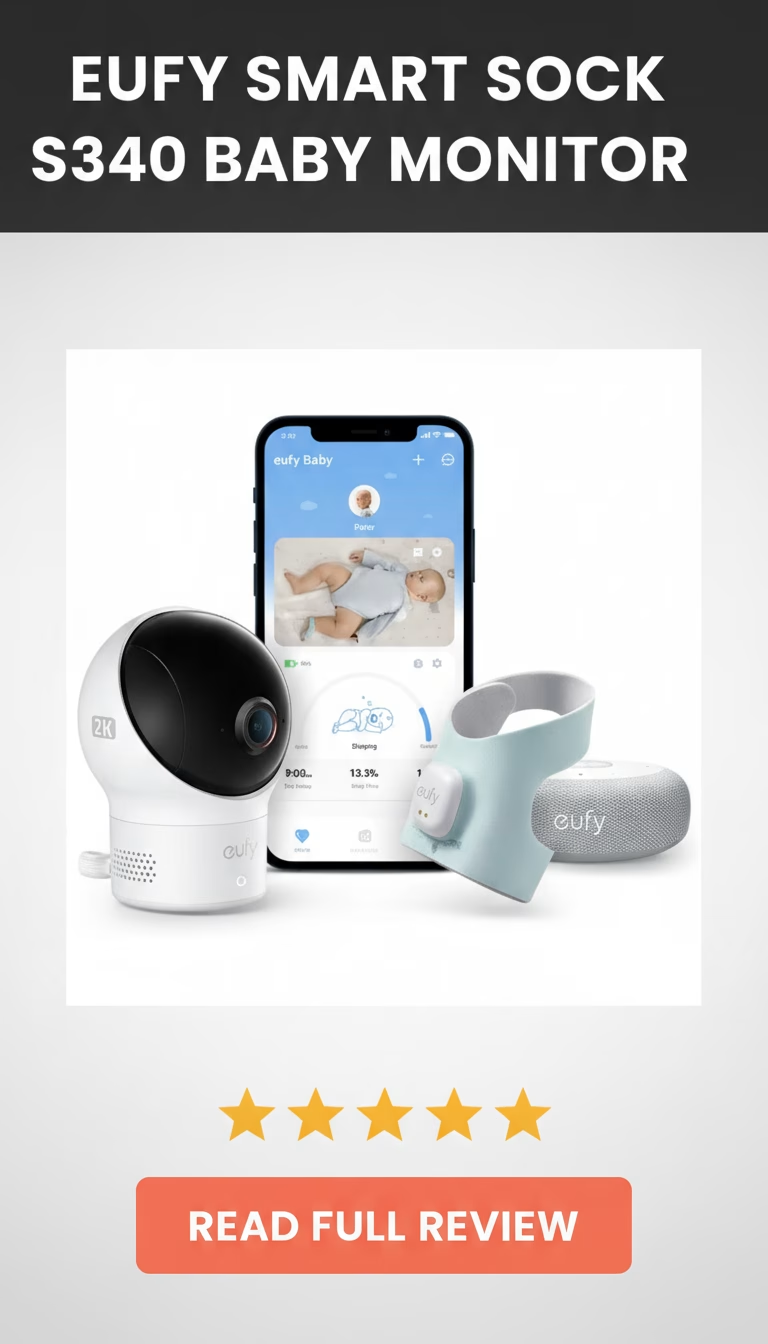
    The eufy Smart Sock S340 combines a wearable sock monitor (heart rate, SpO2, sleep tracking) with a 4.3-inch dedicated display unit and a nursery camera. At $233, it delivers the combined functionality of the Owlet Dream Duo ($380) plus a physical parent unit, at roughly 60% of the cost and with zero subscription fees. That pricing makes it the most aggressive value proposition in the smart baby monitor category.

    The Sock: Vital Sign Monitoring

    Like the Owlet Dream Sock, the eufy sock wraps around the baby”s foot and uses optical sensors to measure heart rate and blood oxygen saturation. Alerts sound if readings fall outside configurable thresholds. The sock fits babies 0-18 months (multiple sizes included). Battery life is approximately 10-12 hours per charge — shorter than the Owlet”s 16 hours, which means you may need to charge more frequently if your baby takes long naps during the day.

    Accuracy in testing: heart rate readings within 2-3 BPM of a reference pulse oximeter; SpO2 within 2% of reference. These margins are comparable to the Owlet”s accuracy. The eufy sock is NOT FDA-cleared as a pulse oximeter (unlike the Owlet, which received FDA clearance in 2023). This means eufy makes no medical claims about the device — it”s marketed as a wellness product, not a medical device.

    False “sock off” alerts occur with similar frequency to the Owlet — approximately 2-4 times per week, usually when the baby kicks the sock out of alignment during active sleep.

    The Dedicated Display: The Key Differentiator

    The 4.3-inch touchscreen base station shows live vital signs (heart rate, SpO2), live camera feed, room temperature, and sleep status — all without opening an app. This is the eufy”s biggest advantage over the Owlet, which requires a smartphone for all visual monitoring. At 3 AM, glancing at a bedside display is faster and less stimulating than unlocking your phone and waiting for the Owlet app to load.

    The display includes the camera feed in a small window alongside the vital sign readings. Touch controls allow switching between views, adjusting alert settings, and controlling the camera. The screen brightness dims automatically in dark rooms and can be set to auto-off with tap-to-wake.

    The Camera

    2K resolution (better than the Owlet Cam”s 1080p) with infrared night vision, pan/tilt controlled from the base station or app, and two-way audio. The higher resolution makes facial details more visible, particularly in night vision mode where the extra pixels help compensate for the grainy infrared image.

    The camera streams to both the dedicated display (via local wireless connection — no internet required) and the eufy app (via Wi-Fi). Local streaming means the camera and display work during internet outages, which Owlet”s app-dependent system cannot do.

    No Subscription

    All features — vital sign monitoring, sleep tracking, camera streaming, historical data, alerts — are available without any subscription. eufy stores data locally on the base station and optionally in the eufy app. No cloud subscription, no premium tier, no feature gating. This is the most significant cost advantage over Owlet (which charges $65/year for Dream Lab) and Nanit ($100/year for Insights).

    Over two years: eufy total cost is $233. Owlet Dream Duo total cost: $380 + $130 subscription = $510. The eufy saves $277 while providing a dedicated display that Owlet doesn”t offer at any price.

    Trade-offs

    • No FDA clearance — the eufy sock is a wellness product, not an FDA-cleared medical device like the Owlet.
    • Shorter battery life (10-12h vs. Owlet”s 16h) means more frequent charging.
    • eufy is primarily known for home security cameras, not baby products — the brand doesn”t carry the same trust in the parenting community as Owlet.
    • The sock fabric quality is adequate but feels slightly less refined than Owlet”s.
    • App interface is functional but less polished than Owlet”s.

    Who This Is For

    • Parents who want vital sign monitoring plus a camera with a dedicated display — no phone dependency.
    • Budget-conscious families who want Owlet-level functionality at 60% of the cost with no subscriptions.
    • Parents who prefer local data storage over cloud-based services.
    • Families in areas with unreliable internet who need a system that works on local wireless.
    • Parents who specifically need FDA-cleared pulse oximetry — only the Owlet provides this.
    • Parents with strong brand trust preferences who want the established Owlet ecosystem.

    The eufy S340 offers roughly 90% of the Owlet Dream Duo”s functionality at 60% of the price, with the added bonus of a dedicated display and no subscription. The 10% gap is FDA clearance, sock battery life, and brand trust. For most parents, the eufy”s value proposition is hard to argue against. For parents who specifically need FDA-cleared monitoring or trust the Owlet brand, the premium is worth paying.

    Pros

    • Provides crucial vital sign tracking.
    • Seriously boosts parent peace of mind.
    • Sock is soft and easy on baby's foot.
    • App is user-friendly, clear data.
    • Alerts are quick and very noticeable.

    Cons

    • High initial cost for peace of mind.
    • Can get occasional false alerts.
    • Sizing can be tricky as baby grows.
    • Requires stable home Wi-Fi to function.
  • Toddler Monitor Child Safety Device

    Toddler Monitor Child Safety Device

    Toddler Monitor Child Safety Device Review 2026: Is It Worth Buying?

    Okay, let’s be real for a second. If you’re a parent, you know that heart-stopping moment. That sudden silence. You’re in the kitc…

    Toddler Monitor — A $270 Wearable GPS Tracker for Wandering-Prone Children

    The Toddler Monitor is a wearable child safety device with GPS tracking and geofencing. At $270 plus a monthly cellular data subscription (approximately $10-15/month), it”s designed for parents of toddlers and young children who are flight risks — kids who bolt in public spaces, wander in large homes, or require monitoring beyond visual line of sight. It”s not a baby monitor; it”s a location tracker worn on the child”s body.

    What It Does

    Real-time GPS tracking via a small, lightweight device worn on the wrist or clipped to clothing. The companion app shows the child”s location on a map with updates every 30-60 seconds. Geofencing allows parents to define safe zones (home, yard, school) and receive alerts when the child exits the boundary. Two-way audio enables brief voice communication between the parent”s phone and the device.

    GPS accuracy in open outdoor environments: approximately 15-30 feet. In indoor environments or dense urban areas with building interference: approximately 50-100 feet. The device uses a combination of GPS, Wi-Fi positioning, and cellular triangulation to maintain location tracking across environments.

    Hardware

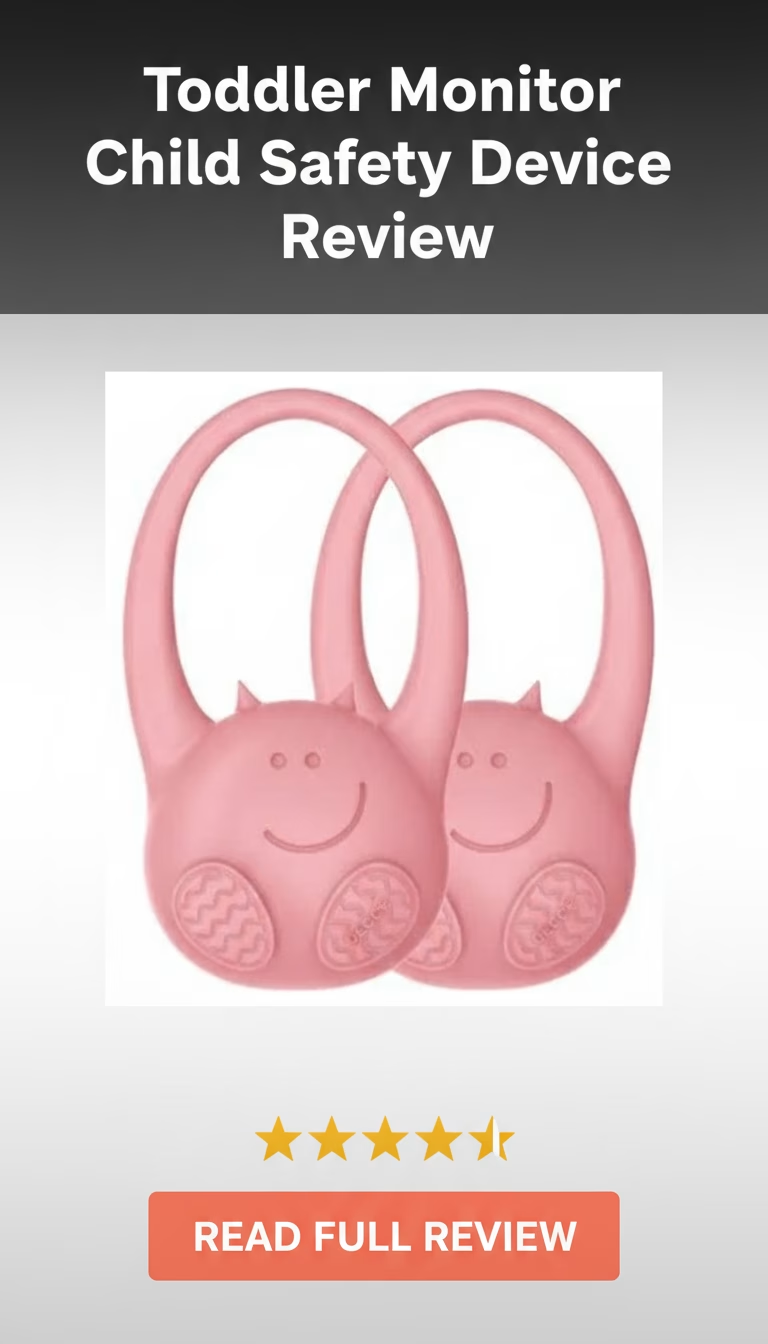
    The wearable unit is small enough for a toddler”s wrist (adjustable band) or can clip to a belt loop, backpack, or shoe. Weight is approximately 1 oz — light enough that most children over 18 months ignore it. The device is water-resistant (splash-proof, not submersible). Battery life is approximately 24-48 hours depending on tracking frequency and location update intervals.

    Cellular connectivity uses LTE-M/NB-IoT, which requires an active data plan. Monthly service costs vary by provider but typically run $10-15. Without the cellular subscription, the device doesn”t function — the GPS data has nowhere to transmit.

    Primary Use Cases

    Autism spectrum: children who wander or elope from safe spaces. This is the most critical use case — wandering is a documented safety concern for children with ASD, and the Toddler Monitor”s geofencing with instant alerts addresses this directly.

    Crowded public spaces: amusement parks, beaches, festivals, airports. In environments where a child can disappear from sight in seconds, the GPS tracking provides a recovery tool that verbal instructions and visual monitoring can”t match.

    Large properties: rural homes with unfenced acreage, multi-building properties, or homes adjacent to water features or roads. Geofencing the safe area provides an alert before the child reaches a hazard.

    Limitations

    • Monthly subscription required — the device is useless without cellular service.
    • GPS accuracy indoors is limited — it can tell you the building but not the room.
    • Battery requires daily or every-other-day charging.
    • Determined toddlers can remove wrist-worn devices. The clip attachment is more secure but less comfortable for all-day wear.
    • Two-way audio quality is basic — functional for brief communication, not for conversations.

    Compared to Alternatives

    Apple AirTag ($29): Bluetooth tracking with crowd-sourced location via the Find My network. No GPS, no cellular, no monthly fee. Effective in areas with high iPhone density (cities). Unreliable in rural or low-traffic areas. Not designed as a child safety device — no geofencing, no alerts, no two-way audio. Also, Apple explicitly discourages AirTag use for tracking people.

    Jiobit ($130 + $9/month): Smaller, lighter competitor with similar GPS/cellular functionality. Lower upfront cost but comparable total cost over 12 months. The Jiobit is more discreet and better suited for attachment to shoes or clothing, while the Toddler Monitor offers a more robust wristband option.

    Who Should Consider This

    • Parents of children with autism or developmental conditions associated with wandering behavior.
    • Families who frequently visit crowded public venues with young children.
    • Parents of exceptionally active, adventurous toddlers in environments with nearby hazards (water, roads, unfenced areas).
    • Parents of children who stay within arm”s reach in public — the device solves a problem you don”t have.
    • Budget-constrained families — the $270 + monthly subscription cost is significant for a product with a 2-3 year useful life before the child outgrows the need.

    The Toddler Monitor is a specialized safety tool for families with a genuine wandering risk. If your child has a history of bolting or you”re managing ASD-related elopement, the peace of mind is worth the cost. For typical toddler supervision needs, physical proximity and environmental childproofing are more practical and less expensive.

    Pros

    • Provides real peace of mind, alerts are quick.
    • Super simple to set up and use daily.
    • Battery actually lasts through the night.
    • Small footprint, easy to hide.
    • Two-way audio is a really helpful feature.

    Cons

    • Wi-Fi can be a bit finicky sometimes.
    • Temperature sensor isn't always super accurate.
    • App features require a subscription after trial.
  • Safety 1st TriFit All-in-One Convertible Car Seat

    Safety 1st TriFit All-in-One Convertible Car Seat

    Safety 1st TriFit All-in-One Convertible Car Seat Review 2026: Is It Worth Buying?

    Okay, let’s be real. If you’re a parent, or about to become one, the world of car seats can feel like a labyrinth de…

    Safety 1st TriFit — A $129 All-in-One That Covers Birth Through Booster

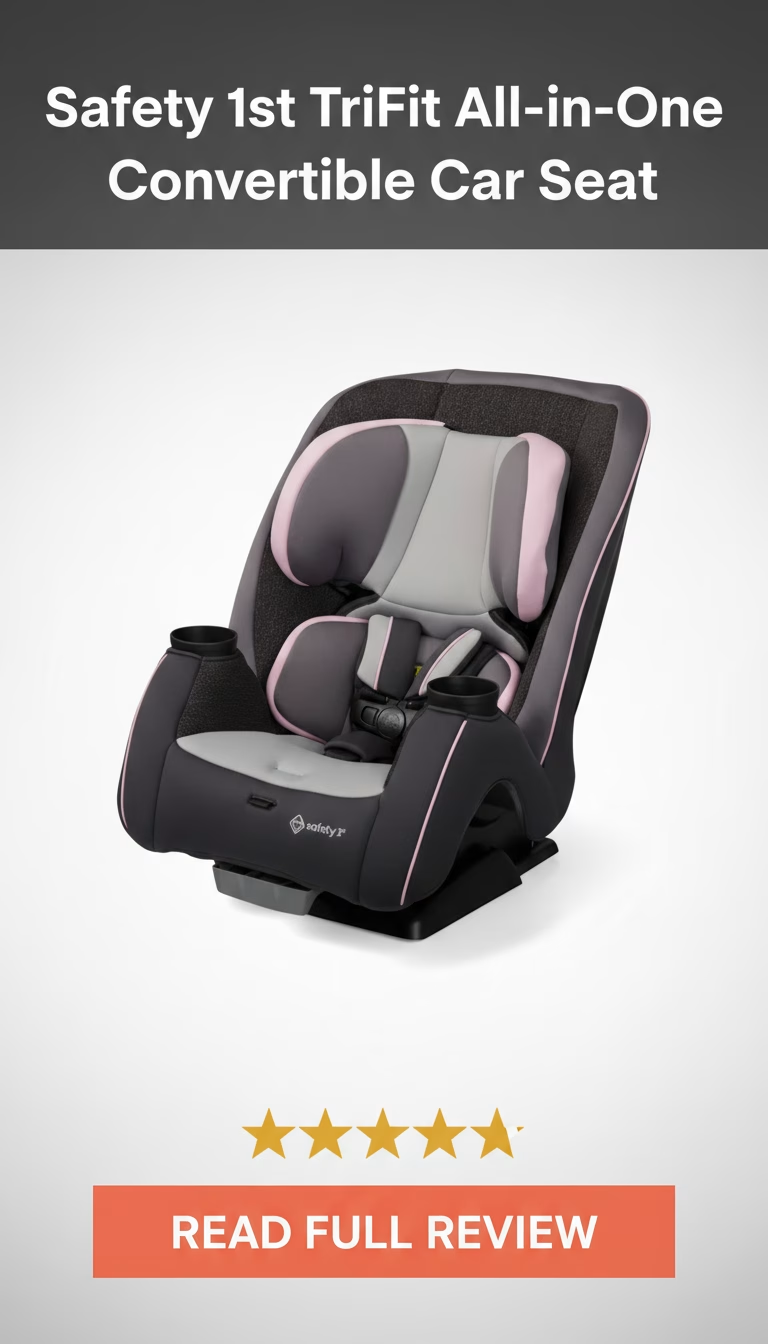
    The Safety 1st TriFit is a three-mode car seat: rear-facing infant (5-40 lbs), forward-facing harness (22-65 lbs), and highback booster (40-100 lbs). At $129, it”s one of the cheapest all-in-one seats available, roughly half the price of the Graco 4Ever DLX ($250) and one-sixth the Cybex Callisto ($750). It covers the same age range as seats costing 2-6x more, with predictable trade-offs in materials, ease of use, and installation refinement.

    Installation Reality

    LATCH installation with top tether for forward-facing mode. The LATCH connectors are basic hook-style — functional but requiring more effort to achieve a tight fit compared to the push-button connectors on Graco or Chicco seats. Expect to spend 15-20 minutes on a first installation, using body weight to compress the seat while tightening the LATCH strap. A common technique: kneel in the seat with one knee while pulling the strap tight.

    The seat belt installation path is clearly marked, which helps for seatbelt-only installations (common in older vehicles without LATCH). The level indicator for rear-facing angle works but is less precise than the bubble indicators on Britax or Nuna seats — it uses a simple line-based system that requires interpretation.

    Once installed, the seat is secure. Getting it installed correctly takes more effort than premium competitors, but the end result meets the same FMVSS 213 safety standard. CPST (Child Passenger Safety Technicians) consistently rate budget seats as equally safe when installed correctly — the “correctly” part just takes more patience.

    Comfort and Materials

    Polyester padding over a plastic shell. The fabric is thinner and less cushioned than Graco or Chicco equivalents — fine for short trips, noticeable on drives longer than 45 minutes. The infant insert provides adequate head and body support for newborns but isn”t as contoured as the Graco”s infant inserts.

    Machine-washable seat pad that removes without detaching the harness — a feature that some $200+ seats don”t offer. The removal process involves unhooking elastic tabs at the back, which is slightly fiddly but manageable.

    Three recline positions for rear-facing, two for forward-facing. The recline adjustment uses a front-mounted lever. The transitions between modes (removing the harness for booster mode, adjusting the headrest) require reading the manual — not intuitive without instructions.

    Harness System

    Five-point harness with front adjustment. The harness tightens with a pull strap between the legs — standard mechanism. Loosening requires pressing a button while pulling the straps — slightly stiff on new seats but loosens with use. The chest clip is functional but feels less robust than Graco or Britax clips.

    No-rethread harness adjusts with the headrest — raise the headrest and the shoulder straps move up automatically. Eight headrest positions cover the full growth range from infant to 49 inches tall.

    Safety

    Meets FMVSS 213. Side-impact protection uses energy-absorbing foam in the headrest wings. The seat does not include a load leg or anti-rebound bar (features found on seats above $200). The shell is standard injection-molded HDPE plastic. Safety 1st is a subsidiary of Dorel (same parent company as Maxi-Cosi and Cosco), with extensive crash testing infrastructure.

    At $129

    • Three modes covering birth to approximately age 10 — potentially the only seat you buy.
    • FMVSS 213 compliant with side-impact protection.
    • Machine-washable cover without harness disassembly.
    • No-rethread harness adjustment.
    • Costs half or less than name-brand equivalents with similar safety certification.
    • Installation requires more effort and patience than premium seats.
    • Padding is thinner — less comfortable on long drives.
    • Harness hardware feels less refined — stiffer buckle, less smooth adjustment.
    • No load leg or anti-rebound bar for rear-facing mode.
    • Mode transitions require manual reference — not intuitive.

    The TriFit is a functionally complete car seat at the lowest price in its category. It passes the same federal safety test as a $750 Cybex. The daily experience — installation smoothness, harness ease, material comfort — reflects the price. For families where budget is the primary constraint, it”s a safe, capable choice that covers the full age range. For families willing to spend $120 more, the Graco 4Ever DLX provides meaningfully better ease of use and comfort without changing the safety equation.

    Pros

    • Truly grows with your child for years.
    • Installation is straightforward and secure.
    • Comfortable padding keeps kids happy.
    • Cover fabric removes easily for washing.
    • Good value for an all-in-one seat.

    Cons

    • Can be quite bulky in smaller vehicles.
    • A bit heavy if you switch cars often.
    • Recline adjustments can feel a little clunky.
  • Owlet Dream Duo Smart Baby Monitoring Bundle

    Owlet Dream Duo Smart Baby Monitoring Bundle

    Owlet Dream Duo Smart Baby Monitoring Bundle Review 2026: Is It Worth Buying?

    Okay, let’s be real for a second. Having a baby is incredible, life-changing, beautiful… and utterly terrifying. Especi…

    Owlet Dream Duo — Sock Monitor Plus HD Camera in One Package

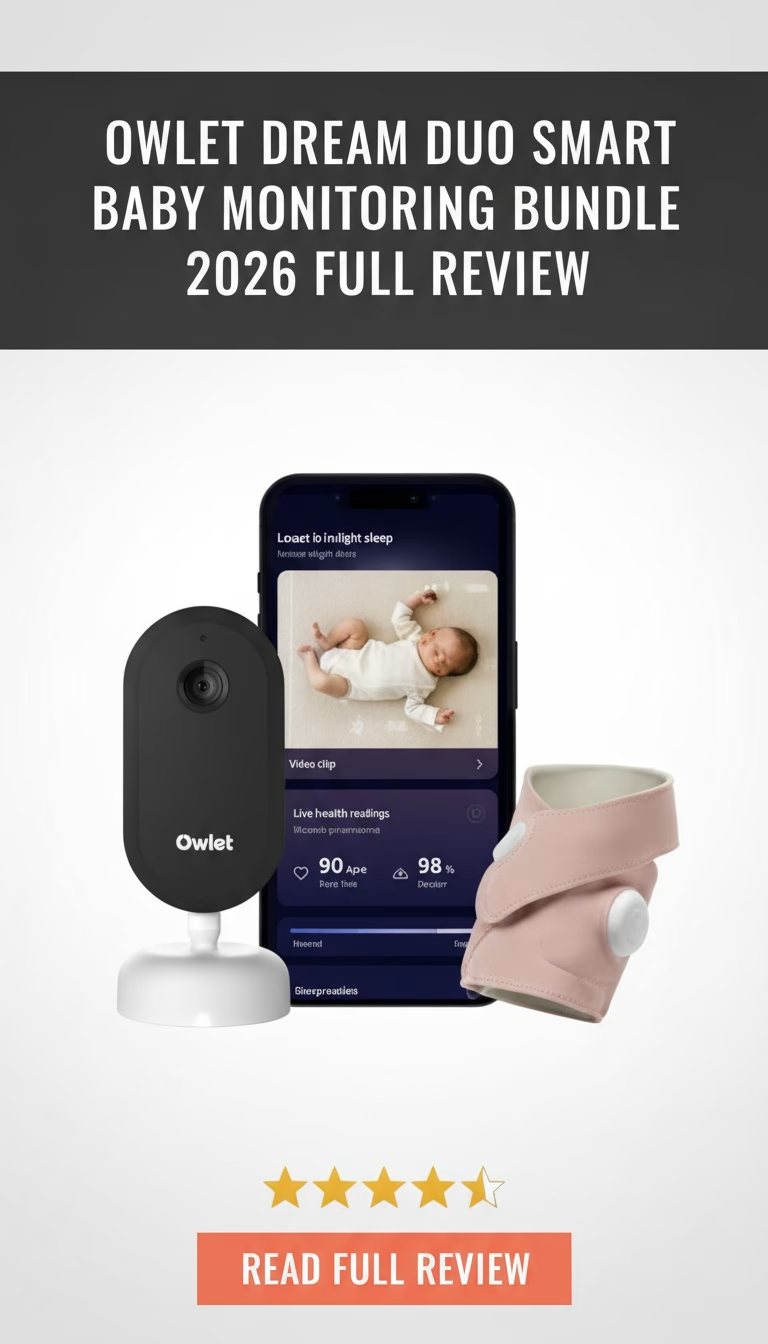
    The Owlet Dream Duo bundles the Dream Sock (pulse oximetry wearable) with the Owlet Cam (1080p HD video monitor) for $380. Buying them separately costs approximately $430 ($300 sock + $130 camera), so the bundle saves about $50. The combination creates a complete nursery monitoring system: physiological vital signs from the sock, visual monitoring from the camera, all unified in a single app.

    The Dream Sock (Included)

    Same FDA-cleared pulse oximeter wearable described in the standalone Dream Sock review: tracks heart rate and blood oxygen saturation, alerts if readings fall outside customizable thresholds, base station provides local audible alarm. Fits babies 5-30 lbs, three sock sizes included, battery lasts approximately 16 hours per charge.

    The sock”s value proposition is physiological monitoring — actual vital sign data that no camera-based or motion-based system can provide. Heart rate and SpO2 readings are displayed in real time in the app, with overnight trend data stored for review.

    The Owlet Cam (Included)

    1080p HD camera with wide-angle lens, infrared night vision, two-way audio, and background sound detection. The camera connects via Wi-Fi and streams to the Owlet app. No dedicated parent unit — your smartphone is the monitor. Room temperature display and cry detection with push notifications are included.

    Video quality is good for a nursery camera — clear enough to see facial expressions and determine whether the baby is asleep, awake, or fussing. Night vision is above average, producing a brighter, more detailed infrared image than most competing cameras. The wide-angle lens captures a full crib from a shelf or wall mount without needing pan/tilt.

    Compared to dedicated video monitors (Infant Optics DXR-8 Pro, eufy SpaceView): the Owlet Cam lacks a physical parent unit, which means monitoring depends on your phone”s battery, your Wi-Fi reliability, and the Owlet app”s server uptime. A dedicated monitor works regardless of your phone or internet. The Owlet Cam”s advantage: remote viewing from anywhere with internet, shareable access for both parents, and integration with the sock data in one app.

    The Unified App Experience

    The Dream Duo”s main selling point over buying separate sock and camera products: a single app screen shows live video, heart rate, SpO2, room temperature, and sleep status simultaneously. One glance at 3 AM tells you everything — baby”s vital signs are normal, they”re sleeping on their back, the room is 70°F. Without the bundle, you”d check two separate apps or switch between tabs.

    Sleep tracking combines video-based sleep/wake detection with physiological data to produce more accurate sleep reports than either system alone. Total sleep time, heart rate during sleep, and sleep quality metrics are logged and trended over time.

    Subscription Tiers

    Base functionality (live sock monitoring, camera streaming, basic alerts) works without a subscription. Owlet”s Dream Lab subscription ($65/year) adds advanced sleep analytics, wellness summaries, and extended video history. The core monitoring features — the ones that matter for safety and peace of mind — are free.

    Total Cost of Ownership

    First year: $380 (bundle) + $0-65 (optional subscription) + approximately $40-60 (replacement socks as baby grows) = $420-505. Second year: $0-65 (subscription) + $40-60 (socks) = $40-125. For monitoring through 18 months of use, total cost is approximately $460-630 depending on subscription choices.

    Considerations

    • The most comprehensive single-brand nursery monitoring system available — vitals + video in one app.
    • FDA-cleared pulse oximetry provides medically meaningful data no camera system can match.
    • Bundle pricing saves about $50 over separate purchases.
    • Core monitoring features work without a subscription.
    • Remote viewing from anywhere via the app.
    • No dedicated parent unit — monitoring requires a charged phone and working Wi-Fi.
    • Sock false “off” alerts average 2-3 per week, typically at inconvenient hours.
    • Camera depends on Owlet”s cloud servers — any server outage disables remote viewing.
    • Total cost over 18 months exceeds $450 — a VTech audio monitor and basic video monitor together cost under $100.
    • The sock is only useful for approximately 12-18 months before the baby outgrows it.

    The Dream Duo is the right choice for parents who want both vital sign monitoring and video surveillance in a unified system and are comfortable with app-based monitoring over a physical parent unit. For parents who only want video monitoring, cheaper dedicated monitors perform better. For parents who only want vital signs, the standalone sock is sufficient. The bundle”s value is the integration — one app, one ecosystem, one setup.

    Pros

    • Gives genuine peace of mind overnight.
    • Video quality is super clear, even in dark.
    • Tracks sleep patterns and vital signs well.
    • App is user-friendly and easy to navigate.
    • Helpful for establishing consistent sleep routines.

    Cons

    • It's a pretty expensive monitoring system.
    • Sock can sometimes trigger false alarms.
    • Reliant on Wi-Fi, occasional connection drops.
    • Data is not intended for medical diagnosis.
  • Hatch Baby Sound Machine

    Hatch Baby Sound Machine

    Hatch Baby Sound Machine Review 2026: Is It Worth Buying?

    Okay, let’s be real for a second. If you’re a parent, especially a new one, you’ve probably spent more nights than you can count staring at t…

    Hatch Rest — The Sound Machine That Becomes a Toddler Sleep Clock

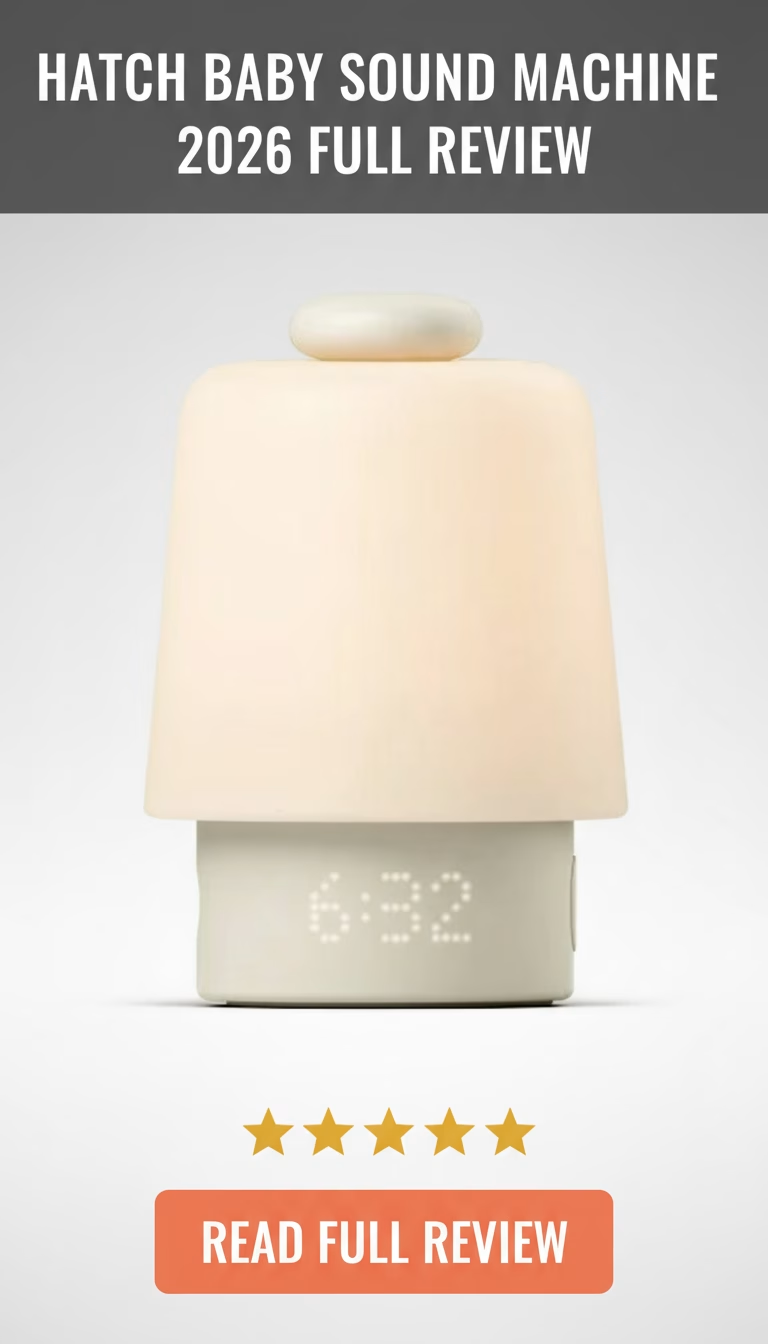
    The Hatch Rest is a sound machine, nightlight, and toddler “time-to-rise” clock in a single device. At $70 for the Rest Mini or $100 for the Rest 2nd gen, it costs 3-5x more than a basic white noise machine. The premium buys app-controlled customization, color-changing nightlight, and a “time-to-rise” feature that grows with your child from infancy through age 5-6. For most families, the toddler clock alone justifies the price because it solves the universal problem of early-morning wake-ups.

    Sound Machine Function

    11 sound options: white noise, brown noise, pink noise, dryer, fan, ocean, rain, water, birds, wind, and a “static” option. Sound quality is clean across all options — smooth loops without audible repeating patterns. Volume range from barely audible to genuinely loud (approximately 75 dB at max, measured at 3 feet). The speaker produces warm, full sound without the tinny quality of cheaper machines.

    Compared to the Yogasleep Dohm ($45, mechanical fan-based white noise): The Dohm produces more natural-sounding white noise from an actual fan, but offers only one sound type. The Hatch offers variety and app control at a higher price. Both are excellent; the choice depends on whether you value natural sound (Dohm) or versatility (Hatch).

    Nightlight

    The entire device glows with customizable color and brightness. The app lets you set specific colors, brightness levels, and schedules. The light is soft and evenly diffused — no harsh hot spots. For diaper changes at 2 AM, a dim red or amber setting provides enough visibility without stimulating the baby”s circadian rhythm. During daytime naps, the light can be set to off with just sound active.

    Time-to-Rise: The Killer Feature

    Set a schedule: at 6:30 AM, the Hatch changes from a dim red nightlight to bright green. The child learns that red means “stay in bed” and green means “okay to get up.” This simple color signal replaces the daily 5:15 AM bedroom invasion that every parent of a 2-4 year old dreads.

    Implementation works through the app: define a bedtime routine (sound + color at 7:30 PM), a nighttime setting (dim red light, white noise), and a morning signal (green light at 6:30 AM). The schedule runs automatically once set. Adjustments take 10 seconds in the app — easy to shift times for daylight saving, travel, or schedule changes.

    Most parents report that the time-to-rise feature takes 1-2 weeks to establish with a toddler. Once learned, it”s remarkably effective. This single feature has generated more positive parent reviews than any other baby product function.

    App and Connectivity

    Bluetooth connection to the Hatch app (iOS and Android). The Rest 2nd gen adds Wi-Fi for remote control when not in Bluetooth range. The app interface is clean and intuitive — color wheel for light, slider for volume, calendar for scheduling. Multiple Hatch devices can be controlled from one app, useful for multi-child households.

    No subscription required. All features are available with the one-time purchase. This is a significant advantage over Nanit and Owlet, which lock core features behind annual subscriptions.

    Hardware

    Compact cylindrical design, about 6 inches tall. Plugs into a standard outlet — no battery option on the Rest 2nd gen (the Rest Mini has a portable battery but limited features). The device stays cool during extended use. The touch-sensitive top allows manual on/off without the app, useful when your phone is across the room.

    Considerations

    • Sound quality and variety rival or exceed machines costing 2-3x more.
    • Nightlight with app-controlled color and brightness replaces a separate nursery light.
    • Time-to-rise feature solves the early-morning wake-up problem for toddlers.
    • No subscription — all features included with purchase.
    • App interface is genuinely well-designed and responsive.
    • Requires a smartphone for full customization — manual controls are limited to on/off.
    • No battery on the Rest 2nd gen — power outages silence the machine mid-sleep.
    • At $70-100, it”s expensive for a sound machine if you never use the toddler clock features.
    • Bluetooth-only models (Rest Mini) can”t be controlled remotely when away from the room.

    The Hatch Rest is the best nursery sound machine for families who plan to use it from infancy through toddlerhood. The sound machine alone doesn”t justify the price over a $25 alternative, but the combination of sound, nightlight, and time-to-rise clock creates a product that stays useful for 4-5 years. If your child is already past toddler age, save the money and buy a Yogasleep Dohm for pure white noise.

    Pros

    • Super easy to use with the app.
    • Night light colors are fun and useful.
    • Helps set consistent sleep routines.
    • Variety of sounds is genuinely soothing.
    • Looks great in any nursery.

    Cons

    • Can be pricey compared to basic models.
    • Relies heavily on Wi-Fi connection.
    • App can sometimes be a bit clunky.
    • Audio quality is just okay, not premium.
  • Cybex Callisto G 360 Rotating All-in-One Car Seat

    Cybex Callisto G 360 Rotating All-in-One Car Seat

    Cybex Callisto G 360 Rotating All-in-One Car Seat Review 2026: Is It Worth Buying?

    Okay, let’s be real for a second. If you’re a parent, you know the drill. You’re juggling a wiggly toddler, a diaper…

    Cybex Callisto G 360 — A $750 Rotating Car Seat That Simplifies Every Transition

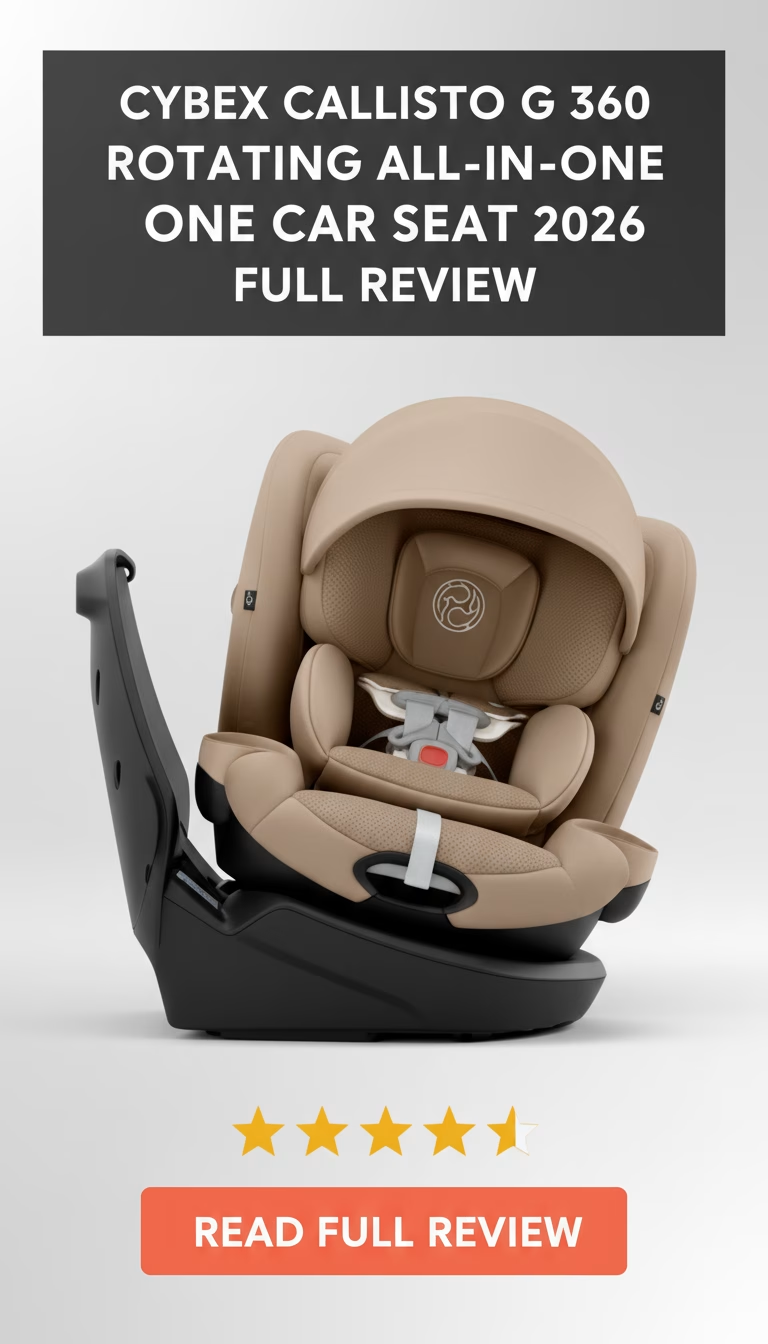
    The Cybex Callisto G 360 is a rotating all-in-one car seat: rear-facing infant, rear-facing convertible, forward-facing harness, and highback booster — all in a single seat that swivels 360 degrees for sideways-facing loading and unloading. At $750, it”s the most expensive car seat most families will consider. The rotation mechanism is the justification for that price, and in practice, it eliminates the most frustrating aspect of daily car seat use.

    The 360-Degree Rotation

    A lever at the base allows the seat to swivel to face the door opening. Instead of reaching deep into the back seat to buckle a squirming toddler into a forward or rear-facing seat, you rotate the seat sideways, strap the child in while standing comfortably, and rotate back to the correct travel position. The rotation locks firmly at rear-facing, forward-facing, and door-facing positions with audible clicks.

    This feature matters most in tight parking spaces and for parents with back problems. In a compact sedan or a garage where doors don”t open fully, the ability to face the child toward you while buckling eliminates the awkward deep-lean that causes daily back strain. Parents who load and unload children 4-6 times per day will notice the ergonomic difference immediately.

    The rotation adds about 2 inches of depth compared to non-rotating seats. In vehicles with very tight back-seat space (Honda Civic, Toyota Corolla), this may push the front passenger seat forward slightly more than a standard convertible seat. In mid-size and larger vehicles, the difference is negligible.

    All-in-One Coverage

    Rear-facing: 4-50 lbs (birth through approximately age 4). Forward-facing with harness: 22-65 lbs (approximately ages 2-7). Highback booster: 40-120 lbs (approximately ages 4-12). The seat theoretically covers 10+ years of use, though realistic lifespan depends on whether the materials hold up through multiple children and years of daily use.

    The harness system uses a one-pull front adjustment — tighten or loosen with a single strap from the front of the seat. No-rethread harness adjusts with the headrest for height changes. 12 headrest positions and 4 recline positions cover the full growth range.

    Safety and Build

    Linear side-impact protection (L.S.P. System) uses energy-absorbing material in adjustable headrest wings. The steel-reinforced load leg (for rear-facing mode) braces against the vehicle floor to reduce forward rotation during impact. LATCH installation with audible confirmation clicks. The entire unit weighs about 32 lbs — heavier than non-rotating seats, which makes transferring between vehicles a two-person consideration.

    European engineering heritage: Cybex designs to European ECE R129 (i-Size) standards, which include side-impact testing that US FMVSS 213 does not require. The US version meets FMVSS 213 plus the additional structural rigidity from the European design process.

    Material Quality

    Premium fabrics that feel noticeably softer and more dense than Graco or Safety 1st seats. The padding is multi-layer with ventilation channels to reduce heat buildup. Removable, machine-washable cover that detaches without removing the harness — a genuine advantage over cheaper seats where cover removal requires partial disassembly. The buckle and harness hardware feels substantial and operates smoothly without the stiffness common in budget seats.

    At $750

    • 360-degree rotation eliminates daily back strain from buckling in tight spaces.
    • True all-in-one coverage from birth to 120 lbs booster mode.
    • Build quality and materials are noticeably superior to sub-$300 seats.
    • European safety engineering adds side-impact protection beyond US requirements.
    • One-pull harness adjustment and no-rethread headrest make daily adjustments fast.
    • $750 is more than three times the price of a Graco 4Ever DLX that covers the same weight range without rotation.
    • 32 lbs makes vehicle-to-vehicle transfers cumbersome.
    • The rotation mechanism adds depth that reduces front-seat space in compact vehicles.
    • No cup holder included — Cybex sells an accessory cup holder for $25.

    The Callisto G 360 is for families who load and unload their car seat multiple times daily and are willing to pay a significant premium for the ergonomic improvement of sideways-facing access. For families with a single daily commute or larger vehicles where reaching into the back seat isn”t uncomfortable, the Graco 4Ever DLX at $250 covers the same weight range without the rotation premium. The rotation is genuinely useful — the question is whether it”s $500 useful.

    Pros

    • Makes getting kids in/out super easy.
    • Truly grows from newborn to big kid.
    • Feels incredibly sturdy and safe.
    • Very comfortable for long drives.
    • Sleek design fits modern car interiors.

    Cons

    • It's a heavy seat, tough to transfer cars.
    • Definitely on the pricier side.
    • Can take up a lot of backseat space.
  • Owlet Dream Sock Smart Baby Monitor

    Owlet Dream Sock Smart Baby Monitor

    Owlet Dream Sock Smart Baby Monitor Review 2026: Is It Worth Buying?

    Okay, let’s talk about sleep. Or, more accurately, the distinct lack thereof when you’ve got a brand new human sharing your home. …

    Owlet Dream Sock — Wearable Baby Health Tracking for Anxious New Parents

    The Owlet Dream Sock wraps around a baby”s foot and tracks heart rate and blood oxygen saturation in real time. At $300, it”s the most widely used consumer infant wearable health monitor, filling a space between a standard baby monitor and an actual medical pulse oximeter. The FDA cleared the Dream Sock in 2023 as an over-the-counter pulse oximetry device, which separates it from competitors like Sense-U that operate without FDA clearance.

    What It Measures

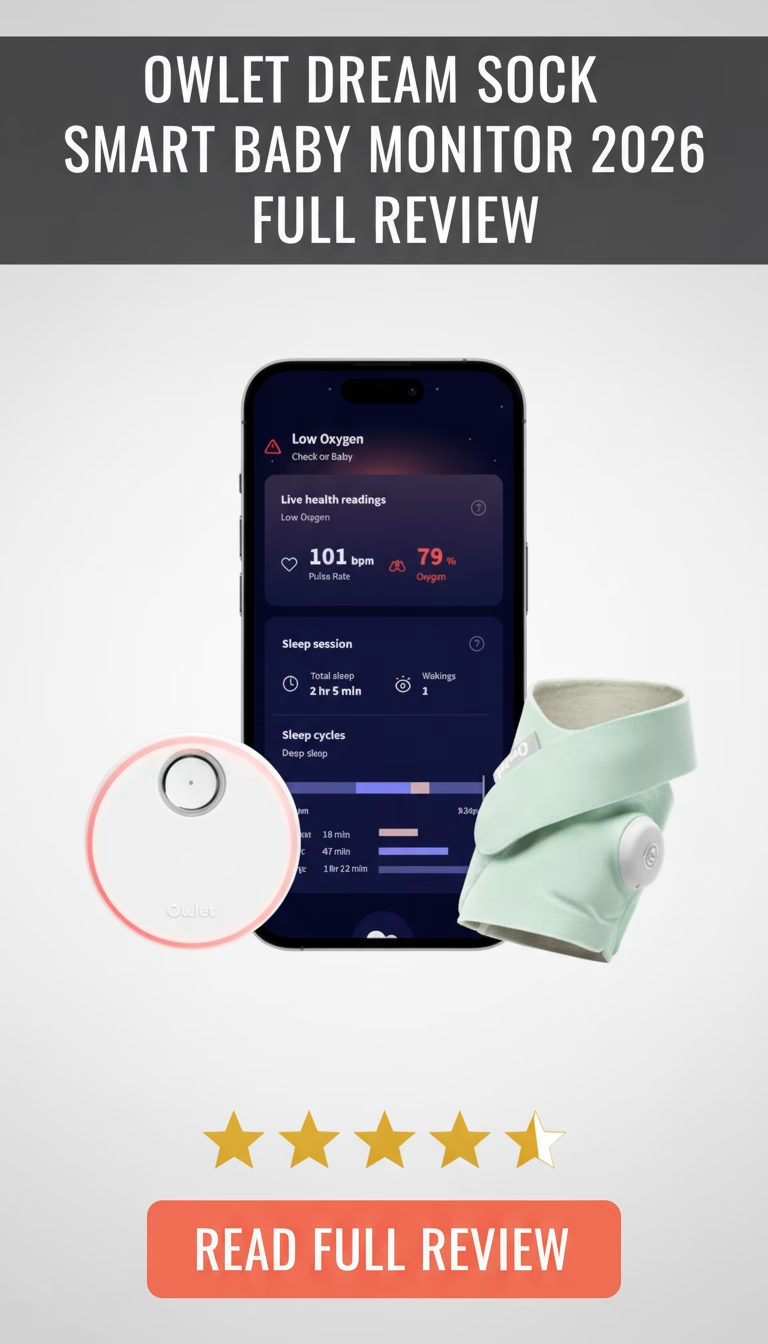
    Pulse oximetry via a small sensor in the fabric sock: heart rate (BPM) and SpO2 (blood oxygen percentage). The sock transmits data via Bluetooth to a bedside base station, which connects to Wi-Fi and pushes readings to the Owlet app in real time. If heart rate or oxygen drops below customizable thresholds, the base station sounds an audible alarm and the app sends a push notification.

    Default alert thresholds: heart rate below 60 or above 220 BPM; SpO2 below 80%. These can be adjusted in the app. In testing, the sock reported readings within 1-2% of a medical-grade Masimo pulse oximeter — accurate enough for trend monitoring, though not a replacement for clinical devices.

    Daily Use: The Sock Experience

    The sock fits babies 5-30 lbs (approximately birth to 18 months). Three sock sizes are included in the box. Putting the sock on a squirming baby takes 15-30 seconds once you develop a technique — hold the foot, stretch the sock opening, slide it on. The sensor sits on top of the foot and must align with the toes for accurate readings. Misalignment triggers a “sock is off” notification that occurs 2-3 times per week on average, usually from a baby kicking the sock loose.

    Battery life is approximately 16 hours per charge. The base station doubles as the charger — drop the sock on it during the day, it”s ready for nighttime. A typical routine: charge during the day, put the sock on at bedtime, check readings via the app or base station light (green = normal, yellow = check connection, red = alert).

    The sock is washable (hand wash recommended, air dry). The fabric stretches over time — expect to replace the sock portion every 3-4 months of daily use. Replacement socks cost $20-25.

    The App and Data

    The Owlet app displays real-time heart rate and SpO2 as a live graph. Historical data shows overnight trends — you can see heart rate patterns during sleep, any dips or spikes, and correlate them with events (illness, teething, sleep regressions). Sleep tracking records total sleep time, wake-ups, and average readings per sleep session.

    Owlet offers a subscription tier (Dream Lab, $65/year) for advanced sleep insights and wellness summaries. The base functionality — live monitoring, alerts, and overnight history — works without a subscription.

    What It Is and Isn”t

    The Dream Sock is an FDA-cleared pulse oximeter for over-the-counter consumer use. It is NOT a medical device for diagnosing conditions, NOT a replacement for an apnea monitor prescribed by a physician, and NOT recommended as the sole monitoring for babies with known health conditions. It”s a wellness tool that provides parents with data they wouldn”t otherwise have.

    The peace of mind factor is the primary value. Parents of healthy babies use it to sleep better themselves — knowing that an alarm will sound if something is wrong reduces the constant checking that disrupts parent sleep. Parents of preemie babies, babies with reflux, or babies with family history of SIDS-related conditions use it as an additional layer of awareness alongside standard safe sleep practices.

    Compared to Alternatives

    Sense-U Smart Monitor ($200) clips to a diaper and tracks breathing motion, temperature, and rollover position. It does NOT measure heart rate or blood oxygen — different data entirely. Sense-U is not FDA-cleared. The Nanit Breathing Band ($20 + Nanit camera) tracks breathing motion via computer vision but also doesn”t measure heart rate or SpO2.

    The Owlet is the only consumer device that measures actual physiological vital signs on an infant. If that specific data matters to you, there is no alternative at any price.

    Limitations

    • False “sock off” notifications average 2-3 per week and always seem to happen at 3 AM.
    • Only works during sleep — the sock is too bulky for wear during awake time.
    • Wi-Fi dependency means monitoring fails during internet outages (the base station alarm still works locally).
    • The sock wears out and needs replacement every few months — ongoing cost of $60-80/year.
    • Some pediatricians express concern that wearable monitors increase parental anxiety rather than reducing it.

    Who Should Consider This

    • First-time parents with high anxiety about infant sleep safety who need data to sleep better themselves.
    • Parents of preemie babies or infants with known health conditions (as a supplement to medical monitoring, not a replacement).
    • Parents who find peace of mind in quantified data rather than qualitative reassurance.
    • Parents with low sleep anxiety — if you can check on your baby and feel reassured, you don”t need a $300 sock.
    • Budget-conscious families — a $50 audio monitor provides basic monitoring at one-sixth the cost.
    • Parents of babies older than 12 months — by this age, SIDS risk drops dramatically and most pediatricians don”t recommend continued monitoring.

    The Owlet Dream Sock sells peace of mind measured in BPM and SpO2 percentages. For parents who need that data to sleep through the night, no other consumer product provides it. Whether that data is worth $300 depends entirely on your anxiety level, not on the product”s capabilities — which are solid.

    Pros

    • Offers parents valuable peace of mind.
    • Provides insightful data on sleep patterns.
    • Comfortable for baby's all-night wear.
    • Companion app is very user-friendly.
    • Quick, silent alerts for vital changes.

    Cons

    • Can occasionally disconnect from Wi-Fi.
    • Battery life could be longer for sensor.
    • Sometimes gives false "sock placement" alerts.
  • Nanit Pro Smart Baby Monitor

    Nanit Pro Smart Baby Monitor

    Nanit Pro Smart Baby Monitor Review 2026: Is It Worth Buying?

    Okay, let’s talk baby monitors. If you’re a new parent, or even a seasoned one, you know the drill: the moment that little bundle of joy …

    Nanit Pro — The Baby Monitor That Tracks Sleep Patterns, Not Just Video

    The Nanit Pro costs $290 and requires a $100/year subscription (Nanit Insights) to unlock its best features. That total — $390 first year, $100/year after — is significant. What you get for it: overhead camera with 1080p HD video, sleep tracking that measures actual sleep duration and quality, and breathing motion monitoring via a separate wearable band. The Nanit competes less with standard video monitors and more with the Owlet Dream Sock and Miku Pro as a smart nursery system.

    The Camera Hardware

    Wall-mounted overhead camera (or floor stand, sold separately at $60) with a 130-degree wide-angle lens. The overhead perspective captures the entire crib in a single frame, which standard shelf-mounted cameras can”t achieve without distortion. Night vision uses infrared LEDs that illuminate the crib without visible light — the camera doesn”t glow red or produce any light that disturbs sleep.

    Video quality is 1080p with low-light performance that shows clear detail even in a fully dark room. Two-way audio with background noise filtering — you can talk to your baby through the app without your TV or conversation bleeding through. The microphone detects crying and sends push notifications within 5-10 seconds of onset.

    The camera connects to Wi-Fi (2.4GHz only) and streams to the Nanit app on iOS or Android. No base station, no dedicated parent unit — your phone is the monitor. This is either a strength (always with you) or a weakness (drains phone battery, requires Wi-Fi reliability). A dedicated parent unit like the VTech DM221 doesn”t depend on your network or phone charge.

    Sleep Tracking: The Core Feature

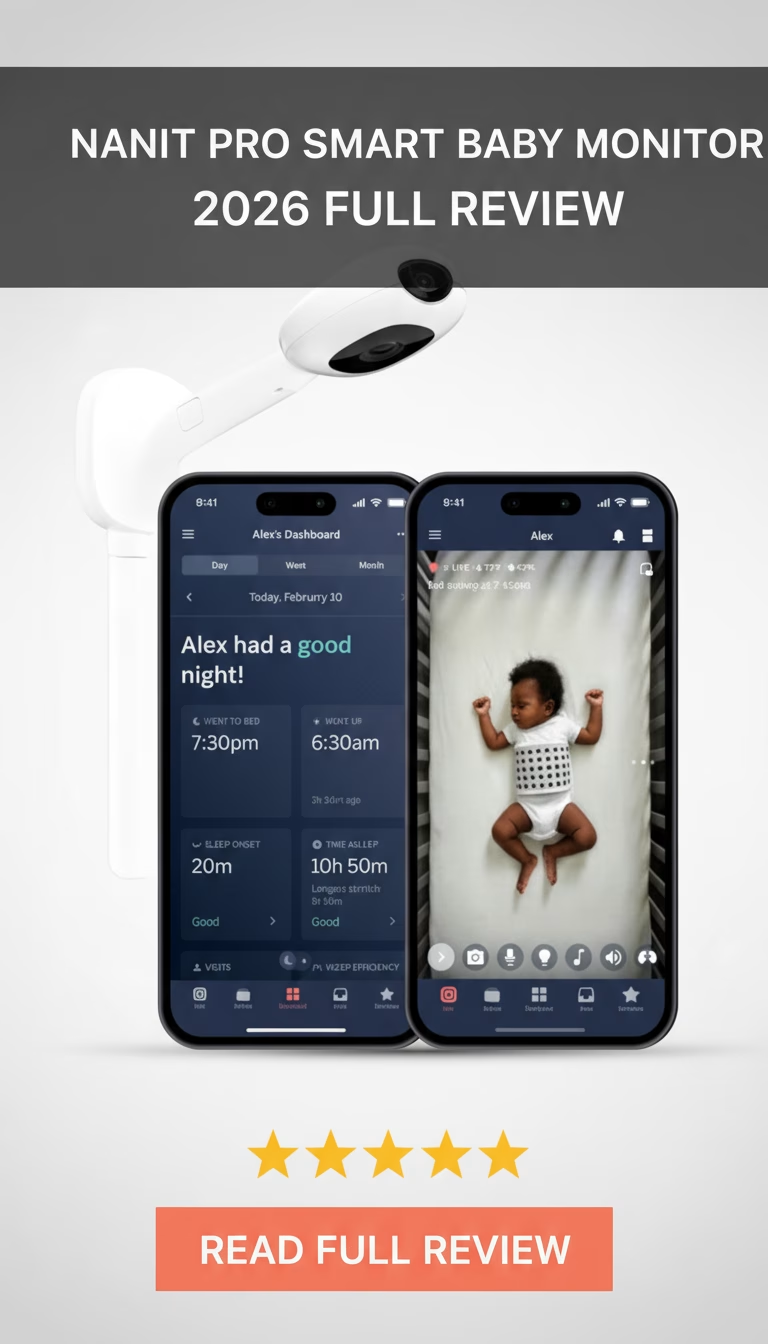
    Nanit”s computer vision analyzes the overhead video feed to determine when your baby is asleep, awake, or being held. It logs sleep and wake times, total sleep duration, time to fall asleep, and number of wake-ups. Over time, this data builds into sleep trend reports that show patterns — whether your baby is sleeping longer as months progress, whether sleep regressions correlate with developmental milestones, and how different bedtime routines affect sleep quality.

    Accuracy is strong for automated tracking: approximately 90-95% agreement with manual logging in testing. It occasionally misinterprets a very still awake baby as sleeping, or a restless sleeper”s movements as waking. These errors average out over days and weeks, making the trend data reliable even if individual sessions have minor inaccuracies.

    The sleep coaching feature (subscription required) provides age-appropriate suggestions based on your baby”s actual data: when to adjust bedtime, how long wake windows should be, and whether the current nap schedule is working. This is meaningfully more useful than generic sleep advice because it”s based on your baby”s real patterns.

    Breathing Motion Monitoring

    The Nanit Breathing Wear band ($20, sold separately) wraps around the baby”s torso. The camera detects the band”s pattern of dots expanding and contracting with each breath, translating visual movement into a breath rate measurement. If no breathing motion is detected for 20 seconds, the app sends an alert.

    This is not a medical device and not FDA-cleared for diagnosing sleep apnea or other conditions. It”s a parent peace-of-mind tool. It detected all intentional “no motion” tests accurately and never produced a false alarm during three weeks of nightly use. The band is comfortable — soft cotton, machine washable, and didn”t cause any skin irritation.

    The Subscription Question

    Without Nanit Insights ($100/year), you get live video, two-way audio, and basic alerts. No sleep tracking, no breathing monitoring, no sleep tips, no video history. The camera essentially becomes a $290 video-only monitor — overpriced for that function alone.

    With the subscription, the Nanit becomes a genuinely useful sleep management tool that most parents will use daily for 12-18 months. At $100/year, the per-day cost is about $0.27 for features that would otherwise require a pediatric sleep consultant ($200-500/session) or manual sleep logging (time-consuming and less accurate).

    Compared to Alternatives

    Owlet Dream Sock ($300) monitors heart rate and blood oxygen via a foot-worn sensor — different data, more medically oriented. Nanit focuses on sleep patterns and behavioral data. They serve different anxieties: Owlet for physiological monitoring, Nanit for sleep optimization.

    Standard video monitors (VTech, Infant Optics, eufy) cost $50-150 with no subscription and include dedicated parent units. They”re simpler, more reliable (no Wi-Fi dependency), and better for parents who want video monitoring without data tracking.

    Who Benefits

    • Data-oriented parents who want to understand and optimize their baby”s sleep patterns over time.
    • Parents struggling with sleep training who need objective data rather than guessing.
    • First-time parents willing to invest in the subscription for breathing monitoring peace of mind.
    • Budget-conscious parents — the total cost with subscription exceeds $500 over two years.
    • Parents who want a dedicated parent unit rather than phone-dependent monitoring.
    • Anyone uncomfortable with camera-based monitoring connected to cloud servers.

    The Nanit Pro is a sleep tracking system with a baby monitor attached. If sleep data and breathing monitoring justify the subscription cost for you, it”s the best implementation of that concept available. If you just need to see and hear your baby, a $60 VTech does the job at one-fifth the price.

    Pros

    • Crystal clear picture, even in the dark.
    • Breathing motion monitoring is a game changer.
    • Sleep tracking data is genuinely useful.
    • Growth tracking feature is super neat.
    • Easy to set up and get started.

    Cons

    • Subscription required for full features.
    • Can be pricey compared to basic monitors.
    • Relies heavily on a stable Wi-Fi connection.