Category: Car Seats

  • Nuna REVV Rotating Convertible Car Seat

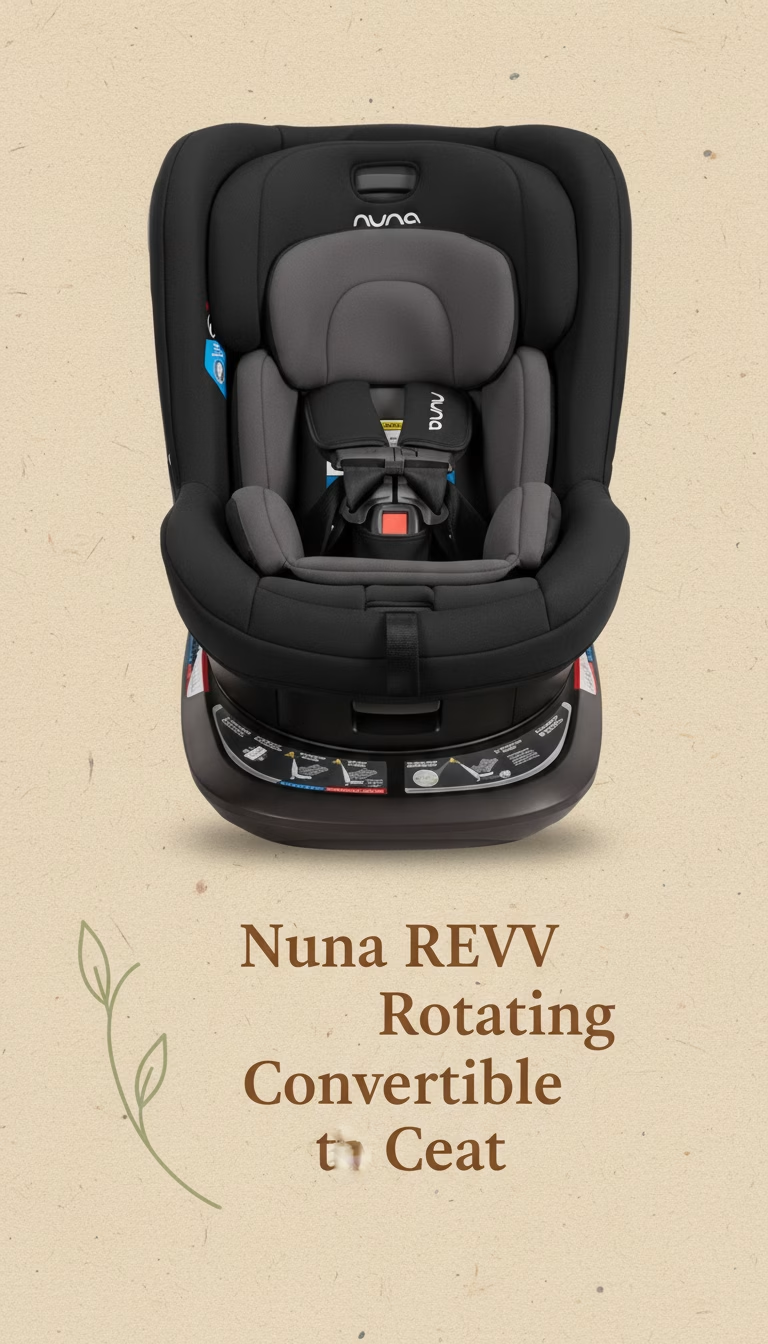
    Nuna REVV Rotating Convertible Car Seat

    Nuna REVV Rotating Convertible Car Seat Review 2026: Is It Worth Buying?

    Let’s be real for a second. If you’re a parent, you know the daily struggle. You’re trying to get a wiggly kid, who suddenly w…

    Nuna REVV — A $600 Rotating Car Seat With a Load Leg

    The Nuna REVV rotates 360 degrees on its base, allowing you to swing the seat toward the car door for easier loading and unloading. It covers rear-facing (5-50 lbs) and forward-facing with harness (25-65 lbs). At $600, it”s the premium end of the convertible car seat market. Two features justify the price: the rotation mechanism and the load leg.

    The Rotation Mechanism

    You load the child while the seat faces the car door, buckle the harness, then rotate the seat to the rear-facing or forward-facing position. The rotation is smooth and one-handed — a single release button unlocks the swivel, you turn the seat, and it locks into the travel position. The practical benefit is eliminating the awkward reach-and-twist motion of loading a child into a fixed car seat, particularly in rear-facing mode where you”re reaching backward over the seat to strap in a squirming toddler.

    For parents with back problems, the rotation is genuinely significant. The load-and-rotate sequence keeps your spine neutral instead of twisting while supporting 20-30 lbs of child weight. For parents in good physical condition, it”s a convenience — nice to have, not essential.

    The rotation adds width and height to the seat. The REVV sits on a base that”s taller than a standard convertible seat, which means the child sits slightly higher in the vehicle. In vehicles with low rooflines (coupes, some sedans), this can reduce headroom for the child. In SUVs and crossovers, the height increase is negligible.

    The Load Leg

    A load leg extends from the base of the car seat to the vehicle floor, creating a third anchor point. In a crash, the load leg absorbs and redirects downward force that would otherwise cause the seat to rotate forward. European car seat regulations have required load legs or similar anti-rotation devices for years; the US market is still catching up.

    Independent crash testing shows measurable reduction in head excursion (how far the child”s head travels forward) with a load leg versus without. The REVV”s load leg is adjustable to fit different vehicle floor heights and retracts when not needed (for transitions between vehicles, for example). Not all vehicles have suitable floor space beneath the car seat position for a load leg — sloped floors, in-floor storage compartments, or HVAC vents can interfere.

    Materials and Build

    Nuna uses flame-retardant-free materials — the fabrics and foams meet flammability standards through material construction rather than chemical treatment. This matters to parents concerned about chemical exposure, as traditional flame retardant chemicals (like TDCPP or TCEP) have raised health concerns in studies.

    The fabric is merino wool blend on premium colorways (Caviar, Hazelwood) and knit fabric on standard colorways. Both are soft, durable, and machine-washable. The harness pads are thick, preventing strap irritation. The steel-reinforced frame adds rigidity and crash protection. Build quality throughout feels premium — buckles click precisely, the headrest adjusts with smooth resistance, and the materials show no degradation over months of use.

    The seat weighs approximately 30 lbs installed on its base — significantly heavier than non-rotating seats. Moving it between vehicles is a two-person job or at minimum an inconvenient solo task. This is a seat you install once and leave in place.

    What $600 Gets You

    A Graco Extend2Fit provides rear-facing up to 50 lbs for $200. A Britax Boulevard provides premium build quality and ClickTight installation for $350. The REVV”s $600 buys the rotation mechanism, the load leg, flame-retardant-free materials, and Nuna”s premium fit and finish. Whether those additions justify a 2-3x price premium depends on how much you value the rotation convenience and the load leg safety benefit.

    For urban parents who frequently load children curbside in tight parking spots, the rotation is practically valuable. For parents driving vehicles with load-leg-compatible floor space who want the added crash protection, the load leg provides measurable safety improvement. For parents who primarily want extended rear-facing capability and reliable installation, the Extend2Fit delivers comparable core functionality at one-third the price.

    Pros

    • Smooth 360-degree spin is a game-changer.
    • Premium fabrics feel incredibly soft and breathable.
    • Solid, safe feel with robust steel frame.
    • Easy LATCH installation, super secure.
    • Excellent for tight parking spots.

    Cons

    • Higher price point is a significant investment.
    • Quite heavy to transfer between cars.
    • Can be bulky in smaller vehicles.
  • WAYB Pico Car Seat

    WAYB Pico Car Seat

    WAYB Pico Car Seat Review 2026: Is It Worth Buying?

    Okay, let’s be real for a second. If you’ve ever traveled with a toddler, especially through an airport, you know the absolute nightmare that is lu…

    WAYB Pico — An 8-Pound Travel Car Seat That Costs $499

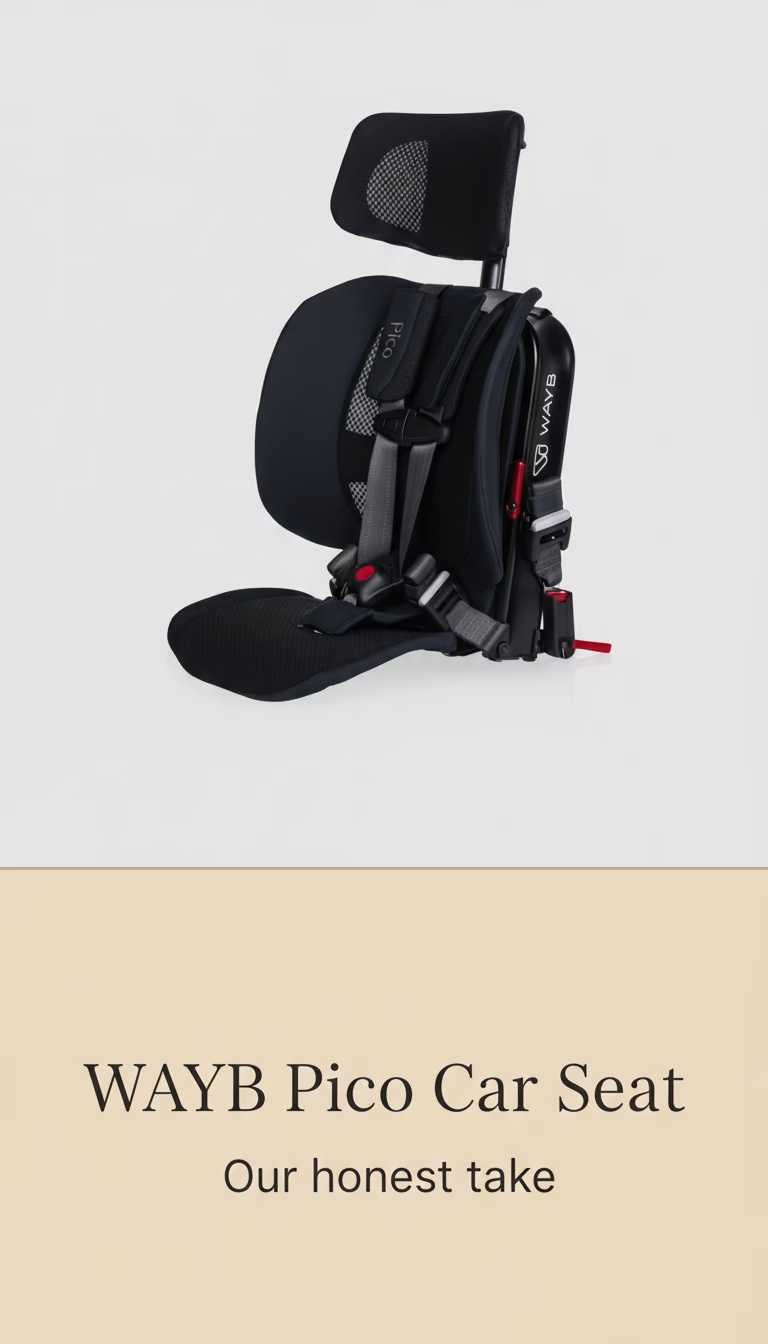
    The WAYB Pico weighs 8 lbs. A standard convertible car seat weighs 18-25 lbs. That weight difference defines everything about the Pico: what it does well, what it sacrifices, and who should buy it. This is a forward-facing-only car seat for children 22-50 lbs (approximately ages 2-5), designed for airline travel, ride-shares, and any situation where carrying a regular car seat is impractical. At $499, it”s the most expensive car seat in this review by a significant margin.

    Construction

    The frame is aerospace-grade aluminum — the same alloy family used in aircraft structures, chosen for its strength-to-weight ratio. The seat fabric is a proprietary knit (WAYB calls it ASTROKNIT) that”s breathable, quick-drying, and tear-resistant. There are no bulky foam padding blocks; instead, the fabric itself provides the seating surface, similar to how high-end camping chairs use tensioned fabric over a frame.

    The Pico folds to roughly the size of a large backpack (26 x 14 x 9 inches folded) and ships with a carrying bag. Folded, all straps and buckles tuck inside the frame — nothing catches or snags during transport. Unfolding takes about 30 seconds once you”ve practiced: release the latch, unfold the frame, lock the joints, done. First-time setup takes a couple of minutes to figure out the sequence.

    Installation

    Seatbelt-only installation (no LATCH). The vehicle seatbelt routes through a specific path on the frame, and a tensioning mechanism locks it down. Installation takes 2-3 minutes in most vehicles — faster than a traditional car seat because the lightweight frame is easier to manipulate while tightening. The seat must be used with the top tether anchored for proper installation, which means it works in vehicles with accessible top tether points (most 2002+ cars have them).

    The Pico has been crash-tested and meets FMVSS 213. WAYB publishes their crash test data showing performance comparable to traditional car seats in front and side impacts. The aluminum frame absorbs and distributes crash forces differently than a plastic shell — through frame deformation rather than shell crumpling — but the end result meets the same federal standard.

    Comfort and Limitations

    The fabric-over-frame design is comfortable for short to medium trips (under 2 hours). For longer drives, the minimal padding becomes noticeable — children accustomed to heavily padded convertible seats may complain. There”s no recline position; the seat sits upright. Sleeping children will slump forward rather than reclining. No cup holders.

    The 50-lb upper weight limit is restrictive. Most children reach 50 lbs between ages 5-7, which means the Pico”s useful life is roughly 3-5 years. A traditional convertible seat with a 65-lb forward-facing limit lasts longer. A booster seat covers higher weights. The Pico is purpose-built for the travel years when a full-size car seat is too bulky and heavy to transport.

    The $499 Question

    You”re paying for engineering, materials, and the weight savings. An aluminum frame costs more to manufacture than injection-molded plastic. The specialized fabric costs more than standard polyester. The folding mechanism with its precision joints adds manufacturing complexity. None of this changes the fact that $499 is five times the cost of a Cosco Finale that meets the same safety standard.

    The value calculation: how often do you fly with a car seat? How frequently do you use ride-shares? If the answer is “multiple times per year,” the Pico replaces the stress, awkwardness, and physical strain of hauling a 20-lb car seat through airports and into taxis. If you fly with kids twice a year and otherwise use a permanent car seat, the cost-per-use is hard to justify.

    Families who travel frequently with young children — especially those who split time between cities, use ride-shares regularly, or take multiple flights per year — will find the Pico transformative. It converts “we can”t bring a car seat” situations into “of course we have a car seat.” For everyone else, it”s an impressive piece of engineering at a price that”s difficult to rationalize against a $70 car seat that weighs 14 lbs more.

    Pros

    • Incredibly lightweight for easy carrying.
    • Folds super compact for storage.
    • FAA-approved, a lifesaver for flights.
    • Quick and simple to install.
    • Stylish, modern design.

    Cons

    • High price point.
    • No recline function.
    • Limited to forward-facing only.
    • Child outgrows it relatively quickly.
  • Graco TrioGrow SnugLock 3-in-1 Car Seat

    Graco TrioGrow SnugLock 3-in-1 Car Seat

    Graco TrioGrow SnugLock 3-in-1 Car Seat Review 2026: Is It Worth Buying?

    Look, if you’re a parent, you know the drill. You buy the infant car seat, then your baby outgrows it in what feels like five …

    Graco TrioGrow SnugLock — The 3-in-1 With the Easiest Installation System

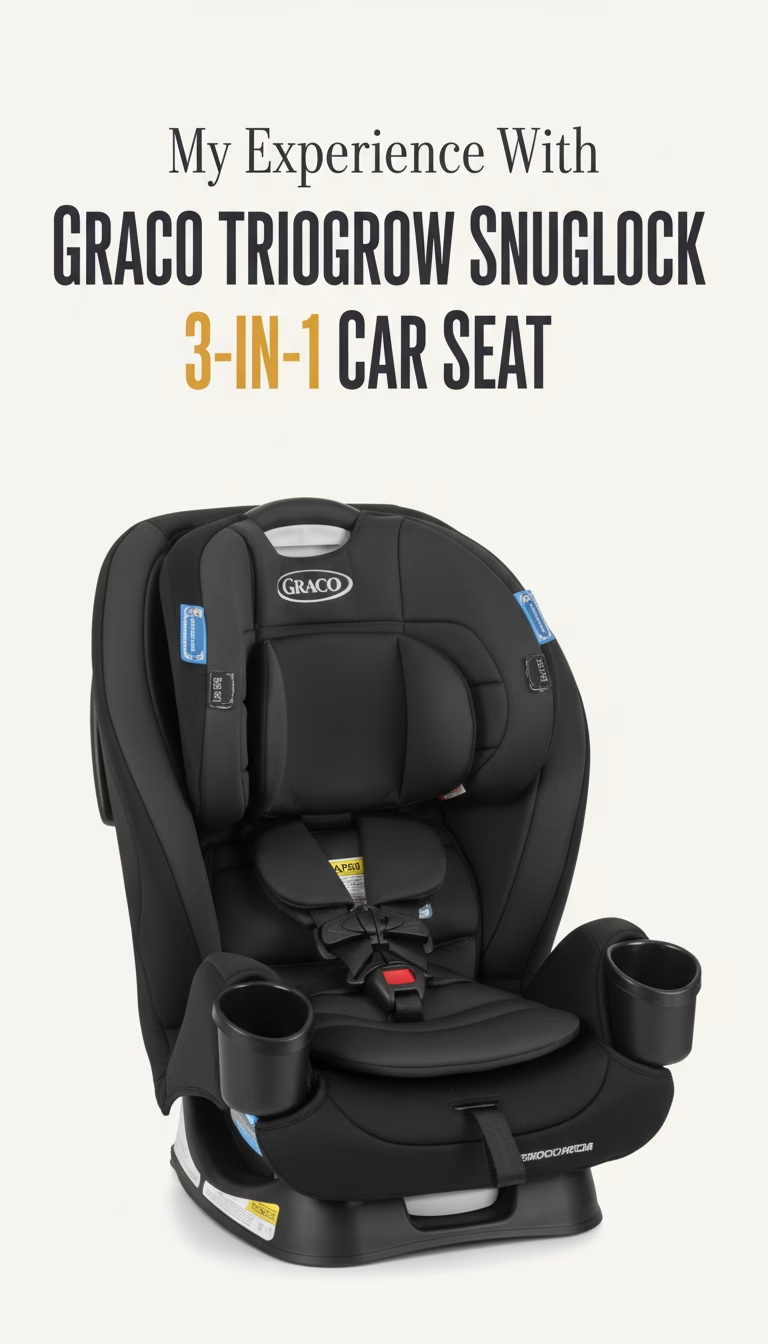
    The Graco TrioGrow SnugLock covers rear-facing (5-40 lbs), forward-facing with harness (22-65 lbs), and highback booster (40-100 lbs). Its distinguishing feature is the SnugLock installation system, which uses the vehicle seatbelt for installation in a way that mimics LATCH simplicity — thread the belt, push the seat back, hear a click, done. At roughly $180-220, it sits in the middle of Graco”s convertible seat lineup.

    SnugLock Installation

    Most convertible car seats offer two installation methods: LATCH (metal connectors to anchored points in the vehicle) or seatbelt routing (threading the belt through specific paths on the seat). LATCH is simpler but has weight limits — many vehicles restrict LATCH use once the child plus seat exceeds 65 lbs. Seatbelt installation works regardless of weight but requires proper routing and tensioning that many parents find confusing.

    SnugLock bridges this gap. You route the vehicle seatbelt through the designated path, then push the seat firmly against the vehicle seat back. The SnugLock mechanism grips the seatbelt automatically, eliminating the need to manually lock the belt or use a locking clip. The result: seatbelt installation that feels as secure and straightforward as LATCH, without the LATCH weight restrictions.

    In practice, SnugLock reduces installation time from the typical 15-20 minutes of first-time seatbelt installation to about 5-10 minutes. Subsequent installations (moving between vehicles) are faster still once you understand the routing. The seat should move less than 1 inch at the belt path when properly installed — same standard as any car seat, but SnugLock makes achieving that tightness more intuitive.

    Three-Stage Performance

    Rear-facing (5-40 lbs): Standard rear-facing capability with multiple recline positions. The 40-lb limit is adequate for most children through age 2-3, though it”s 10 lbs less than the Extend2Fit”s 50-lb limit. No extension panel — tall toddlers will have their legs more compressed than in the Extend2Fit.

    Forward-facing with harness (22-65 lbs): 5-point harness with no-rethread headrest/harness height adjustment. The Simply Safe Adjust harness system moves the headrest and harness together through multiple positions. This is the same system found across Graco”s mid-range and premium seats — it works well and eliminates the rethreading hassle during growth spurts.

    Highback booster (40-100 lbs): Remove the harness, route the vehicle seatbelt through the belt guides. The headrest adjusts to maintain proper shoulder belt positioning. The back provides lateral head protection and sleeping support.

    Build and Comfort

    The seat weighs approximately 18 lbs — slightly lighter than the 4Ever DLX and comparable to other mid-range convertible seats. Padding is moderate, appropriate for daily use. The fabric is machine-washable. Two cup holders are integrated into the base.

    The TrioGrow is 19 inches wide, consistent with most convertible seats. Three-across in a standard sedan isn”t practical. In a three-row SUV or minivan, two TrioGrow seats plus a booster or third seat can work depending on the vehicle”s bench width.

    Choosing the TrioGrow

    The TrioGrow makes the most sense for parents who: frequently move the seat between vehicles (the SnugLock system makes reinstallation faster and more reliable than standard seatbelt routing), drive vehicles where LATCH access is difficult or where LATCH weight limits are a concern, or want a solid mid-range 3-in-1 without paying for the 4Ever DLX”s premium features.

    If extended rear-facing is the priority, the Extend2Fit”s 50-lb limit and extension panel are more valuable than the SnugLock convenience. If maximum lifespan is the priority, the 4Ever DLX adds a backless booster stage. The TrioGrow”s advantage is installation simplicity — and for families who regularly move seats between vehicles, that advantage is significant enough to drive the purchase decision.

    Pros

    • SnugLock installation is incredibly easy and secure.
    • Truly grows from infant to booster, long lasting.
    • Adjusting the harness height is quick and painless.
    • Padding is soft and seems comfortable for kids.
    • Removable, machine-washable fabric simplifies cleaning.

    Cons

    • Can be quite bulky in smaller backseats.
    • Fairly heavy if you need to move it often.
    • Cup holders feel a little flimsy, wish they were sturdier.
  • Graco TurboBooster 2.0 Highback Booster Seat

    Graco TurboBooster 2.0 Highback Booster Seat

    Graco TurboBooster 2.0 Highback Booster Seat Review 2026: Is It Worth Buying?

    Okay, parents, let’s be real for a second. That moment when your kid outgrows their last car seat – the one you probabl…

    Graco TurboBooster 2.0 — A Straightforward Booster at a Low Price

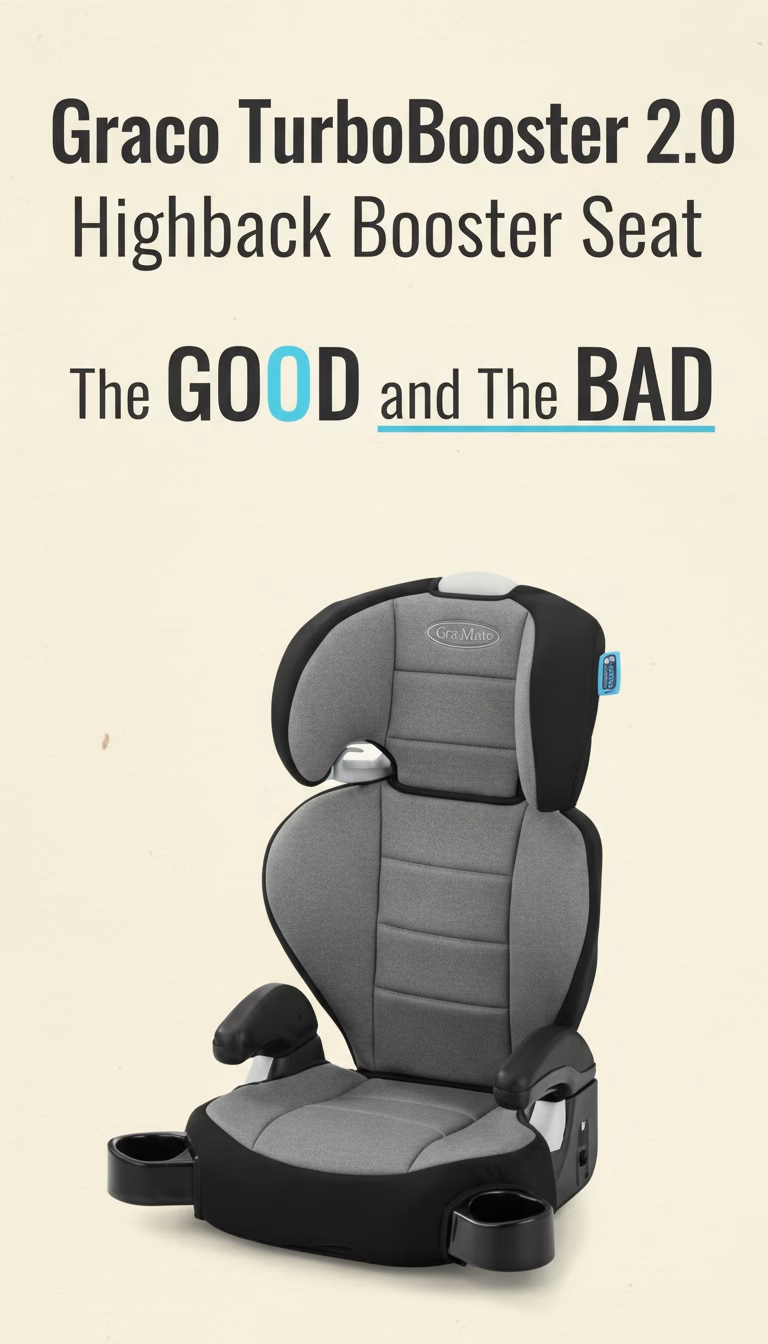
    The TurboBooster 2.0 is a booster seat with no harness — it uses the vehicle”s seatbelt as the restraint system and positions it correctly across the child”s body. Two modes: highback (40-100 lbs) and backless (40-120 lbs). At approximately $50-70 depending on retailer, it”s one of the least expensive booster seats from a major brand. This is the seat you buy when your child has outgrown a harnessed car seat and needs proper seatbelt positioning until they”re large enough to ride with just the vehicle belt.

    When a Child is Ready for a Booster

    A child should transition to a booster seat only after outgrowing the forward-facing harness limits on their previous seat (typically 65 lbs or 49 inches, whichever comes first). Most children reach booster-readiness between ages 4-7. The critical factor isn”t age — it”s whether the child can sit with their back against the seat back, knees bent at the seat edge, and feet flat on the floor, for the entire ride without slouching or leaning. Children who can”t maintain this posture need to stay in a harnessed seat longer.

    Highback vs. Backless Mode

    The highback mode provides three advantages over backless: side head protection in a lateral impact, shoulder belt routing guides that keep the seatbelt on the collarbone (not the neck), and a headrest that serves as a sleeping pillow on long drives. The headrest adjusts through multiple positions to accommodate growth.

    The backless mode — the bottom cushion only, after detaching the back — is appropriate for children over 40 lbs who fit the vehicle seatbelt correctly without the back portion”s guidance. Some vehicles have high seatbelt anchors that route naturally across a child”s shoulder without the booster back. In those vehicles, backless mode works fine. In vehicles with lower seatbelt anchors, the highback is important for preventing the shoulder belt from crossing the child”s neck.

    Build and Comfort

    The seat weighs under 8 lbs. It”s one of the lightest booster seats available, making it easy for the child to carry themselves (relevant for carpools and after-school pickups). The padding is thin — functional but not plush. Foam cushion under a polyester cover, machine-washable. Two retractable cup holders on each side.

    The armrests sit at a reasonable height for most children in the 40-80 lb range. Older/larger children near the 100+ lb range will find the seat increasingly tight width-wise. At that point, the backless mode or a transition to seatbelt-only riding is usually appropriate.

    There”s no LATCH installation — the seat sits on the vehicle seat and the child”s seatbelt holds everything in place. This means the seat can shift slightly when unoccupied. Some parents use the LATCH anchors with a separate booster strap (sold by some manufacturers, not included with TurboBooster) to keep the seat positioned when the child isn”t in it.

    What the TurboBooster Doesn”t Do

    No harness, no LATCH attachment, no recline. This is a positioning device for the vehicle seatbelt, nothing more. It doesn”t restrain the child independently — the vehicle seatbelt does all the work. The booster just ensures the seatbelt sits across the child”s body in the right places: across the sternum and collarbone (not the neck), and across the hip bones (not the abdomen).

    For children who can”t sit still, tend to unbuckle themselves, or lean far forward during rides, a harnessed booster like the Graco Tranzitions is a better choice. The TurboBooster relies on the child maintaining proper seated posture for the seatbelt to function as designed.

    At $50-70, the TurboBooster 2.0 is a sensible, affordable solution for the booster years. It does exactly one thing — positions the seatbelt correctly — and does it well enough for millions of families. The light weight makes it genuinely portable. The 10-year expiration provides ample time for one or two children to use it through the booster stage. Not glamorous, but functional and priced right.

    Pros

    • Easily converts for long-term use.
    • Lightweight, so it's simple to swap cars.
    • Kids generally find it pretty comfy.
    • Open belt guides make buckling super easy.
    • Those two cup holders are a lifesaver!

    Cons

    • Padding could be thicker for longer drives.
    • Fabric can be a pain to deep clean.
    • No LATCH, relies solely on seat belt.
  • Graco Tranzitions 3 in 1 Harness Booster Car Seat

    Graco Tranzitions 3 in 1 Harness Booster Car Seat

    Graco Tranzitions 3 in 1 Harness Booster Car Seat Review 2026: Is It Worth Buying?

    Okay, let’s talk car seats. If you’re a parent, you know the drill. You buy an infant seat, then a convertible seat,…

    Graco Tranzitions 3-in-1 — A Harness Booster for the Forward-Facing Years

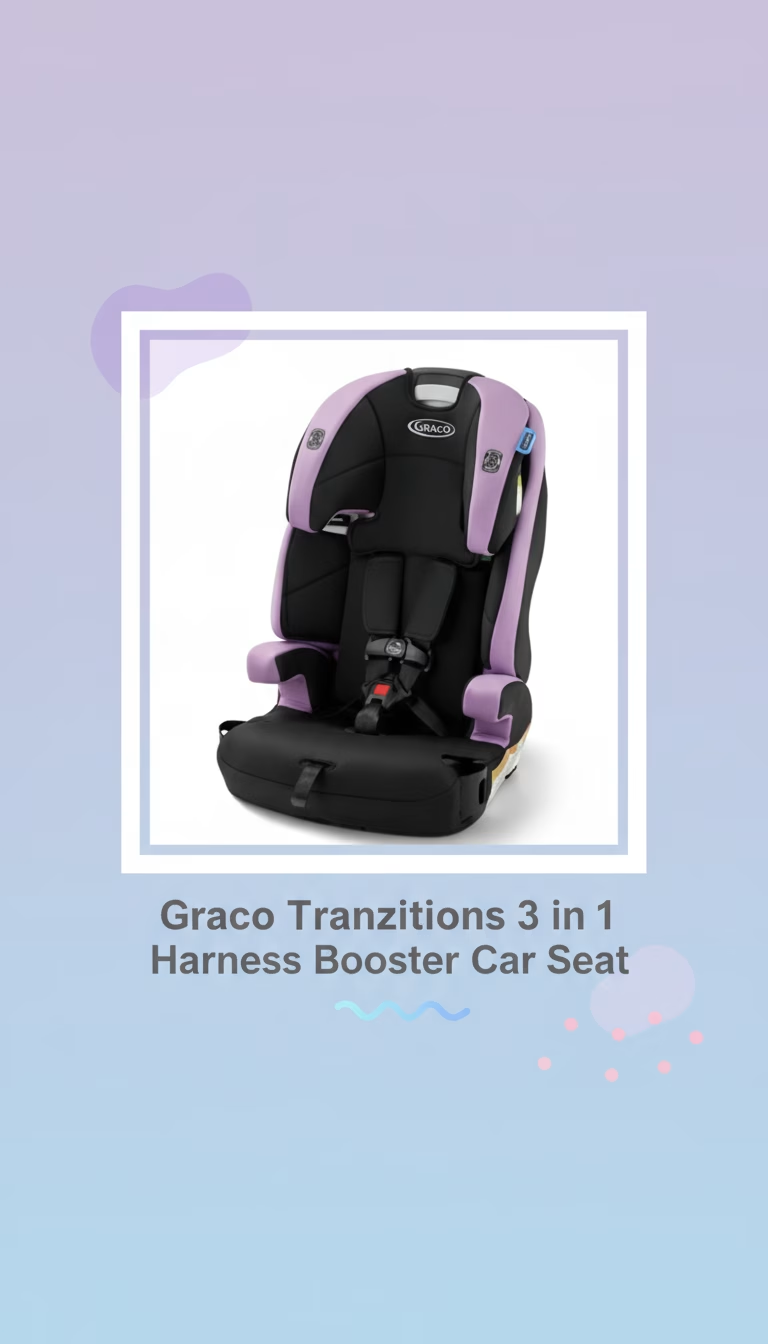
    The Graco Tranzitions is not a convertible car seat — it has no rear-facing mode. It starts at the forward-facing harness stage (22-65 lbs) and transitions through highback booster (30-100 lbs) to backless booster (40-120 lbs). This makes it a second seat, not a first seat. You need an infant carrier or rear-facing convertible seat first, then transition to the Tranzitions when your child is old enough and heavy enough for forward-facing.

    Who Needs a Harness Booster

    The Tranzitions fills a specific gap: children who”ve outgrown their infant or convertible seat”s rear-facing mode but aren”t yet ready for booster-only mode (where the vehicle seatbelt is the primary restraint). The 5-point harness provides more secure restraint than a seatbelt for children under 5-6 years old who may not sit still enough for proper seatbelt positioning.

    This is also the seat you buy for a second vehicle, for grandparents” cars, or as a replacement when a convertible seat reaches its expiration date. At roughly $100-130 (depending on retailer and colorway), it costs significantly less than a full convertible seat because it covers fewer stages.

    The Three Stages

    Forward-facing harness (22-65 lbs): 5-point harness with no-rethread height adjustment. The harness accommodates children up to approximately 49 inches tall. The headrest adjusts through 8 positions, moving the harness shoulder height simultaneously. Harness tightening uses a single front-pull strap with a release lever at the base.

    Highback booster (30-100 lbs): Remove the harness, route the vehicle seatbelt through the designated guides. The headrest continues to adjust to maintain proper shoulder belt positioning as the child grows. The back provides lateral head and torso protection that a backless booster doesn”t offer.

    Backless booster (40-120 lbs): Detach the back, use the base cushion with seatbelt guides. This stage provides a seating height boost for proper belt positioning across the child”s shoulder and lap. The 120-lb upper limit covers most children through age 10-12 or until they reach 4”9″ tall.

    Installation and Dimensions

    LATCH connectors for the harness stage. The booster stages use the vehicle seatbelt only — no LATCH needed. The seat weighs approximately 12 lbs, making it one of the lighter multi-mode car seats and practical to move between vehicles. Width is around 17.5 inches, narrower than most convertible seats, which makes three-across installations more feasible in wider vehicles.

    The relatively light weight and simple installation make the Tranzitions a popular choice for carpools, grandparent vehicles, and families who need to swap seats between cars regularly. The harness stage requires LATCH or seatbelt anchoring; the booster stages sit on the vehicle seat with the child”s seatbelt holding everything in place.

    Comfort

    Padding is adequate but not premium. The fabric is durable polyester, machine-washable. Two cup holders built into the seat frame. The recline options are limited compared to convertible seats — the Tranzitions sits relatively upright in all modes, which is standard for harness boosters. Children who tend to fall asleep in the car may slump more than they would in a convertible seat with deeper recline options.

    The harness padding covers the shoulder straps but doesn”t extend to the lap portion. For children who complain about harness tightness or strap irritation, aftermarket strap covers can help (make sure they”re CPSC-compliant and don”t interfere with harness function).

    Practical Considerations

    The Tranzitions has a 10-year expiration, which comfortably covers its use range. A child starting in the harness stage at age 2-3 will likely finish with the backless booster by age 10-12, well within the expiration window. The seat passes down well to younger siblings or can be used concurrently in a second vehicle.

    At $100-130, the Tranzitions is one of the most cost-effective ways to cover the forward-facing-through-booster years. Families who already own a rear-facing infant or convertible seat don”t need another rear-facing mode — they need a good harness booster that lasts, and the Tranzitions delivers exactly that without paying for capabilities you won”t use.

    Pros

    • Seriously lasts forever, grows with your kid.
    • Super easy to install, even for new parents.
    • Surprisingly lightweight, great for car-pooling.
    • Kids find it comfortable for long rides.
    • Covers remove easily for washing.

    Cons

    • Can be a bit wide for smaller backseats.
    • Cup holders are fixed, don't swivel.
    • Harness tightening can feel stiff sometimes.
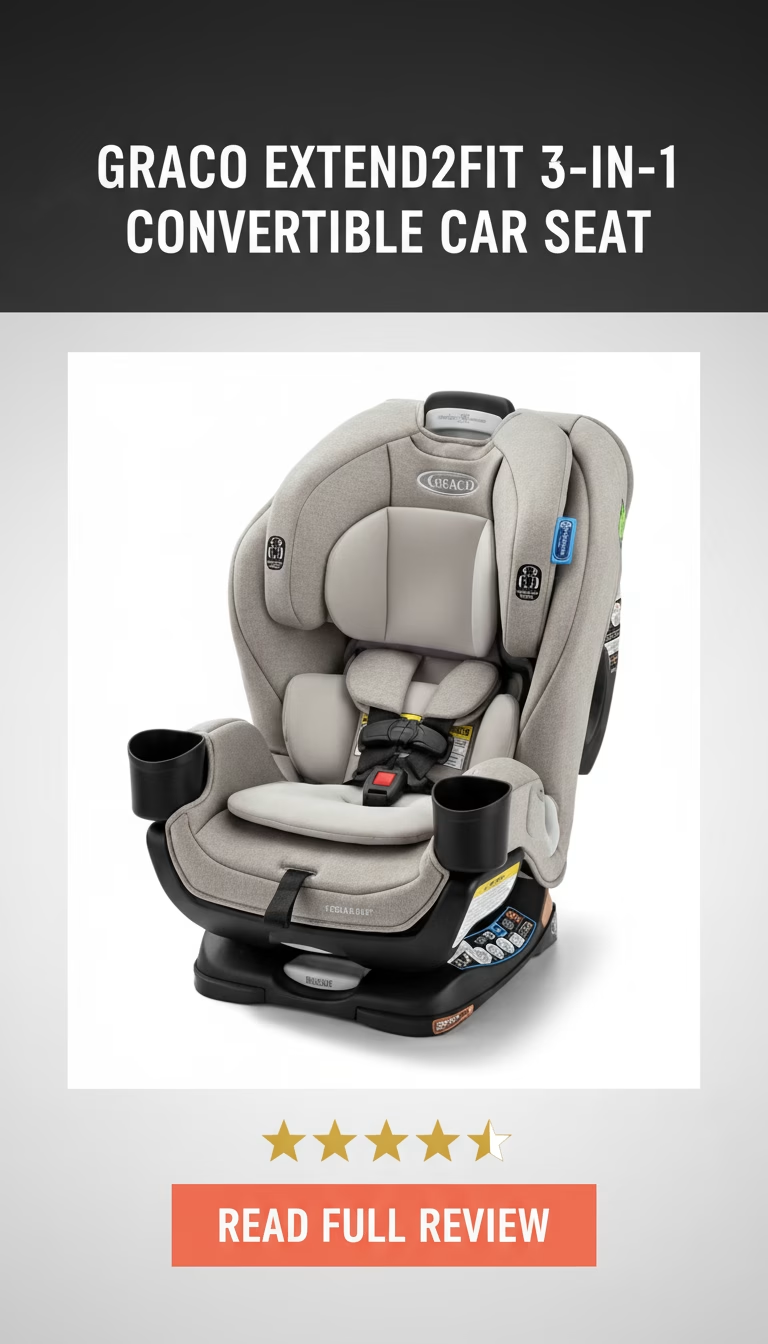
  • Graco Extend2Fit 3-in-1 Convertible Car Seat

    Graco Extend2Fit 3-in-1 Convertible Car Seat

    Graco Extend2Fit 3-in-1 Convertible Car Seat Review 2026: Is It Worth Buying?

    Okay, let’s be real for a second. If you’re a parent, or about to become one, you’ve probably already started feeling tha…

    Graco Extend2Fit 3-in-1 — Extended Rear-Facing That Actually Fits in Normal Cars

    The Extend2Fit”s defining feature is a 5-inch legroom extension panel that allows rear-facing use up to 50 lbs — 10 lbs more than most convertible seats. This matters because pediatric safety organizations recommend rear-facing as long as possible, and the typical 40-lb rear-facing limit forces many children forward-facing earlier than necessary. At ~$280, the Extend2Fit 3-in-1 covers rear-facing, forward-facing with harness, and highback booster modes.

    The Extension Panel

    The fold-out extension panel adds roughly 5 inches of legroom for rear-facing children. This addresses the most common complaint parents have about extended rear-facing: “my child”s legs are crammed against the back seat.” The panel creates enough space that children up to about 4 years old can sit rear-facing with legs in a natural position rather than folded up or pressed against the vehicle seat back.

    Practically, the panel also helps the seat fit in smaller vehicles. Without it, a rear-facing convertible seat pushed far enough back for a toddler”s legs often leaves zero front-passenger legroom. With the panel deployed, the seat can sit slightly more upright and forward while the child still has adequate leg space. In a Honda Accord or Toyota Camry, the difference between functional and non-functional front passenger space.

    The 50-lb rear-facing limit means children who are in the 75th-90th percentile for weight can remain rear-facing until age 4-5. Average-weight children may not reach 50 lbs until age 5-6. This extended rear-facing window is the primary safety advantage of the Extend2Fit over seats with standard 40-lb limits.

    Three-Stage Coverage

    Rear-facing (4-50 lbs): The widest rear-facing range in Graco”s lineup. Multiple recline positions accommodate newborns (more reclined) through preschoolers (more upright). The infant insert supports babies from 4 lbs.

    Forward-facing with harness (22-65 lbs): Standard 5-point harness with no-rethread adjustment. Harness height accommodates children up to 49 inches. The transition from rear-facing to forward-facing requires rotating the seat and adjusting the recline — a 10-15 minute process if you haven”t done it before.

    Highback booster (40-100 lbs): Remove the harness, use the vehicle seatbelt. The 10-position headrest guides the shoulder belt across the proper position on the child”s collarbone and shoulder. This stage doesn”t include a backless booster option — the 4Ever DLX adds that fourth stage if you want it.

    Installation

    LATCH installation with a push-button connector system. The tightening mechanism works with a single pull strap — pull until the seat moves less than 1 inch at the belt path. For vehicles without accessible LATCH anchors or for center-seat installation, seatbelt installation follows the manual”s lock-off routing diagrams.

    The seat weighs approximately 21 lbs. It”s bulky enough that regular transfers between vehicles aren”t practical, but the weight is standard for this category. The width (approximately 19 inches) makes three-across configurations in most sedans impossible.

    Cover and Maintenance

    The 3-in-1 version includes Graco”s machine-washable cover that removes without unthreading the harness. This is a meaningful upgrade — standard convertible seat covers are notoriously difficult to remove and reattach, which means they rarely get cleaned. The fabric is a neutral gray or black depending on the colorway, with enough padding to keep children comfortable on longer drives.

    Two integrated cup holders. The harness storage clips keep the straps open during loading. These are standard Graco conveniences that small but consistently useful.

    Choosing Between Extend2Fit Models

    Graco sells several Extend2Fit variations: the basic 2-in-1 (rear-facing + forward-facing only, ~$200), this 3-in-1 (adds highback booster, ~$280), and the Extend2Fit DLX with platinum features. The 3-in-1 is the sweet spot — the booster stage extends the seat”s useful life by 3-4 years compared to the 2-in-1, and the price premium pays for itself compared to buying a separate booster later.

    Compared to the 4Ever DLX ($330), the Extend2Fit 3-in-1 trades the backless booster stage and the fourth stage for the superior 50-lb rear-facing limit. For families who prioritize extended rear-facing, the Extend2Fit is the better choice. For families who want the longest possible single-seat lifespan including the backless booster stage, the 4Ever DLX covers more ground.

    Pros

    • Extended rear-facing keeps kids safer longer
    • Very easy to adjust harness and headrest
    • Comfortable for growing toddlers
    • Simple LATCH install makes life easier
    • Good value for its features

    Cons

    • Can be a bit wide in smaller cars
    • Heavy to transfer between vehicles
    • Fabric can get warm in hot weather
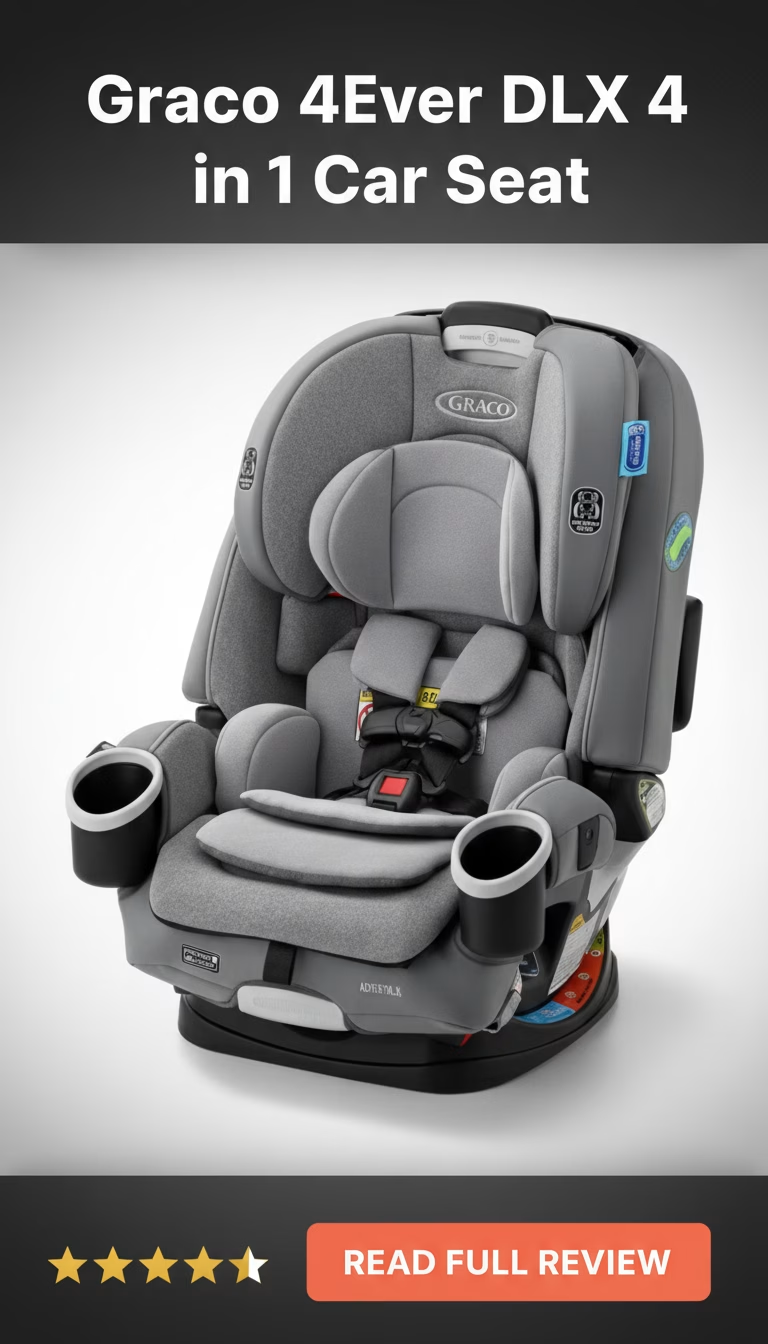
  • Graco 4Ever DLX 4 in 1 Car Seat

    Graco 4Ever DLX 4 in 1 Car Seat

    Graco 4Ever DLX 4 in 1 Car Seat Review 2026: Is It Worth Buying?

    Alright, let’s talk car seats. If you’re a parent, or about to become one, you know the dread. The sheer thought of buying a car seat …

    Graco 4Ever DLX — One Car Seat from Birth to Booster, and What That Actually Means

    The Graco 4Ever DLX covers four stages: rear-facing infant seat (4-40 lbs), forward-facing harness seat (22-65 lbs), highback booster (40-100 lbs), and backless booster (40-120 lbs). At roughly $330, the pitch is that you buy one seat and use it for approximately 10 years instead of purchasing three separate seats. The math works if the seat survives that long and your child progresses through all four stages in the same vehicle.

    Stage-by-Stage Breakdown

    Rear-facing (4-40 lbs): The seat accommodates newborns with the included infant insert, though most parents of newborns prefer a detachable infant carrier for the convenience of moving a sleeping baby without unbuckling. The 4Ever DLX doesn”t detach — it”s permanently installed. Rear-facing extends to 40 lbs, which covers most children through age 3-4. The recline adjustment offers multiple positions for rear-facing, important for both infant head support and fitting in tighter back seats.

    Forward-facing with harness (22-65 lbs): This is where most families will spend the longest stretch — roughly ages 2-5 depending on the child”s size. The 5-point harness adjusts without rethreading (a genuine time-saver during growth spurts), and the harness height accommodates children up to 49 inches tall. The InRight LATCH system makes installation straightforward — push the connectors into the vehicle”s LATCH anchors until they click, then tighten the strap.

    Highback booster (40-100 lbs): Remove the harness, switch to the vehicle”s seatbelt. The headrest adjusts through 10 positions to keep the seatbelt routed correctly across the shoulder as the child grows. This stage typically covers ages 4-10.

    Backless booster (40-120 lbs): The back portion detaches entirely, leaving a booster cushion that raises the child high enough for proper seatbelt positioning. This final stage bridges the gap until the child can ride with just the vehicle belt (typically around 4”9″ tall, ages 8-12).

    Installation Reality

    The seat weighs approximately 22 lbs empty — heavy enough that moving it between vehicles regularly is impractical. The InRight LATCH system genuinely simplifies installation compared to threading seatbelts through designated paths. The manual is detailed but long (100+ pages). The most common installation mistake: not pulling the LATCH strap tight enough. The seat should move less than 1 inch side-to-side at the belt path when properly installed.

    In smaller vehicles (Honda Civic, Toyota Corolla class), the rear-facing configuration consumes significant front-passenger legroom. Someone over 5”10″ may struggle to sit comfortably in front of a rear-facing 4Ever DLX. In mid-size SUVs and three-row vehicles, space is adequate. Three-across configurations in sedans with the 4Ever DLX are nearly impossible — the seat is 19.5 inches wide at the widest point.

    Comfort and Practical Features

    The DLX designation adds a few upgrades over the base 4Ever: a 6-position recline (vs. 4), the rapid-remove machine-washable cover, and slightly upgraded padding. The rapid-remove cover is the standout feature — it pulls off without removing the harness or uninstalling the seat. This matters more than it sounds: standard car seat covers require partial disassembly to remove, which means most parents never wash them despite the accumulation of crumbs, milk, and general child mess.

    The harness holders keep the straps out of the way during loading — small detail, significant convenience improvement. Two integrated cup holders accommodate sippy cups or snack containers.

    What to Know Before Buying

    Car seats expire. The 4Ever DLX has a 10-year expiration from manufacture date, which theoretically covers the full four-stage lifespan. However, if you plan to use it for a second child, the timeline tightens. A seat manufactured in 2026 expires in 2036 — enough for one child”s full progression, but a second child starting in 2030 would only have 6 years of remaining life.

    The “4-in-1” promise assumes your child fits neatly into all four stage ranges. Some children outgrow the height limits before the weight limits (or vice versa). Tall, thin children may age out of the forward-facing harness by height before reaching the maximum weight, which is normal and just means transitioning to the booster stage earlier.

    At $330, the 4Ever DLX costs less than buying an infant seat ($150-200), a convertible seat ($150-250), and a booster ($50-100) separately. The value proposition is real if your family situation supports using one seat through the full lifecycle. For families with multiple children close in age who”ll need the seat back for a younger sibling, buying dedicated stage-specific seats often makes more practical sense.

    Pros

    • Truly lasts from infant to big kid.
    • Effortless one-hand harness adjustment.
    • Kids find it super comfortable.
    • Easy to clean removable seat pads.
    • Very sturdy and feels safe.

    Cons

    • Can be bulky in smaller cars.
    • Pretty heavy if you move it often.
    • Initial installation can be a bit tricky.
    • Fabric might feel warm in summer.