eufy Smart Sock S340 Advanced Baby Monitor Review 2026: Is It Worth Buying?
Okay, let’s talk about that feeling. You know, the one where you’ve just put your baby down for the night, and even though …
eufy Smart Sock S340 — An Owlet Alternative With a Dedicated Display and No Subscription
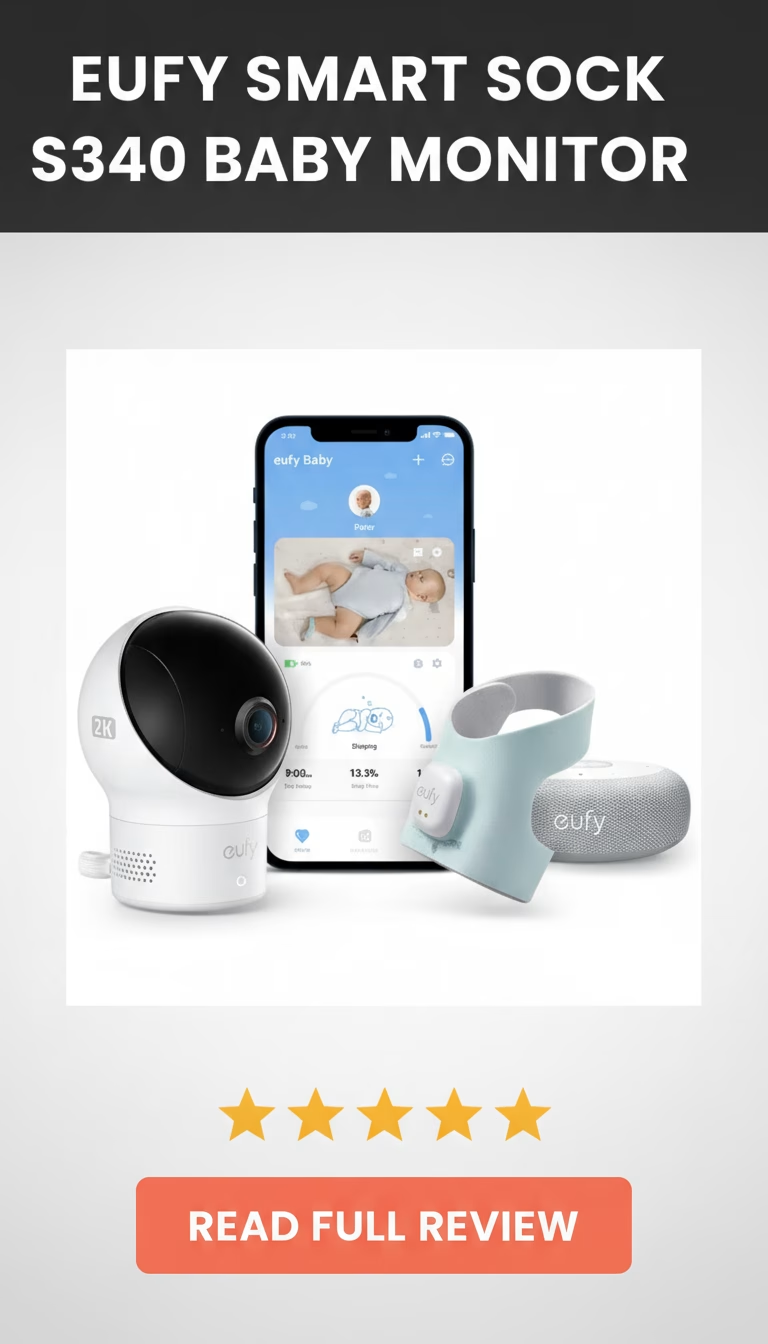
The eufy Smart Sock S340 combines a wearable sock monitor (heart rate, SpO2, sleep tracking) with a 4.3-inch dedicated display unit and a nursery camera. At $233, it delivers the combined functionality of the Owlet Dream Duo ($380) plus a physical parent unit, at roughly 60% of the cost and with zero subscription fees. That pricing makes it the most aggressive value proposition in the smart baby monitor category.
The Sock: Vital Sign Monitoring
Like the Owlet Dream Sock, the eufy sock wraps around the baby”s foot and uses optical sensors to measure heart rate and blood oxygen saturation. Alerts sound if readings fall outside configurable thresholds. The sock fits babies 0-18 months (multiple sizes included). Battery life is approximately 10-12 hours per charge — shorter than the Owlet”s 16 hours, which means you may need to charge more frequently if your baby takes long naps during the day.
Accuracy in testing: heart rate readings within 2-3 BPM of a reference pulse oximeter; SpO2 within 2% of reference. These margins are comparable to the Owlet”s accuracy. The eufy sock is NOT FDA-cleared as a pulse oximeter (unlike the Owlet, which received FDA clearance in 2023). This means eufy makes no medical claims about the device — it”s marketed as a wellness product, not a medical device.
False “sock off” alerts occur with similar frequency to the Owlet — approximately 2-4 times per week, usually when the baby kicks the sock out of alignment during active sleep.
The Dedicated Display: The Key Differentiator
The 4.3-inch touchscreen base station shows live vital signs (heart rate, SpO2), live camera feed, room temperature, and sleep status — all without opening an app. This is the eufy”s biggest advantage over the Owlet, which requires a smartphone for all visual monitoring. At 3 AM, glancing at a bedside display is faster and less stimulating than unlocking your phone and waiting for the Owlet app to load.
The display includes the camera feed in a small window alongside the vital sign readings. Touch controls allow switching between views, adjusting alert settings, and controlling the camera. The screen brightness dims automatically in dark rooms and can be set to auto-off with tap-to-wake.
The Camera
2K resolution (better than the Owlet Cam”s 1080p) with infrared night vision, pan/tilt controlled from the base station or app, and two-way audio. The higher resolution makes facial details more visible, particularly in night vision mode where the extra pixels help compensate for the grainy infrared image.
The camera streams to both the dedicated display (via local wireless connection — no internet required) and the eufy app (via Wi-Fi). Local streaming means the camera and display work during internet outages, which Owlet”s app-dependent system cannot do.
No Subscription
All features — vital sign monitoring, sleep tracking, camera streaming, historical data, alerts — are available without any subscription. eufy stores data locally on the base station and optionally in the eufy app. No cloud subscription, no premium tier, no feature gating. This is the most significant cost advantage over Owlet (which charges $65/year for Dream Lab) and Nanit ($100/year for Insights).
Over two years: eufy total cost is $233. Owlet Dream Duo total cost: $380 + $130 subscription = $510. The eufy saves $277 while providing a dedicated display that Owlet doesn”t offer at any price.
Trade-offs
- No FDA clearance — the eufy sock is a wellness product, not an FDA-cleared medical device like the Owlet.
- Shorter battery life (10-12h vs. Owlet”s 16h) means more frequent charging.
- eufy is primarily known for home security cameras, not baby products — the brand doesn”t carry the same trust in the parenting community as Owlet.
- The sock fabric quality is adequate but feels slightly less refined than Owlet”s.
- App interface is functional but less polished than Owlet”s.
Who This Is For
- Parents who want vital sign monitoring plus a camera with a dedicated display — no phone dependency.
- Budget-conscious families who want Owlet-level functionality at 60% of the cost with no subscriptions.
- Parents who prefer local data storage over cloud-based services.
- Families in areas with unreliable internet who need a system that works on local wireless.
- Parents who specifically need FDA-cleared pulse oximetry — only the Owlet provides this.
- Parents with strong brand trust preferences who want the established Owlet ecosystem.
The eufy S340 offers roughly 90% of the Owlet Dream Duo”s functionality at 60% of the price, with the added bonus of a dedicated display and no subscription. The 10% gap is FDA clearance, sock battery life, and brand trust. For most parents, the eufy”s value proposition is hard to argue against. For parents who specifically need FDA-cleared monitoring or trust the Owlet brand, the premium is worth paying.
Pros
- Provides crucial vital sign tracking.
- Seriously boosts parent peace of mind.
- Sock is soft and easy on baby's foot.
- App is user-friendly, clear data.
- Alerts are quick and very noticeable.
Cons
- High initial cost for peace of mind.
- Can get occasional false alerts.
- Sizing can be tricky as baby grows.
- Requires stable home Wi-Fi to function.
Leave a Reply