Category: Audio & Home Theater

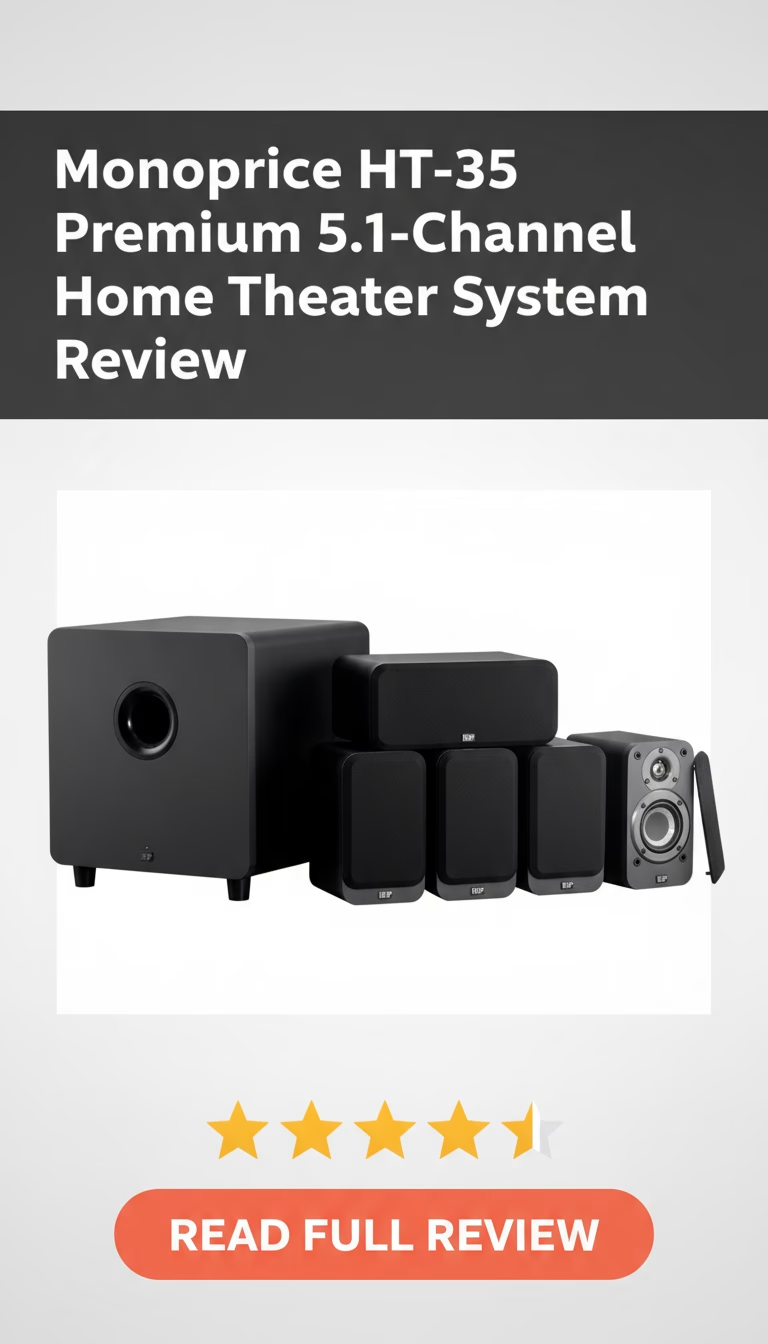
  • Monoprice HT-35 Premium 5.1-Channel Home Theater System

    Monoprice HT-35 Premium 5.1-Channel Home Theater System

    Monoprice HT-35 Premium 5.1-Channel Home Theater System Review 2026: Is It Worth Buying?

    So, you’ve finally gotten tired of your TV’s built-in speakers, haven’t you? That tinny, hollow sound, dialo…

    Monoprice HT-35 — Budget 5.1 Speakers That Overperform Their Price

    The Monoprice HT-35 Premium 5.1 system includes five speakers (two front towers, one center, two surrounds) and a powered 8-inch subwoofer for approximately $350. It”s the cheapest complete 5.1 speaker package from a brand that consistently produces budget audio gear punching above its weight. You still need an AV receiver ($250+), but the total system cost of $600 delivers real home theater surround at a price most soundbar systems charge for virtual processing.

    The Speakers

    Front towers: dual 5.25-inch woofers and a 1-inch silk dome tweeter in a floor-standing cabinet. These produce enough output to fill a medium living room without strain. The sound signature is warm and slightly bass-forward — pleasant for movies, adequate for music, and never harsh or fatiguing. For $350 towers, the frequency response extends surprisingly low (approximately 50Hz), meaning less reliance on the subwoofer for mid-bass content.

    Center channel: dual 3.5-inch drivers and a 1-inch tweeter in a dedicated horizontal cabinet. Dialogue clarity is good — voices are centered and intelligible during action scenes. The center”s output matches the towers well enough that the tonal transition across the front stage is smooth.

    Surround speakers: compact bookshelf design with a 3.5-inch woofer and 1-inch tweeter each. Wall-mountable with included brackets. Adequate for ambient surround effects and panning, though they”re not full-range enough for music listening in surround mode.

    The Subwoofer

    An 8-inch powered subwoofer with a built-in amplifier. Bass extends to approximately 40Hz with moderate output. Adequate for most movie effects and music bass at moderate listening levels. In larger rooms or at reference volume, the sub runs out of headroom and distorts — a 10 or 12-inch upgrade ($150-300) is the most impactful system upgrade path.

    Build Quality

    MDF cabinets with vinyl wrap — standard construction for budget speakers. The cabinets are reasonably well-braced and don”t resonate noticeably at moderate volumes. The vinyl wrap finish is acceptable but won”t fool anyone into thinking these are premium furniture-grade speakers. The binding posts accept banana plugs and bare wire.

    Total System Context

    HT-35 system ($350) + Denon AVR-S570BT ($250) = $600 total for a complete 5.1 surround system with Audyssey room correction. This $600 system produces better surround separation, better dynamics, and better overall sound quality than any soundbar system under $1,000. The trade-off is setup complexity: five speakers to position, speaker wire to run, and a receiver to configure.

    At $350

    • Complete 5.1 speaker package including floor-standing towers and powered sub.
    • Warm, pleasant sound signature that”s easy to listen to for extended sessions.
    • High sensitivity — easy to drive with budget receivers.
    • Front towers produce enough bass to supplement the modest subwoofer.
    • Subwoofer output is limited — large rooms or bass-heavy content will want an upgrade.
    • Build quality is budget-grade — functional but not premium.
    • Surround speakers are small and limited in frequency range.
    • Requires a separate AV receiver ($250+).

    The Monoprice HT-35 is the best value entry point to discrete 5.1 home theater audio. Paired with a $250 Denon receiver, the $600 total system outperforms soundbar packages at twice the price. Buyers willing to deal with speaker placement and cable routing get fundamentally better surround sound than any single-box solution can provide.

    Pros

    • Fantastic sound quality for the price.
    • Speakers are surprisingly compact and sleek.
    • Subwoofer adds impactful, rumbling bass.
    • Easy to set up, even for beginners.
    • Major upgrade from TV's built-in speakers.

    Cons

    • Included speaker wires are a bit short.
    • Not powerful enough for very large rooms.
    • Build quality feels a little basic sometimes.
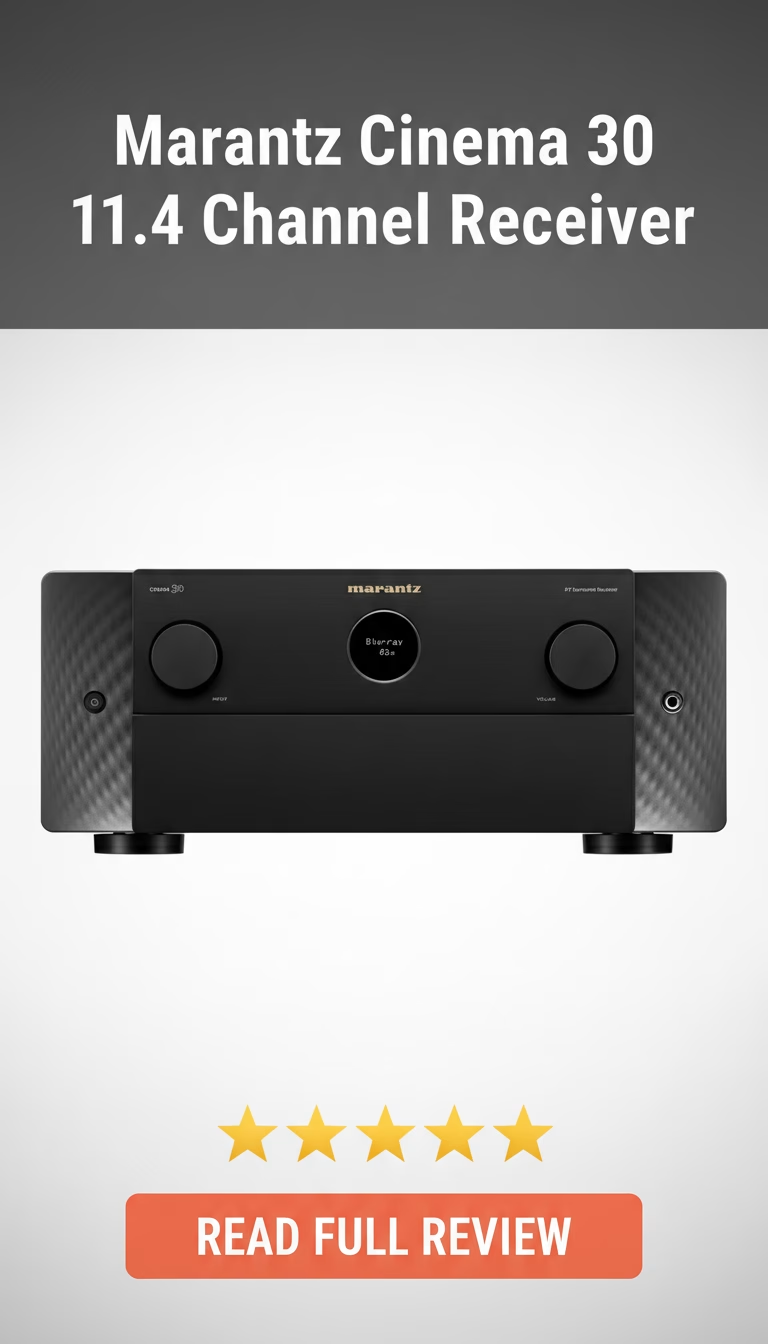
  • Marantz Cinema 30 11.4 Channel Receiver

    Marantz Cinema 30 11.4 Channel Receiver

    Marantz Cinema 30 11.4 Channel Receiver Review 2026: Is It Worth Buying?

    You know that feeling, right? You’re sitting there, watching a movie, and something just feels… off. The explosions aren’t q…

    Marantz Cinema 30 — A Flagship 11.4 Receiver for Serious Home Theaters

    The Marantz Cinema 30 is a $3,500 11.4-channel AV receiver with Dirac Live room correction, Dolby Atmos, DTS:X, Auro-3D, IMAX Enhanced, and 11 channels of amplification. It targets dedicated home theater rooms with 7.1.4 or 9.1.2 speaker configurations — spaces where the receiver is a permanent installation driving thousands of dollars in speakers. At this price, the Cinema 30 competes with the Denon AVR-X6800H and Anthem MRX 740, both of which offer similar capabilities at slightly different price points.

    Amplification

    140 watts per channel (8 ohms, 2 channels driven, 20Hz-20kHz). With all 11 channels active, real-world power is approximately 80-90 watts per channel — sufficient for moderate to high-sensitivity speakers in rooms up to 3,500 cubic feet. The amplifier section uses Marantz”s HDAM (Hyper Dynamic Amplifier Modules) discrete circuitry, which produces a warmer, smoother sound than typical Class AB IC-based amplification in mid-range receivers.

    For low-sensitivity speakers or very large rooms, external amplification via the pre-outs (all 11.4 channels have dedicated pre-outs) provides unlimited scaling. The Cinema 30 excels as both an integrated amplifier and a processor/preamp for external power amps.

    Dirac Live

    Included Dirac Live Full license corrects across all frequencies (not just bass, which is the limited version). Multi-point measurement optimizes sound for a wide listening area rather than a single sweet spot. Dirac Live Bass Control (available as an upgrade) manages the interaction between multiple subwoofers, optimizing bass response across all listening positions — critical for rooms with more than one sub.

    Processing

    Dolby Atmos (7.1.4 or 9.1.2), DTS:X, DTS:X Pro, Auro-3D, IMAX Enhanced, and Dolby Atmos Music. Support for virtually every immersive audio format available. Seven HDMI inputs (three 8K, four 4K), three HDMI outputs (including zone 2 and zone 3). All 8K ports support 4K/120Hz, VRR, ALLM, QFT, and Dolby Vision.

    HEOS Streaming

    Built-in HEOS with Wi-Fi, AirPlay 2, Bluetooth, Spotify Connect, TIDAL Connect, Amazon Music, and Roon Ready certification. The streaming platform is comprehensive and supports high-resolution audio formats up to 24-bit/192kHz via Wi-Fi.

    At $3,500

    • 11.4 channels with pre-outs for every channel — maximum configuration flexibility.
    • Dirac Live Full room correction — the best available consumer room calibration.
    • Marantz HDAM amplification — warm, refined sound signature favored by home theater enthusiasts.
    • Support for every immersive audio format currently available.
    • Roon Ready for audiophile streaming integration.
    • $3,500 for a receiver alone — the total system cost with appropriate speakers easily exceeds $10,000.
    • 11 channels of amplification may require external amps for demanding speakers — the per-channel power with all channels driven is moderate.
    • Physical size and weight (over 30 lbs) require proper rack space and ventilation.
    • The HEOS app has historically had usability issues, though recent updates have improved stability.

    The Marantz Cinema 30 is for buyers building or upgrading a dedicated home theater room with 7.1.4 or larger speaker configurations, where Dirac Live room correction and Marantz”s refined amplification make an audible difference. It”s not for casual users or living room setups — it”s a serious piece of audio equipment for serious home theaters. At this price point, an in-home demo or professional system design consultation is recommended before purchase.

    Pros

    • Stunning audio quality, truly immersive sound.
    • Powerful eleven-channel amplification built-in.
    • Top-tier room correction with Audyssey/Dirac.
    • Modern HDMI 2.1 support for gaming/video.
    • Beautiful Marantz design and build quality.

    Cons

    • Definitely a premium price tag.
    • Dirac Live requires separate license purchase.
    • Heavy and large, needs ample space.
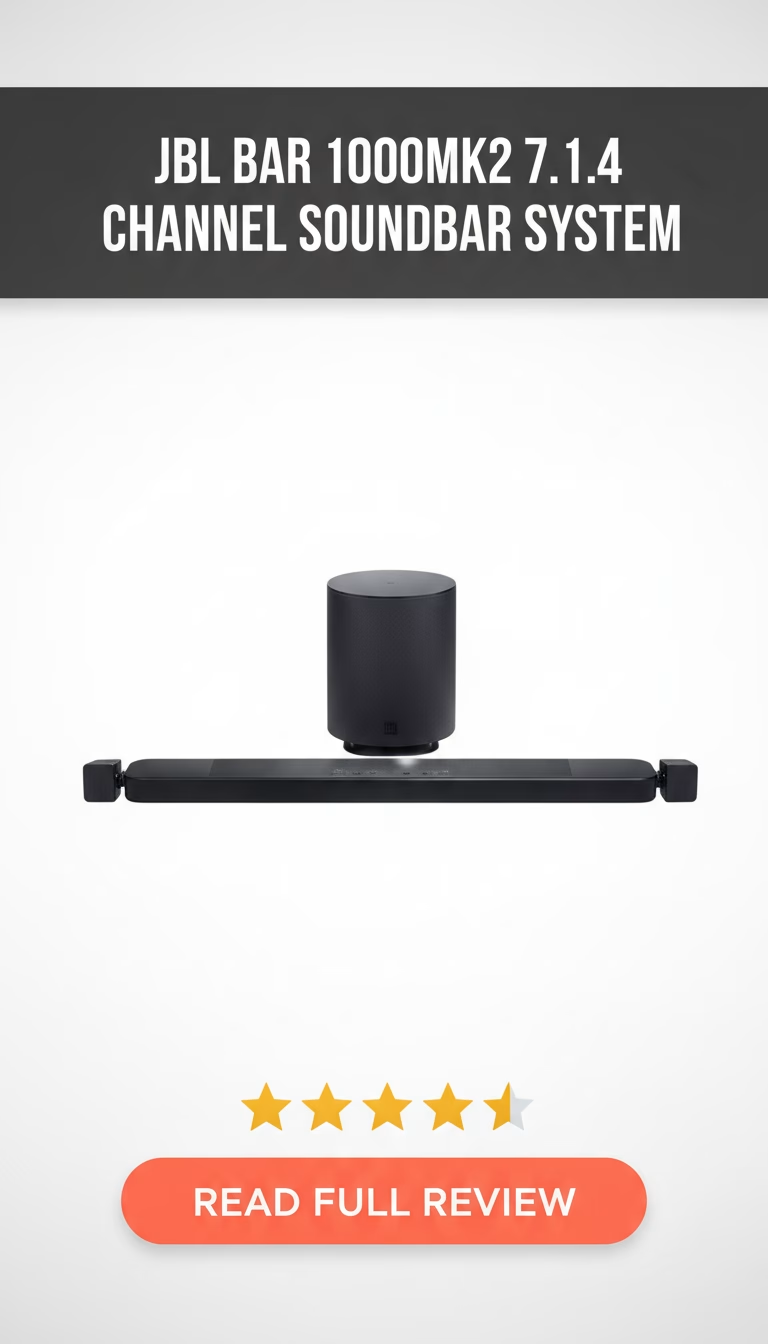
  • JBL Bar 1000MK2 7.1.4 Channel Soundbar System with Detachable Surround Speakers

    JBL Bar 1000MK2 7.1.4 Channel Soundbar System with Detachable Surround Speakers

    JBL Bar 1000MK2 7.1.4 Channel Soundbar System with Detachable Surround Speakers Review 2026: Is It Worth Buying?

    You know the drill, right? You just dropped a bunch of cash on a gorgeous new TV, all …

    JBL Bar 1000 MK2 — The Maximum Soundbar System for Atmos Immersion

    The JBL Bar 1000 MK2 is a $1,300 7.1.4-channel soundbar system with detachable rear speakers, a 10-inch wireless subwoofer, and four upward-firing Atmos drivers (two in the bar, two in the rears). It delivers more channels and more driver count than any other soundbar system, including Samsung”s Q990D and LG”s S95TR. Whether more channels translates to a better experience depends on your room and expectations.

    The Detachable Rears

    The rear speakers magnetically attach to the ends of the main bar for storage and music listening, then detach and run wirelessly for movie surround. Each rear contains a full-range driver and an upward-firing Atmos driver, creating genuine rear surround with height effects from behind the listening position. The detachable design is the Bar 1000”s signature feature — no other system offers this flexibility.

    When attached, the bar functions as a wide 3.1.2 system for music and casual TV. When detached, it becomes a full 7.1.4 surround system. The transition takes about 30 seconds (place rears, let them connect wirelessly). Internal batteries power the rears for approximately 10 hours — no need to find outlets behind your sofa.

    Sound Performance

    The 10-inch subwoofer produces deep, impactful bass down to approximately 30Hz — the most powerful sub in the soundbar category. Movie explosions, musical bass drops, and LFE effects have genuine physical presence. The sub is large (14 x 12 x 14 inches) and heavy enough that it doesn”t walk across the floor during heavy bass.

    The 7.1.4 channel count creates the most enveloping soundbar surround available. With rears detached and positioned behind the seating area, the immersion rivals entry-level discrete speaker systems. PureVoice Technology keeps dialogue centered and clear through the dedicated center channel, even during the busiest action sequences.

    Calibration

    Automatic room calibration via a built-in microphone that measures your room and adjusts levels, distances, and EQ. The calibration is effective for balancing the system”s many channels, though it doesn”t reach the sophistication of Dirac Live or Audyssey in a receiver.

    Connectivity

    HDMI eARC, HDMI input with 4K Dolby Vision passthrough, optical, Wi-Fi, Bluetooth 5.3, AirPlay 2, Chromecast built-in. The HDMI input allows routing a console or streaming device through the bar with video passthrough to the TV — useful for gaming setups where eARC latency might be a concern.

    At $1,300

    • Most channels of any soundbar system — genuine 7.1.4 with four Atmos up-firing drivers.
    • Detachable battery-powered rears — no outlet needed behind the sofa.
    • 10-inch subwoofer with sub-30Hz bass capability.
    • HDMI input with 4K Dolby Vision passthrough for gaming.
    • $1,300 approaches receiver + speaker system territory in price.
    • The main bar is wide (44 inches) — ensure it fits your TV setup.
    • Battery-powered rears must be recharged periodically if not used attached to the bar.
    • The system is complex — troubleshooting wireless connectivity between four components can be frustrating.

    The JBL Bar 1000 MK2 is the maximum-effort soundbar for buyers who want the best surround immersion possible without a receiver. The detachable rears solve the “I don”t want speakers permanently behind the sofa” problem, and the 10-inch sub delivers bass that competing systems can”t match. At $1,300, it”s a commitment — but for a single-box purchase that approaches discrete speaker performance, nothing else comes as close.

    Pros

    • Truly immersive, flexible surround sound.
    • Excellent Dolby Atmos/DTS:X performance.
    • Subwoofer provides fantastic, room-shaking bass.
    • Dialogue is always clear and easy to understand.
    • Simple setup and great smart features.

    Cons

    • Detachable surrounds need recharging sometimes.
    • It's a large system, takes up significant space.
    • Definitely a premium price tag.
    • Could be overkill for smaller rooms.
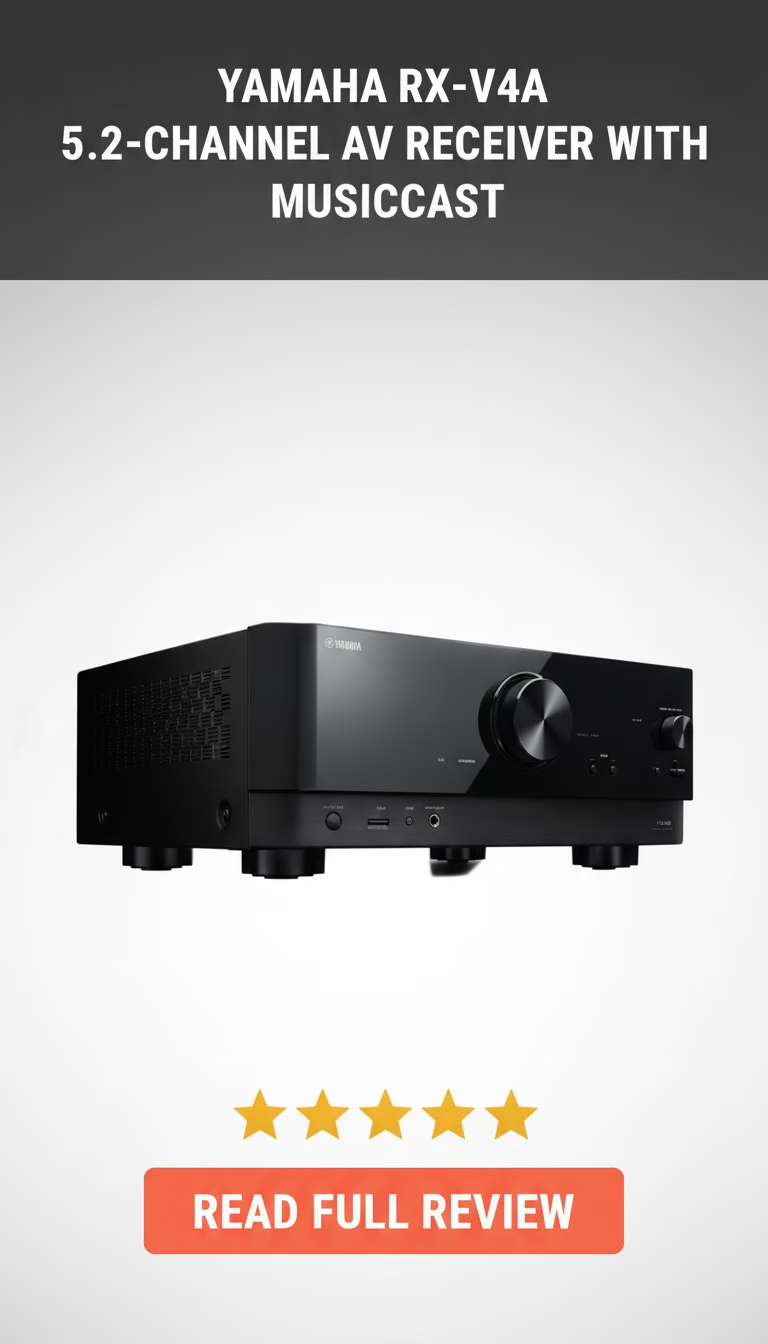
  • Yamaha RX-V4A 5.2-Channel AV Receiver with MusicCast

    Yamaha RX-V4A 5.2-Channel AV Receiver with MusicCast

    Yamaha RX-V4A 5.2-Channel AV Receiver with MusicCast Review 2026: Is It Worth Buying?

    Remember that feeling when you finally snagged that sweet 4K TV, got it all hooked up, and then realized… the s…

    Yamaha RX-V4A — The Best Sub-$400 Receiver for Music and Movies

    The Yamaha RX-V4A is a 5.2-channel AV receiver priced around $350 that balances home theater surround processing with Yamaha”s traditional strength in music reproduction. It doesn”t support Atmos height channels (that requires the RX-V6A at $500), but it handles 5.1 surround with audio quality that exceeds every competitor at this price. The amplifier section is genuinely better than what Sony or Denon offers under $400.

    Amplification Quality

    80 watts per channel (8 ohms, 20Hz-20kHz, 2 channels driven, 0.06% THD). This is an honest power rating measured across the full frequency range with low distortion — more conservative and realistic than Sony”s 145W rating measured at 1kHz with higher distortion allowance. In practice, the Yamaha drives speakers with more control, better dynamics, and less distortion than the Sony DH590 or Denon S570BT, despite lower headline wattage.

    Music reproduction is where Yamaha receivers have always excelled. Stereo music through the RX-V4A sounds musical, detailed, and engaging — instruments have texture, vocals have presence, and the stereo image is well-defined. Paired with decent bookshelf speakers ($200-400 per pair), the RX-V4A produces a stereo listening experience that dedicated audiophile integrated amplifiers at this price can”t significantly improve upon.

    HDMI and Features

    Four HDMI inputs (two with 8K/4K120Hz passthrough via HDMI 2.1), one HDMI output with eARC. Dolby Vision, HDR10+, and HLG passthrough on all ports. This is a significant advantage over the Sony DH590/DH790, which lack both eARC and Dolby Vision. The HDMI 2.1 ports support 4K/120Hz and VRR for PS5/Xbox Series X gaming without quality loss.

    YPAO (Yamaha Parametric Room Acoustic Optimizer) automatic room correction uses an included measurement microphone. Place the mic at your listening position, run the calibration, and YPAO adjusts speaker levels, distances, and EQ to optimize for your room”s acoustics. The calibration is effective and easy — a clear advantage over the Sony receivers” manual-only setup.

    Streaming

    Built-in Wi-Fi with MusicCast multi-room audio, AirPlay 2, Spotify Connect, and Bluetooth. MusicCast links the receiver to other Yamaha wireless speakers for whole-home audio. AirPlay 2 integrates with Apple”s ecosystem. Spotify Connect allows direct streaming without routing through a phone. The streaming features match or exceed what Denon offers with HEOS at this price.

    Limitations

    No Dolby Atmos or DTS:X support — the RX-V4A is strictly 5.1/5.2. For height channels, the RX-V6A ($500) adds 7.2 processing with Atmos. The $150 premium is significant but buys a genuinely important feature for movie watchers.

    Bottom Line

    • Best amplification quality under $400 — Yamaha”s musical heritage shows.
    • HDMI 2.1 with 4K/120Hz, Dolby Vision, eARC — fully modern connectivity.
    • YPAO room correction with included microphone.
    • MusicCast, AirPlay 2, Spotify Connect — comprehensive streaming.
    • No Atmos/DTS:X — strictly 5.1/5.2 surround.
    • 5 channels limits expansion to a basic surround layout.
    • $350 is close enough to the $500 RX-V6A that Atmos-wanting buyers should stretch.

    The RX-V4A is the receiver to buy if you want excellent 5.1 surround and excellent music reproduction in one box at $350, with modern HDMI 2.1 connectivity and room correction. It”s the best-sounding receiver under $400 and the only one with HDMI 2.1 plus YPAO at this price. If Atmos matters, save for the RX-V6A. If it doesn”t, the V4A is outstanding.

    Pros

    • Sounds great for movies and music.
    • YPAO setup makes calibration easy.
    • Future-proof with HDMI 2.1 features.
    • MusicCast multi-room audio is a game changer.
    • Clean, modern design looks sharp.

    Cons

    • Only 4 HDMI inputs can be limiting.
    • Limited power for very demanding speakers.
    • Remote feels a bit basic and dated.
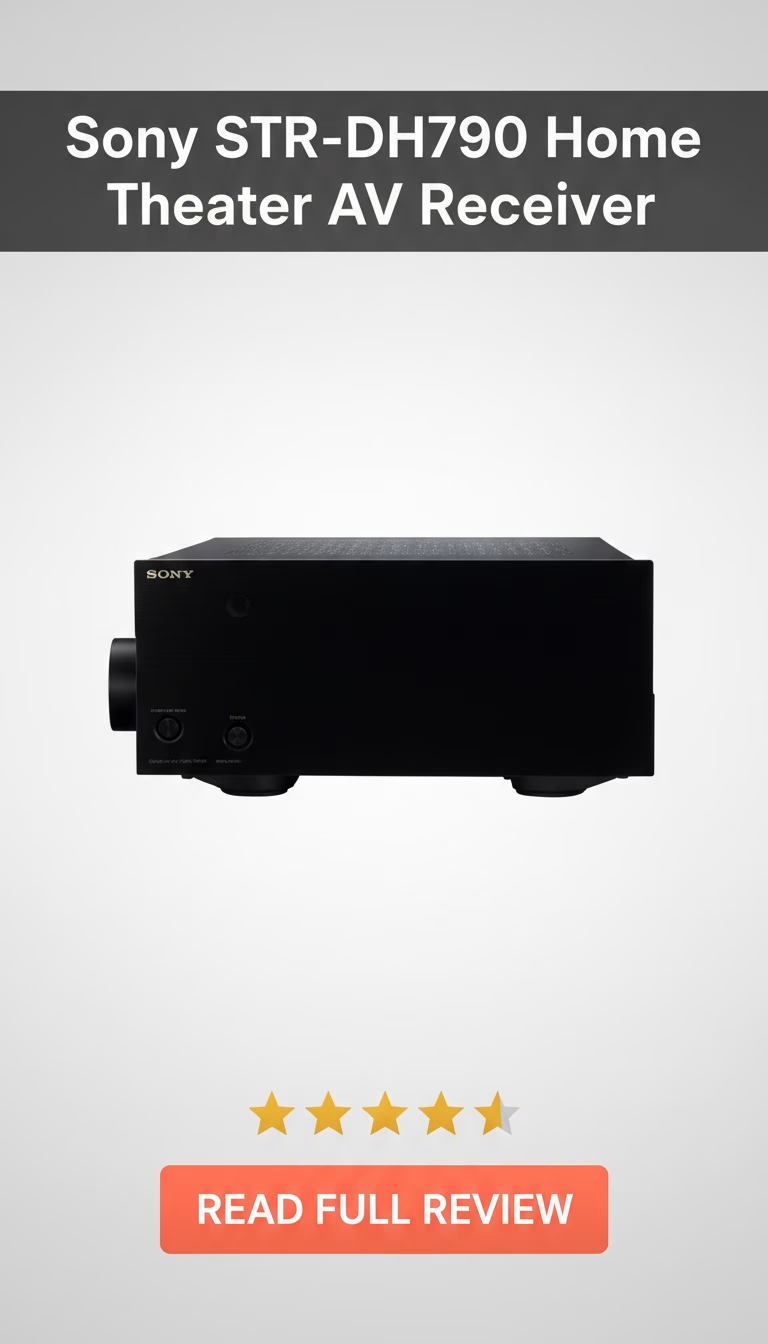
  • Sony STR-DH790 7.2-Channel Home Theater AV Receiver

    Sony STR-DH790 7.2-Channel Home Theater AV Receiver

    Sony STR-DH790 7.2-Channel Home Theater AV Receiver Review 2026: Is It Worth Buying?

    Let’s be real for a second: you’ve probably got a pretty decent TV, maybe even a 4K monster, right? But the sound?…

    Sony STR-DH790 — The Cheapest Path to Dolby Atmos in a Receiver

    The Sony STR-DH790 is a 7.2-channel AV receiver with Dolby Atmos and DTS:X support, priced around $350. It”s the least expensive receiver that supports height channels for object-based surround sound. The 5.2-channel DH590 below it handles traditional surround only; the jump to the DH790 adds the third dimension. For a $100 premium over the DH590, you get Atmos capability that transforms movie soundtracks.

    Atmos on a Budget

    The DH790 drives 7.2 channels: five ear-level speakers, two height speakers (either ceiling-mounted or Atmos-enabled upward-firing modules), and two subwoofer outputs. In a 5.1.2 configuration (the most common Atmos layout), you get the standard surround field plus overhead effects from two height speakers.

    145 watts per channel (6 ohms, 1kHz, 1 channel driven). Real-world power with all channels active: approximately 60-70 watts per channel. Sufficient for bookshelf speakers and moderate-efficiency floor-standers in rooms up to 350 square feet.

    Atmos decoding handles both Dolby Atmos and DTS:X object-based soundtracks. The improvement over non-Atmos surround is immediately audible in well-mixed content: overhead effects create a convincing sense of height that traditional 5.1 can”t reproduce. Rain, aircraft, ambient room sounds, and directional effects gain a vertical dimension.

    HDMI and Connectivity

    Four HDMI inputs, one HDMI output with ARC (not eARC — same limitation as the DH590). All ports support 4K HDR10 passthrough but NOT Dolby Vision. The Dolby Vision limitation is the most significant missing feature — content sources with DV must connect directly to the TV, using ARC to return audio.

    Bluetooth streaming, analog stereo inputs, optical input, and a phono preamp. No Wi-Fi, no streaming services, no AirPlay. Same connectivity limitations as the DH590 — you need external streaming devices.

    Setup

    Manual calibration only — no automatic room correction microphone. Speaker distances, levels, and crossover frequencies are set manually through the on-screen menu. This works fine for tech-comfortable users with a smartphone SPL meter, but it”s a meaningful gap compared to the Denon AVR-S660H ($400) which includes Audyssey room correction that automatically optimizes all channels for your room”s acoustics.

    Versus Competitors

    Denon AVR-S660H ($400): 5.2-channel with Audyssey room correction, eARC, 8K passthrough, HEOS streaming, and Dolby Vision. Only 5.2 channels (no Atmos from the receiver itself, though it can process Atmos to a 5.1.2 layout with external amplification). The Sony wins on channel count and Atmos support; the Denon wins on every connectivity and calibration feature.

    Yamaha RX-V6A ($500): 7.2-channel with YPAO room correction, HDMI 2.1, MusicCast streaming, Dolby Vision passthrough, and better amplification. Costs $150 more but addresses every DH790 limitation. The strongest upgrade path for buyers who can stretch the budget.

    Bottom Line

    • Cheapest Dolby Atmos/DTS:X receiver available — genuine height channel support at $350.
    • 7.2 channels drives a full 5.1.2 Atmos configuration from one box.
    • Adequate power for bookshelf and moderate floor-standing speakers.
    • Built-in phono preamp for turntable owners.
    • No automatic room correction — manual setup only.
    • No eARC — limited to ARC for TV audio return.
    • No Dolby Vision passthrough — DV sources must connect directly to TV.
    • No Wi-Fi or streaming — requires external streaming devices.

    The DH790 exists for one reason: Dolby Atmos at the lowest receiver price. If height channels matter and your budget is $350, this is the only option. If you can spend $400-500, the Denon S760H or Yamaha RX-V6A provide dramatically better connectivity, room correction, and future-proofing. The Sony is a capable receiver held back by connectivity that was already dated when it launched.

    Pros

    • Excellent immersive sound for the price.
    • Dolby Atmos and DTS:X really shine.
    • Sound optimization with auto calibration is great.
    • 4K HDR passthrough works flawlessly.
    • Bluetooth streaming is super convenient.

    Cons

    • Only 4 HDMI inputs, might be limiting.
    • No Wi-Fi or built-in streaming apps.
    • Remote feels a bit cheap.
    • Basic on-screen display interface.
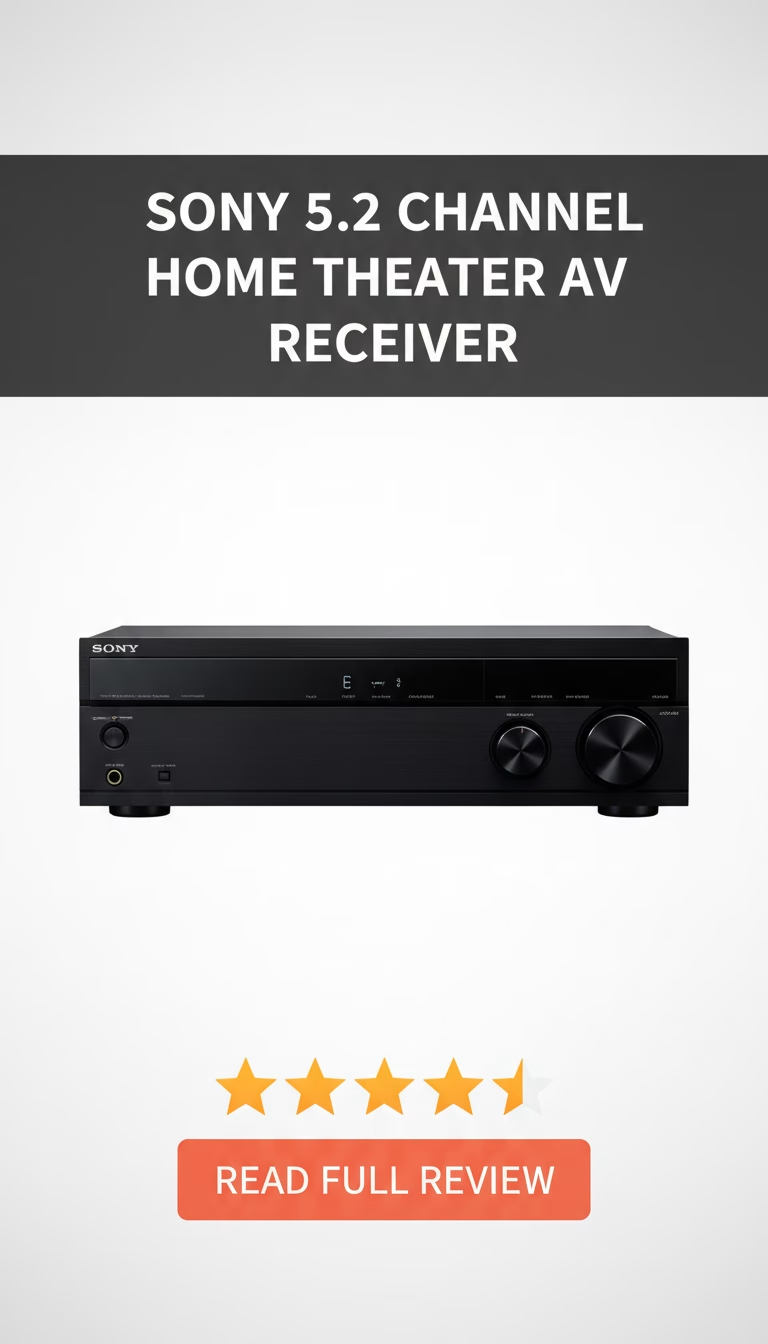
  • Sony 5.2 Channel Home Theater AV Receiver

    Sony 5.2 Channel Home Theater AV Receiver

    Sony 5.2 Channel Home Theater AV Receiver Review 2026: Is It Worth Buying?

    Look, we’ve all been there, right? You’ve got this beautiful big screen TV, maybe even a new one, and the picture quality is…

    Sony STR-DH590 — A Budget 5.2 Receiver That Does the Basics Right

    The Sony STR-DH590 is a 5.2-channel AV receiver priced around $200-250. It handles the core job of a home theater receiver — decoding surround sound formats, amplifying five speakers plus two subwoofer outputs, and switching between HDMI sources — without the streaming features, room correction, or advanced processing of receivers costing $400+. At this price, it”s an entry point for building a real speaker-based surround system.

    What You Get

    145 watts per channel (6 ohms, 1kHz, 1 channel driven). Real-world output with all five channels running simultaneously is closer to 70-80 watts per channel, which is enough to drive bookshelf speakers and a center channel to reference levels in rooms up to about 300 square feet. Larger rooms or floor-standing speakers with low sensitivity ratings may benefit from more power.

    Four HDMI inputs, one HDMI output with ARC (not eARC). All HDMI ports support 4K HDR10 passthrough. No Dolby Vision passthrough — a limitation that matters if your content sources output Dolby Vision and your TV supports it. The receiver strips Dolby Vision and passes HDR10 instead. For Dolby Vision, you”d need to connect sources directly to the TV and use ARC for audio return.

    Surround formats: Dolby Digital, Dolby TrueHD, DTS, DTS-HD Master Audio. No Dolby Atmos, no DTS:X — these require the STR-DH790 or higher. The DH590 is a 5.1/5.2 receiver strictly for traditional surround layouts (front L/R, center, surround L/R, subwoofer).

    Connectivity

    Bluetooth for wireless music streaming from phones and tablets. No Wi-Fi, no AirPlay, no Chromecast, no multi-room audio. If you want streaming integration, you”ll need a separate streaming device (Chromecast, Apple TV, Fire Stick) connected via HDMI. The Bluetooth works reliably for casual music listening but compresses audio — not suitable for critical music listening.

    Analog stereo inputs, optical input, and a phono preamp input for turntables. The phono stage is basic but functional — adequate for entry-level turntables without requiring a separate preamp.

    Setup and Use

    On-screen setup guide walks through speaker configuration, distance settings, and level calibration using a test tone and manual adjustment. No automatic room correction microphone — you set distances and levels by ear or with a smartphone SPL meter. This is the main feature gap versus the Denon AVR-S570BT ($250), which includes Audyssey room correction that automates the calibration process.

    The remote is a standard Sony AV remote with clearly labeled buttons. The on-screen interface is basic but functional. Input switching is responsive — about 2 seconds to switch between HDMI sources.

    Compared to Competitors

    Denon AVR-S570BT ($250): Adds Audyssey MultEQ room correction, eARC, 8K HDMI passthrough on one port, and HEOS streaming. Costs $50 more but addresses every limitation of the Sony. For most buyers, the Denon is the better choice at a small premium.

    Yamaha RX-V4A ($350): Adds MusicCast streaming, YPAO room correction, HDMI 2.1 on two ports, and significantly better amplification quality. The $100-150 premium buys meaningful upgrades in both features and sound quality.

    Who Should Buy This

    • Budget home theater builders who want a real 5.1 system at the lowest possible receiver cost.
    • Buyers who already have a streaming device and don”t need built-in Wi-Fi or app streaming.
    • Turntable owners who want a receiver with a built-in phono stage.
    • Anyone who wants Dolby Atmos or DTS:X — this receiver doesn”t support height channels.
    • Dolby Vision users — the HDMI ports don”t pass through DV.
    • Buyers who want automatic room correction — spend $50 more on the Denon S570BT.

    The STR-DH590 is a bare-bones 5.2 receiver for buyers on the tightest budget. It works. It sounds decent. It connects your HDMI sources and drives five speakers with adequate power. For $50 more, the Denon S570BT does everything the Sony does plus room correction and eARC, making the Sony a hard recommendation unless you find it on a significant sale.

    Pros

    • Excellent sound for the price point.
    • Easy setup with simple auto calibration.
    • Handles 4K HDR content beautifully.
    • Bluetooth streaming is very convenient.
    • Enough HDMI ports for typical setups.

    Cons

    • No built-in Wi-Fi or streaming apps.
    • Remote feels a bit basic and dated.
    • Limited to 5.2 channels, no upgrade path.
  • LG 7.1.3-Channel s90tr Home Theater Soundbar with Wireless Subwoofer and Rear Speakers

    LG 7.1.3-Channel s90tr Home Theater Soundbar with Wireless Subwoofer and Rear Speakers

    LG 7.1.3-Channel s90tr Home Theater Soundbar with Wireless Subwoofer and Rear Speakers Review 2026: Is It Worth Buying?

    You know the drill, right? You just shelled out a good chunk of change for a go…

    LG S90TR — A Complete 7.1.3 Atmos System in a Box

    The LG S90TR ships with a soundbar, wireless subwoofer, and two wireless rear speakers — a complete 7.1.3-channel Dolby Atmos system for roughly $1,000. No receiver, no speaker wire, no mounting. Plug the bar into HDMI eARC, position the sub and rears, and the system self-calibrates. It”s the lowest-effort path to genuine surround sound with height channels.

    Channel Configuration

    The soundbar houses the front left, center, and right channels plus two up-firing Atmos height drivers that bounce off the ceiling. The wireless subwoofer handles bass below roughly 80Hz. The two rear speakers each contain a full-range driver and an up-firing Atmos driver, creating rear height effects that the soundbar”s ceiling bounce alone can”t produce.

    The 7.1.3 configuration means: three front channels, two side/surround channels (from the rear speakers), two rear surround channels, one subwoofer, and three height channels (two front, one center from the bar”s up-firing drivers plus the rear up-firing drivers). In practice, the surround immersion is significantly better than any soundbar-only setup because sound actually comes from behind you rather than being simulated.

    Sound Performance

    Total system output is 810 watts. The subwoofer produces bass down to approximately 35Hz — adequate for movie explosions, music bass lines, and gaming rumble. The wireless subwoofer placement is flexible; it communicates with the bar via a proprietary wireless protocol with no audible latency.

    Dialogue clarity through the center channel is good but not exceptional — in very loud action scenes, voices can be slightly overwhelmed by surround effects. Using the “Clear Voice” mode boosts dialogue but slightly reduces surround immersion. This is a compromise inherent in soundbar-based systems where the center channel shares a relatively small enclosure with other drivers.

    Atmos height effects are more convincing with the rear speakers than without, because the rear up-firing drivers complete the overhead sound field. Rain, helicopter flybys, and ambient atmospheric sounds create a noticeable bubble of sound. Ceiling height and material still affect performance — flat drywall ceilings under 9 feet produce the best results.

    LG TV Integration

    Connected to an LG TV via eARC, the S90TR offers seamless integration: TV remote controls soundbar volume, the TV”s sound settings adjust the bar”s modes, and WOW Orchestra mode combines the TV”s speakers with the soundbar for a wider soundstage. This integration makes the S90TR the default recommendation for LG TV owners who want surround sound without a receiver.

    Connectivity

    One HDMI eARC output, one HDMI input (4K 120Hz passthrough — important for gamers who want to route a console through the bar), optical input, and Bluetooth 5.0. Wi-Fi supports AirPlay 2 and Chromecast. The HDMI input with 4K/120Hz passthrough means the bar can sit between your console and TV without downgrading video quality — a feature most competing soundbars lack.

    Considerations

    • Complete 7.1.3 Atmos system requiring no additional purchases.
    • Wireless rear speakers with up-firing drivers create genuine surround with height effects.
    • LG TV integration is seamless and adds WOW Orchestra mode.
    • 4K/120Hz HDMI passthrough for gaming without quality loss.
    • Self-calibration via AI Room Calibration adjusts for room acoustics.
    • Dialogue clarity can be overwhelmed during loud scenes.
    • Rear speakers require nearby power outlets — wireless audio, but wired power.
    • Bass is adequate but not as deep or punchy as dedicated home theater subwoofers.
    • At $1,000, an AV receiver + bookshelf speakers produces better raw sound quality, but with far more complexity.

    The LG S90TR is the best complete surround sound system for buyers who want rear speakers and Atmos height channels without installing a receiver, running speaker wire, or mounting anything to the ceiling. LG TV owners get additional integration benefits. Audiophiles will find better sound from a traditional receiver setup, but most households will find the S90TR”s convenience-to-performance ratio hard to beat.

    Pros

    • Unbelievable immersive 3D surround sound.
    • Deep, powerful, room-filling wireless bass.
    • Seamless setup with included rear speakers.
    • AI Room Calibration optimizes sound for space.

    Cons

    • Premium price tag is a significant investment.
    • Rear speakers still require power outlets.
    • May be overkill for small apartment rooms.
  • Sonos Arc Ultra Soundbar

    Sonos Arc Ultra Soundbar

    Sonos Arc Ultra Soundbar Review 2026: Is It Worth Buying?

    You know the drill. You finally splurged on that gorgeous new OLED TV, brought it home, set it up, and then… the sound hit you. Flat, tinny…

    Sonos Arc Ultra — The Soundbar That Actually Replaces a Home Theater

    The Sonos Arc Ultra is a $999 single-unit soundbar with Dolby Atmos, nine drivers, and a built-in subwoofer module that produces bass no single-bar competitor matches. It replaces the original Arc ($899) with measurably better low-end response, wider soundstage, and improved height channel performance. At this price, it competes less with other soundbars and more with budget AV receiver setups — and it wins on simplicity while trading away flexibility.

    Sound Quality

    Nine custom drivers in a 45-inch housing: four forward-firing woofers, four up-firing/angled drivers for Atmos height effects, and a center-channel tweeter for dialogue. The Sound Motion woofer (Sonos”s new transducer technology) produces bass response down to approximately 32Hz — deep enough for movie explosions and music with real sub-bass presence. Most single soundbars roll off around 50-60Hz, requiring a separate subwoofer for impact. The Arc Ultra doesn”t need one for most content.

    Dolby Atmos creates overhead effects using the up-firing drivers that bounce sound off the ceiling. Effectiveness depends heavily on ceiling height and material: flat ceilings under 10 feet with hard surfaces (drywall, plaster) produce the best results. Vaulted, beamed, or very high ceilings reduce the effect. In an average living room, the height channels add noticeable dimensionality to Atmos content — rain falling overhead, aircraft passing above, ambient atmospheric sounds — without the precision of ceiling-mounted discrete speakers.

    Dialogue clarity is excellent. The dedicated center channel keeps voices anchored to the screen and intelligible even during loud action sequences. A Speech Enhancement mode further boosts dialogue frequency ranges for hearing-impaired viewers or noisy rooms.

    Room Calibration

    Sonos Trueplay uses your iPhone microphone (iOS only) to measure room acoustics and optimize the frequency response. The calibration process takes about 3 minutes of walking around the room while the bar plays test tones. The improvement is audible — reduced bass boominess in corners, smoother midrange response, and better-balanced surround effects. Android users cannot use Trueplay, which is a frustrating platform limitation on a $999 product.

    Connectivity

    One eARC HDMI input, Wi-Fi, AirPlay 2, and Bluetooth. No optical input, no analog input, no additional HDMI ports. All sources must either connect through the TV”s eARC or stream via Wi-Fi/Bluetooth. This means Sonos only receives audio that the TV passes through — if your TV doesn”t support Atmos passthrough via eARC, the bar won”t receive Atmos signals from external devices.

    The Sonos app handles streaming services natively (Spotify, Apple Music, Amazon Music, etc.) with room grouping across other Sonos speakers. For a multi-room Sonos household, the Arc Ultra integrates seamlessly.

    Expandability

    Add Sonos Sub ($799) for deeper bass extension (though the Arc Ultra alone produces more bass than most bars + sub combos). Add two Sonos Era 100 or Era 300 speakers as rear surrounds for true 5.1.2 or 7.1.4 configurations. The full expanded system can exceed $2,500 — at which point a quality AV receiver with discrete speakers becomes the better value for pure sound performance.

    Versus Competitors

    Samsung HW-Q990D ($1,300): Includes wireless subwoofer and rear speakers — true 11.1.4 at the box price. More channels, wider surround field. The Samsung system produces a more enveloping surround experience out of the box, but the Sonos sounds more refined and natural in its frequency response.

    Bose Smart Soundbar 900 ($900): Excellent dialogue clarity, slightly less bass impact, similar Atmos implementation. Better if you want Bose”s ecosystem; worse for multi-room audio. The Arc Ultra wins on bass and soundstage width.

    Who This Is For

    • Minimalists who want one device, no subwoofer, no rear speakers, and no receiver.
    • Sonos ecosystem users adding a TV speaker to their multi-room setup.
    • Living rooms where a 45-inch bar is the maximum acceptable audio footprint.
    • Budget-constrained buyers — $999 for a soundbar is premium territory.
    • Android users who lose the Trueplay room calibration feature.
    • Surround sound purists who want discrete rear channels without additional purchases.

    The Sonos Arc Ultra is the best single soundbar available for combined music and movie use. It doesn”t beat a full discrete speaker system for surround precision, but it eliminates the complexity, the cables, and the receiver. If simplicity and sound quality in one device is the priority, nothing else at this price does it better.

    Pros

    • Incredible spatial audio experience.
    • Stylish, premium design.
    • Simple, intuitive Sonos app setup.
    • Excellent smart home integration.
    • Scalable with other Sonos speakers.

    Cons

    • Premium price point.
    • Requires HDMI eARC for full features.
    • Bass can be light without a separate Sub.
    • No analog audio inputs.