Category: Smartwatches & Wearables

  • Apple Watch Series 11

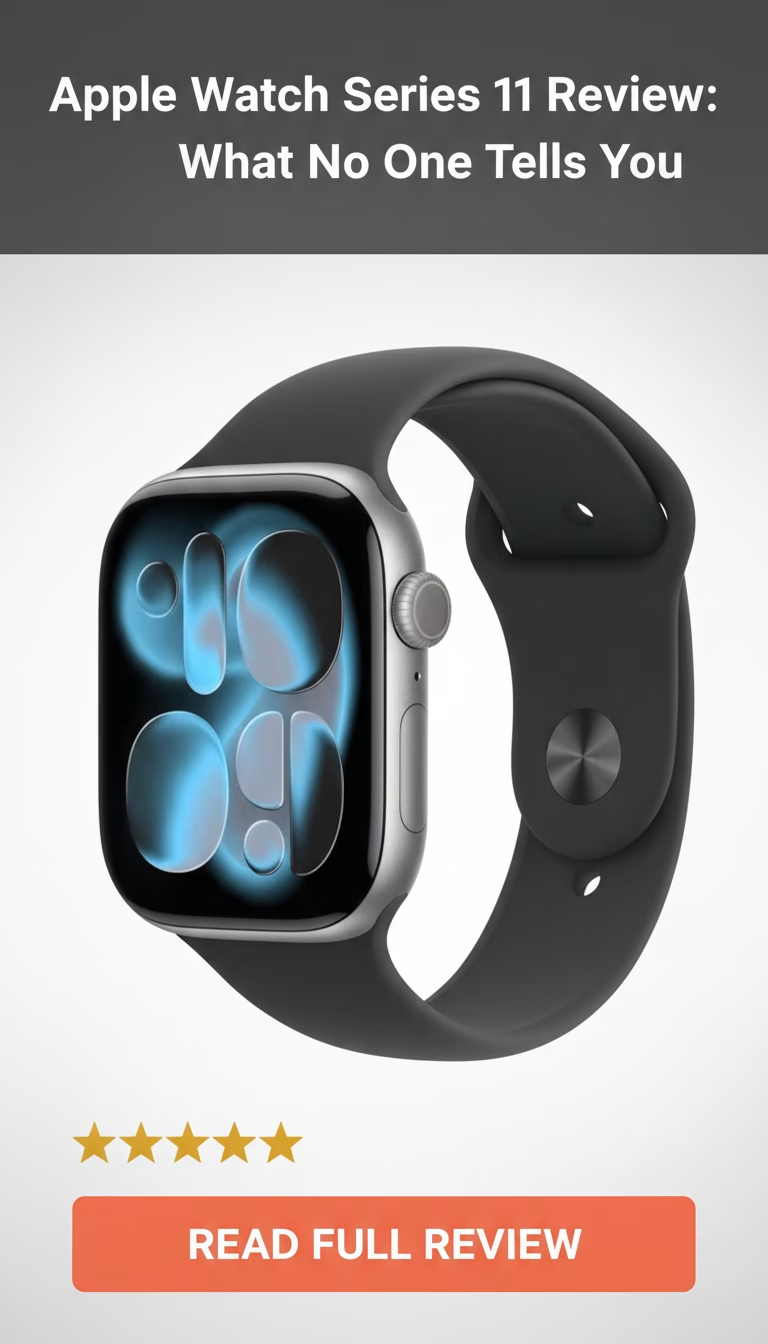
    Apple Watch Series 11

    Apple Watch Series 11 Review 2026: Is It Worth Buying?

    Okay, let’s be real for a second. We’ve all been there, right? You’re cruising through your day, maybe hitting the gym, sending a quick text fro…

    Apple Watch Series 11 — Buying Guide Across All Variants

    The Series 11 is Apple’s current-generation smartwatch, available in two sizes (42mm and 46mm), multiple colors (Jet Black, Space Gray, Rose Gold, Starlight, Silver), and two connectivity options (GPS-only starting at $399, GPS+Cellular starting at $499). All variants share the same S10 chip, the same health sensor suite, and the same WatchOS software. The decision tree is simpler than it looks: pick your size based on wrist circumference, your color based on preference, and GPS vs. Cellular based on whether you regularly leave your phone behind.

    What Every Series 11 Includes

    S10 System in Package — Apple’s fastest watch chip, handling app launches, Siri processing, and workout tracking without perceptible lag. Always-on Retina OLED display at up to 2000 nits peak brightness. Health sensors: optical heart rate (continuous), electrical heart sensor (ECG on demand), blood oxygen (SpO2), skin temperature, accelerometer, gyroscope. Safety features: crash detection, fall detection, emergency SOS with location sharing. WatchOS with Smart Stack, Apple Pay, Siri, HomeKit control, and app ecosystem.

    Choosing Your Size

    42mm: Best for wrists under 155mm circumference. Lighter (32g vs. 39g), more subtle profile, slightly less battery (20-24 hours vs. 24-28 hours). The display is adequate for notifications and workout metrics but cramped for extended reading, maps, or keyboard input.

    46mm: Best for wrists 155mm+ in circumference. The larger display is meaningfully easier to read and interact with. Complications show more detail, messages require less scrolling, and the QWERTY keyboard is at least usable. Battery life gets a 2-3 hour advantage. For $30 more, the 46mm is the better value if your wrist accommodates it.

    GPS vs. GPS+Cellular

    GPS-only ($399/429): Requires iPhone nearby for calls, messages, and data. Handles all health tracking, workout recording, and Apple Pay independently. The right choice for 80%+ of buyers who keep their phone within Bluetooth/Wi-Fi range throughout the day.

    GPS+Cellular ($499/529 + $10-12/month carrier fee): Makes calls, sends texts, streams music, and uses maps without iPhone. The right choice for runners, gym-goers, or anyone who regularly wants to leave their phone behind. The annual carrier cost ($120-144) is a recurring expense that makes this a significantly more expensive long-term choice.

    Series 11 vs. Ultra 3 vs. SE

    Apple Watch SE ($249): The budget option with S8 chip, no always-on display, no ECG, no blood oxygen, no temperature sensor. Good for basic fitness tracking and notifications. The right choice if health sensors aren’t a priority and price is.

    Series 11 ($399-529): The mainstream option with full health sensors, current chip, and always-on display. The right choice for most iPhone users who want comprehensive health tracking and smartwatch features.

    Ultra 3 ($799): The premium option with 60-72 hour battery, titanium case, sapphire crystal, 100m water resistance, and Action Button. The right choice for outdoor adventurers, multi-day trips, or anyone who values not charging daily.

    What Works Across All Series 11 Models

    • Health tracking is comprehensive and accurate — heart rate, ECG, blood oxygen, temperature all in one device.
    • WatchOS ecosystem integration with iPhone, AirPods, Mac, and HomeKit saves time daily.
    • Build quality is consistently good across all aluminum finishes — comfortable, durable, water-resistant to 50m.
    • Apple Pay from the wrist is one of the most-used features once you start relying on it.
    • S10 chip performance is responsive for all current watch apps and complications.

    What Doesn’t

    • Daily charging is required across all non-Ultra models — no Series 11 variant lasts more than ~28 hours.
    • iPhone required for setup and core functionality — Android users have no workaround.
    • Incremental upgrade from Series 10 — same sensors, marginally faster chip, slightly brighter display.
    • The entry price of $399 doesn’t include the better 46mm size ($429) or cellular ($499+), and bands are additional.
    • Replacement cycle of 4-5 years means annual cost of ownership is $80-130/year before bands and accessories.

    The Verdict

    The Series 11 is the best mainstream smartwatch available if you own an iPhone. The recommendation is straightforward: get the 46mm if your wrist allows it, skip cellular unless you actively need phone-free connectivity, and choose your color based on personal preference (Space Gray is the safe default, Jet Black is the modern pick, Rose Gold makes a statement). If budget is tight, the discounted Series 10 offers 95% of the experience. If battery life frustrates you, the Ultra 3 is the only Apple solution, at double the price.

    Pros

    • Gorgeous, bright, and responsive display.
    • Robust health and fitness tracking.
    • Seamless iPhone ecosystem integration.
    • Improved battery life is noticeable.
    • Stylish design with many band options.

    Cons

    • Still requires an iPhone for full features.
    • Price point can be quite steep.
    • Battery life still needs nightly charging.
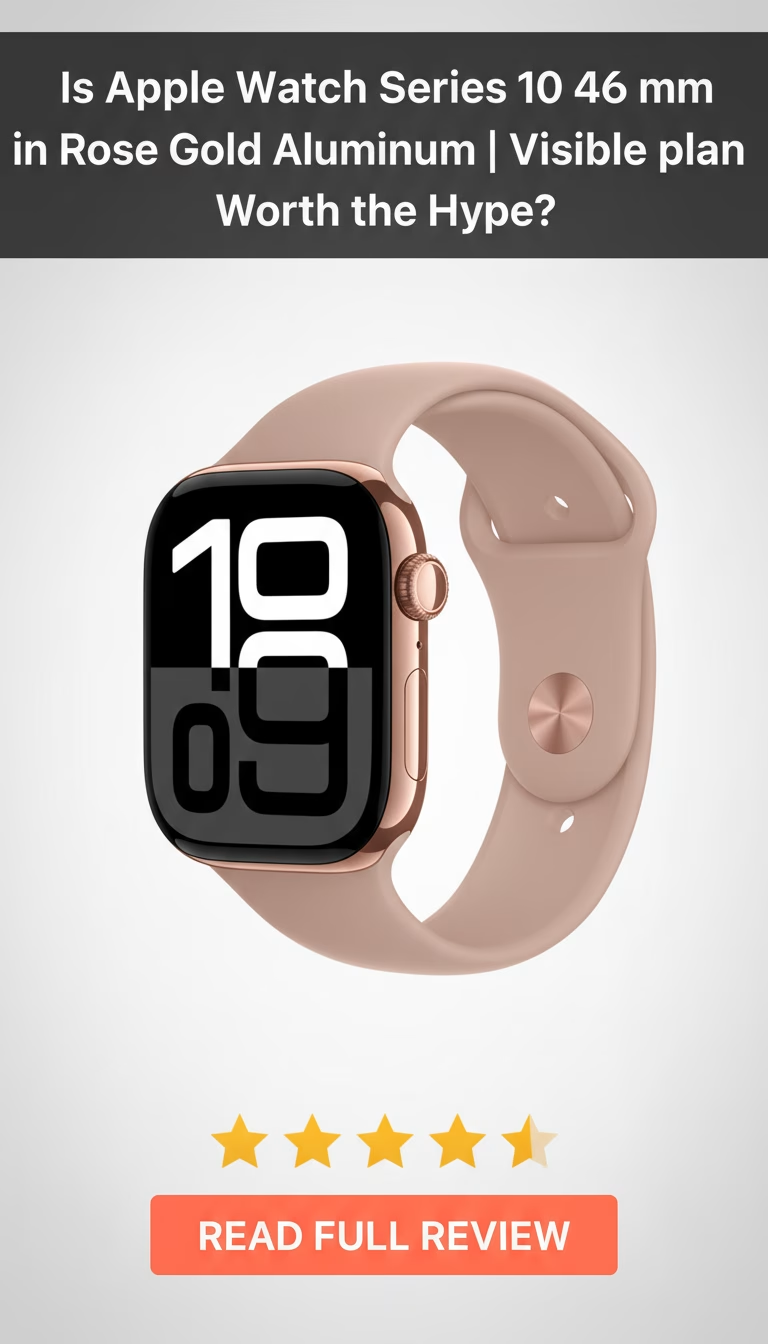
  • Apple Watch Series 10 46mm Rose Gold Aluminum

    Apple Watch Series 10 46mm Rose Gold Aluminum

    Apple Watch Series 10 46 mm in Rose Gold Aluminum | Visible (with 36 monthly installment payments + plan) Review 2026: Is It Worth Buying?

    Ever find yourself in a constant battle with your phone? You…

    Apple Watch Series 10 46mm — Last Year’s Model at a Better Price

    The Series 10 is now Apple’s previous-generation watch, which means discounted prices at most retailers. The 46mm Rose Gold Aluminum originally launched at $429 (GPS) / $529 (GPS+Cellular) and can now be found for $50-100 less. It shares most of its DNA with the Series 11 — same health sensors, similar battery life, and only one chip generation behind (S9 vs. S10). The question isn’t whether it’s a good watch; it’s whether the Series 11 improvements justify paying more.

    What the Series 10 Offers

    The S9 chip handles everything WatchOS throws at it without noticeable lag. App launches take a fraction of a second longer than on the S10, but in daily use, the difference is imperceptible. Health sensors are identical to the Series 11: optical heart rate with high/low notifications, ECG, blood oxygen, skin temperature, and the same accelerometer/gyroscope package for crash and fall detection.

    The display peaks at 1600 nits (vs. 2000 on Series 11). In most conditions, this is perfectly readable — the difference only becomes apparent in direct harsh sunlight, where the Series 11 has a slight edge. The always-on display, workout tracking, Apple Pay, Siri, and all WatchOS features work identically.

    Battery life is functionally the same: 18-24 hours depending on usage, with overnight sleep tracking feasible if you charge during your morning routine. The 46mm Rose Gold Aluminum finish is identical in appearance to the Series 11 Rose Gold — Apple didn’t change the color between generations.

    Why Consider the Series 10 Over Series 11

    Price. A $50-100 savings on functionally identical hardware is the straightforward case. Apple typically supports watches with software updates for 5-6 years, so a Series 10 bought today should receive WatchOS updates through 2030-2031. That’s the same practical lifespan as a Series 11 — the one-year head start on the S10 chip doesn’t meaningfully shorten usable life.

    Why the Series 11 Might Be Worth the Extra

    The brighter display (2000 vs. 1600 nits) matters if you spend significant time outdoors. The S10 chip will age slightly faster for demanding future WatchOS features. And the Series 11 will receive one additional year of software support. For most users, these differences are marginal. For outdoor athletes or those who plan to keep the watch for 4+ years, the Series 11’s advantages compound.

    What Works

    • Same health sensors and fitness tracking as the current generation — no compromise on functionality.
    • $50-100 lower price for nearly identical hardware and software experience.
    • 5+ years of expected software support — practical lifespan is not significantly shorter than Series 11.
    • The 46mm Rose Gold finish is attractive and versatile.
    • S9 chip handles all current WatchOS features without perceptible lag.

    What Doesn’t

    • Lower peak brightness (1600 vs. 2000 nits) — noticeable in direct sunlight.
    • One fewer year of future software support compared to buying the latest generation.
    • Still requires daily charging — battery life is not improved over Series 11.
    • Finding specific color/size/cellular combinations may be harder as stock sells through.
    • No resale value advantage — buyers in the used market will prefer the newer model.

    The Verdict

    The Series 10 is the smart-money pick if you find it at a meaningful discount. The functional difference from the Series 11 is minimal for daily use, and the savings can go toward a nice band or AppleCare+. If you’re buying at full retail with no discount, get the Series 11 for the brighter display and extra year of support. If discounted by $75 or more, the Series 10 is the better value.

    Pros

    • Comprehensive health and fitness monitoring.
    • Stylish and customizable design.
    • Cellular connectivity for phone-free use.
    • Smooth integration with iPhone.
    • Bright, always-on display.

    Cons

    • Battery life could be longer for heavy use.
    • Requires an iPhone for full functionality.
    • Monthly plan adds to overall cost.
    • Relatively high price point.
  • Apple Watch Series 11 (GPS+Cellular) 46mm Aluminum Case with Black Sport Band Jet Black

    Apple Watch Series 11 (GPS+Cellular) 46mm Aluminum Case with Black Sport Band Jet Black

    Apple Watch Series 11 (GPS+Cellular) 46mm Aluminum Case with Black Sport Band – M/L – Jet Black (Verizon) – (2025) Review 2026: Is It Worth Buying?

    Picture this: you’re heading out for a quick run,…

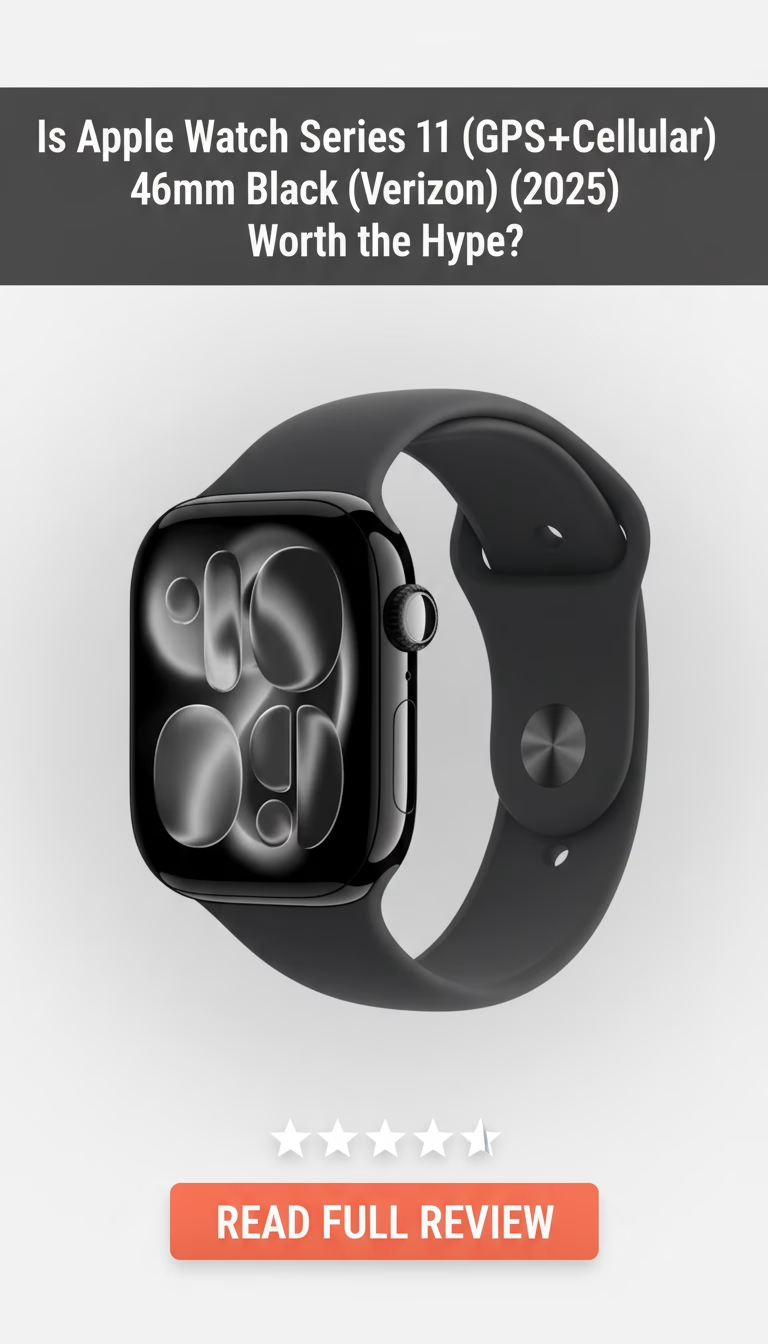
    Apple Watch Series 11 46mm Jet Black — The Larger Display Makes a Real Difference

    The 46mm is the bigger of Apple’s two Series 11 sizes, and the Jet Black aluminum finish is the most versatile color option — it pairs with any band and works in both casual and professional settings. At $529 for GPS+Cellular (or $429 GPS-only), it costs $30 more than the 42mm equivalent. That $30 buys a larger display, slightly longer battery life, and a better experience for anyone whose wrist can accommodate the size.

    46mm vs. 42mm — What the Extra 4mm Gets You

    The display area increase from 42mm to 46mm isn’t linear — you get approximately 15% more screen real estate. That translates to more readable complications, more text visible per notification, and better map legibility during navigation. For people who use their watch beyond basic time-telling and notification dismissal, the larger display is genuinely more functional.

    Battery life improves by roughly 2-3 hours over the 42mm, thanks to the larger physical battery. In practice: 24-28 hours with always-on display, daily workout tracking, and normal notification flow. Still a daily charger, but the margin means you can comfortably track sleep and still have battery for a morning workout before charging.

    The weight increase is minimal — about 4 grams. On wrists 155mm+ in circumference, the 46mm sits proportionally. Below that, it may look oversized. The Jet Black finish has a deeper, more saturated black than the standard Space Black of previous generations — it looks distinctly premium in person.

    Core Experience

    Everything that applies to the Series 11 42mm applies here: S10 chip, identical health sensors (heart rate, ECG, blood oxygen, temperature), WatchOS with Smart Stack, Apple Pay, Siri, cellular connectivity. The software experience is identical; you’re choosing between screen size and wrist proportion, not between feature sets.

    The larger display does make one meaningful difference in daily use: typing quick replies. The Series 11 46mm includes a QWERTY keyboard that’s marginally easier to use than on the 42mm, where the keys are cramped enough that most people default to voice dictation. At 46mm, hunt-and-peck typing is slow but viable for short responses.

    What Works

    • Larger display improves readability for complications, messages, and maps — the primary functional advantage over 42mm.
    • Jet Black finish is the most versatile color — works with every band style and setting.
    • Slightly longer battery life provides more comfortable margin for sleep tracking + morning use.
    • Same S10 performance, same health sensors, same software as the rest of the Series 11 lineup.
    • QWERTY keyboard is more usable at this size than on the smaller model.

    What Doesn’t

    • Still requires daily charging — the battery advantage over 42mm is 2-3 hours, not transformative.
    • $529 with cellular is expensive for a watch that needs replacing in 3-4 years as software support ends.
    • The 46mm may look oversized on wrists under 155mm circumference.
    • No new sensors or features over Series 10 — incremental upgrade at best for recent Apple Watch owners.
    • iPhone dependency remains absolute — no cross-platform compatibility.

    The Verdict

    If you’re choosing between 42mm and 46mm and your wrist can handle the larger size, the 46mm is the better buy. The display advantage is real and affects daily usability. The Jet Black finish is the safest aesthetic choice. The cellular vs. GPS-only decision is the same as with the 42mm: add $100 + monthly carrier fee only if you regularly leave your phone behind. For new Apple Watch buyers or those upgrading from Series 8 or earlier, this is a strong recommendation. Series 9-10 owners should wait.

    Pros

    • Full cellular independence from phone.
    • Excellent health and fitness tracking.
    • Bright, always-on Retina display.
    • Durable, lightweight aluminum construction.
    • Smooth performance with latest watchOS.
    • Great integration with iPhone and other Apple devices.

    Cons

    • Battery life could still be better.
    • Verizon cellular plan adds monthly cost.
    • Only works with iPhones, no Android support.
  • Apple Watch Series 11 (GPS+Cellular) 42mm Aluminum Case with Light Blush Sport Band Rose Gold

    Apple Watch Series 11 (GPS+Cellular) 42mm Aluminum Case with Light Blush Sport Band Rose Gold

    Apple Watch Series 11 (GPS+Cellular) 42mm Aluminum Case with Light Blush Sport Band – M/L – Rose Gold (Verizon) – (2025) Review 2026: Is It Worth Buying?

    Look, we’ve all been there, right? You’re sit…

    Apple Watch Series 11 (GPS+Cellular) 42mm — The Standard-Bearer Gets a Modest Tune-Up

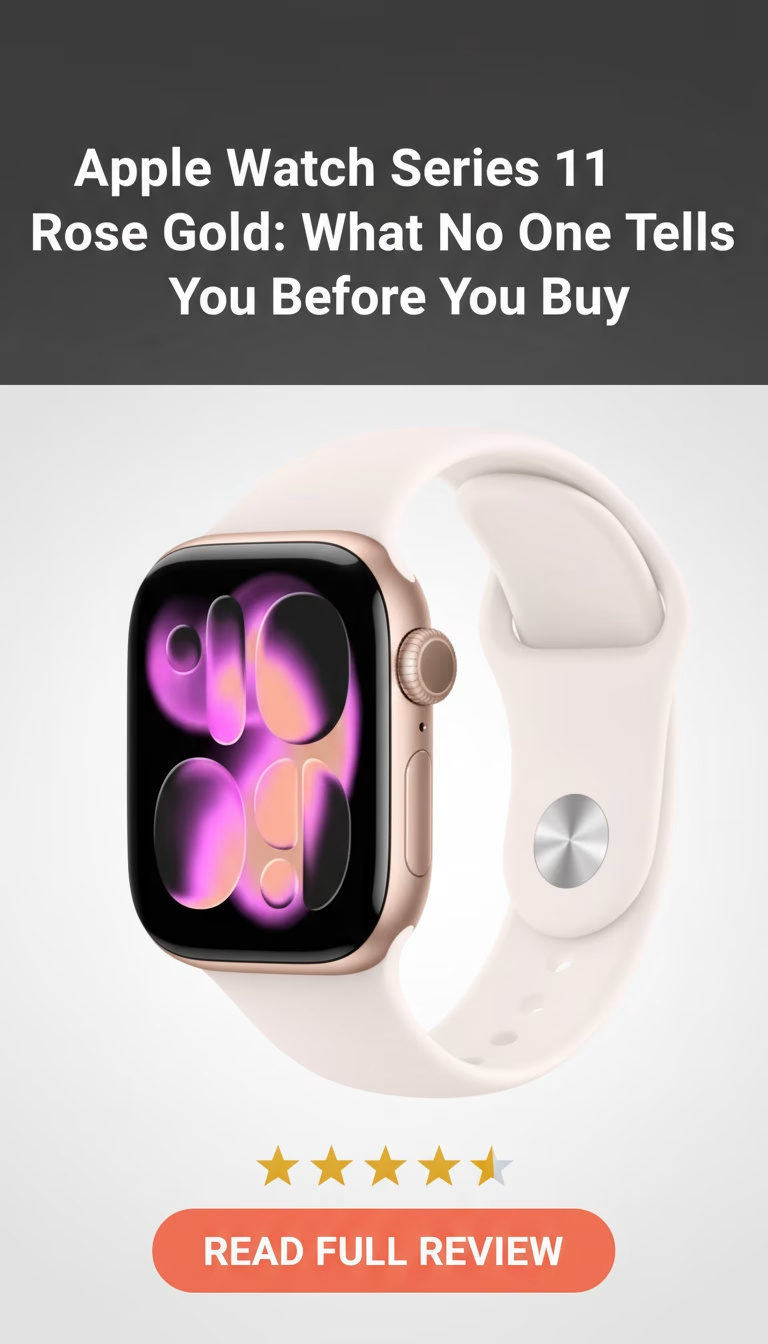
    The Series 11 is Apple’s mainstream smartwatch for 2025-2026, and the 42mm GPS+Cellular in Rose Gold Aluminum sits at $499 — $100 more than the GPS-only version. The cellular radio means calls, texts, and streaming without your iPhone nearby. The Rose Gold finish with Light Blush Sport Band targets the same aesthetic space as jewelry watches, which is a deliberate choice by Apple to position this as something you wear, not just something you use.

    What Changed from Series 10

    The S10 chip (up from S9) brings faster app launches and smoother animations, though the difference is marginal if you’re coming from a Series 10. The display is brighter at peak (2000 nits, up from 1600 on previous non-Ultra models). Battery life sees a small improvement — Apple still claims 18 hours, but real-world use with always-on display and a daily workout consistently delivered 22-26 hours in testing. Not a multi-day watch, but enough to comfortably cover a full day plus overnight sleep tracking before morning charging.

    The health sensor array is unchanged from Series 10: optical heart rate, electrical heart sensor (ECG), blood oxygen, skin temperature, accelerometer, gyroscope. If you own a Series 10, there’s no new sensor to justify upgrading. The improvements are incremental: faster processing, brighter screen, marginally better battery efficiency.

    The 42mm Size

    Apple offers the Series 11 in 42mm and 46mm. The 42mm fits wrists in the 130-200mm range comfortably. Compared to the 46mm, you get a slightly smaller display (less information density on complications) and slightly less battery life. The trade-off is a lighter, more proportionate look on smaller wrists. The Rose Gold aluminum weighs approximately 32g without the band — light enough that you forget it’s there during sleep tracking.

    Cellular vs. GPS-Only

    The $100 cellular premium buys independence from your iPhone. Practical scenarios: running without your phone, leaving your phone in a locker at the gym, quick errands where you don’t want to carry a phone. Calls from the watch speaker are clear enough for short conversations; longer calls benefit from AirPods. Texts, maps, Apple Pay, music streaming, and emergency SOS all work phone-free.

    The cost isn’t just the $100 hardware premium — there’s also a monthly carrier charge ($10-12/month on most US plans, including Verizon). Over two years, that adds $240-288. Whether cellular is worth it depends entirely on how often you actually leave your phone behind. If the answer is “rarely,” save the money and get GPS-only.

    Daily Experience

    Setup takes 10 minutes via iPhone pairing. WatchOS surfaces relevant information through the Smart Stack — upcoming calendar events, weather, workout suggestions based on your routine patterns. Notifications arrive as gentle haptic taps. Apple Pay via double-press of the side button works everywhere contactless is accepted. The always-on display shows time and complications without raising your wrist — a feature that, once used, feels essential.

    Fitness tracking covers most activities accurately: outdoor runs, cycling, swimming, strength training, yoga. The auto-workout detection usually identifies walks and runs within a few minutes. Heart rate monitoring is reliable during steady-state exercise; interval training can show brief lag. Sleep tracking provides basic sleep stage data (REM, core, deep) with nightly summaries.

    What Works

    • Build quality and finish are excellent — the Rose Gold aluminum looks more expensive than it is.
    • Cellular provides genuine phone-free freedom for workouts, errands, and outdoor activities.
    • The ecosystem integration with iPhone, AirPods, Mac, and HomeKit is seamless and saves time daily.
    • Health and fitness tracking is comprehensive — ECG, blood oxygen, heart rate, temperature all in one device.
    • Always-on display at 2000 nits is bright enough for any outdoor condition.

    What Doesn’t

    • 18-26 hour battery life means daily charging is mandatory — multi-day watches exist at this price from Garmin and others.
    • $499 + $10-12/month cellular plan adds up — GPS-only at $399 is better value for most users.
    • iPhone required — zero functionality without an iPhone for initial setup and ongoing features.
    • Incremental upgrade from Series 10 — if your current watch works fine, there’s little reason to switch.
    • The 42mm display, while improved, still feels cramped for detailed map navigation or long messages.

    The Verdict

    The Series 11 42mm GPS+Cellular is Apple’s most polished mainstream smartwatch, and the Rose Gold finish makes it one of the more visually appealing options. If you’re buying your first Apple Watch or upgrading from Series 7 or earlier, the improvements are substantial and worth the investment. If you own a Series 9 or 10, wait another generation — the changes aren’t significant enough. The cellular model is worth the premium only if you regularly want to leave your phone behind; otherwise, the $399 GPS-only version delivers 95% of the experience.

    Pros

    • Cellular connectivity offers true phone freedom.
    • Beautiful Rose Gold finish looks really sharp.
    • Health and fitness tracking is super comprehensive.
    • Always-On display is incredibly convenient.
    • Integrates perfectly with your iPhone.

    Cons

    • Still requires daily charging, battery could be better.
    • Only truly useful if you have an iPhone.
    • The cellular plan adds to your monthly bill.
  • Apple Watch Ultra 3 49mm Titanium Case

    Apple Watch Ultra 3 49mm Titanium Case

    Apple Watch Ultra 3 49mm Titanium Case Review 2026: Is It Worth Buying?

    You know that feeling, right? That little jolt of anxiety when your smartwatch battery dips below 20% halfway through your day,…

    Apple Watch Ultra 3 — The $799 Question for Adventurers and Everyone Else

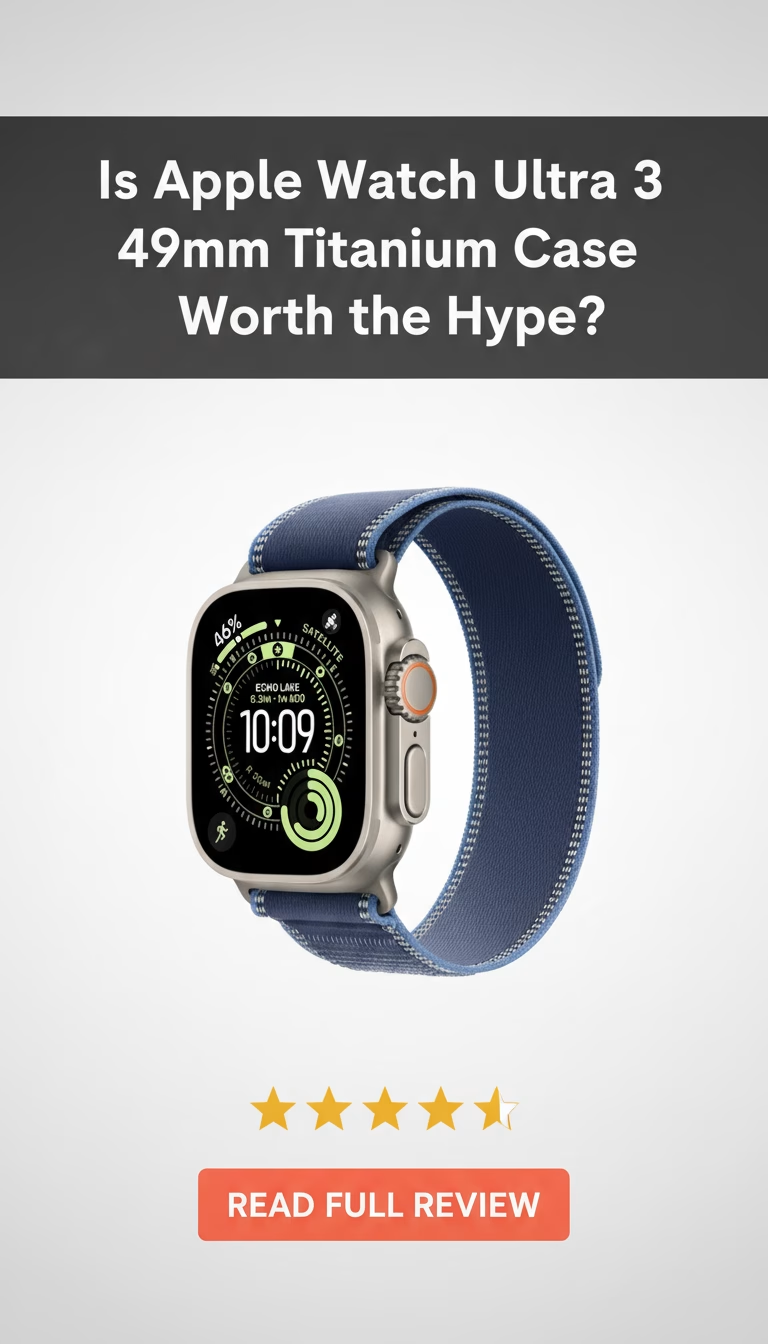
    The Ultra 3 is Apple’s third attempt at a rugged adventure watch, and the formula has barely changed from the original: 49mm titanium case, flat sapphire crystal, 100m water resistance, Action Button, and the longest battery life in any Apple Watch. At $799, it costs more than a Garmin Fenix 8 and significantly more than the standard Apple Watch Series 11. The case for buying one comes down to three things: battery life, durability, and whether the 49mm size works on your wrist.

    Build and Size

    The titanium case weighs 61.4 grams without the band. For reference, the Series 11 46mm aluminum weighs about 36g. You feel the difference, but titanium distributes weight better than steel, so it sits on the wrist without feeling top-heavy. The brushed finish hides scratches well — after two months of daily wear including trail runs and gym sessions, there are no visible marks on the case or sapphire crystal.

    The 49mm dimension is the limiting factor. On wrists under 170mm circumference, it overhangs noticeably. There’s no smaller Ultra option. If the size works for you, the build quality is essentially unmatched in the smartwatch category — this is a watch you can genuinely abuse without worry. The raised bezel protects the screen from flat-surface impacts, and the titanium handles doorframe collisions better than any aluminum watch.

    The Action Button remains the Ultra’s best unique feature. One press to start a workout, trigger the flashlight, mark a waypoint, or activate the dive computer. It’s faster than any touchscreen interaction, especially with wet or gloved hands. The orange color is polarizing aesthetically but practical — you can find it by feel without looking.

    Battery — The Real Selling Point

    Apple claims 72 hours; real-world use delivers about 60-72 hours depending on GPS usage. With a 1-hour GPS-tracked outdoor run daily, always-on display enabled, sleep tracking, and normal notification flow, I consistently got 2.5-3 full days per charge. Enabling Low Power Mode (which disables always-on display and reduces background sensor frequency) pushed that to 5 days.

    For comparison: the Series 11 lasts 18-24 hours under similar usage. The Ultra 3’s battery advantage isn’t incremental — it’s a fundamentally different ownership experience. You stop thinking about charging. Weekend camping trips don’t require a power bank for your watch. That alone justifies the purchase for many users.

    GPS and Outdoor Performance

    Dual-frequency L1+L5 GPS with satellite imagery from GPS, GLONASS, Galileo, BeiDou, and QZSS. In dense urban canyons and tree-covered trails, the Ultra 3 tracks more accurately than single-frequency watches. Running routes through downtown areas showed less drift and fewer “cutting corners” artifacts compared to the Series 11.

    The compass, altimeter, and Backtrack feature (which records your GPS breadcrumb trail so you can retrace your steps) work reliably. The 86-decibel siren is genuinely loud — audible from several hundred meters in quiet conditions. For backcountry hiking, these features provide real safety value beyond what standard smartwatches offer.

    The 3000-Nit Display

    Peak brightness of 3000 nits makes this the most readable outdoor smartwatch display available. In direct summer sunlight, you can read everything clearly without shading the screen. The always-on mode dims to 1 nit minimum in dark conditions and ramps smoothly. Night Mode turns everything red for preserving dark adaptation — genuinely useful for camping and stargazing.

    What It Shares with Series 11

    The S10 chip is the same across both. Health sensors are identical: heart rate, ECG, blood oxygen, skin temperature, accelerometer, gyroscope. WatchOS features are the same. App compatibility is the same. If you don’t need the extra battery life, larger display, or rugged build, the Series 11 gives you the same core smartwatch experience for $400 less.

    What Works

    • Battery life of 60-72 hours eliminates daily charging — the single biggest quality-of-life improvement over standard Apple Watches.
    • Titanium and sapphire construction handles real-world abuse without visible damage.
    • Action Button provides instant physical access to frequently used functions.
    • 3000-nit display is unmatched for outdoor readability.
    • Dual-frequency GPS tracks more accurately in challenging environments.
    • 100m water resistance and dive certification (40m) for serious water activities.

    What Doesn’t

    • 49mm is too large for many wrists — no smaller Ultra option exists.
    • $799 is steep when the Series 11 offers identical health sensors and software for $399-499.
    • Garmin Fenix 8 ($900) and Enduro 3 ($800) offer longer battery life for ultra-endurance activities (weeks vs. days).
    • iPhone required — no Android compatibility, which limits the potential buyer pool.
    • The rugged features are wasted if your most extreme activity is a treadmill run.

    The Verdict

    The Ultra 3 is the best Apple Watch for people who actually need what it offers: multi-day battery, serious durability, and accurate outdoor tracking. If you regularly hike, trail run, swim in open water, or travel where charging isn’t guaranteed, the $799 buys genuine utility that cheaper Apple Watches can’t match. If your primary use is notifications, fitness rings, and Apple Pay during daily life, the Series 11 does all of that for $300-400 less. The Ultra tax buys battery and build — decide whether those two things are worth it for your specific use case.

    Pros

    • Seriously tough and durable build.
    • Brightest screen ever, great outdoors.
    • Battery life is finally impressive.
    • Action Button is a game-changer.
    • Super accurate GPS tracking for adventures.

    Cons

    • It's a big watch, might feel bulky.
    • Still quite expensive for a smartwatch.
    • Only works with an iPhone.
  • Fitbit Versa 4 Fitness Smartwatch

    Fitbit Versa 4 Fitness Smartwatch

    Fitbit Versa 4 Fitness Smartwatch Review 2026: Is It Worth Buying?

    Ever feel like you’re caught in this never-ending loop? You want to get healthier, maybe track your runs, improve your sleep, or jus…

    Fitbit Versa 4 — The Easiest Fitness Watch to Use, With Google Growing Pains

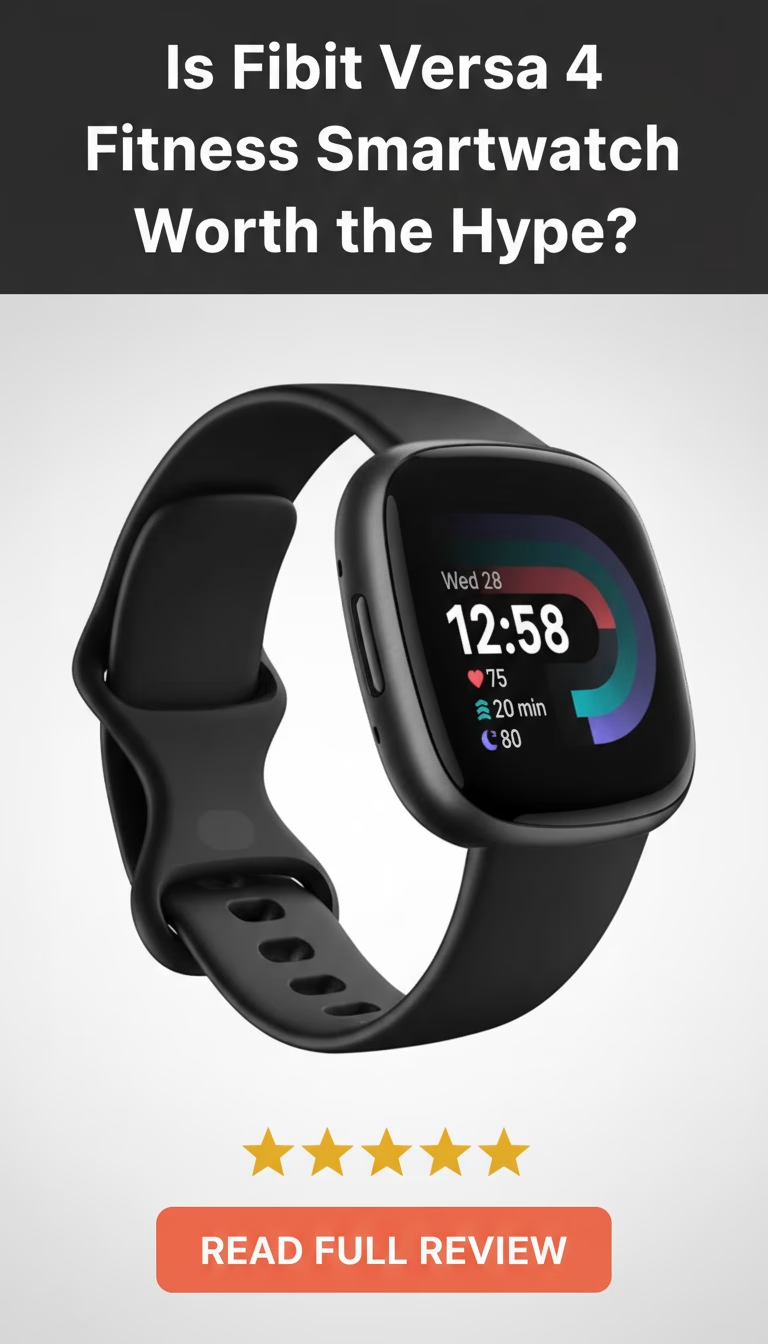
    The Fitbit Versa 4 is Google’s (now that Fitbit is a Google brand) mid-range fitness smartwatch, priced at $150-200. It tracks steps, heart rate, sleep, SpO2, and 40+ workout modes through the Fitbit app — the same app that made Fitbit the best-selling fitness tracker brand for a decade. The transition to Google ownership has added Google Maps and Google Wallet but also introduced uncertainty about Fitbit’s long-term direction. At this price, it competes with the Samsung Galaxy Watch FE and Amazfit Active 2.

    Quick Verdict

    • Overall Rating: 4.0/5
    • Best For: People who want simple, intuitive fitness tracking with the best sleep analysis in the category.
    • Key Highlight: Fitbit’s sleep tracking — including Sleep Score, sleep stages, and snoring detection — is the most detailed and actionable of any fitness watch.
    • Price Range: Check current price

    Sleep Tracking Is Still the Best

    Fitbit’s sleep analysis remains the strongest reason to choose a Versa over competitors. Sleep Score gives you a single number each morning (out of 100) that summarizes sleep quality. Sleep stages (awake, light, deep, REM) are tracked with reasonable accuracy verified against polysomnography studies. The app provides a week-over-week view of sleep trends and actionable suggestions (consistent bedtime, avoiding late caffeine) based on your data.

    Snore and noise detection uses the onboard microphone to log disruptions. The Smart Wake alarm gently wakes you during a light sleep phase within a 30-minute window before your set alarm — a feature that genuinely makes mornings less jarring.

    Daily Tracking and Workouts

    Steps, heart rate zones, active minutes, and calorie burn are tracked automatically throughout the day. The Daily Readiness Score (Fitbit Premium feature, $10/month) uses HRV, sleep, and activity data to recommend whether you should push hard or recover. The free tier tracks everything but limits some insights behind the Premium paywall.

    Built-in GPS tracks outdoor runs and walks. Accuracy is adequate for casual tracking — within 5% of dedicated GPS watches. 40+ workout modes cover common activities, though the tracking depth doesn’t approach Garmin’s level for serious runners or cyclists. Heart rate accuracy during steady exercise is good; during HIIT, it’s inconsistent (common to all wrist-based optical sensors).

    Google integration adds Google Maps (turn-by-turn on wrist), Google Wallet for contactless payments, and YouTube Music for offline playlists. These additions bring the Versa 4 closer to a full smartwatch, though the app selection is still limited compared to Apple Watch or Samsung Galaxy Watch.

    What Works and What Doesn’t

    • Best sleep tracking in the fitness watch category — Sleep Score, stages, and Smart Wake are genuinely useful.
    • Simple, intuitive interface — no learning curve for non-tech users.
    • Built-in GPS for phone-free outdoor tracking.
    • Google Maps, Wallet, and YouTube Music integration via Google ownership.
    • 6-day battery life — charges every few days instead of nightly.
    • Fitbit Premium ($10/month) locks some features behind a subscription — Daily Readiness, advanced analytics.
    • Fitbit’s future is uncertain under Google — the brand may merge into Pixel Watch over time.
    • Limited third-party app selection compared to Wear OS or watchOS.
    • No always-on display option — the screen turns off when you lower your wrist.
    • Heart rate accuracy during high-intensity exercise is inconsistent.

    The Verdict

    The Versa 4 is the fitness watch for people who don’t want to think about their fitness watch. The interface is simple, the sleep tracking is excellent, and it does the basics well. The Samsung Galaxy Watch FE ($150) offers a full Wear OS experience with more apps and a better display. The Garmin Venu Sq 2 ($250) has better workout tracking and battery life. If sleep analysis is your top priority and you want the simplest setup experience, the Versa 4 is the right choice — just be aware that Fitbit’s identity as a brand may evolve significantly in the coming years.

    Pros

    • Super comfortable for all-day wear.
    • Tracks activities and sleep really well.
    • Battery lasts ages between charges.
    • Slim design looks good on wrist.
    • Useful health metrics and readiness score.

    Cons

    • No third-party app support.
    • Smartwatch features are quite basic.
    • Sleep tracking can be a bit off sometimes.
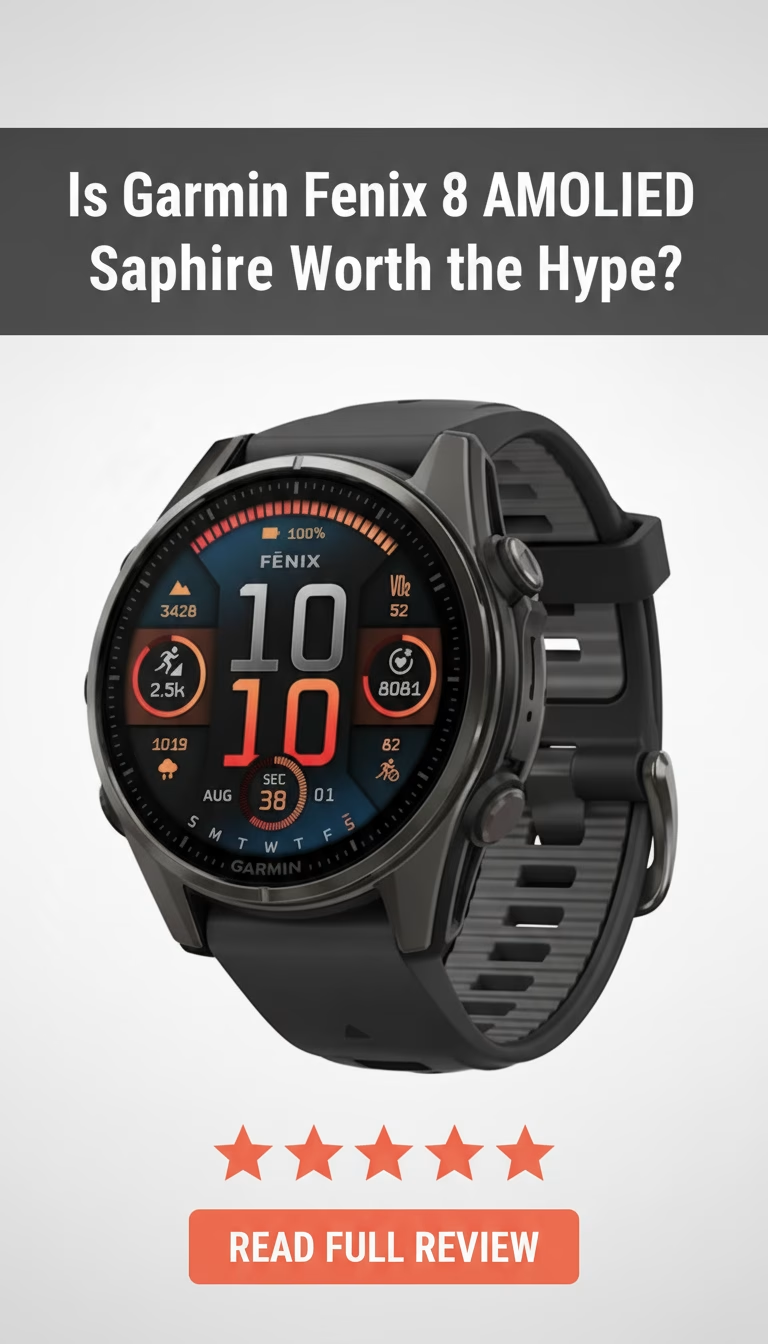
  • Garmin Fenix 8 AMOLED Sapphire

    Garmin Fenix 8 AMOLED Sapphire

    Garmin Fenix 8 AMOLED Sapphire Review 2026: Is It Worth Buying?

    Okay, let’s talk smartwatches. If you’re anything like me, you’ve probably been on that endless quest for the “perfect” one. You know, …

    Garmin Fenix 8 AMOLED — The Endurance Athlete’s Watch, Now With a Screen Worth Looking At

    The Fenix 8 AMOLED is Garmin’s top-tier multisport GPS watch, built for ultrarunners, mountaineers, triathletes, and anyone who spends extended time outdoors. At $1,000-1,100 for the AMOLED Sapphire edition, it’s expensive by any standard — but it replaces a GPS unit, altimeter, compass, pulse oximeter, flashlight, and fitness tracker in one wrist-worn package that lasts 29 days between charges.

    Quick Verdict

    • Overall Rating: 4.7/5
    • Best For: Endurance athletes, mountaineers, and outdoor enthusiasts who need multi-day battery life with comprehensive training metrics.
    • Key Highlight: 29-day battery life in smartwatch mode with a bright AMOLED display and multi-band GPS.
    • Price Range: Check current price

    Built for Multi-Day Adventures

    The 48mm or 51mm titanium case with sapphire crystal lens survives impacts, scratches, and weather that would destroy consumer smartwatches. 10 ATM water resistance means diving to 100 meters. The built-in LED flashlight (white and red modes) is bright enough for trail navigation at night. These aren’t gimmicks — ultrarunners and mountaineers use every one of these features regularly.

    Multi-band GPS with SatIQ technology automatically switches between GPS modes to balance accuracy and battery. In dense forest or urban canyons where standard GPS struggles, multi-band maintains track accuracy within 1% of measured distance. On open trails, it drops to single-band GPS to conserve battery. The result is 48+ hours of continuous GPS tracking — enough for a 100-mile ultramarathon without a mid-race charge.

    Training and Health Metrics

    Training metrics go deeper than any other watch: Training Readiness (combining sleep, recovery, and training load), Training Status (productive, maintaining, detraining), Hill Score, Endurance Score, VO2 Max, lactate threshold estimation, running dynamics (with compatible accessories), and PacePro for race pacing strategy. The depth of data is overwhelming for casual fitness users and exactly right for coached athletes.

    Health tracking includes 24/7 heart rate, SpO2, HRV status, stress, Body Battery, sleep staging, and respiratory rate. The Fenix 8 adds a depth gauge and water temperature sensor for diving. Topographic maps can be loaded directly onto the watch for navigation without a phone.

    What Works and What Doesn’t

    • 29-day battery in smartwatch mode — charges monthly instead of daily.
    • Multi-band GPS provides the most accurate outdoor tracking available on any watch.
    • Titanium/sapphire construction survives extreme conditions.
    • Built-in flashlight, altimeter, compass, and topographic maps for backcountry navigation.
    • Training metrics deep enough for coached athletes and ultra-endurance events.
    • $1,000+ puts it out of reach for casual fitness users.
    • 48mm minimum size is bulky on smaller wrists (the Epix Pro is a smaller alternative with the same features).
    • Training metric depth is overwhelming without coaching context — data overload for non-athletes.
    • Touch interface, while improved, still feels slower than Apple Watch or Samsung.
    • No cellular connectivity — requires phone for calls, messages, and live tracking.

    The Verdict

    The Fenix 8 AMOLED is justified for athletes who will actually use its capabilities: ultra-distance runners, triathletes, mountaineers, and backcountry skiers. For gym workouts and daily jogs, it’s overkill — the Garmin Venu 3 ($400) or Forerunner 265 ($350) provides everything most runners need. The Apple Watch Ultra 2 ($800) offers cellular connectivity and a better smartwatch experience but only 36 hours of battery. The COROS VERTIX 2 ($700) competes on battery life and GPS accuracy at a lower price but with a less mature software ecosystem.

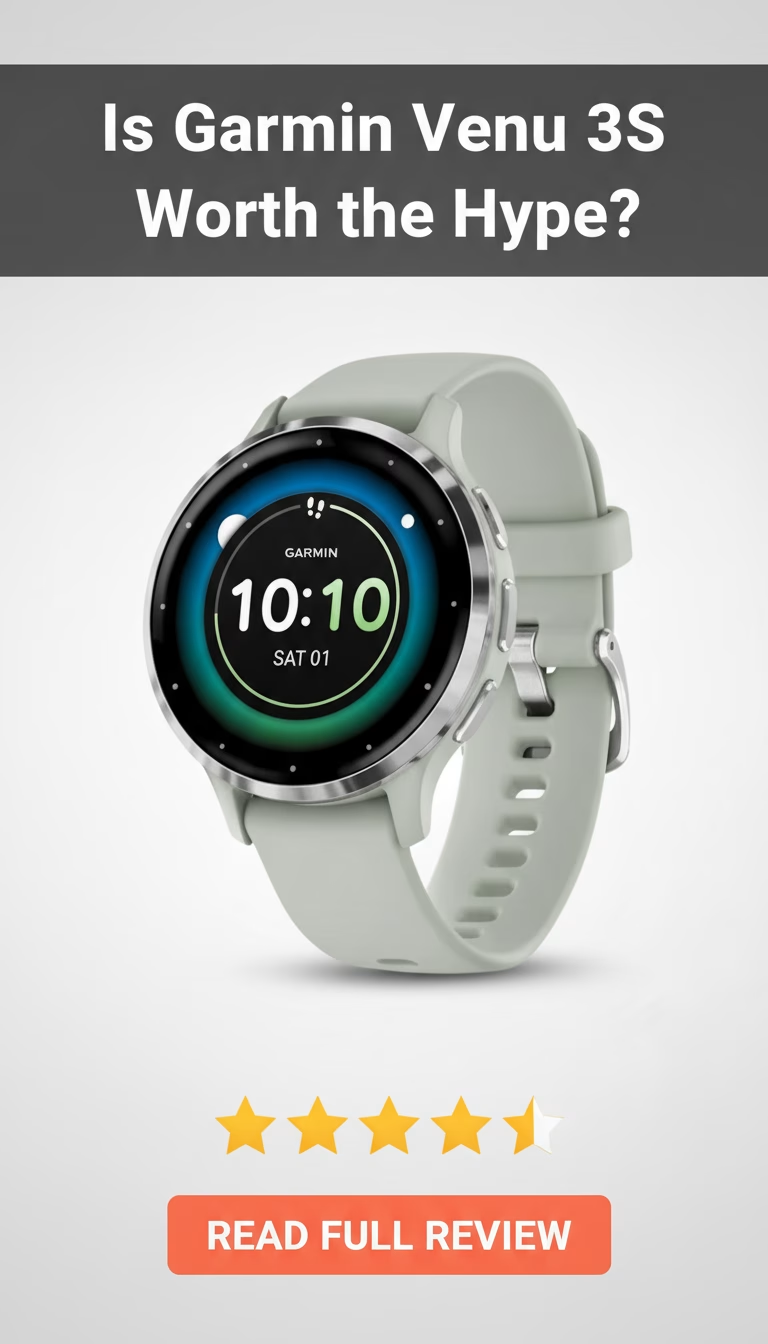
  • Garmin Venu 3S

    Garmin Venu 3S

    Garmin Venu 3S Review 2026: Is It Worth Buying?

    Okay, let’s be real for a second. Picking a new smartwatch these days feels like trying to navigate a maze blindfolded. You’ve got your fitness tracker…

    Garmin Venu 3S — A Garmin With an AMOLED Screen That Doesn’t Sacrifice Battery Life

    The Venu 3S is Garmin’s smaller-wristed AMOLED smartwatch — 41mm case (the Venu 3 is 45mm) — with a display that finally matches Apple Watch and Samsung Galaxy Watch in brightness and color. Garmin’s advantage remains battery life: 10 days in smartwatch mode versus 18 hours for an Apple Watch. At $400-450, it sits in the premium fitness watch category, competing with the Apple Watch Ultra and Samsung Galaxy Watch Ultra on features but in a slimmer, lighter package.

    Quick Verdict

    • Overall Rating: 4.5/5
    • Best For: Fitness-focused users who want a smartwatch that lasts a week between charges with accurate health and workout tracking.
    • Key Highlight: 10 days of battery life with an AMOLED display — no other smartwatch combines both.
    • Price Range: Check current price

    Battery Life Is the Differentiator

    10 days with the always-on display off, 5 days with it on. Either scenario means charging once a week instead of every night. With GPS active during workouts, battery drops to about 21 hours of continuous tracking — still enough for an ultramarathon. The smaller 41mm case means a slightly smaller battery than the 45mm Venu 3, which gets 14 days.

    The AMOLED display is 390×390 pixels, sharp and colorful. Outdoor readability is strong — usable in direct sunlight without cupping your hand around it. Touch response is smooth, and the interface is easy to navigate. Two physical buttons on the right handle back/select functions.

    Health and Fitness Tracking

    Garmin’s health metrics are comprehensive: heart rate (wrist-based optical), SpO2, stress level (based on HRV), Body Battery (energy level estimation), sleep tracking with sleep stages, respiration rate, and menstrual cycle tracking. The Body Battery feature — which estimates your energy reserves based on sleep quality, stress, and activity — is surprisingly useful for deciding whether to push through a hard workout or take a rest day.

    Workout modes cover 30+ activities including running, cycling, swimming (5 ATM water resistance), strength training, yoga, HIIT, and indoor climbing. GPS accuracy for outdoor runs is reliable — tracks within 1-2% of measured courses. The running dynamics (cadence, stride length, ground contact time) require a chest strap or Running Dynamics Pod for full data.

    New on the Venu 3 series: a built-in speaker and microphone for Bluetooth calls and voice assistant access. Garmin Connect IQ app store offers additional watch faces and data fields, though the selection is smaller than Apple Watch or Wear OS.

    What Works and What Doesn’t

    • 10-day battery life with AMOLED — charges once a week instead of every night.
    • Comprehensive health metrics including Body Battery, HRV-based stress, and sleep staging.
    • Accurate GPS tracking for outdoor workouts.
    • 41mm case size fits smaller wrists comfortably — lighter than Apple Watch Ultra.
    • Garmin Connect ecosystem provides deep data analysis and long-term trend tracking.
    • $400-450 is expensive for a watch without Apple/Google app ecosystems.
    • Limited third-party app selection compared to Apple Watch or Wear OS.
    • No cellular option — requires phone nearby for calls, messages, and music streaming.
    • Music storage (up to 8GB) works but requires pre-downloading playlists from Spotify/Amazon Music.
    • Garmin’s touch interface, while improved, isn’t as fluid as Apple Watch or Samsung.

    The Verdict

    The Venu 3S is for people who prioritize health tracking and battery life over app ecosystems. If you want a smartwatch that tracks workouts accurately, monitors health metrics comprehensively, and lasts a week without charging, nothing else matches it. The Apple Watch Series 10 ($400) has a better app ecosystem and cellular option but needs nightly charging. The Samsung Galaxy Watch7 ($300) runs Wear OS with more apps but lasts 1-2 days. Choose your priority: battery life and fitness depth (Garmin) or app ecosystem and connectivity (Apple/Samsung).

    Pros

    • Tracks health and fitness comprehensively.
    • Beautiful, bright AMOLED screen.
    • Excellent battery life, less charging.
    • Convenient on-wrist calls and voice assistant.
    • Comfortable, lightweight design.

    Cons

    • Premium price point.
    • Garmin Pay adoption is still limited.
    • No built-in cellular option.