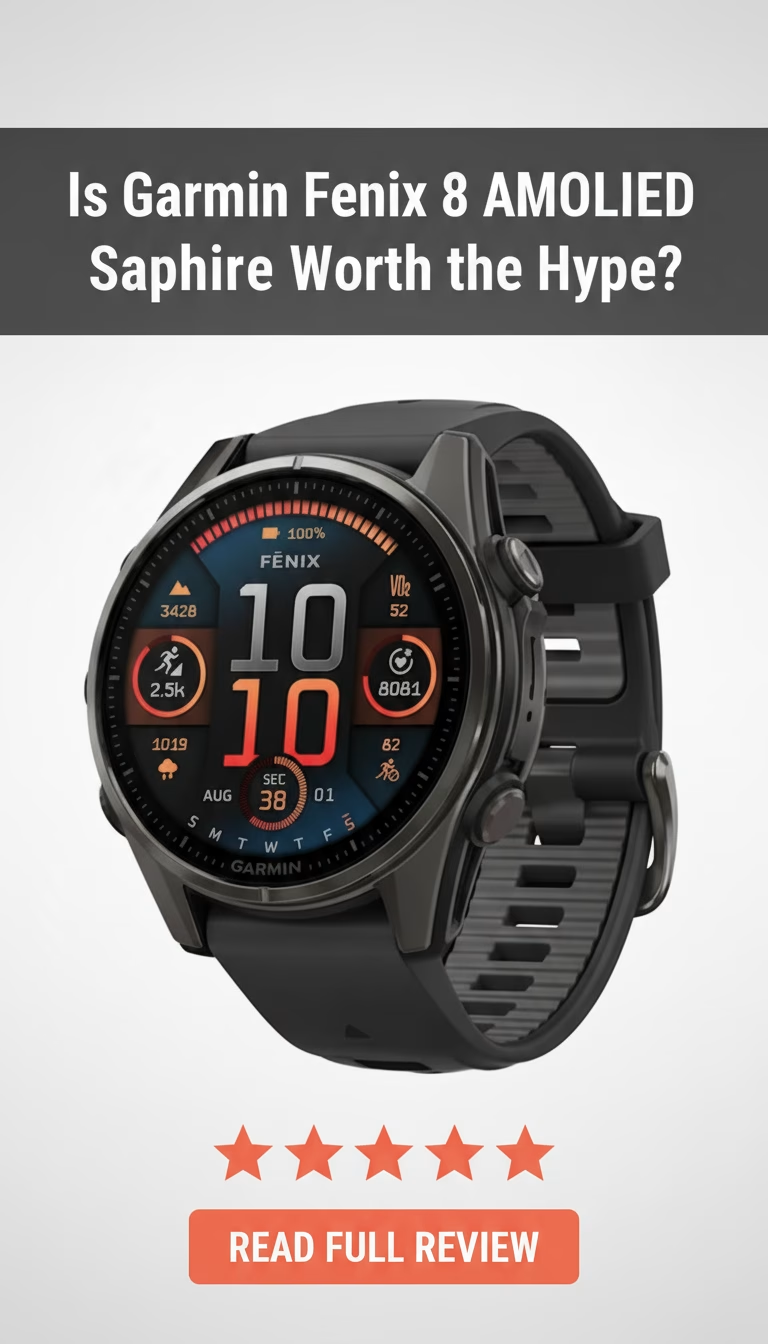
Garmin Fenix 8 AMOLED Sapphire Review 2026: Is It Worth Buying?
Okay, let’s talk smartwatches. If you’re anything like me, you’ve probably been on that endless quest for the “perfect” one. You know, …
Garmin Fenix 8 AMOLED — The Endurance Athlete’s Watch, Now With a Screen Worth Looking At
The Fenix 8 AMOLED is Garmin’s top-tier multisport GPS watch, built for ultrarunners, mountaineers, triathletes, and anyone who spends extended time outdoors. At $1,000-1,100 for the AMOLED Sapphire edition, it’s expensive by any standard — but it replaces a GPS unit, altimeter, compass, pulse oximeter, flashlight, and fitness tracker in one wrist-worn package that lasts 29 days between charges.
Quick Verdict
- Overall Rating: 4.7/5
- Best For: Endurance athletes, mountaineers, and outdoor enthusiasts who need multi-day battery life with comprehensive training metrics.
- Key Highlight: 29-day battery life in smartwatch mode with a bright AMOLED display and multi-band GPS.
- Price Range: Check current price
Built for Multi-Day Adventures
The 48mm or 51mm titanium case with sapphire crystal lens survives impacts, scratches, and weather that would destroy consumer smartwatches. 10 ATM water resistance means diving to 100 meters. The built-in LED flashlight (white and red modes) is bright enough for trail navigation at night. These aren’t gimmicks — ultrarunners and mountaineers use every one of these features regularly.
Multi-band GPS with SatIQ technology automatically switches between GPS modes to balance accuracy and battery. In dense forest or urban canyons where standard GPS struggles, multi-band maintains track accuracy within 1% of measured distance. On open trails, it drops to single-band GPS to conserve battery. The result is 48+ hours of continuous GPS tracking — enough for a 100-mile ultramarathon without a mid-race charge.
Training and Health Metrics
Training metrics go deeper than any other watch: Training Readiness (combining sleep, recovery, and training load), Training Status (productive, maintaining, detraining), Hill Score, Endurance Score, VO2 Max, lactate threshold estimation, running dynamics (with compatible accessories), and PacePro for race pacing strategy. The depth of data is overwhelming for casual fitness users and exactly right for coached athletes.
Health tracking includes 24/7 heart rate, SpO2, HRV status, stress, Body Battery, sleep staging, and respiratory rate. The Fenix 8 adds a depth gauge and water temperature sensor for diving. Topographic maps can be loaded directly onto the watch for navigation without a phone.
What Works and What Doesn’t
- 29-day battery in smartwatch mode — charges monthly instead of daily.
- Multi-band GPS provides the most accurate outdoor tracking available on any watch.
- Titanium/sapphire construction survives extreme conditions.
- Built-in flashlight, altimeter, compass, and topographic maps for backcountry navigation.
- Training metrics deep enough for coached athletes and ultra-endurance events.
- $1,000+ puts it out of reach for casual fitness users.
- 48mm minimum size is bulky on smaller wrists (the Epix Pro is a smaller alternative with the same features).
- Training metric depth is overwhelming without coaching context — data overload for non-athletes.
- Touch interface, while improved, still feels slower than Apple Watch or Samsung.
- No cellular connectivity — requires phone for calls, messages, and live tracking.
The Verdict
The Fenix 8 AMOLED is justified for athletes who will actually use its capabilities: ultra-distance runners, triathletes, mountaineers, and backcountry skiers. For gym workouts and daily jogs, it’s overkill — the Garmin Venu 3 ($400) or Forerunner 265 ($350) provides everything most runners need. The Apple Watch Ultra 2 ($800) offers cellular connectivity and a better smartwatch experience but only 36 hours of battery. The COROS VERTIX 2 ($700) competes on battery life and GPS accuracy at a lower price but with a less mature software ecosystem.
Leave a Reply