TCL Class QM8K Series 4K QD-Mini LED UHD HDR Smart TV Review 2026: Is It Worth Buying?
You know that feeling, right? You’re scrolling through endless TV models online, each one promising to be the …
TCL QM8K — Maximum Mini-LED Specs, Aggressive Pricing
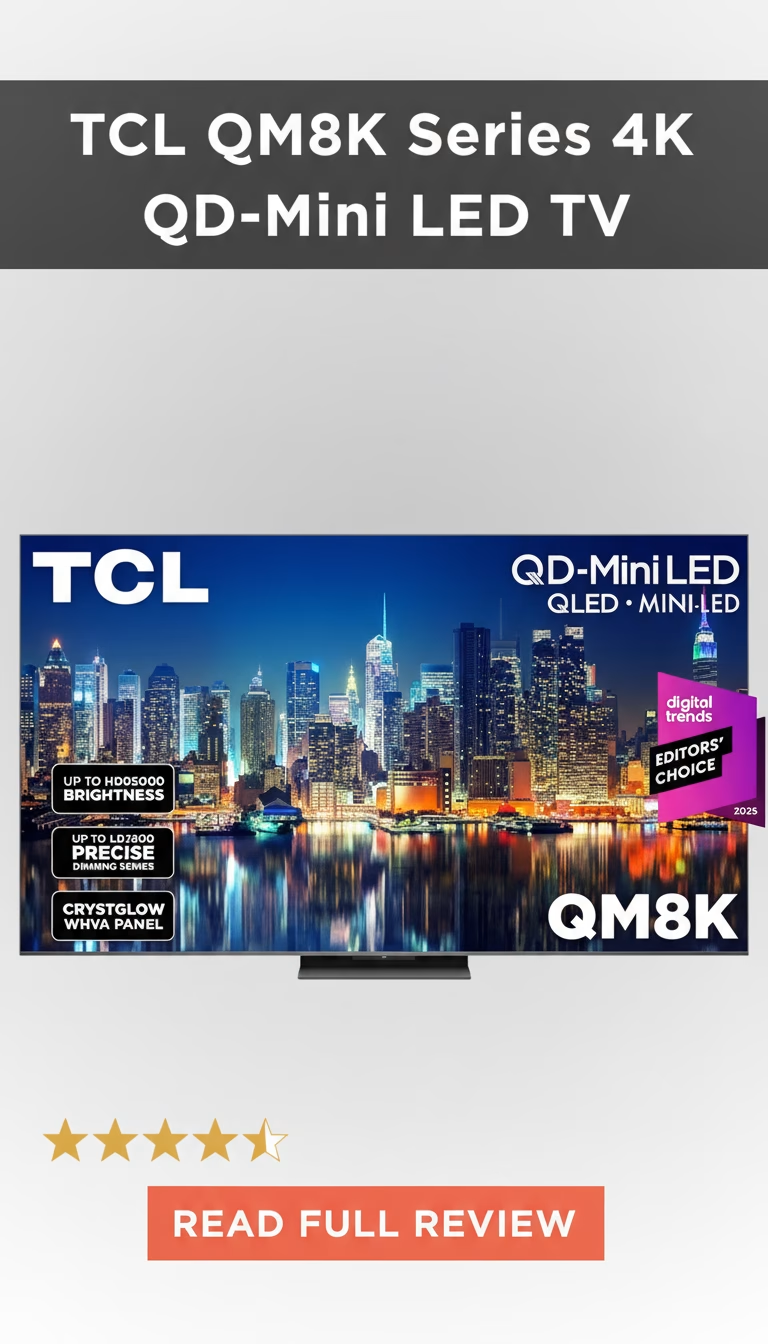
TCL”s QM8K is their 2026 flagship: QD-Mini LED with the highest zone count, brightest panel, and most complete feature set in their lineup. At roughly $998 for the 65-inch, it matches the Hisense U8”s price while pushing even further on hardware specifications. The QM8K bets that more zones, more brightness, and quantum dot color can brute-force its way to flagship image quality — and it gets surprisingly close.
The Spec Sheet: Impressive Numbers
The 65-inch QM8K packs approximately 2,000+ mini-LED dimming zones — far more than Sony”s BRAVIA 9 (~700 zones at $2,000) and roughly four times the Hisense U8. Peak brightness exceeds 2,500 nits on 10% HDR windows, making it one of the brightest consumer TVs available at any price. Full-screen sustained brightness holds around 1,100 nits. These are numbers that a year ago required spending $2,500+ to achieve.
Quantum dot color enhancement covers approximately 97% of DCI-P3. Combined with the extreme brightness, color volume — the ability to maintain saturated color at high luminance levels — is among the best of any LED TV. Bright HDR scenes maintain their color integrity rather than washing out toward white, which is a common issue on less bright panels.
In Practice: Raw Power vs. Refinement
With 2,000 zones, blooming should theoretically be minimal. In practice, it”s well-controlled but not invisible. TCL”s processing algorithm handles the massive zone count capably — white subtitles on black backgrounds show tight, contained halos rather than the broad glow that fewer-zone TVs produce. Complex scenes with scattered bright elements against darkness behave well, with minimal zone transitions visible during normal viewing.
Where the QM8K stumbles: processing finesse. Color accuracy out of the box in the default “Dynamic” mode is heavily oversaturated — reds look artificially vivid, greens glow, and skin tones skew orange. Switching to “Filmmaker” or “Movie” mode corrects most of this, bringing delta E to roughly 3.5 — acceptable but still behind Sony”s 1.5-2.5 in the same price range. TCL includes a manual white balance and color management system for calibration enthusiasts, but most buyers won”t touch it.
Motion handling defaults to an aggressive interpolation setting that creates visible soap opera effect on film content. Disabling “LED Motion Clarity” and reducing “Action Smoothing” to its lowest setting produces natural-looking motion. Sports and gaming look excellent once settings are adjusted, but the out-of-box experience requires work.
Black Levels and Dark Room Performance
The VA panel provides roughly 5,000:1 native contrast before local dimming. With 2,000+ zones active, effective contrast in HDR content is dramatic — dark scenes with bright elements produce a high-impact image with deep blacks and punchy highlights. The QM8K handles dark-room viewing better than any TCL TV before it, and better than the Hisense U8 in this specific scenario thanks to the higher zone count reducing visible blooming.
Against a $2,000 Sony BRAVIA 9 in a dark room, the QM8K shows more visible zone transitions and less refined shadow detail. Against the Hisense U8, the QM8K”s additional zones produce cleaner dark scenes. Price-adjusted, the dark-room performance is impressive.
Gaming: Full Featured
Two HDMI 2.1 ports: 4K 144Hz, VRR (FreeSync Premium Pro, basic G-Sync compatibility), ALLM. Input lag at 4K/120Hz: approximately 6ms in Game Mode — the lowest of any mini-LED TV tested, and competitive with OLED flagships. This makes the QM8K one of the best gaming TVs under $1,000 purely on response time.
The Game Bar overlay provides FPS, VRR range, and input lag monitoring. Genre presets adjust contrast and shadow visibility. For competitive FPS players on a budget, the QM8K”s combination of extreme brightness (better visibility in bright in-game environments), low input lag, and high refresh rate is a strong package.
Smart TV: Google TV
Google TV runs adequately on the QM8K”s hardware. Not as fast as Sony”s implementation — apps take 3-5 seconds to load versus Sony”s 2-3 — but responsive enough for daily use. Chromecast, Google Assistant, and full app support are all present. TCL includes some pre-installed promotional apps that can be removed but shouldn”t be there in the first place on a $1,000 TV.
Build Quality
Metal frame and stand with a premium look that exceeds TCL”s reputation. Thin bezels, stable dual-position stand, clean cable management. At 48 lbs for the 65-inch, it”s on the heavier side for wall mounting. The remote is basic plastic with dedicated streaming buttons — functional but not premium. Build quality overall is a step up from previous TCL flagships, approaching Samsung and Sony levels.
Speakers are 30W with Dolby Atmos support. Better than average — noticeable bass presence and decent soundstage width. Still thin compared to Sony”s acoustic surface technology, but above what Hisense and Samsung deliver at this price.
Who This TV Is For
- Spec-sheet buyers who want maximum brightness, zones, and refresh rate for minimum price.
- Competitive gamers — 6ms input lag at 4K/144Hz is hard to beat under $1,000.
- Bright-room viewers who need a TV that overpowers ambient light.
- HDR enthusiasts who want the most impactful highlights possible without spending $2,000+.
- Viewers who want accurate, natural-looking images out of the box — factory settings need work.
- Film purists who prioritize motion accuracy and color fidelity — Sony”s BRAVIA 7 is better calibrated.
- Buyers who value build polish and software refinement over raw specs.
The TCL QM8K delivers more mini-LED hardware per dollar than anything else available. Whether that hardware translates to a better viewing experience depends on your willingness to adjust settings and your tolerance for processing that”s capable but not quite refined. At $1,000, it”s the most TV you can buy — the question is whether “the most” is the same as “the best.”
Pros
- Picture quality is incredibly bright and punchy.
- Contrast and black levels are seriously impressive.
- Fantastic for gaming with buttery smooth motion.
- Google TV interface is fast and easy to navigate.
- Great value for such high-end performance.
Cons
- Built-in speakers are just okay, not amazing.
- Some minor blooming can be visible in very dark scenes.
- Can be a bit thick compared to some OLEDs.
- Reflections can be an issue in extremely bright rooms.