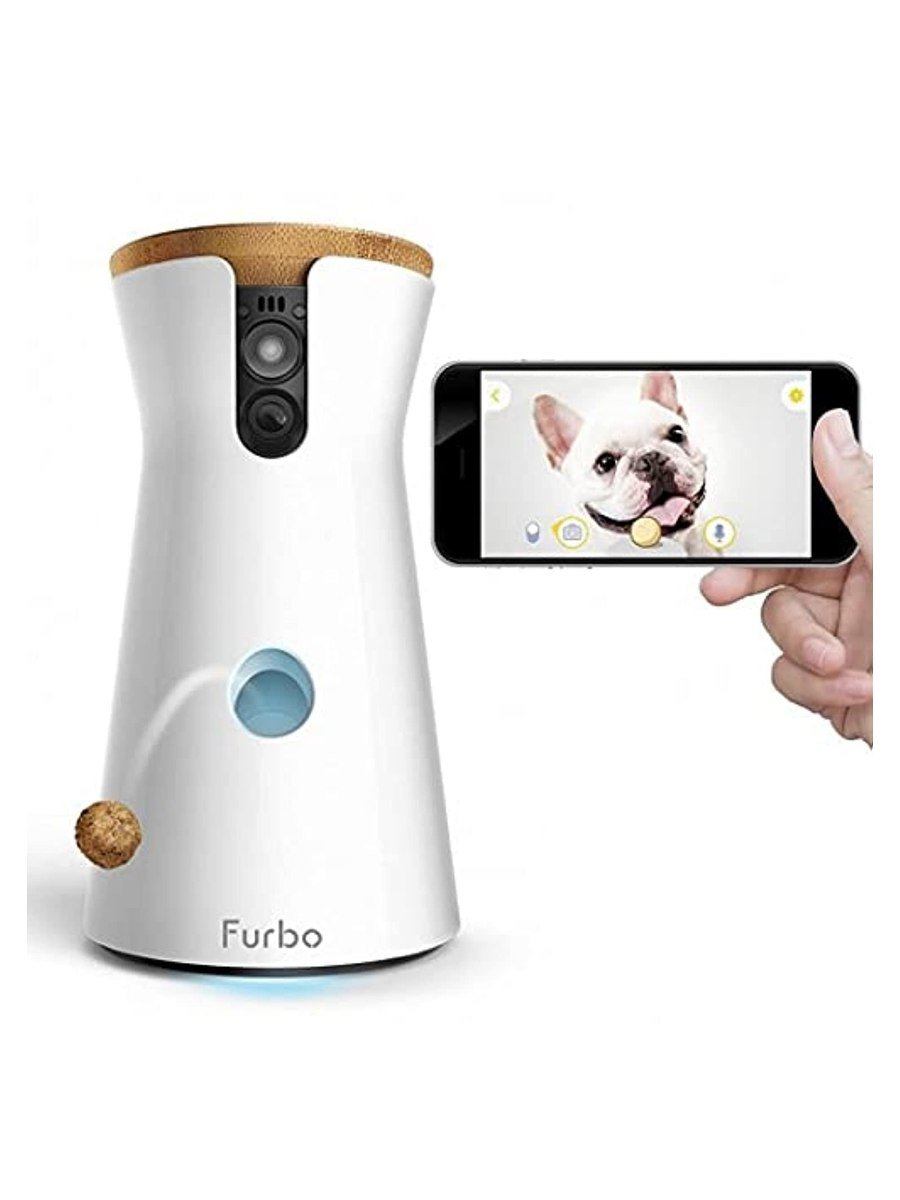
A pet camera is easy to justify and hard to use well. You watch your dog sleep for a week, then stop opening the app. The Furbo survives that phase for one reason: it tells you when something happens instead of waiting for you to look.
The barking alert
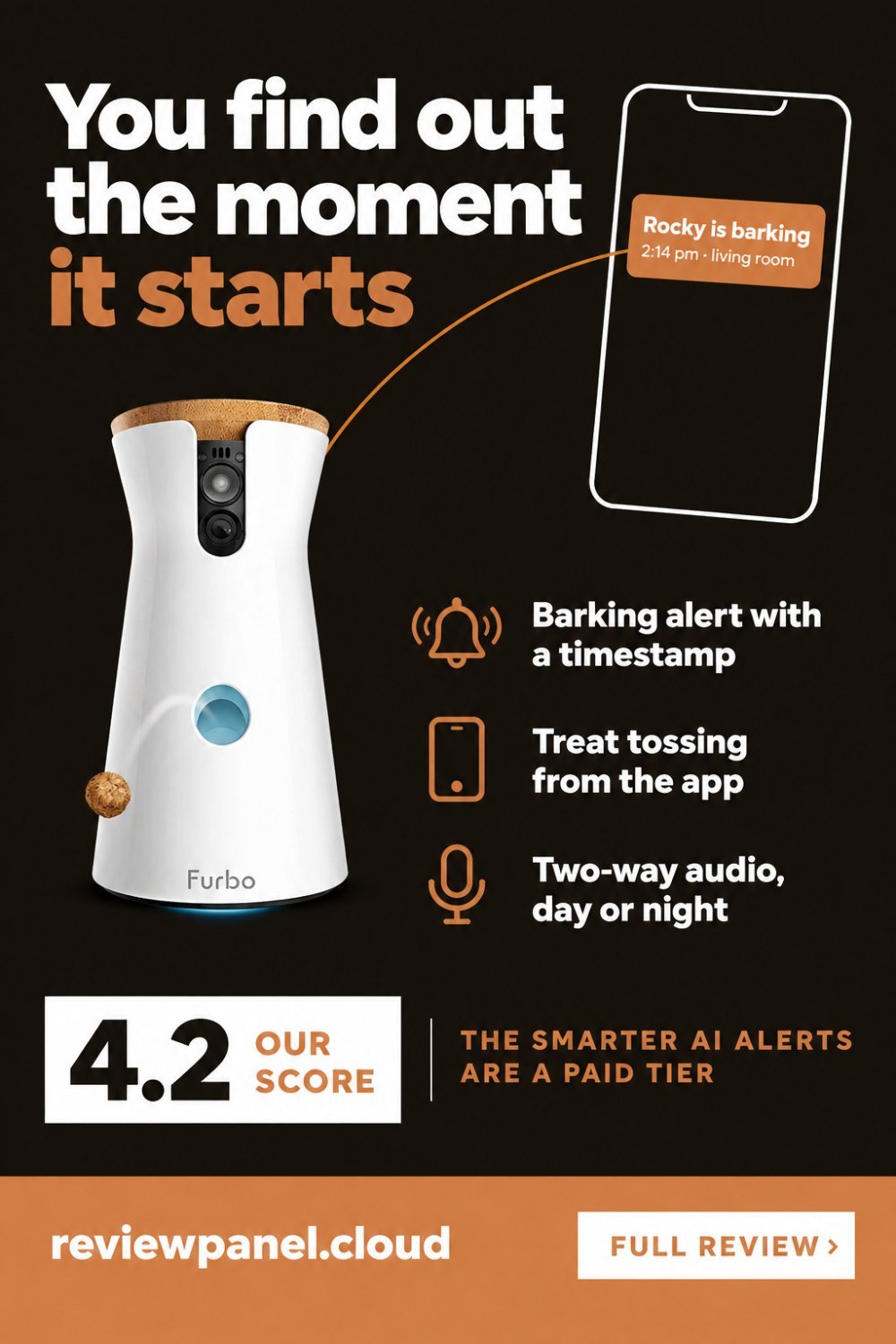
The camera listens for barking and sends a push notification when it hears it. For anyone dealing with separation anxiety or a complaint from a neighbour, this is the feature that matters. It tells you not just that your dog barks, but when — five minutes after you leave, or at three in the afternoon when the post arrives. That timing is the information a trainer actually needs.
Reading the timings, because that is the real product
The pattern of alerts says more than any single one, and the shapes are well known enough to recognise. Barking that starts within ten to thirty minutes of the door closing and then settles is normal adjustment. Barking that starts in that window and does not stop is the picture of separation distress, and it is the one to take to a behaviourist rather than a louder deterrent. Barking in short bursts scattered through the day, especially around the same times, is usually triggered by something outside: the postman, a delivery round, a dog walked past the window. That kind responds to blocking the view or moving the dog's resting place, which costs nothing.
Keep the notifications for a week before you change anything. A fortnight of timings tells you which of those three you have, and they need completely different responses.
Treat tossing
It is a genuine feature and also a genuine gimmick. Load the canister with small round treats, press the button in the app, and one fires a metre or two across the room with a tone that dogs learn quickly. The practical use is calling a dog to the camera so you can see them, and rewarding calm. The impractical use is what most people do, which is firing treats until the canister is empty.
Treat size matters. Round, roughly one centimetre, dry. Anything irregular jams the mechanism, which is the most common complaint.
There is a training trap worth naming. If you toss a treat every time the dog barks, you have rewarded barking, and dogs learn that faster than anything else in this list. Toss when the dog is quiet and settled, and ignore the barking; the tone becomes a marker for calm rather than a prize for noise.
Camera and audio
1080p with 4x zoom, a wide view of the room and colour night vision using infrared. Two-way audio works in real time; whether your dog finds your disembodied voice comforting or distressing varies enormously by dog, and it is worth testing before relying on it.
The design is deliberately domestic — a white tower with a bamboo-effect top — because a pet camera lives in a living room, not a server cupboard.
Where to put it
On a low, stable surface, facing the space where the dog actually settles rather than the middle of the room, and far enough back that a bored dog cannot reach it. A pet camera at nose height on a coffee table is a treat dispenser waiting to be tipped over. Keep it off the floor for airflow and out of direct sunlight, and route the cable behind furniture, because a chewed mains cable is a worse problem than any it solves.
Subscriptions
This is where care is needed. Different Furbo listings bundle different things, and some of the AI features — person detection, dog activity alerts, video history — require a paid plan. The core functions of live view, barking alerts, two-way audio and treat tossing are available without a subscription on the standard models. Check exactly which version a listing is before ordering.
Should you buy it?
Buy the Furbo if you are working on separation anxiety or barking and you need to know when it happens. Skip it if you just want a camera, in which case a general security camera does the same for far less.
Key features
Barking sensor
Detects barking and sends a push notification with the time.
Treat tossing
Fires a treat across the room from the app, with a tone dogs learn.
1080p live view
Wide-angle with 4x digital zoom.
Two-way audio
Speak to your dog and hear the room in real time.
Night vision
Infrared for a clear picture after dark.
Alexa compatible
View the feed on compatible Echo Show devices.
Pros & cons
What we like
- Barking alerts with timing you can act on
- Full HD live view with 4x zoom
- Real-time two-way audio
- Treat toss is genuinely useful for recall and calm
- Colour night vision
- Designed to look acceptable in a living room
What could be better
- Jams if the treats are not small and round
- Some AI features need a paid plan
- Costs far more than a plain camera
Specifications
Frequently asked questions
Small, round, dry treats about a centimetre across. Irregular or soft treats jam the dispenser, which is the most common problem owners report.
The standard models give you live view, barking alerts, two-way audio and treat tossing without one. AI detection and video history are paid extras, and some listings are subscription-required versions, so read the listing carefully.
It depends entirely on the dog. Some settle at a familiar voice; others become more anxious because they can hear you but not find you. Test it while you are nearby.
Around a hundred small treats, depending on their size.
It will film one perfectly well, but the treat mechanism and barking detection are designed around dogs.
Barking that starts within half an hour of you leaving and then settles is normal adjustment. Barking that starts then and never stops points to separation distress. Short bursts at the same times each day are usually triggered by something outside the window.
No. That rewards barking, and dogs learn it quickly. Toss when the dog is quiet and settled so the tone becomes a marker for calm.
On a low, stable surface facing where the dog actually settles, far enough back that it cannot be knocked over, out of direct sun, with the cable routed behind furniture.
Final verdict
The barking alert is the feature that earns its place, because it tells you when the problem happens. Treat tossing is fun and slightly gimmicky.
What owners report
Gathered from what long-term owners consistently say, not from a single test.
The barking alert genuinely working is what owners describe as the reason the device stays; the smarter alerts sitting behind a subscription is the most common complaint. Treat tossing jams with the wrong treat size, while round and firm ones feed through without trouble. The camera angle is fixed, so placement matters: at the wrong height the dog walks out of frame. Night vision performs as expected in a genuinely dark room.
Reader rating
Found this review helpful?
Pin it to one of your boards and come back to it whenever you need a reminder.



No comments yet.
Join the discussion. Comments are moderated before appearing.