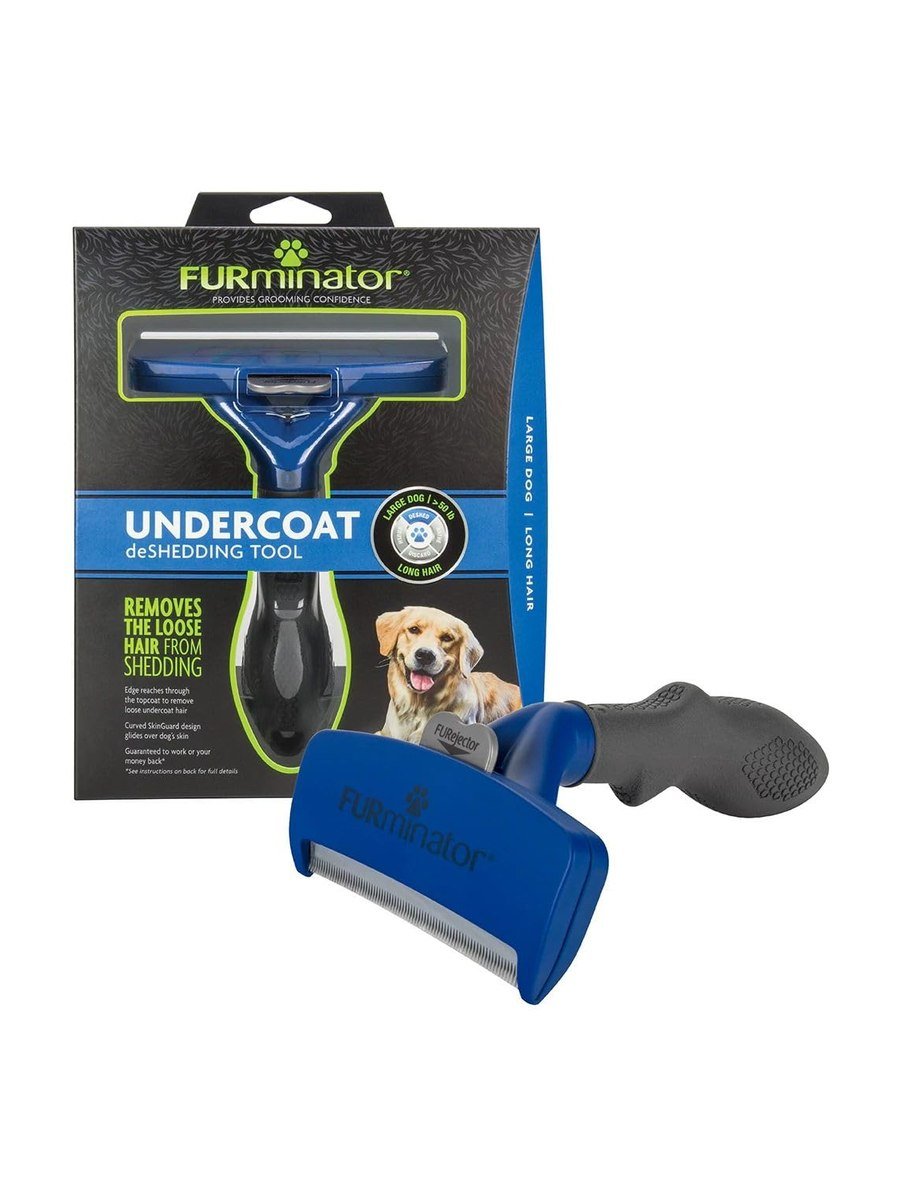
Brushes move loose hair around. This does something else: the stainless steel edge reaches past the topcoat and pulls out the dead undercoat that is actually responsible for the drifts of fur under your furniture.
What it does differently
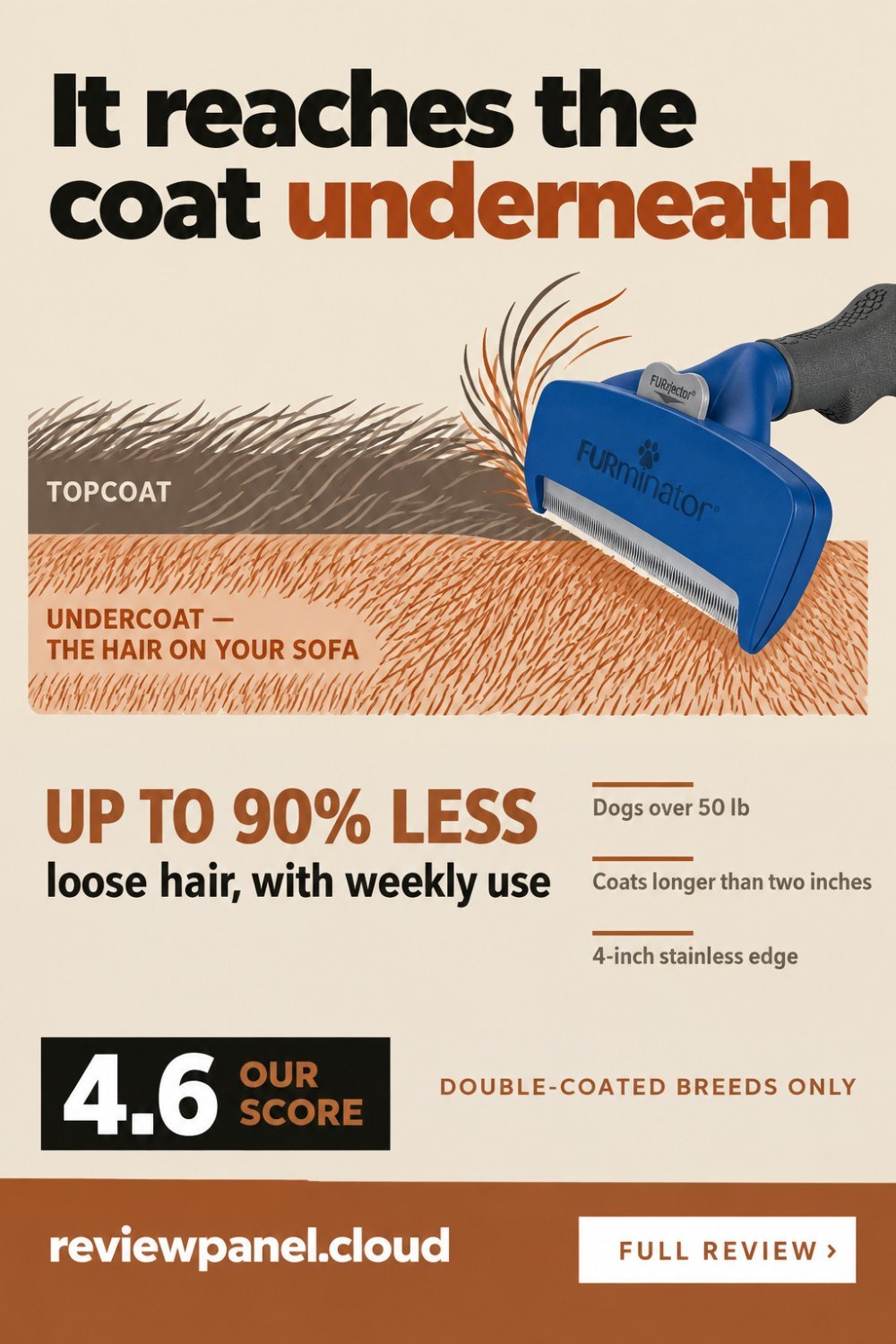
A normal slicker brush works on the surface. The FURminator edge has fine teeth designed to pass through the guard hairs and catch the soft undercoat underneath, without cutting the coat or scraping skin. The first time you use it on a double-coated dog the quantity that comes out is genuinely startling, and that is hair that would otherwise have ended up on your clothes.
FURminator says regular use reduces loose hair from shedding by up to ninety per cent. Weekly is the recommended rhythm; during a seasonal coat change you will want to do it more often and outdoors.
Does your dog have an undercoat?
This decides whether the tool helps or harms, and it is the question most buyers skip. A double coat has two layers: coarse guard hairs on top and a dense, soft layer beneath that sheds in clumps twice a year. Part the coat with your fingers and look. If you see a woolly, lighter layer close to the skin, the tool is for you. If the hair goes all the way to the skin in one texture, it does not.
| Coat | Examples | Use it? |
|---|---|---|
| Double coat, long | German shepherd, husky, collie, golden retriever | Yes, the long-hair size |
| Double coat, short | Labrador, beagle, corgi, pug | Yes, the short-hair size |
| Single coat | Poodle, bichon, maltese, most doodle crosses | No |
| Wire coat | Terriers, schnauzers | No, these need hand-stripping |
| Cats, heavy shedders | Maine coon, ragdoll, domestic shorthair | Yes, but the cat version |
Getting the right one
These are sized by animal weight and coat length, and buying the wrong one is the most common mistake. The large long-hair model is for dogs over fifty pounds with a coat longer than two inches, with a four-inch edge. There are short-hair versions, medium versions, and separate cat tools. Using a long-hair tool on a short coat is uncomfortable for the animal and ineffective.
Technique
Light pressure, in the direction the coat lies, in short strokes. The temptation is to press hard and rake, and that is how you get skin irritation. It is a tool for removing loose undercoat, not for detangling — work mats out with fingers or a proper dematting comb first, or you will hurt the dog.
Do not use it on a dog without an undercoat. Single-coated breeds and poodle crosses get nothing from it except a damaged coat.
A session that the dog tolerates
Ten minutes is plenty, and five is fine. Work one area at a time rather than covering the whole dog: start along the back, then the sides, then the hindquarters, which is where most undercoat sits. Go gently over bony places — hips, shoulders, spine — where there is little padding between the edge and the bone, and stay off the legs, belly and tail unless the coat there is thick. Stop when the edge stops filling up; continuing over a patch that has given up its loose hair is exactly how skin gets sore.
Do it outside during a coat change unless you enjoy vacuuming. And end before the dog wants you to, not after: a dog that learns grooming stops while it is still pleasant is a dog that comes back next week.
The FURejector
A button on the handle pushes the collected hair off the edge in one motion, so you are not picking clumps out of the teeth every thirty seconds. It is a small mechanism that makes a long grooming session tolerable.
Should you buy it?
Buy it if you have a double-coated dog or a heavy-shedding cat and you are tired of the hair. Skip it if your animal is single-coated, if their coat is matted and needs proper detangling first, or if you cannot commit to using it weekly — occasional use does very little.
Key features
Stainless steel edge
Reaches through the topcoat to the loose undercoat beneath.
4-inch edge width
Sized for coats longer than two inches on large dogs.
FURejector button
Releases collected hair from the edge in one motion.
Ergonomic handle
Designed for the length of a full grooming session.
For dogs over 50 lb
Separate sizes exist for small, medium and short-haired dogs.
Weekly use
The recommended rhythm for up to 90% less loose hair.
Pros & cons
What we like
- Removes undercoat that brushes leave behind
- FURejector button clears the edge in one press
- Ergonomic handle for long sessions
- Stainless steel edge does not cut the coat
- Sized properly for large long-haired dogs
- Weekly use visibly reduces shedding around the house
What could be better
- Wrong size or heavy pressure irritates skin
- Useless on single-coated breeds
- Not a detangling tool
Specifications
Frequently asked questions
Match your animal's weight and coat length. The large long-hair model is for dogs over 50 pounds with coats longer than two inches. The wrong size is uncomfortable and ineffective.
No. Breeds without an undercoat, including poodles and many crosses, get no benefit and the tool can damage the coat.
Weekly for most dogs, more often during a seasonal coat change. Occasional use does very little.
Not with light pressure in the direction of the coat. Pressing hard or raking the same spot repeatedly causes skin irritation, which is the usual complaint.
No. Work mats out with fingers or a dematting comb first. Dragging this through a mat is painful.
Part the coat with your fingers and look at the skin. A woolly, lighter layer underneath the coarse top hairs means a double coat and this tool suits it. One texture all the way to the skin means a single coat and it does not.
Five to ten minutes, one area at a time, starting along the back and finishing at the hindquarters where most undercoat sits. Stop when the edge stops filling up, and go gently over hips, shoulders and spine.
No. Those are single-coated, so there is no undercoat to remove and the tool only damages the coat. A slicker brush and a comb are the right tools there.
Final verdict
Reaches through the topcoat and pulls out the dead undercoat, which is the hair that ends up on your sofa. Sizing and light pressure are everything.
What owners report
Gathered from what long-term owners consistently say, not from a single test.
The amount of hair that comes off on the first use is at the level owners describe as producing a second dog. Pressing down causes skin irritation, and it is the warning repeated most; a light touch is both safer and more effective. The steel edge dulling shows up over years for people using it several times a week. Choosing the wrong size drops the results noticeably, which is why checking the dog's back width is the usual advice.
Reader rating
Found this review helpful?
Pin it to one of your boards and come back to it whenever you need a reminder.

No comments yet.
Join the discussion. Comments are moderated before appearing.