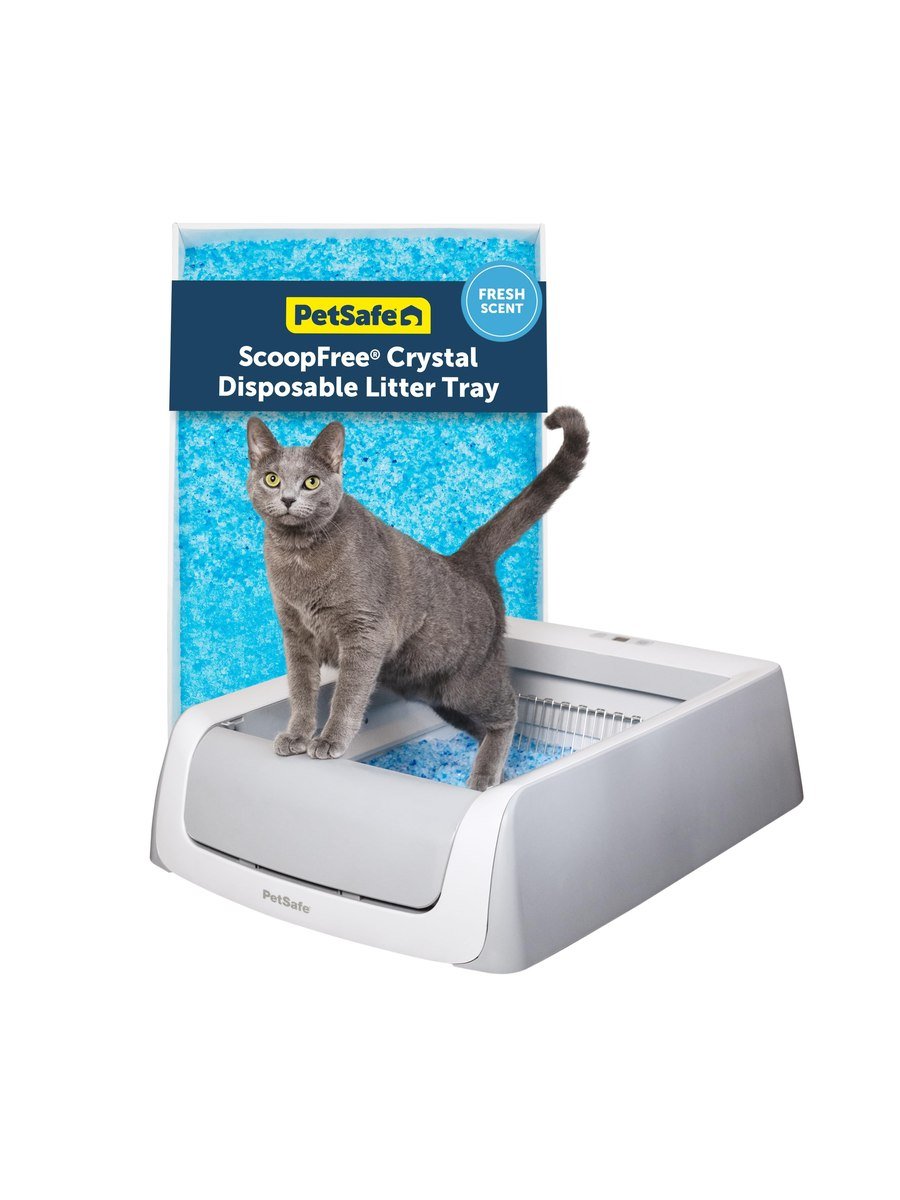
Automatic litter boxes fail in two directions: they jam, or the cat refuses to use them. The ScoopFree has been around long enough that both problems are well understood, and it sits in a different category to the rotating globes because it uses crystal litter rather than clumping.
How it works
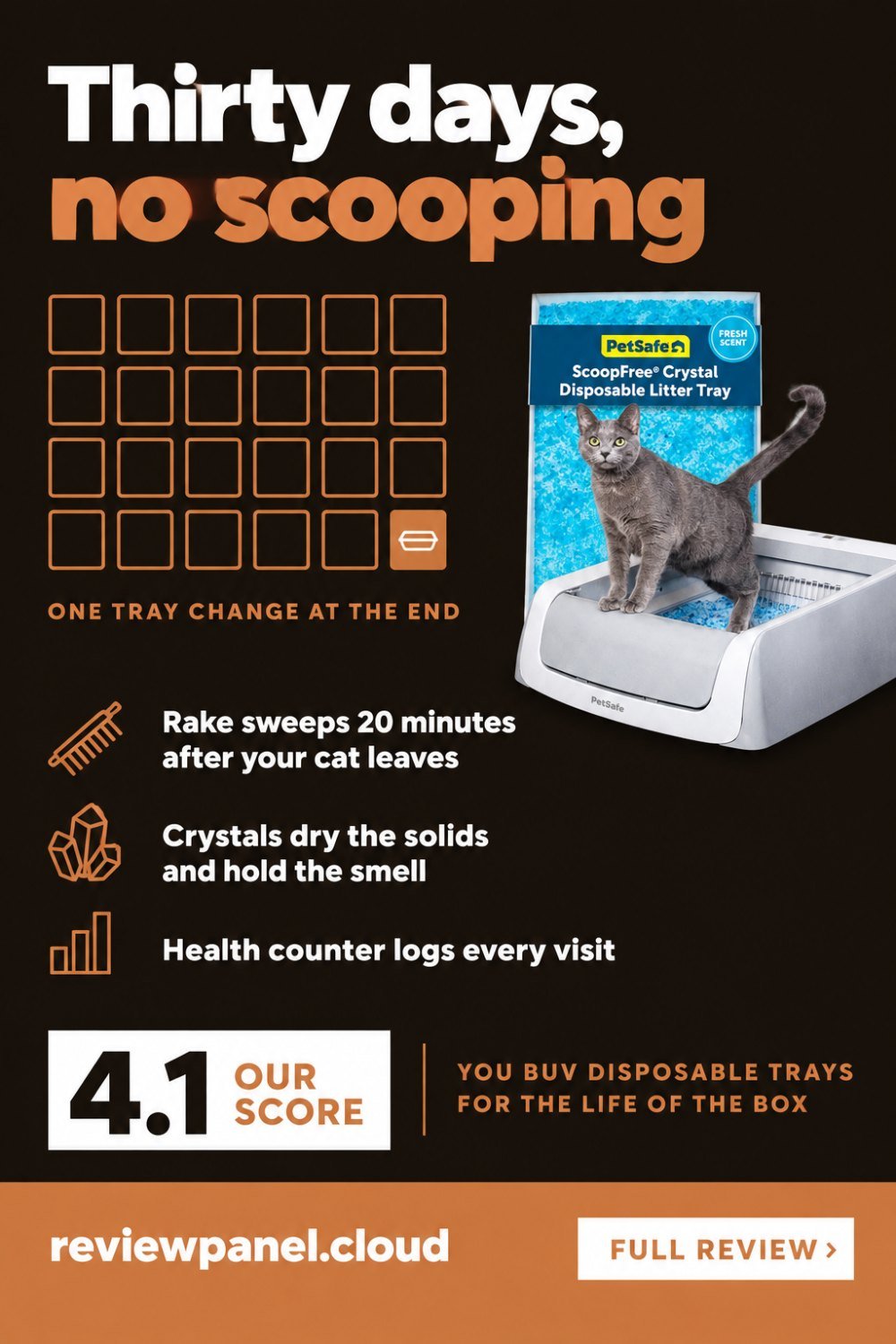
A motion sensor notices the cat entering. Twenty minutes after they leave, a rake sweeps across the tray and pushes solid waste into a covered compartment at one end. The crystal litter absorbs the liquid and dehydrates the solids, which is why the covered trap does not smell the way a clumping bin does. PetSafe claims five times better odour control than traditional clumping litter, and the covered waste compartment is the reason.
The delay matters: twenty minutes is long enough that a cat coming straight back does not get startled by a moving rake.
The crystals
This is the part that decides whether you like the product. Crystal litter is low-tracking and quoted at 99 per cent dust free, which is a real improvement if you have ever swept clay litter out of a hallway. It also feels quite different underfoot to a cat, and some cats simply will not accept the texture. If your cat is fussy, buy a bag of crystal litter for the existing box first and find out before spending on the machine.
Moving a cat onto it without a protest
Cats object to change in litter far more than to litter itself, and a rushed switch is the usual reason an expensive box ends up unused. Do it slowly. Put the new box beside the old one, both available, and leave the new one switched off and silent for the first few days so it is simply another box. Mix a handful of the old litter on top of the crystals to carry the familiar smell across. When the cat is using it, plug the rake in. Then remove the old box, not before.
The whole process takes a fortnight and it is the difference between a cat that accepts the box and a cat that starts going behind the sofa. If a cat that was using the box stops, treat it as a health question first and a preference question second: a sudden change in toilet habits is one of the ways a urinary problem announces itself.
The running cost
The disposable trays come lined with plastic and have lids for disposal, which makes the change genuinely clean — you lift the tray out, click the lid on, and it goes in the bin. It also means you are buying trays for the life of the product. Work out the monthly cost for your number of cats before deciding; for a single cat it is reasonable, for three it adds up quickly.
| Cats | Tray lasts about | Trays a year |
|---|---|---|
| One | Up to 30 days | 12–13 |
| Two | About 2 weeks | 24–26 |
| Three | About 10 days | 36–40 |
Multiply your tray price by the last column before you decide. For one cat the numbers are defensible against the time saved. For three, a standard box and a scoop is cheaper by a wide margin, and the usual advice of one box per cat plus one applies regardless of technology.
The health counter
The Crystal Pro Legacy counts how often the cat uses the box and shows it on a display. Changes in frequency are one of the earliest signs of urinary problems in cats, and a box that counts for you is a genuinely useful piece of preventive care. The Smart version puts the same data in an app over Wi-Fi.
Use it as a trend rather than a number. What matters is a change from your cat's own normal: visits doubling, or visits stopping, over a day or two. In a multi-cat house the counter cannot tell cats apart, which is another argument for one box per cat.
Should you buy it?
Buy the ScoopFree for one cat, if they will accept crystals, and you want weeks between interventions. Skip it if you have several cats, if you are unwilling to commit to buying trays, or if you have a kitten under six months — PetSafe says to leave the rake unplugged until then.
Key features
Motion-triggered rake
Sweeps solids into a covered trap 20 minutes after the cat leaves.
Crystal litter
Absorbs moisture and dehydrates solids for odour control.
Covered waste trap
Keeps smell contained between tray changes.
Health counter
Counts box visits, an early indicator of urinary problems.
Disposable trays
Plastic-lined with a lid for leak-free disposal.
Low tracking crystals
Quoted as 99% dust free, so less mess around the box.
Pros & cons
What we like
- Up to around 30 days hands-free for one cat
- Crystal litter controls odour better than clumping
- Low tracking and 99% dust free
- Covered waste trap keeps smell contained
- Health counter flags changes in usage
- Tray lifts out with a lid for clean disposal
What could be better
- Disposable trays are an ongoing cost
- Some cats refuse crystal litter
- Not suitable for kittens under six months
Specifications
Frequently asked questions
PetSafe quotes up to 30 days for a single cat. Two cats roughly halve that, and three make the running cost hard to justify.
Many do, some do not. The texture is different from clay. Try a bag of crystals in the existing box before buying the machine.
PetSafe says to leave it unplugged and scoop manually until a kitten is six months old.
Far less than a clumping box, because the crystals dehydrate solids and the waste sits in a covered trap. It is not odourless at the end of a tray cycle.
Not in this model, which is designed around the disposable crystal trays. The ScoopFree Clumping version takes ordinary clumping litter instead.
Put it beside the old one, switched off, with a handful of the old litter mixed on top of the crystals. Leave both available for several days, plug the rake in once the cat is using it, and only then remove the old box. Rushing the swap is why these boxes end up unused.
Rarely. A tray lasting a month for one cat lasts about two weeks for two and ten days for three. Multiply your tray price by 36 to 40 a year for three cats and a standard box and scoop wins easily.
Health before preference. A sudden change in toilet habits is one of the ways a urinary problem shows itself, and that is worth a vet call before you assume the cat dislikes the litter.
Final verdict
Weeks of hands-free use and genuinely better odour control than a clumping bin. You are committing to buying disposable trays for the life of the box.
What owners report
Gathered from what long-term owners consistently say, not from a single test.
The cost of the trays is discussed more than the box itself, and it is the expense that decides the long run. Crystal litter tracks out of the box on paws, and a mat in front is the usual answer. The rake occasionally jams and needs a hand, generally when the litter is filled too deep. Odour control being clearly better than a clumping bin is repeated almost without exception.
Reader rating
Found this review helpful?
Pin it to one of your boards and come back to it whenever you need a reminder.

No comments yet.
Join the discussion. Comments are moderated before appearing.