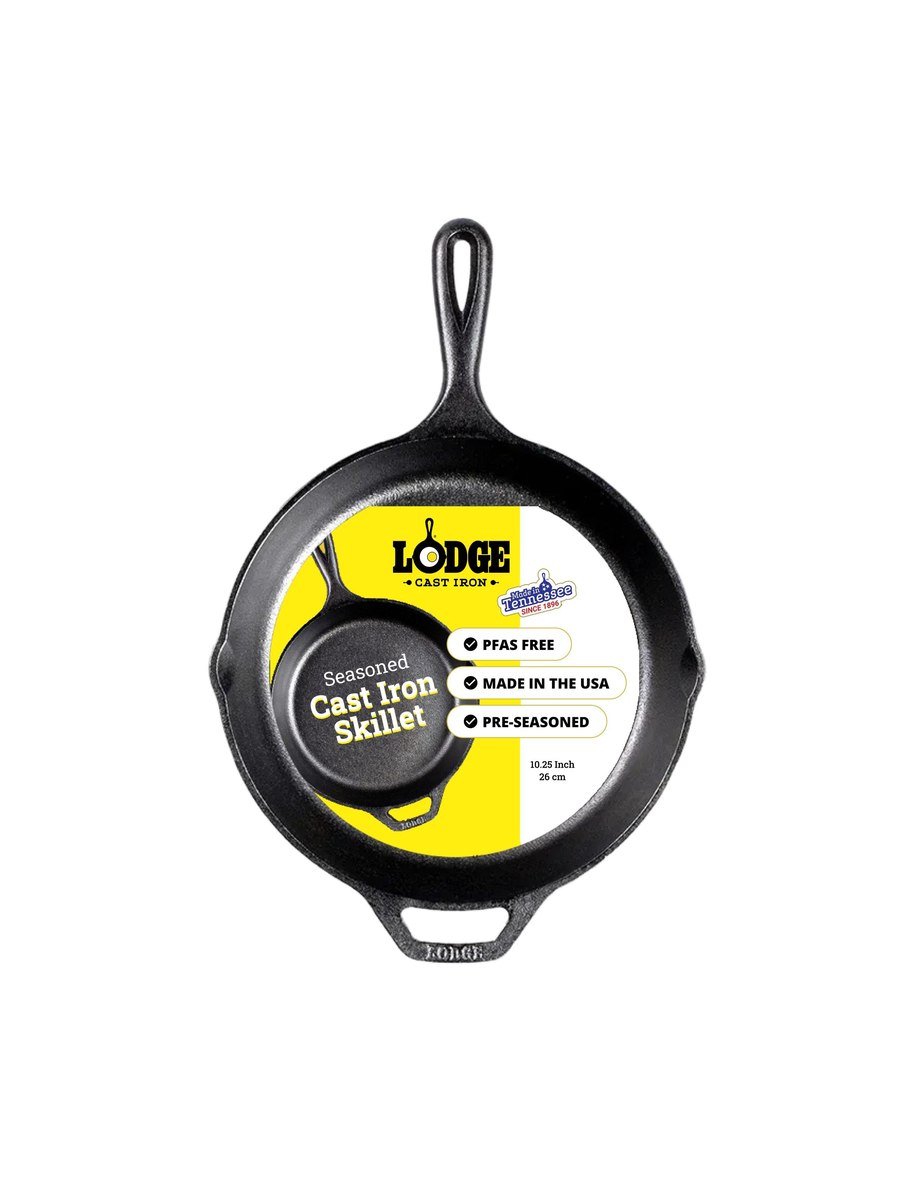
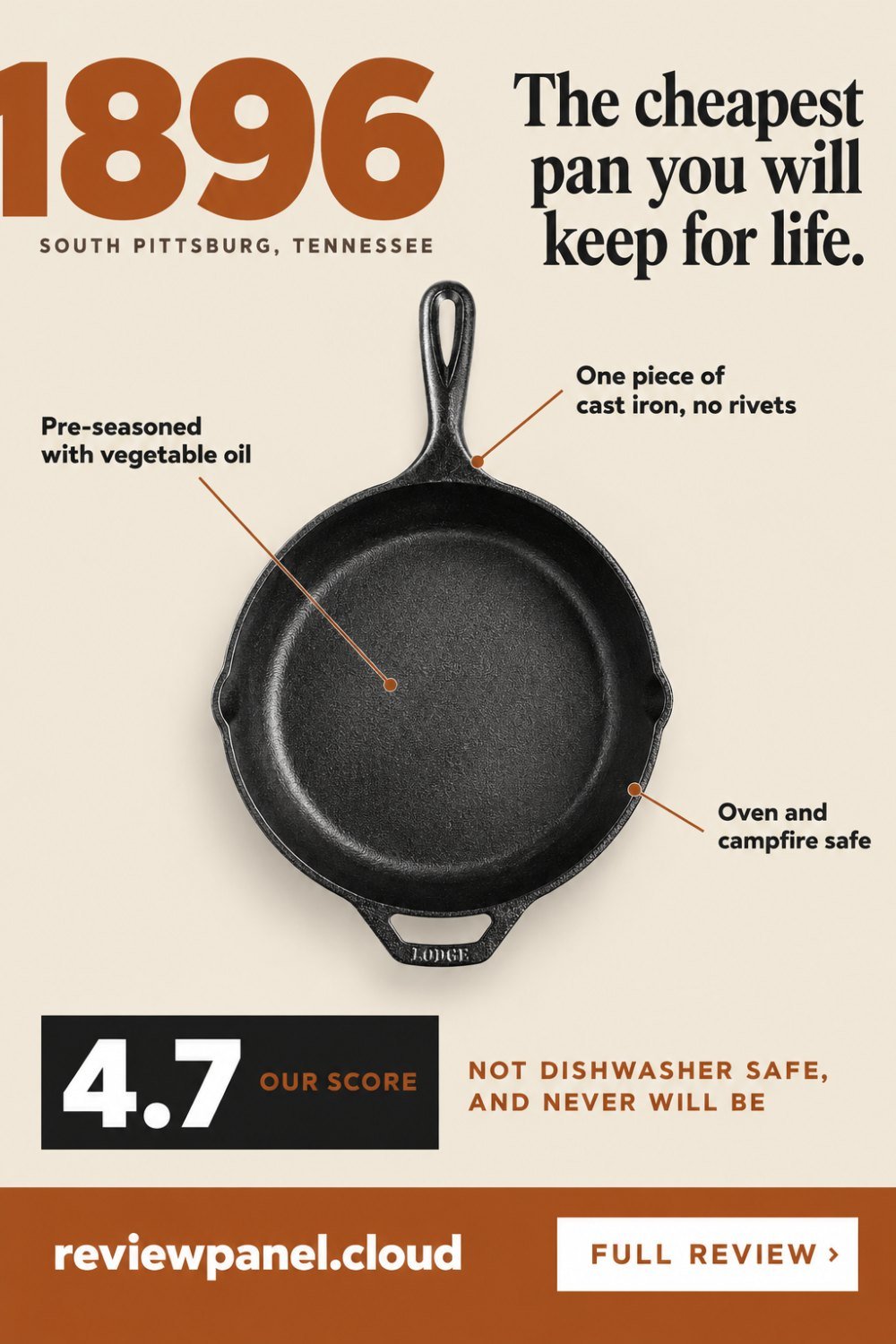
There is no clever engineering in a Lodge skillet. It is a single piece of cast iron, seasoned with vegetable oil, made in the same Tennessee foundry the company has used since 1896. That is the entire product, and it is why it is still the answer.
What it is good at
Heat retention. A cast iron pan holds its temperature when cold food hits it, which is exactly what you want for a steak, a smash burger or cornbread. Thin stainless pans lose heat and steam the food instead of searing it. The Lodge does not. Get it properly hot, dry the meat, and you get a crust that no nonstick pan will produce.
It also goes anywhere: stovetop, oven, grill, campfire. There is no plastic handle and no coating with a temperature limit, so you can start a frittata on the hob and finish it under the broiler without thinking about it.
The seasoning question
Lodge pre-seasons with one hundred per cent vegetable oil — no synthetic coating, no PFOA or PTFE. Out of the box it is usable but not slick. The seasoning builds with use: cook fatty things early on, wipe it out while warm, dry it on a low burner, and after a month eggs stop sticking. Nobody tells you the first few weeks are mediocre, and that is where most people give up.
Care is simpler than the internet suggests. Hot water and a brush, or a chain-mail scrubber for stuck-on food. A little soap will not ruin modern seasoning. What ruins it is leaving it wet, which is how you get rust.
Building seasoning on purpose
Cooking bacon in it for a month works. If you would rather not wait, one oven round does most of the job and takes an evening. Heat the oven to 450°F. Wash and dry the pan completely. Rub a very thin film of oil over every surface, inside, outside and handle, then wipe it back off with a clean cloth until the pan looks dry rather than oily — too much oil is the single most common mistake and it bakes into a sticky, patchy film. Put the pan in upside down for an hour, then let it cool in the oven. Two or three rounds give you a hard, even base that ordinary cooking then improves.
Which oil matters less than people claim, but the oil has to be able to take the heat.
| Oil | Smoke point | Verdict |
|---|---|---|
| Grapeseed | ~420°F | Good all-rounder, cheap enough to use freely |
| Canola / rapeseed | ~400°F | What most people already have; works |
| Sunflower | ~440°F | Fine, and takes a hotter oven |
| Flaxseed | ~225°F | Hardest finish, but it flakes if applied thickly |
| Olive oil | ~375°F | Burns before it polymerises properly; skip it |
What to cook in it, and what to keep out
Steak, chops, burgers, chicken thighs, cornbread, roast potatoes, skillet pizza and anything that wants a hard crust. Eggs too, once the seasoning is a few months old and you are generous with fat. Fish is fine if the pan is hot and the fish is dry.
Keep three things out until the pan is well established. Long tomato or wine simmers, which strip seasoning and pick up a metallic edge; use stainless or enamel for those. Delicate fish fillets, which will weld themselves to a young pan. And anything you want to boil for an hour, because cast iron is a searing tool, not a saucepan.
Heat, and the mistake everyone makes
Cast iron heats slowly and unevenly, then holds what it has. Preheat on medium for five minutes rather than on high for two: a burner set high scorches the middle while the rim is still cold, and on a glass hob it risks thermal shock. Cast iron also keeps cooking after you take it off the heat, so pull food a little earlier than you would from a stainless pan. On induction it works well, but move it around rather than leaving it dead centre, because induction heats a ring rather than the whole base.
If it rusts
Rust is not the end of the pan, which is the point of owning iron. Scrub the orange off with steel wool or coarse salt and a little oil, wash it, dry it on a burner, then re-season as above. A pan left in a wet sink overnight recovers completely; a pan left in a shed for ten years usually does too.
The honest downsides
It is heavy — a little over five pounds — and the handle gets hot, so a silicone grip or a folded towel is not optional. The cooking surface is textured rather than mirror-smooth, unlike vintage pans, so early seasoning takes longer. And acidic sauces will strip seasoning if you simmer them for an hour.
Is 10.25 inches the right size?
It is the one to own if you own one. It takes two steaks, a pound of mince, or a cornbread for four, and it still fits on a standard burner. The eight-inch is a breakfast pan and too small for searing anything with a side. The twelve-inch cooks for four comfortably but weighs over eight pounds, which is the point where people stop lifting it one-handed and it starts living in the oven.
Should you buy it?
Buy it if you sear meat, bake cornbread, or want one pan that will outlast the kitchen it sits in. Skip it if you cannot comfortably lift five pounds one-handed, or if you want a pan that is nonstick on day one with no work from you.
Key features
Pre-seasoned finish
100% vegetable oil, no synthetic coating or chemicals.
One-piece cast iron
No rivets, no joints and nothing to loosen.
Oven and campfire safe
No plastic parts and no coating with a temperature ceiling.
Superior heat retention
Holds temperature when cold food hits the pan.
Signature teardrop handle
Plus an assist handle on the opposite side.
Made in the USA
Cast in South Pittsburg, Tennessee.
Pros & cons
What we like
- Holds heat better than any thin pan, so it sears instead of steaming
- Oven, grill and campfire safe with no temperature limit
- Pre-seasoned with vegetable oil, no PFOA or PTFE
- Seasoning improves for years with use
- Costs less than a single restaurant meal
- Effectively unbreakable
What could be better
- Just over five pounds and the handle gets hot
- Textured surface takes longer to season than vintage pans
- Long-simmered acidic sauces strip the seasoning
Specifications
Frequently asked questions
No. It is usable but not slick. The seasoning builds over a few weeks of cooking, and eggs generally stop sticking after a month of regular use.
A small amount on modern seasoning is fine. What actually damages a pan is leaving it wet. Dry it on a warm burner and wipe a thin film of oil over it.
Yes. Cast iron is ideal for induction.
Modern Lodge pans are not machine-polished. The texture fills in as seasoning builds, but it takes longer to reach the glassy finish of a vintage pan.
Briefly, yes. A long acidic simmer will strip seasoning and give the food a metallic edge, so use stainless or enamel for those.
Heat the oven to 450°F, wash and dry the pan, rub a very thin film of oil over every surface and then wipe it back off until the pan looks dry. Bake it upside down for an hour and let it cool inside. Two or three rounds give a hard base. Too much oil is the usual mistake and leaves a sticky film.
Grapeseed, canola or sunflower all work and are cheap enough to use freely. Avoid olive oil, which burns before it sets properly. Flaxseed gives the hardest finish but flakes if you apply it thickly.
No. Scrub the rust off with steel wool or coarse salt and oil, wash it, dry it on a burner and season it again. Iron recovers from neglect that would finish any coated pan.
The 10.25-inch. It takes two steaks or a cornbread for four and still fits a standard burner. The 12-inch weighs over eight pounds, which is the point where people stop lifting it one-handed.
Final verdict
Iron, oil and nothing else. Give it a month of use and it becomes the pan you reach for, and it will outlast everything else in the kitchen.
What owners report
Gathered from what long-term owners consistently say, not from a single test.
The surface is rough out of the box, and people who stick in the first few weeks often mistake that for a defect when it simply smooths with use. The factory seasoning is a starting point rather than a finished coating; after a few fatty cooks the pan behaves completely differently. The handle getting too hot to hold on the hob is what everybody learns on day one. Rusting when left wet is described as the only real maintenance rule.
Reader rating
Found this review helpful?
Pin it to one of your boards and come back to it whenever you need a reminder.


No comments yet.
Join the discussion. Comments are moderated before appearing.