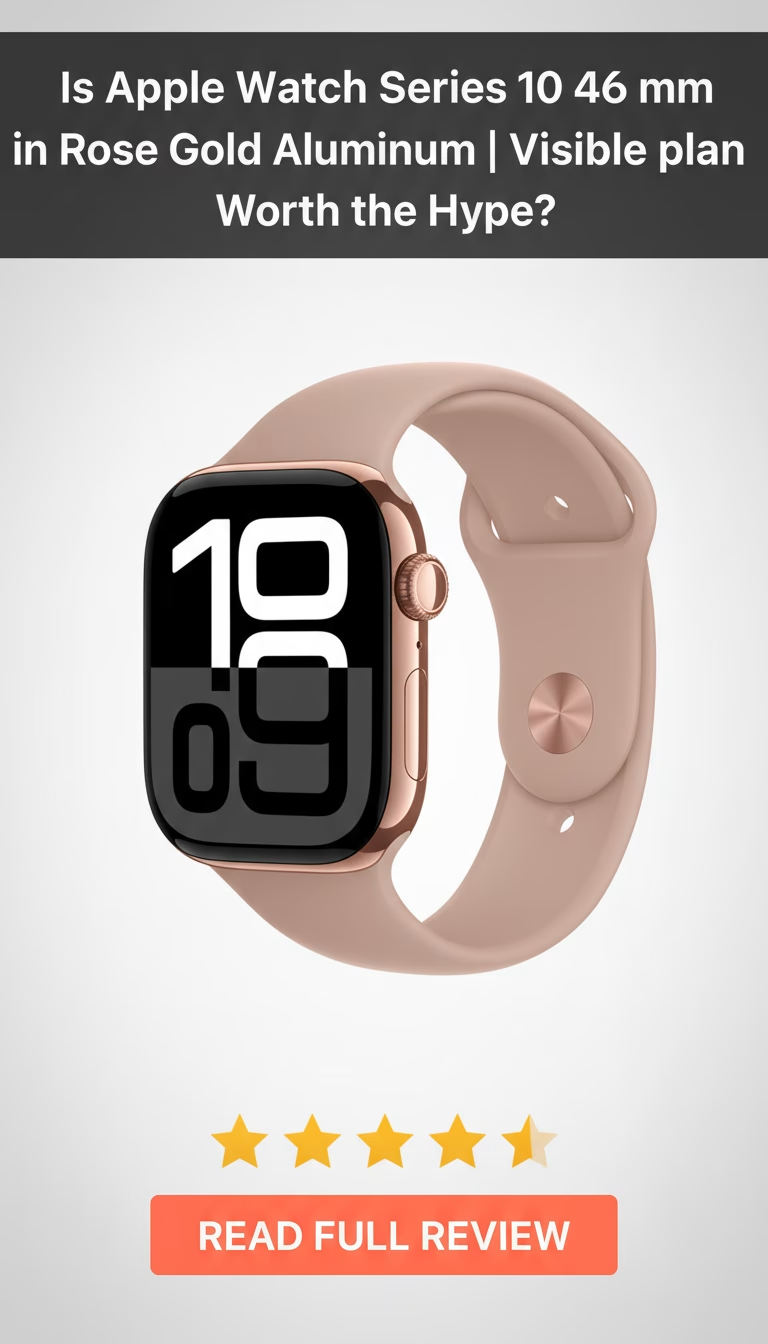
Apple Watch Series 10 46 mm in Rose Gold Aluminum | Visible (with 36 monthly installment payments + plan) Review 2026: Is It Worth Buying?
Ever find yourself in a constant battle with your phone? You…
Apple Watch Series 10 46mm — Last Year’s Model at a Better Price
The Series 10 is now Apple’s previous-generation watch, which means discounted prices at most retailers. The 46mm Rose Gold Aluminum originally launched at $429 (GPS) / $529 (GPS+Cellular) and can now be found for $50-100 less. It shares most of its DNA with the Series 11 — same health sensors, similar battery life, and only one chip generation behind (S9 vs. S10). The question isn’t whether it’s a good watch; it’s whether the Series 11 improvements justify paying more.
What the Series 10 Offers
The S9 chip handles everything WatchOS throws at it without noticeable lag. App launches take a fraction of a second longer than on the S10, but in daily use, the difference is imperceptible. Health sensors are identical to the Series 11: optical heart rate with high/low notifications, ECG, blood oxygen, skin temperature, and the same accelerometer/gyroscope package for crash and fall detection.
The display peaks at 1600 nits (vs. 2000 on Series 11). In most conditions, this is perfectly readable — the difference only becomes apparent in direct harsh sunlight, where the Series 11 has a slight edge. The always-on display, workout tracking, Apple Pay, Siri, and all WatchOS features work identically.
Battery life is functionally the same: 18-24 hours depending on usage, with overnight sleep tracking feasible if you charge during your morning routine. The 46mm Rose Gold Aluminum finish is identical in appearance to the Series 11 Rose Gold — Apple didn’t change the color between generations.
Why Consider the Series 10 Over Series 11
Price. A $50-100 savings on functionally identical hardware is the straightforward case. Apple typically supports watches with software updates for 5-6 years, so a Series 10 bought today should receive WatchOS updates through 2030-2031. That’s the same practical lifespan as a Series 11 — the one-year head start on the S10 chip doesn’t meaningfully shorten usable life.
Why the Series 11 Might Be Worth the Extra
The brighter display (2000 vs. 1600 nits) matters if you spend significant time outdoors. The S10 chip will age slightly faster for demanding future WatchOS features. And the Series 11 will receive one additional year of software support. For most users, these differences are marginal. For outdoor athletes or those who plan to keep the watch for 4+ years, the Series 11’s advantages compound.
What Works
- Same health sensors and fitness tracking as the current generation — no compromise on functionality.
- $50-100 lower price for nearly identical hardware and software experience.
- 5+ years of expected software support — practical lifespan is not significantly shorter than Series 11.
- The 46mm Rose Gold finish is attractive and versatile.
- S9 chip handles all current WatchOS features without perceptible lag.
What Doesn’t
- Lower peak brightness (1600 vs. 2000 nits) — noticeable in direct sunlight.
- One fewer year of future software support compared to buying the latest generation.
- Still requires daily charging — battery life is not improved over Series 11.
- Finding specific color/size/cellular combinations may be harder as stock sells through.
- No resale value advantage — buyers in the used market will prefer the newer model.
The Verdict
The Series 10 is the smart-money pick if you find it at a meaningful discount. The functional difference from the Series 11 is minimal for daily use, and the savings can go toward a nice band or AppleCare+. If you’re buying at full retail with no discount, get the Series 11 for the brighter display and extra year of support. If discounted by $75 or more, the Series 10 is the better value.
Pros
- Comprehensive health and fitness monitoring.
- Stylish and customizable design.
- Cellular connectivity for phone-free use.
- Smooth integration with iPhone.
- Bright, always-on display.
Cons
- Battery life could be longer for heavy use.
- Requires an iPhone for full functionality.
- Monthly plan adds to overall cost.
- Relatively high price point.
Leave a Reply