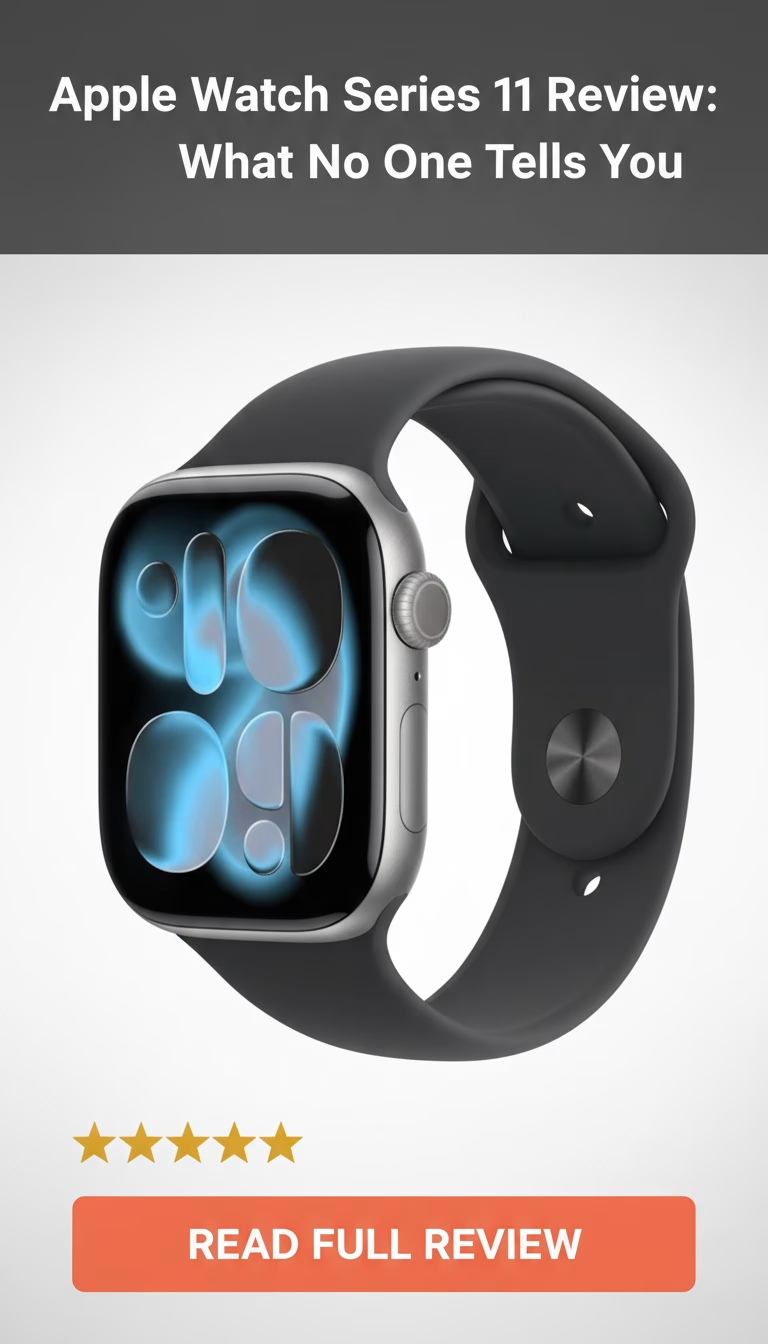
Apple Watch Series 11 Review 2026: Is It Worth Buying?
Okay, let’s be real for a second. We’ve all been there, right? You’re cruising through your day, maybe hitting the gym, sending a quick text fro…
Apple Watch Series 11 — Buying Guide Across All Variants
The Series 11 is Apple’s current-generation smartwatch, available in two sizes (42mm and 46mm), multiple colors (Jet Black, Space Gray, Rose Gold, Starlight, Silver), and two connectivity options (GPS-only starting at $399, GPS+Cellular starting at $499). All variants share the same S10 chip, the same health sensor suite, and the same WatchOS software. The decision tree is simpler than it looks: pick your size based on wrist circumference, your color based on preference, and GPS vs. Cellular based on whether you regularly leave your phone behind.
What Every Series 11 Includes
S10 System in Package — Apple’s fastest watch chip, handling app launches, Siri processing, and workout tracking without perceptible lag. Always-on Retina OLED display at up to 2000 nits peak brightness. Health sensors: optical heart rate (continuous), electrical heart sensor (ECG on demand), blood oxygen (SpO2), skin temperature, accelerometer, gyroscope. Safety features: crash detection, fall detection, emergency SOS with location sharing. WatchOS with Smart Stack, Apple Pay, Siri, HomeKit control, and app ecosystem.
Choosing Your Size
42mm: Best for wrists under 155mm circumference. Lighter (32g vs. 39g), more subtle profile, slightly less battery (20-24 hours vs. 24-28 hours). The display is adequate for notifications and workout metrics but cramped for extended reading, maps, or keyboard input.
46mm: Best for wrists 155mm+ in circumference. The larger display is meaningfully easier to read and interact with. Complications show more detail, messages require less scrolling, and the QWERTY keyboard is at least usable. Battery life gets a 2-3 hour advantage. For $30 more, the 46mm is the better value if your wrist accommodates it.
GPS vs. GPS+Cellular
GPS-only ($399/429): Requires iPhone nearby for calls, messages, and data. Handles all health tracking, workout recording, and Apple Pay independently. The right choice for 80%+ of buyers who keep their phone within Bluetooth/Wi-Fi range throughout the day.
GPS+Cellular ($499/529 + $10-12/month carrier fee): Makes calls, sends texts, streams music, and uses maps without iPhone. The right choice for runners, gym-goers, or anyone who regularly wants to leave their phone behind. The annual carrier cost ($120-144) is a recurring expense that makes this a significantly more expensive long-term choice.
Series 11 vs. Ultra 3 vs. SE
Apple Watch SE ($249): The budget option with S8 chip, no always-on display, no ECG, no blood oxygen, no temperature sensor. Good for basic fitness tracking and notifications. The right choice if health sensors aren’t a priority and price is.
Series 11 ($399-529): The mainstream option with full health sensors, current chip, and always-on display. The right choice for most iPhone users who want comprehensive health tracking and smartwatch features.
Ultra 3 ($799): The premium option with 60-72 hour battery, titanium case, sapphire crystal, 100m water resistance, and Action Button. The right choice for outdoor adventurers, multi-day trips, or anyone who values not charging daily.
What Works Across All Series 11 Models
- Health tracking is comprehensive and accurate — heart rate, ECG, blood oxygen, temperature all in one device.
- WatchOS ecosystem integration with iPhone, AirPods, Mac, and HomeKit saves time daily.
- Build quality is consistently good across all aluminum finishes — comfortable, durable, water-resistant to 50m.
- Apple Pay from the wrist is one of the most-used features once you start relying on it.
- S10 chip performance is responsive for all current watch apps and complications.
What Doesn’t
- Daily charging is required across all non-Ultra models — no Series 11 variant lasts more than ~28 hours.
- iPhone required for setup and core functionality — Android users have no workaround.
- Incremental upgrade from Series 10 — same sensors, marginally faster chip, slightly brighter display.
- The entry price of $399 doesn’t include the better 46mm size ($429) or cellular ($499+), and bands are additional.
- Replacement cycle of 4-5 years means annual cost of ownership is $80-130/year before bands and accessories.
The Verdict
The Series 11 is the best mainstream smartwatch available if you own an iPhone. The recommendation is straightforward: get the 46mm if your wrist allows it, skip cellular unless you actively need phone-free connectivity, and choose your color based on personal preference (Space Gray is the safe default, Jet Black is the modern pick, Rose Gold makes a statement). If budget is tight, the discounted Series 10 offers 95% of the experience. If battery life frustrates you, the Ultra 3 is the only Apple solution, at double the price.
Pros
- Gorgeous, bright, and responsive display.
- Robust health and fitness tracking.
- Seamless iPhone ecosystem integration.
- Improved battery life is noticeable.
- Stylish design with many band options.
Cons
- Still requires an iPhone for full features.
- Price point can be quite steep.
- Battery life still needs nightly charging.
Leave a Reply