Look at the last five things you cooked in a skillet. If most were eggs, pancakes or delicate fish, you want nonstick. If most were steaks, chops, cornbread or anything that moves from the stovetop to the oven, you want cast iron. That one honest look settles the question faster than any spec sheet.
The two pans are not rivals so much as tools for different jobs. Most of the regret people report comes from asking one pan to do the other's work, or from buying a pan whose upkeep they never intended to do.
This guide walks through the factors that decide it, gives you a concrete check for each, and then tells you which kind of cook should buy which pan.
What actually matters
How the pan handles heat
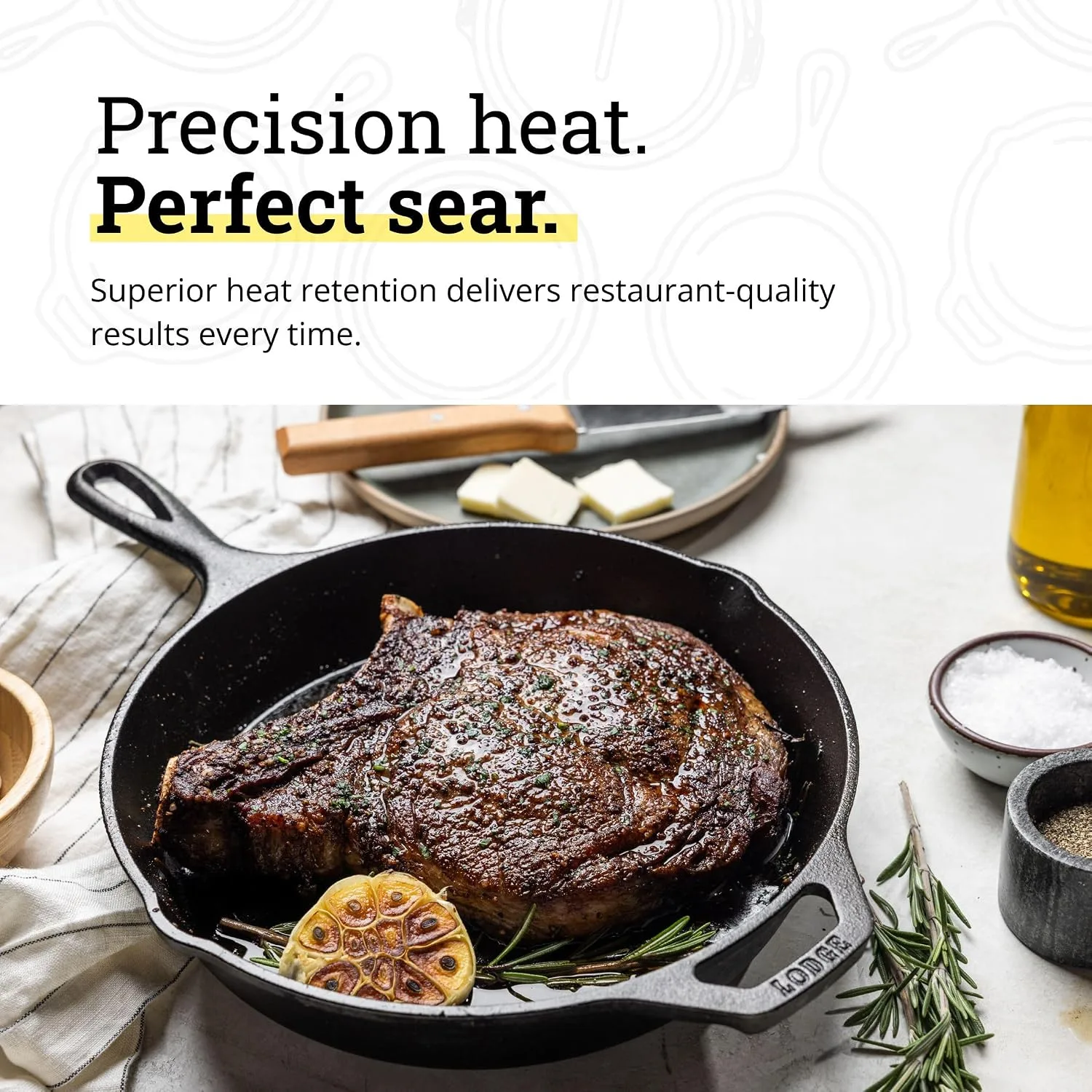
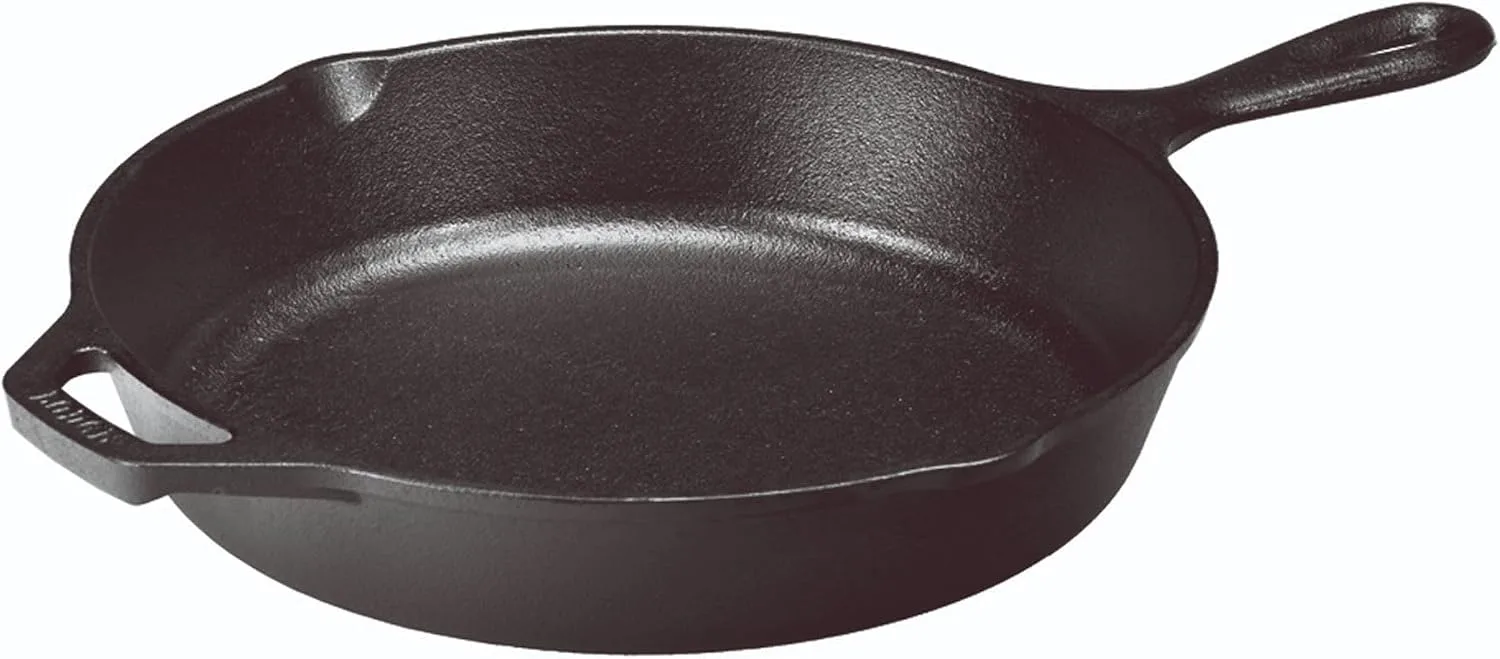
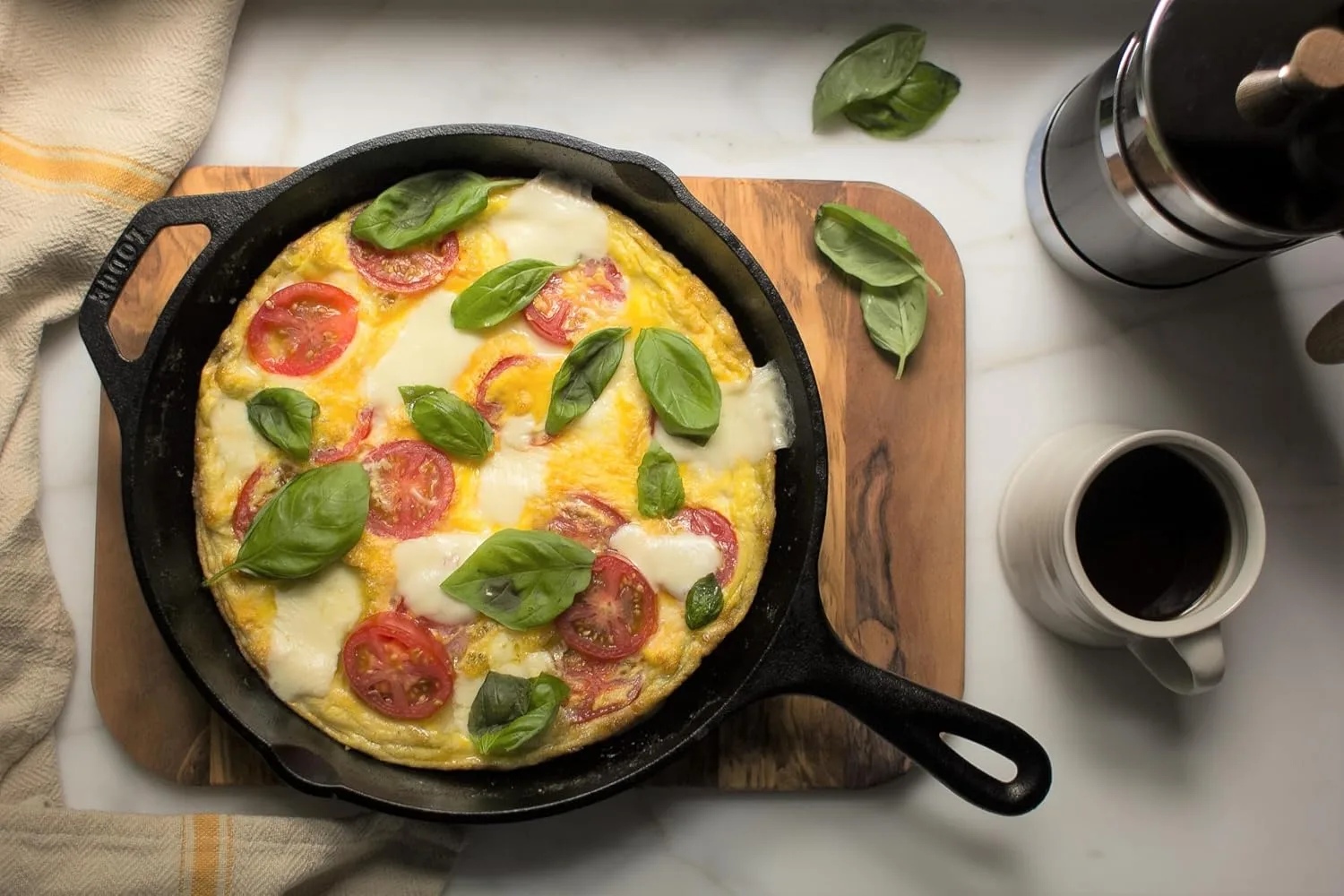
A steak sears when the pan stays hot after cold meat lands on it. A thin pan loses heat at that moment, and the meat steams in its own juices instead of browning. Cast iron is slow to heat and slow to cool, which is exactly what searing needs. In our review, the Lodge Pre-Seasoned Cast Iron Skillet stands out for holding temperature when cold food hits the pan.
The check: think about how often you cook cold, wet or thick food at high heat. If that is weekly, heat retention should rank first. If your skillet mostly sees eggs, reheated leftovers and quick sautés, it barely matters.
What the surface does with sticky food
Nonstick wins on release, and it is not close on day one. Eggs slide, fish skin stays intact, and you can cook with very little fat. Cast iron releases food through seasoning, which is baked-on oil, and that takes time to build.
Owners of the Lodge mention that the surface is rough out of the box, and that people who see sticking in the first few weeks often take it for a defect. It is not. The surface smooths with use, and the factory seasoning is a starting point rather than a finished coating. After a few fatty cooks, owners say, the pan behaves completely differently.
The check: be honest about your patience. If you want a pan that works perfectly the first morning, buy nonstick. If you are willing to cook bacon, sausages and shallow-fried food for a few weeks to build the surface, cast iron rewards that.
Oven and heat source range
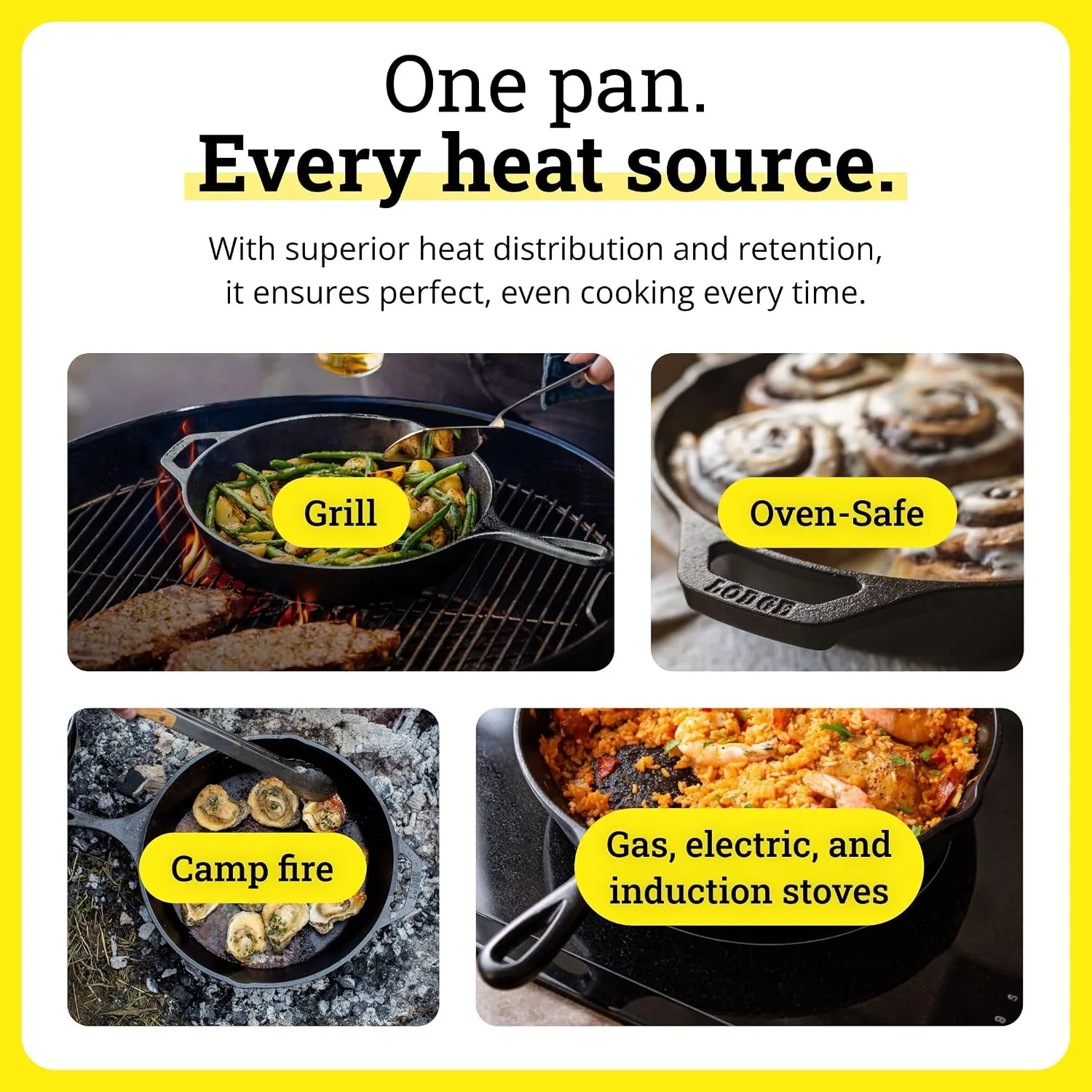
This is where cast iron pulls clearly ahead. A one-piece iron pan with no plastic and no coating has no temperature ceiling to worry about. The Lodge is oven, grill and campfire safe, with no stated limit.
Nonstick pans come with a limit, because the coating and often the handle cannot take unlimited heat. The limit varies by pan, so it has to be read on each one rather than assumed.
The check: if you plan to start a frittata or a pan of chicken thighs on the stovetop and finish it in a hot oven, look for the stated oven limit on any nonstick pan you consider. If you cannot find one, treat that as an answer. With cast iron, the question disappears.
Weight and handling
The Lodge weighs about 5.4 lb before any food goes in. That is a real number to consider. Flipping and tossing food in the air is harder with a pan this heavy, and lifting it one-handed from the oven with a full meal inside takes a firm grip. It does have an assist handle opposite the main one, which helps.
The handle also gets hot. Owners describe it as the thing everybody learns on day one, and it is a habit to build: a mitt or a handle cover is part of the purchase.
The check: pick up your heaviest current pan, put a bag of flour or a few full cans in it, and lift it with one hand. If that feels like too much, nonstick is the kinder choice. Also check your wrist habits: if you shake and toss food in the pan often, lighter will suit you.
Durability and what wears out
A nonstick coating is a layer, and layers wear. Scratches from metal utensils, overheating and dishwasher cycles can all shorten its life, and when it goes, the pan is finished. Cast iron has no coating to lose. The Lodge is one piece of iron, with no rivets or joints to loosen, and it is effectively unbreakable. Its seasoning improves with use over the years.
The check: count how many people use your kitchen and how they treat pans. A household where someone reaches for a metal spatula or a dishwasher is going to be hard on nonstick.
Cooktop and size
The Lodge is induction compatible and has a 10.25 inch diameter. If you have induction, a quick fridge-magnet test tells you whether any pan will work: if the magnet sticks firmly to the base, it should. For size, measure the burner you will use most and the cabinet or hook where the pan will live, since a heavy pan stored badly gets used less.
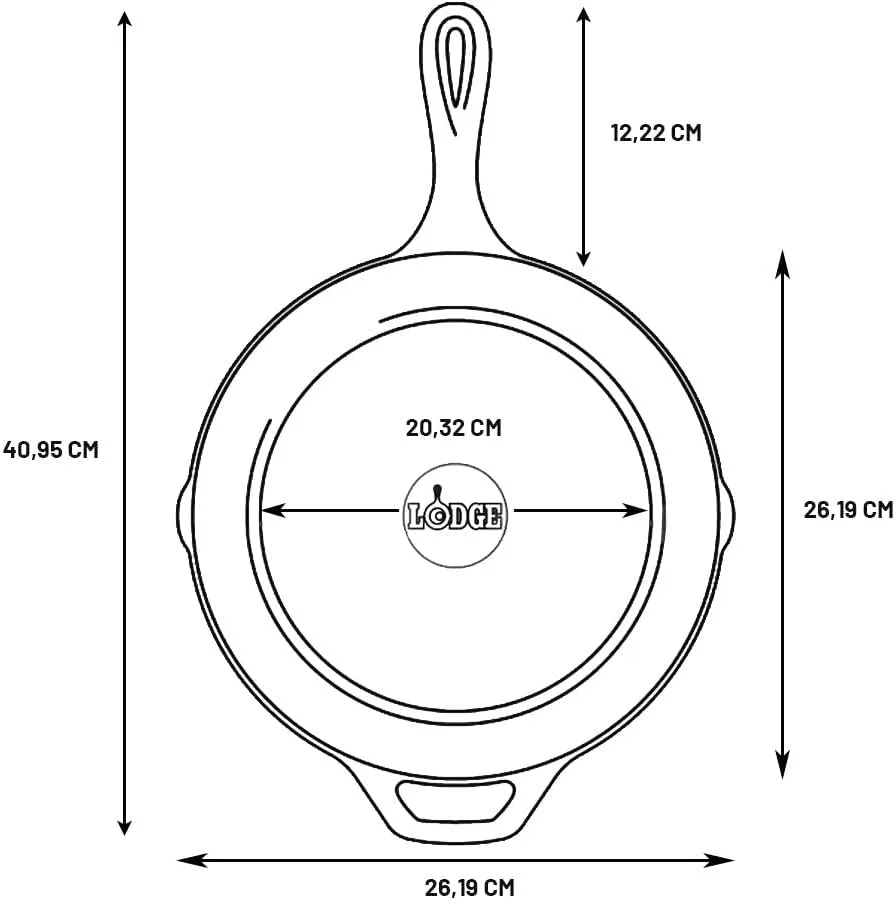
The check: think about how many people you usually feed at once. Compare the pan's diameter with the largest meal you cook on a regular night. If you often cook for a crowd, a bigger pan or batch cooking will matter more than the material.
What to ignore
- The idea that cast iron is difficult. It has one real rule, which owners describe plainly: do not leave it wet, because it rusts. Dry it after washing and you have covered the main upkeep.
- A smooth surface as a sign of quality. A new textured cast iron pan feels rougher than a polished one and smooths with use. Smoothness is something you earn through cooking.
- Coating buzzwords. Words on a nonstick box tell you little about how long the surface lasts. The practical questions are the stated oven limit, which utensils are safe, and whether the maker allows the dishwasher.
- The pre-seasoned label as a promise of finished performance. It means the pan is ready to cook, not that it is at its best.
- Brand age as a substitute for fit. A long history is nice, but it does not tell you whether you want a 5 lb pan.
Common mistakes
- Buying one pan to do everything. Cast iron is the better pick for a hard sear, and nonstick is the easier pick for delicate eggs. Many kitchens end up happiest with one of each, if shelf space allows.
- Judging cast iron in the first week. Early sticking is common and usually passes with a few fatty cooks. Give it a month before deciding the pan is wrong.
- Simmering acidic sauces for a long time. A long-simmered tomato sauce strips seasoning from cast iron. A slow ragu belongs in another pot.
- Leaving cast iron wet. Rust is the main maintenance problem, and it comes from leaving the pan damp on the rack or in the sink.
- Grabbing the handle. It gets too hot to hold on the stovetop. Put a mitt near the stove before you need it.
- Running a nonstick pan hot and empty. High heat is hard on a coating, and an empty pan heats fast. Use medium heat and add fat or food right away.
- Putting a coated pan in the dishwasher without checking. Check the maker's guidance first, since many coatings do better washed by hand.
Which kind of buyer should pick which pan
| If your cooking is mostly... | Choose | Why |
|---|---|---|
| Steaks, chops, burgers, seared vegetables | Cast iron | Heat retention keeps the surface hot, so food browns instead of steaming. |
| Cornbread, frittatas, anything finished in the oven | Cast iron | No coating or plastic parts, so no temperature ceiling to check. |
| Eggs, pancakes, delicate fish | Nonstick | Food releases easily from day one with little fat. |
| Quick weeknight meals, light pan, low upkeep | Nonstick | Easier to lift, toss and clean, with no seasoning to maintain. |
| Grill or campfire cooking | Cast iron | No coating to damage over open heat. |
| A pan you want to keep for decades | Cast iron | One piece of iron, with seasoning that improves with use. |
| Shared kitchen where pans get rough treatment | Cast iron | No coating to scratch, and no rivets or joints to loosen. |
If you cook both kinds of food and can only keep one pan, the deciding factor is usually your tolerance for weight and upkeep. Cooks who do not mind a heavy pan and a little drying after washing tend to be happy with iron. Cooks who want to grab a light pan and go tend to be happier with nonstick, while accepting that the coating will eventually need replacing.
Where our catalog fits
We do not currently review a nonstick skillet, so this guide cannot point you to one. We do review a cast iron pan, and it suits the buyer described above.
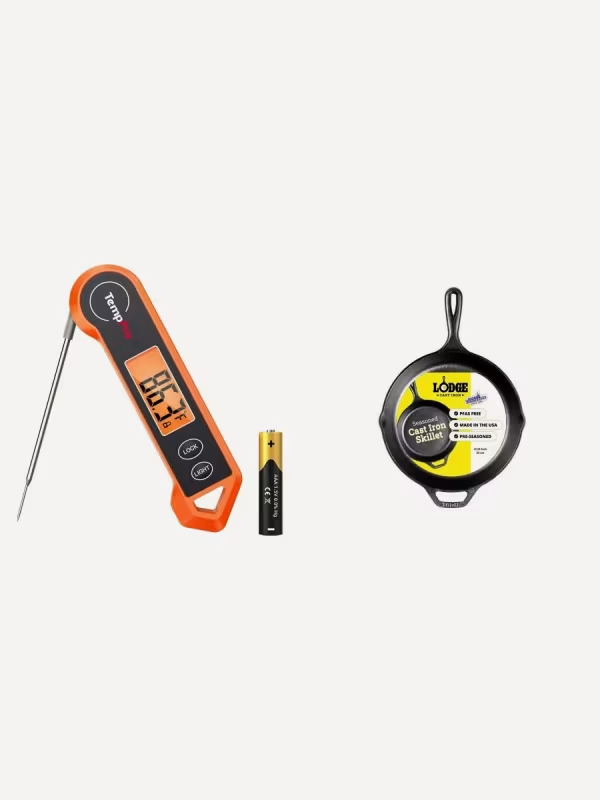
The Lodge is iron, oil and nothing else. It is seasoned with vegetable oil, carries no synthetic coating, and is PFOA and PTFE free. It is cast in one piece in South Pittsburg, Tennessee, in the same foundry that has been making them since 1896. It is built for searing meat, cornbread and anything that starts on the stovetop and finishes in the oven, which is exactly the use case where iron beats nonstick.
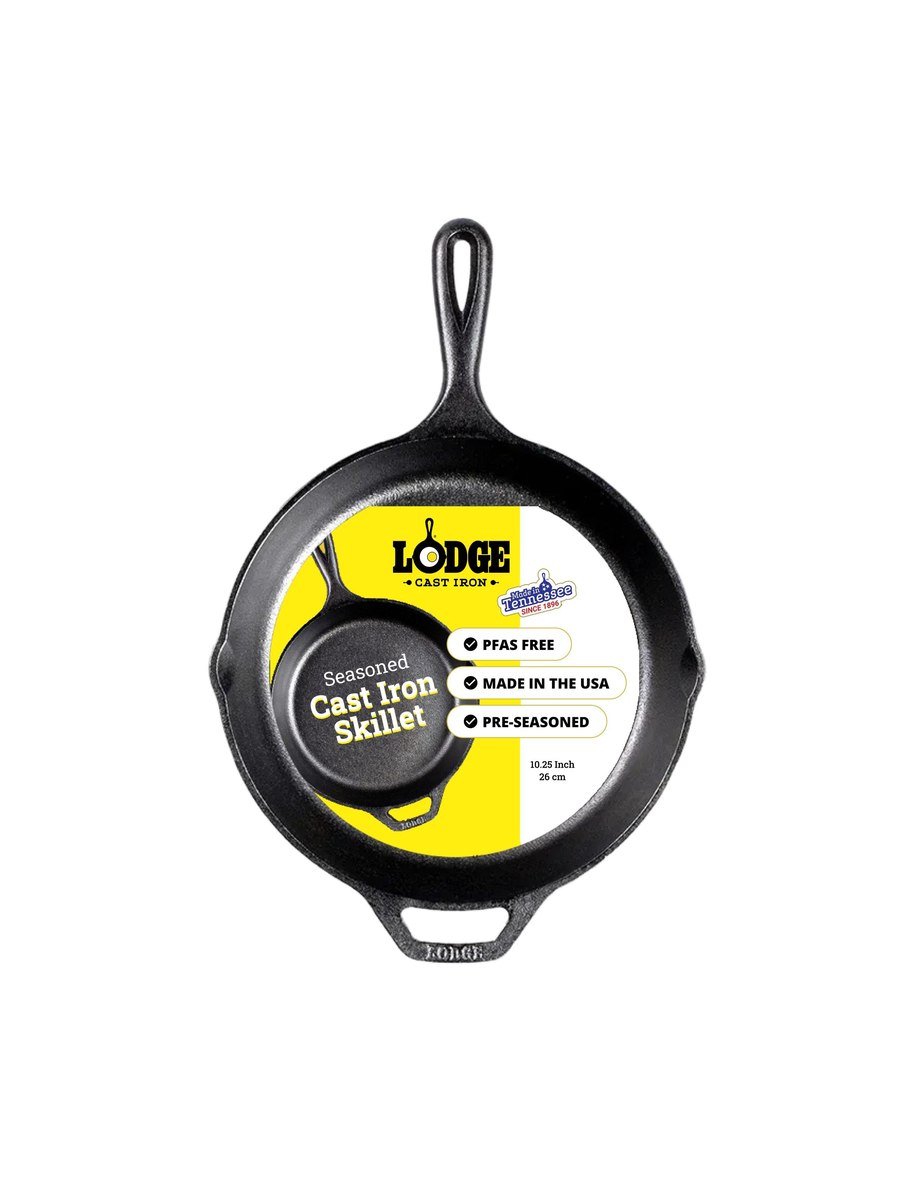 Best ValueLodge Pre-Seasoned Cast Iron Skillet, 10.25 inLodge · L8SK34.7/5
Iron, oil and nothing else. Give it a month of use and it becomes the pan you reach for, and it will outlast everything else in the kitchen.
As an Amazon Associate we earn from qualifying purchases. Links on this page may be affiliate links; we may earn a commission at no extra cost to you.
Iron, oil and nothing else. Give it a month of use and it becomes the pan you reach for, and it will outlast everything else in the kitchen.
As an Amazon Associate we earn from qualifying purchases. Links on this page may be affiliate links; we may earn a commission at no extra cost to you.
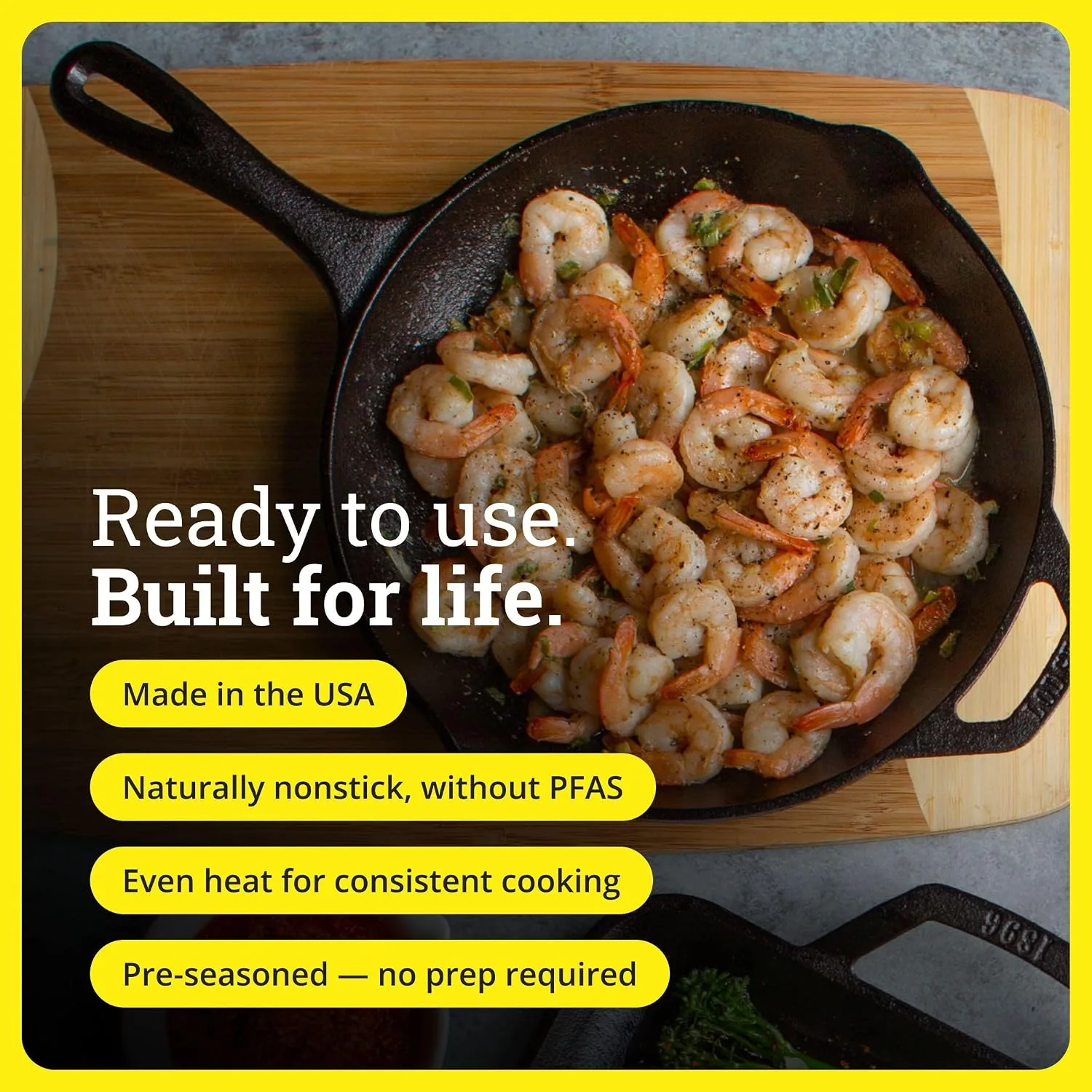
The trade-offs are the ones listed earlier. It is just over five pounds, the handle gets hot, and the textured surface takes longer to season than a vintage pan. Long-simmered acidic sauces will strip the seasoning, so keep those for a different pot. Owners say rust from leaving it wet is the only real maintenance rule, and that after a few fatty cooks the pan behaves completely differently from how it did on day one.
It is not dishwasher safe, so plan on washing it by hand and drying it. Check the current price at the retailer you prefer, and read the full review before you buy.
Found this review helpful?
Pin it to one of your boards and come back to it whenever you need a reminder.

No comments yet.
Join the discussion. Comments are moderated before appearing.