Dry the pan completely, every time, before you put it away. If you do only one thing from this guide, make it that. Owners of the Lodge describe rust from sitting wet as the only real maintenance rule, and almost every other cast iron problem can be fixed with a scrub, a little oil and some heat.
Cast iron has a reputation for being fussy. It is closer to the opposite. The pan is one solid piece of metal with a layer of baked-on oil, and that layer is forgiving. You can damage it, but you can also rebuild it at home with nothing more than a paper towel and your oven.
What follows covers how to clean the pan, how to re-season it when it needs it, how to cook so the finish improves, and what to ignore. Each point comes with a check you can do at the sink or the stove.
What actually matters
1. Seasoning is cooked-on oil, and it builds with use
Seasoning is a thin layer of oil that has been heated until it bonds to the iron. It is what makes the surface slick and keeps it from rusting. It is not paint and it is not a coating, which is why it can be thickened, thinned or repaired.
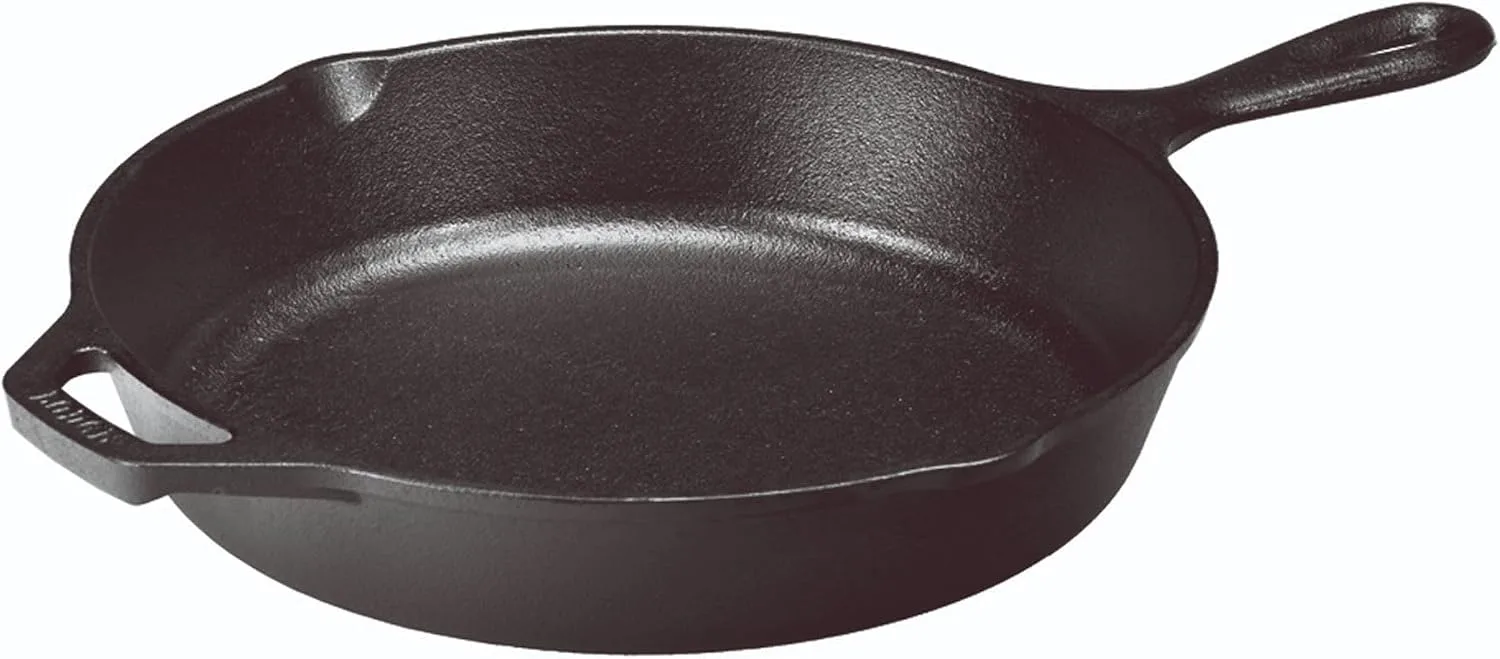
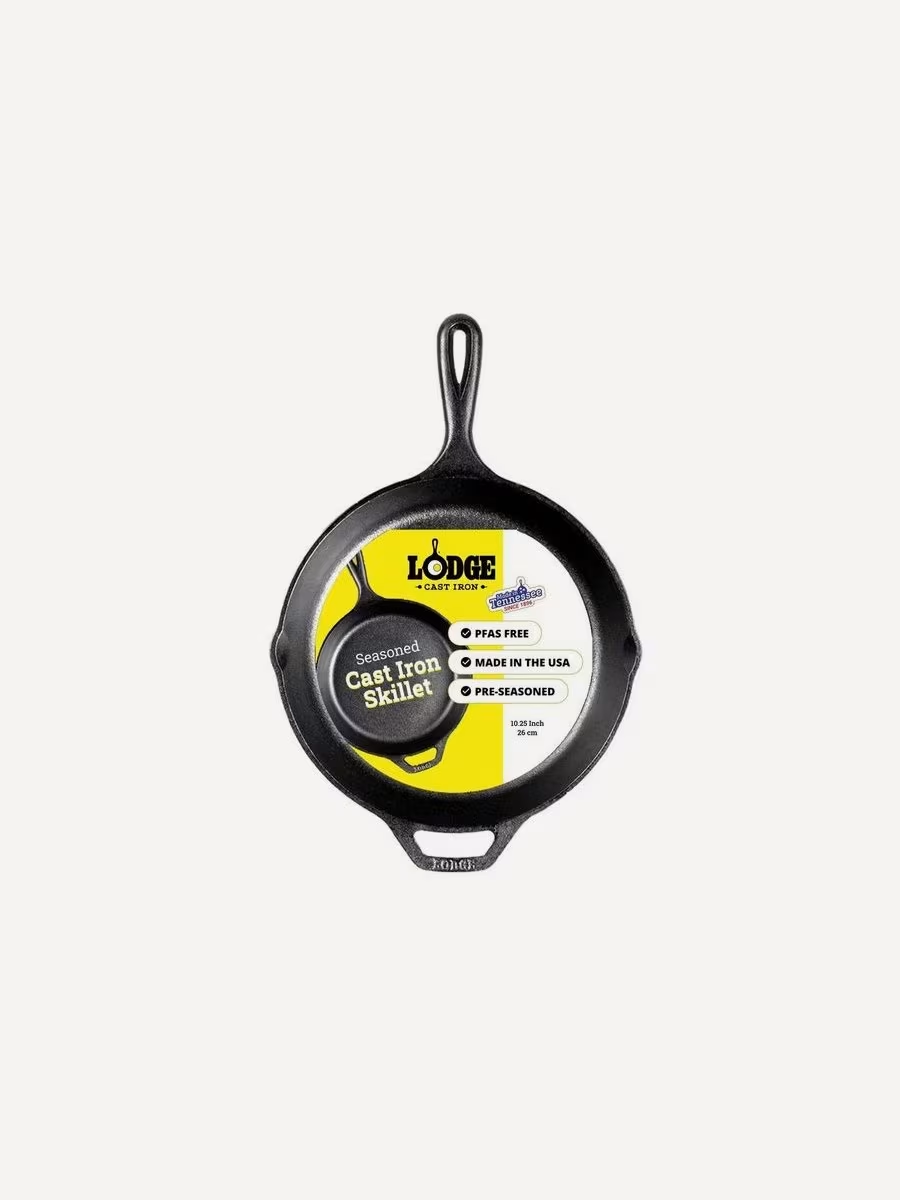
A pan from the factory arrives with a starting layer. The Lodge Pre-Seasoned Cast Iron Skillet, 10.25 in is seasoned with 100% vegetable oil and has no synthetic coating. Owners describe that factory layer as a starting point rather than a finished surface. After a few fatty cooks, they say, the pan behaves completely differently.
The check: look at the cooking surface under a bright light. A dull, even finish is healthy. Gray, bare-looking patches mean the layer is thin there. Orange means rust.
2. Dry the pan with heat, not just a towel
A towel gets the surface dry to the touch, but it may not get all the moisture. Set the clean pan on a burner for a minute or two until any remaining water has gone.
This pan has no rivets or joints, since it is a single piece of cast iron, so there is nothing to loosen and no seam to trap water. The surface itself is still the part that rusts.
The check: wipe the warm pan with a clean white paper towel. If it comes away black, that is carbon and oil, which is normal. If it comes away orange or brown, there is rust and you need to fix it (see below).
3. Clean it while it is still warm
Food releases most easily when the pan is warm, not cold and dried on. Scrape out stuck bits with a flat spatula, rinse under hot water and scrub with a stiff brush or a non-scratch pad. For stubborn spots, a little coarse salt and a paper towel works as a gentle abrasive.
Soap is where cooks argue. A quick wash with a small amount of mild dish soap is fine for most people, because well-built seasoning is cured oil and not loose grease. What hurts the pan is the long contact with water, not the lather. Do not put it in the dishwasher. The Lodge is not dishwasher safe, and the reason is the same: a long wet cycle followed by air drying is how cast iron rusts.
The check: after washing, run a finger over the surface. It should feel clean and slightly slick, not tacky and not gritty.
4. Add a thin film of oil after drying
Once the pan is dry and still warm, put a few drops of cooking oil on it and rub them around with a paper towel. Then wipe the pan again as if you were trying to remove all the oil. What is left is the right amount.
Too much oil is the most common way people make their own pan sticky. Oil that pools does not cure into a hard finish. It stays gummy and goes rancid.
The check: the pan should look barely darker than before, with a soft satin look and no shine in the light. If you can see droplets or a glossy sheen, wipe again.
5. Cook with fat early on
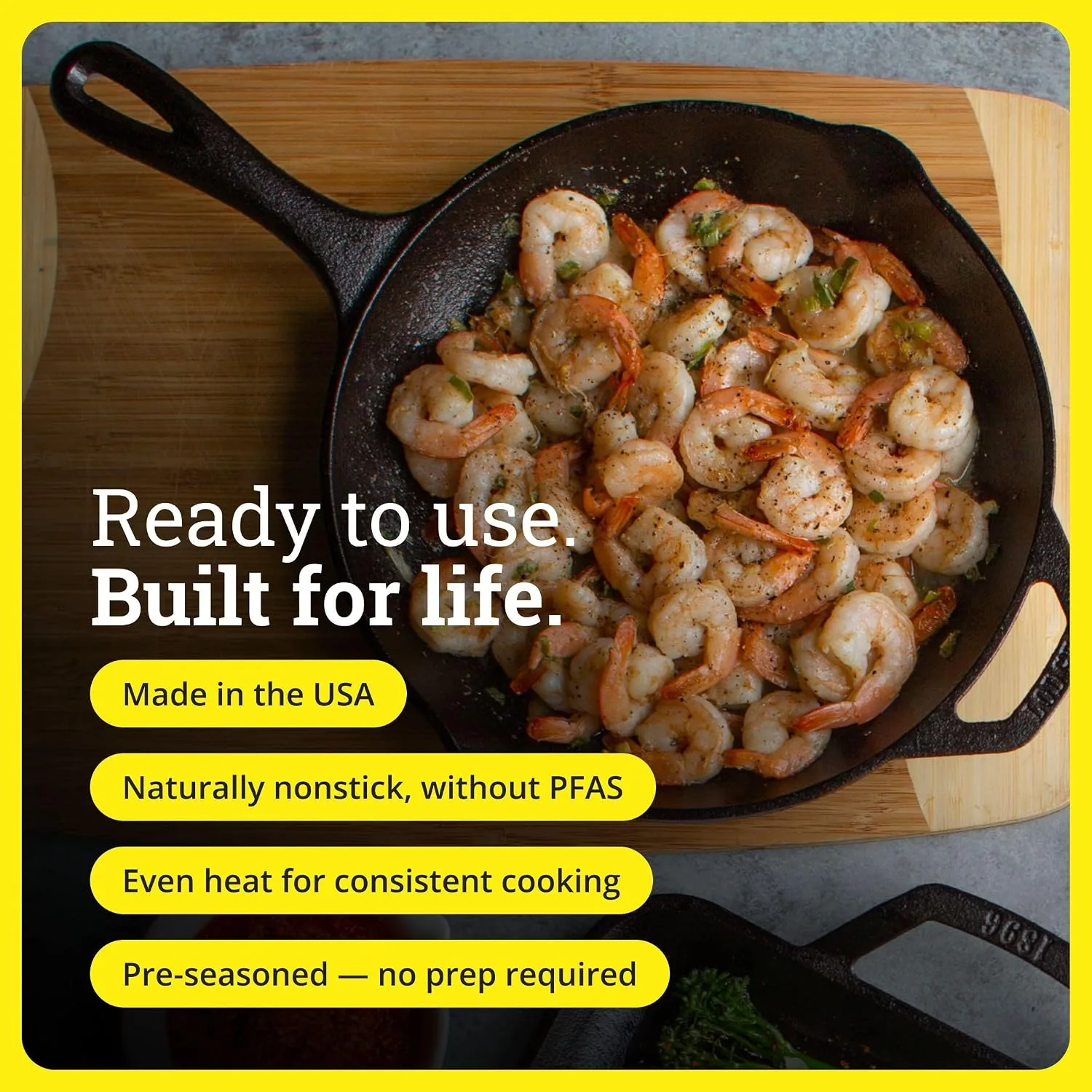
The fastest way to improve a pan is to cook things in it that involve fat. Searing meat, frying bacon, shallow frying and cornbread all leave a little oil behind that bonds to the surface. A pan used this way builds seasoning with every meal, without you doing anything special.
That matters most in the first few weeks. Owners of the Lodge note that the surface is rough out of the box, and people who find food sticking early often mistake that for a defect. It smooths with use. In our review, the textured surface takes longer to season than vintage pans do.
The check: preheat the pan properly, then add oil. When the oil moves easily across the surface and food releases without tearing, the pan is ready for that food. If it sticks, the pan was too cold or the food was too wet.

How to re-season when it goes wrong
You will need to do this eventually. A pan gets scrubbed too hard, left wet overnight, or used for a long acidic simmer, and the finish goes patchy. Re-seasoning takes an afternoon and very little effort.
- Strip loose material. Scrub off rust, flaking and any sticky patches. Steel wool is fine for rust. The goal is clean, bare-looking iron where the problem was.
- Wash and dry completely. Heat it on a burner until it is bone dry. Any water left behind will rust under the new layer.
- Apply oil, then wipe almost all of it off. Cover the inside, outside and handle with a very thin coat. Buff with a clean cloth until the pan looks nearly dry.
- Bake it upside down. Put the pan in a hot oven with a sheet of foil or a tray on the rack below to catch drips. Leave it for a good while, until it stops smoking, then let it cool in the oven.
- Repeat if the pan needs it. A badly stripped pan benefits from several thin layers rather than one thick one.
The Lodge has no coating with a temperature ceiling and no plastic parts, and it is oven safe with no stated limit, so the oven step does not put the pan at risk. It also works the same way on a grill or over a campfire.

The check: once cool, the pan should look evenly dark and feel smooth and dry. Tacky spots mean the oil was too thick. Scrub those areas and repeat with less oil.
What to ignore
- The idea that you must never use soap. Long soaking and dishwashers do the damage. A quick wash does not.
- Chasing a perfect, glossy black finish. Real pans go patchy, brown in places and darker near the center. Function matters more than looks. If food releases and nothing is rusting, the pan is fine.
- Elaborate seasoning rituals. You do not need a special oil, a salt bath or a particular cooking order. A thin coat of ordinary cooking oil, applied consistently, does the job. Regular cooking maintains it.
- Treating the factory seasoning as the finish line. It is a starting point, and owners say the pan behaves very differently after a few fatty cooks.
- Worry about scratching it. Metal utensils may scuff the surface, but scuffs are repaired the same way as everything else. The Lodge is effectively unbreakable, so the pan is far tougher than the seasoning on it.

Common mistakes
- Soaking overnight. Leaving a dirty pan in the sink with water in it is the quickest route to rust. If food is stuck, add a little water to the warm pan, simmer briefly and scrape.
- Air drying on the rack. It feels harmless, but a pan left to dry on its own can rust at the edges and underneath.
- Using too much oil when seasoning. This produces a sticky, uneven surface that people then blame on the pan.
- Simmering acidic sauces for a long time. Long-simmered acidic sauces strip seasoning. Cook those in another pot, especially while the pan is still young.
- Giving up in the first few weeks. Sticking early is normal. It is the seasoning building, not the pan failing.
- Grabbing the handle bare-handed. It sounds minor, but owners say a handle too hot to hold on the stovetop is what everybody learns on day one. Keep a mitt or a folded towel next to the stove.
- Storing it wet or covered. A lid on a damp pan traps moisture. Store it dry and uncovered, or with a paper towel between the pan and anything stacked on it.
Fixing rust
Rust looks worse than it is. Scrub the rusty area with steel wool or a stiff brush until you reach bare iron, rinse, and dry on a burner. Then re-season as described above.
The pan is not ruined. The Lodge has no coating to peel, and the seasoning on it is oil you can rebuild. That is a big reason a cast iron skillet lasts so long.
Which kind of buyer should pick which kind of pan
| If you are | Pick | Why |
|---|---|---|
| New to cast iron and want to cook the day it arrives | A pre-seasoned pan | It comes with a starting layer, so the first cook does not have to wait on an oven session. |
| Cooking on induction | A pan listed as induction compatible | The Lodge is compatible. |
| Cooking over a grill or fire | Plain cast iron with no plastic parts or coating | Nothing on the Lodge has a temperature ceiling. |
| Wanting a pan that seasons faster | A vintage pan, if you can find one | The Lodge's textured surface takes longer to season than vintage pans. |
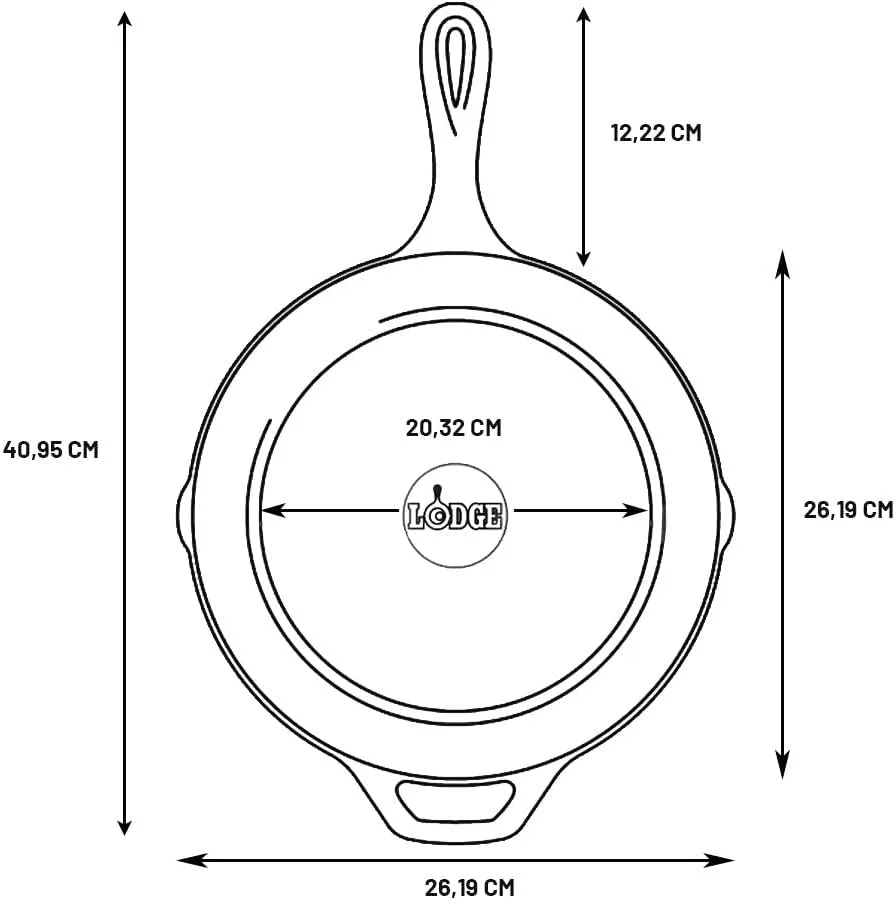
| Sensitive to heavy cookware | Check weight before you buy | This pan is about 5.4 lb, and it has an assist handle on the opposite side from the main handle. |
| Cooking mostly slow acidic sauces | A different pot for those dishes | Long simmers strip the seasoning. |
If you want a pan for steaks, cornbread and dishes that start on the stovetop and finish in the oven, cast iron is a natural fit. If most of your cooking is long, acidic simmering, use a different pot for those dishes and keep the skillet for the rest.
Where the Lodge fits
Here is how the Lodge skillet lines up with the habits above.
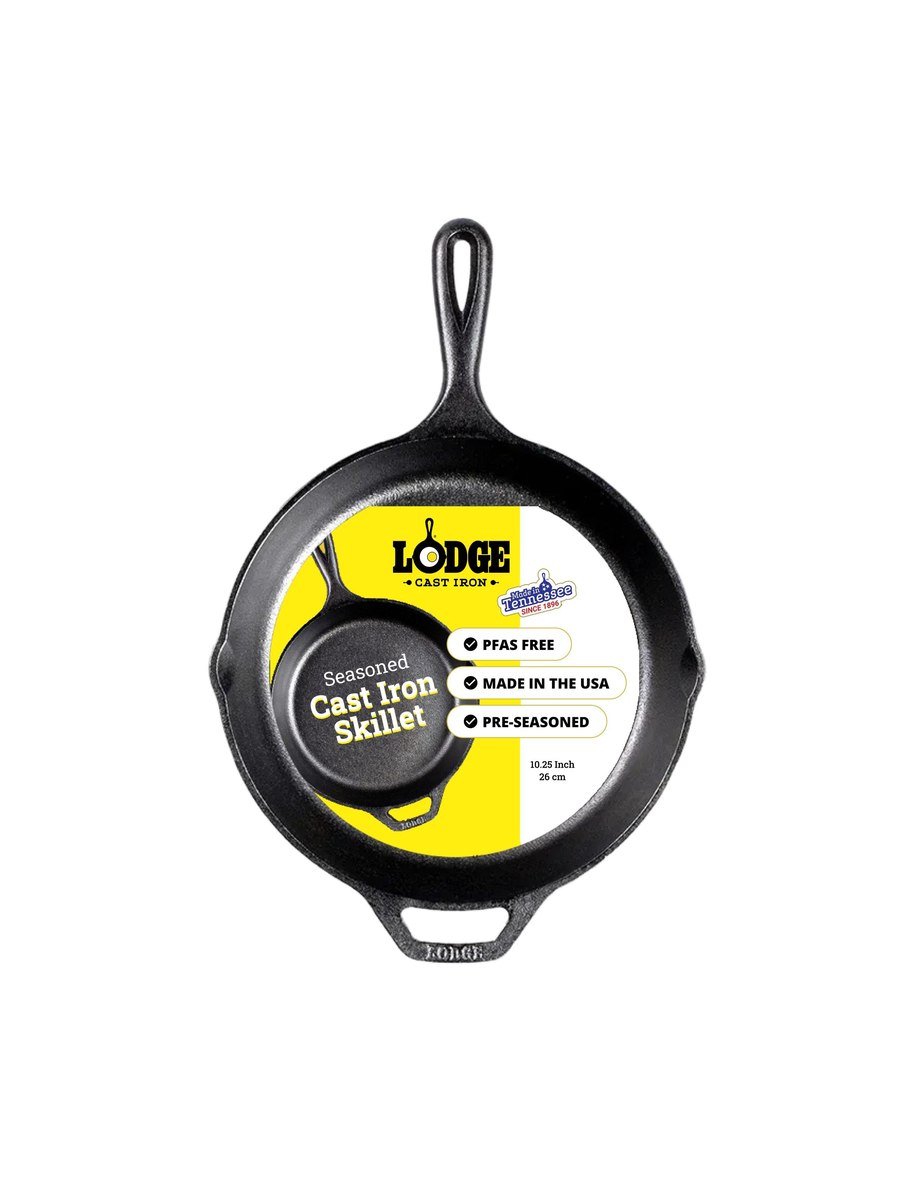 Best ValueLodge Pre-Seasoned Cast Iron Skillet, 10.25 inLodge · L8SK34.7/5
Iron, oil and nothing else. Give it a month of use and it becomes the pan you reach for, and it will outlast everything else in the kitchen.
As an Amazon Associate we earn from qualifying purchases. Links on this page may be affiliate links; we may earn a commission at no extra cost to you.
Iron, oil and nothing else. Give it a month of use and it becomes the pan you reach for, and it will outlast everything else in the kitchen.
As an Amazon Associate we earn from qualifying purchases. Links on this page may be affiliate links; we may earn a commission at no extra cost to you.
The pan is a single piece of cast iron in the 10.25 in size, made in South Pittsburg, Tennessee. It is seasoned with vegetable oil and has no coating, so everything in this guide applies directly. It is compatible with induction and oven safe with no stated limit. It weighs about 5.4 lb, which some people will find heavy.
The pros are straightforward. It holds heat better than a thin pan, so it sears instead of steaming. It works in the oven, on a grill or over a campfire. The seasoning keeps improving for years. The cons are just as plain: the handle gets hot, the surface takes longer to smooth than a vintage pan, and long acidic simmers will strip the finish.
Our verdict is that it is iron, oil and nothing else. Give it a month of regular use and it becomes the pan you reach for. For more detail on size, handles and what owners report, read our full Lodge skillet review, and check the current price before you buy.
The short version
- Wash it while warm, dry it on a burner, and wipe on a very thin film of oil.
- Cook with fat early and often. Seasoning builds from use, not from rituals.
- Never soak it, never put it in the dishwasher, and never put it away wet.
- If it rusts or goes patchy, scrub it back, dry it, and re-season it in the oven.
- Give a new pan a few weeks before you decide whether it sticks.
The pan will take a few weeks to settle and a few meals to teach you its handle. After that it asks for very little.
Found this review helpful?
Pin it to one of your boards and come back to it whenever you need a reminder.


No comments yet.
Join the discussion. Comments are moderated before appearing.