Category: Skincare

  • The Ordinary Argireline Solution

    The Ordinary Argireline Solution

    The Ordinary Argireline Solution Review 2026: Is It Worth Buying?

    Okay, let’s talk about those pesky lines. You know the ones. The eleven lines between your brows that decide to make a permanent home…

    The Ordinary Argireline Solution 10% — A $10 Peptide That Mimics (Some of) What Botox Does

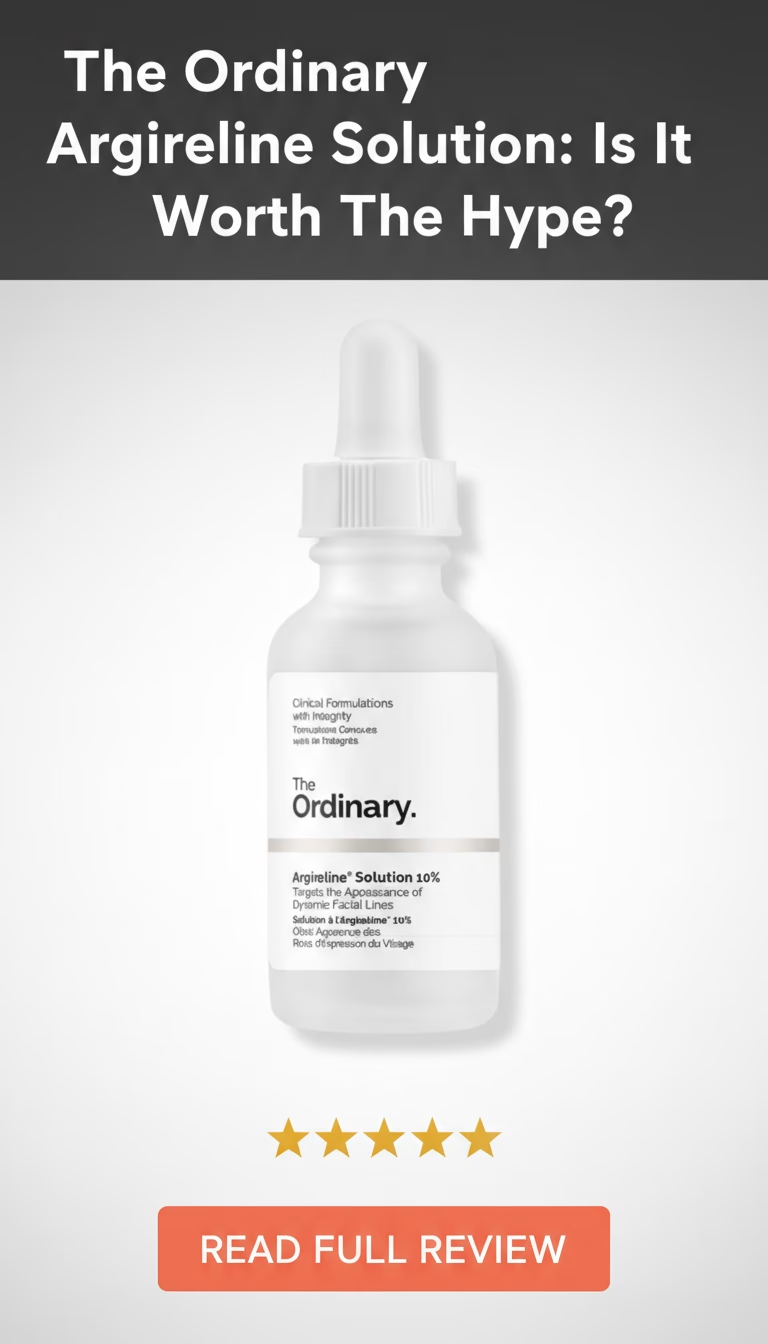
    The Ordinary made its name selling clinical-grade actives at drugstore prices, and the Argireline Solution is one of their more interesting offerings. At $9.70 for 30ml, it contains 10% Acetyl Hexapeptide-8 (trademarked as Argireline) — a synthetic peptide that inhibits the neurotransmitter release involved in facial muscle contraction. In simpler terms: it works on the same principle as Botox (reducing muscle movement to prevent expression lines) but through topical application rather than injection, and with far less potency.

    How Argireline Works

    When you frown, squint, or raise your eyebrows, a neurotransmitter called acetylcholine triggers the muscle contraction. Botox blocks this signal completely at the injection site. Argireline does something similar but gentler — it partially inhibits the SNARE complex (the protein assembly that releases acetylcholine at the neuromuscular junction). The result is slightly reduced muscle contraction intensity over time, which means the skin above those muscles creases less deeply with each expression.

    The key word is “slightly.” Published studies show Argireline can reduce wrinkle depth by 17-27% over 15-30 days of consistent application at 10% concentration. That’s measurable but modest compared to Botox’s near-complete muscle relaxation. It works best on dynamic wrinkles — the lines that appear during expression and gradually become permanent — rather than deep static wrinkles that are already etched in at rest.

    The Product Itself

    Clear, water-thin liquid in The Ordinary’s standard brown glass dropper bottle. No scent, no color, no viscosity. It feels like applying water. Absorbs in about 10 seconds, leaving zero residue — no stickiness, no film, no detectable trace that anything was applied. The dropper dispenses precisely: 2-3 drops cover the forehead, brow area, and crow’s feet zones.

    Application is targeted rather than full-face. You apply it specifically to areas with expression lines — forehead horizontals, the “11” lines between the brows, crow’s feet. There’s no benefit to applying it to areas without dynamic wrinkles. Use it after cleansing, before heavier serums and moisturizer. It layers under everything without interference.

    10-Week Observations

    Used twice daily (morning and night), applied specifically to forehead lines, glabellar lines (between brows), and outer eye area.

    Week 1-2: No visible change. The product is so lightweight that the experience is essentially “apply water, move on.” No tingling, no tightening sensation, no immediate visual effect. This is normal — peptides need time to accumulate in the tissue.

    Week 3-4: First noticeable difference appeared in the forehead lines. At rest, the three horizontal creases that are normally visible looked marginally shallower — as if they’d been sanded down by one grade. The “11” lines between the brows, which are usually shadowed enough to show in photos, appeared lighter. Not gone, but reduced.

    Week 5-8: The improvement continued incrementally. Forehead lines at rest were visibly softer than the week-1 baseline. Crow’s feet during smiling still formed but the resting-state lines were less pronounced. The overall forehead area looked smoother — less terrain, more even surface. A friend asked unprompted if I’d had Botox (I hadn’t), which was probably the most telling indicator.

    Week 9-10: Results plateaued. The improvement from week 5-8 maintained but didn’t progress further. Skipping the product for 4 days produced a subtle regression — lines looked slightly deeper again — confirming that the effect requires continuous application.

    Realistic Expectations

    Argireline at 10% will not: eliminate deep forehead furrows, replace Botox for moderate-to-severe expression lines, provide permanent results, or work on wrinkles caused by sun damage or volume loss rather than muscle movement.

    It will: soften the appearance of dynamic expression lines by roughly 20-25% over 4-6 weeks, make expression lines less visible at rest, potentially extend the interval between Botox appointments (some dermatologists recommend it as maintenance between injections), and do all of this without needles, downtime, or risk of that frozen look.

    Against Competitors

    Peter Thomas Roth Peptide 21 Wrinkle Resist Serum ($86) contains multiple peptides including Argireline in a more complex (and expensive) formula with additional hydrating and firming ingredients. The results are similar for expression lines, but the Peter Thomas Roth adds benefits for overall skin quality. Whether that justifies 9x the price depends on whether you need a multi-function serum or a targeted treatment.

    The Ordinary Matrixyl 10% + HA ($13) is the companion product — Matrixyl stimulates collagen production rather than relaxing muscles. Used together, they address both dynamic lines (Argireline) and skin structure (Matrixyl). The combined cost of $23 for both products is still cheaper than most single peptide serums from prestige brands.

    What Works

    • Measurable reduction in expression line depth at rest — visible by week 3-4 with consistent twice-daily application.
    • $9.70 for a 30ml bottle that lasts 8-10 weeks — possibly the best cost-to-efficacy ratio in anti-aging skincare.
    • Zero irritation risk — no actives that cause purging, redness, or sensitivity.
    • Completely invisible in any routine — no texture, no scent, no interference with other products.
    • Good maintenance option between Botox appointments to extend the interval.

    What Doesn’t

    • Effects are modest — 20-25% wrinkle depth reduction, not elimination.
    • Results require continuous application — stop using it and lines return to baseline within 1-2 weeks.
    • Only works on dynamic wrinkles from muscle movement — no benefit for sun damage lines, volume loss, or deep static wrinkles.
    • Takes 3-4 weeks to see initial results — requires patience and consistency.
    • The watery texture and invisible application make it psychologically unsatisfying — hard to feel like you’re “doing something” for your skin.

    The Verdict

    At under $10, the Argireline Solution is one of the lowest-risk experiments in anti-aging. The science is published and the mechanism is understood — it won’t replace Botox, but it provides a measurable softening of expression lines for less than the cost of a lunch. If you have early-to-moderate forehead lines or crow’s feet and want to address them without injectables, start here. Pair it with The Ordinary Matrixyl ($13) for a combined approach that covers both muscle-relaxation and collagen-stimulation. Together they cost $23 and address two of the three main wrinkle mechanisms. For the third (volume loss), you’d need hyaluronic acid filler or a retinoid — but that’s a different conversation.

    Pros

    • Visibly smooths forehead lines.
    • Reduces appearance of crow's feet.
    • Great value for money.
    • Lightweight, absorbs fast.
    • Simple, effective formulation.

    Cons

    • Results aren't permanent.
    • Can take weeks to see effects.
    • May not work for deep wrinkles.
  • SK-II Facial Treatment Essence

    SK-II Facial Treatment Essence

    SK-II Facial Treatment Essence Review 2026: Is It Worth Buying?

    You know that feeling, right? That endless quest for *the one* – the skincare product that actually delivers on its promises, the one…

    SK-II Facial Treatment Essence — Is Fermented Yeast Worth $185?

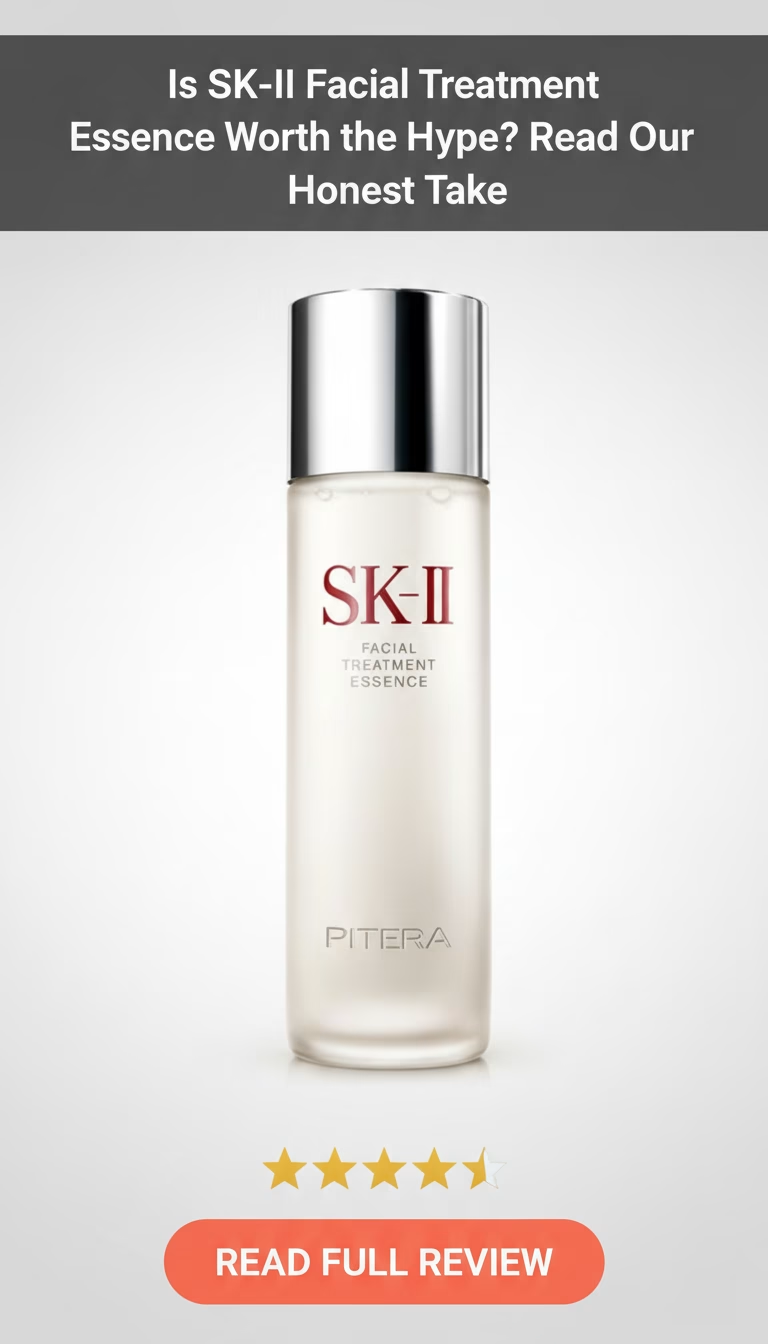
    SK-II’s Facial Treatment Essence (FTE) has been the brand’s flagship since 1980. The legend: scientists noticed sake brewery workers had aged hands but remarkably smooth, young-looking skin on their faces — and traced it to a specific yeast strain (Galactomyces) used in fermentation. That strain now produces Pitera, the core ingredient in every bottle of FTE. A 230ml bottle costs about $185 on Amazon, making it one of the most expensive essences on the market. The question isn’t whether it works — 44 years of loyal users confirm something is happening — but whether what it does is worth ten times what alternatives cost.

    What Pitera Actually Is

    Pitera is a fermented filtrate — the liquid byproduct of fermenting Galactomyces yeast under controlled conditions. It contains over 50 micro-nutrients: vitamins (B2, B5), amino acids (14 of them), minerals, and organic acids. SK-II claims Pitera mimics the skin’s Natural Moisturizing Factor (NMF) — the cocktail of compounds that keeps healthy skin hydrated and functioning properly. The FTE is over 90% Pitera by composition, with minimal added ingredients (butylene glycol, pentylene glycol, and sodium benzoate as preservative).

    The texture is literal water — clear, thin, completely fluid. There’s no viscosity, no gel-like quality, nothing you’d associate with a serum. You pour it into your palm and it runs through your fingers if you’re not quick. It absorbs instantly — faster than water because of its smaller molecular structure. No residue, no film, no stickiness. There is, however, a distinctive smell: a fermented, yeasty, slightly sake-like aroma. It’s not strong, and it dissipates within 30 seconds of application, but it’s there. Some people barely notice it; others find it off-putting. It’s an authentic byproduct of the fermentation, not an added fragrance.

    3-Month Test

    Applied twice daily — morning and evening — after cleansing, before all other products. A quarter-sized pour into the palm, patted gently onto the face and neck.

    Week 1-2: The initial impression is underwhelming. It feels like water, absorbs like water, and leaves no perceptible trace. Skin might feel slightly smoother after application, but it’s subtle enough to be placebo. No immediate glow, no instant plumping, no visible change. This is where many people give up — they’ve spent $185 and feel like they’re splashing overpriced water on their face.

    Week 3-4: Texture changes became noticeable. The cheeks felt smoother, less rough under fingertips. Products applied afterward — serums, moisturizers — seemed to absorb more evenly. Skin had a slight clarity improvement: not brighter exactly, but less muddy. The uneven patches of tone that make bare skin look tired started to recede.

    Week 5-8: The crystal clear claim gained credibility. Under natural light, skin looked notably more luminous — the kind of even, healthy reflectance that people attribute to good genetics or expensive facials. Fine lines around the eyes and mouth appeared shallower. Post-inflammatory marks from old breakouts faded faster than baseline. The overall impression was skin that looked calmer, more balanced, and more alive.

    Week 9-12: The cumulative effect plateaued into a new normal. Skin maintained the improved texture and clarity without further dramatic changes. The barrier felt stronger — less reactive to seasonal shifts, less prone to the tight-dry-oily cycle. Occasional breakouts resolved faster and left less marking. Skipping the FTE for a few days produced a noticeable regression — skin looked slightly duller and felt less smooth — which was perhaps the most convincing evidence that it was actually doing something.

    What FTE Does and Doesn’t Do

    It does: improve skin texture and clarity, create a more even-toned complexion, enhance the absorption and effectiveness of subsequent products, support barrier function, and create a subtle but genuine luminosity over time.

    It does not: erase deep wrinkles, provide significant firming or lifting, replace retinoids for collagen building, replace vitamin C for pigmentation, or replace sunscreen for aging prevention. It’s a foundational product — it makes skin healthier so that everything else works better.

    The Pricing Reality

    At $185 for 230ml, each application costs roughly $1.00-1.50 depending on how generous your pour is. The bottle lasts approximately 4-5 months with twice-daily use. That’s $37-46/month. For context: a good retinol serum costs $15-30/month, a vitamin C serum $10-25/month, and a quality moisturizer $15-40/month. The FTE adds $40/month on top of your existing routine for what amounts to a prep and glow step. Is it necessary? No. Does it make a visible difference? In my experience, yes.

    Alternatives Worth Considering

    Missha Time Revolution First Treatment Essence ($22 for 150ml) uses a similar Galactomyces ferment filtrate. It’s not identical to Pitera — different yeast strain, different fermentation conditions — but the concept is the same. In blind tests, many users can’t distinguish between the two. If you want to test whether fermented essence works for your skin, Missha is the obvious starting point before committing to SK-II pricing.

    COSRX Galactomyces 95 Tone Balancing Essence ($19 for 100ml) is another Korean alternative with similar Galactomyces content. Thicker texture than SK-II, slightly different feel, but targeting the same outcomes. The Ordinary has no direct equivalent — their ferment-based products don’t concentrate on Galactomyces specifically.

    What Works

    • Skin clarity and luminosity improvement is genuine and visible by week 4-6 of consistent use.
    • Texture refinement is measurable — smoother surface, less roughness, more even product absorption.
    • Completely weightless — zero interference with any other product, routine, or makeup application.
    • Barrier support is notable — skin becomes less reactive and recovers from irritation faster.
    • 4-5 month bottle life makes the per-use cost more palatable than the sticker price suggests.

    What Doesn’t

    • $185 for what is essentially fermented yeast water — Missha offers a similar concept for $22.
    • Results take 4+ weeks to become visible, and first-time users often feel they’re paying for nothing during weeks 1-2.
    • The fermented smell is a legitimate deal-breaker for some people.
    • Won’t replace targeted treatments for wrinkles, pigmentation, or acne — it’s supplementary, not corrective.
    • The pour-from-bottle format wastes product — a pump or spray nozzle would improve dispensing precision.

    The Verdict

    SK-II FTE is a legitimate product that produces genuine improvements in skin texture, clarity, and overall health over consistent use. The science behind Galactomyces ferment filtrate is supported by research, and the observable results across thousands of users aren’t mass delusion. The problem is price — Missha’s equivalent costs 1/8th as much and uses similar technology. Try Missha first. If your skin responds well to Galactomyces ferment, then you know the approach works for you. At that point, whether SK-II’s specific Pitera formulation justifies the 8x premium becomes a personal value judgment rather than a blind gamble.

    Pros

    • Seriously improves skin texture and clarity.
    • Noticeably reduces visible fine lines.
    • Leaves skin feeling deeply hydrated.
    • Gives a healthy, undeniable radiant glow.
    • Absorbs super fast, feels weightless.

    Cons

    • It's a huge splurge, very expensive.
    • Subtle, distinct ferment scent isn't for everyone.
    • Takes weeks to see real noticeable changes.
    • Might not suit super sensitive or reactive skin.
  • Lancome Renergie H.P.N. 300 Peptide Cream SPF 25

    Lancome Renergie H.P.N. 300 Peptide Cream SPF 25

    Lancome Renergie H.P.N. 300 Peptide Cream SPF 25 Review 2026: Is It Worth Buying?

    Alright, let’s talk about that moment you catch yourself in the mirror, maybe in some less-than-flattering lighting, …

    Lancome H.P.N. 300-Peptide Cream SPF 25 — Day Cream with Built-In Sun Protection

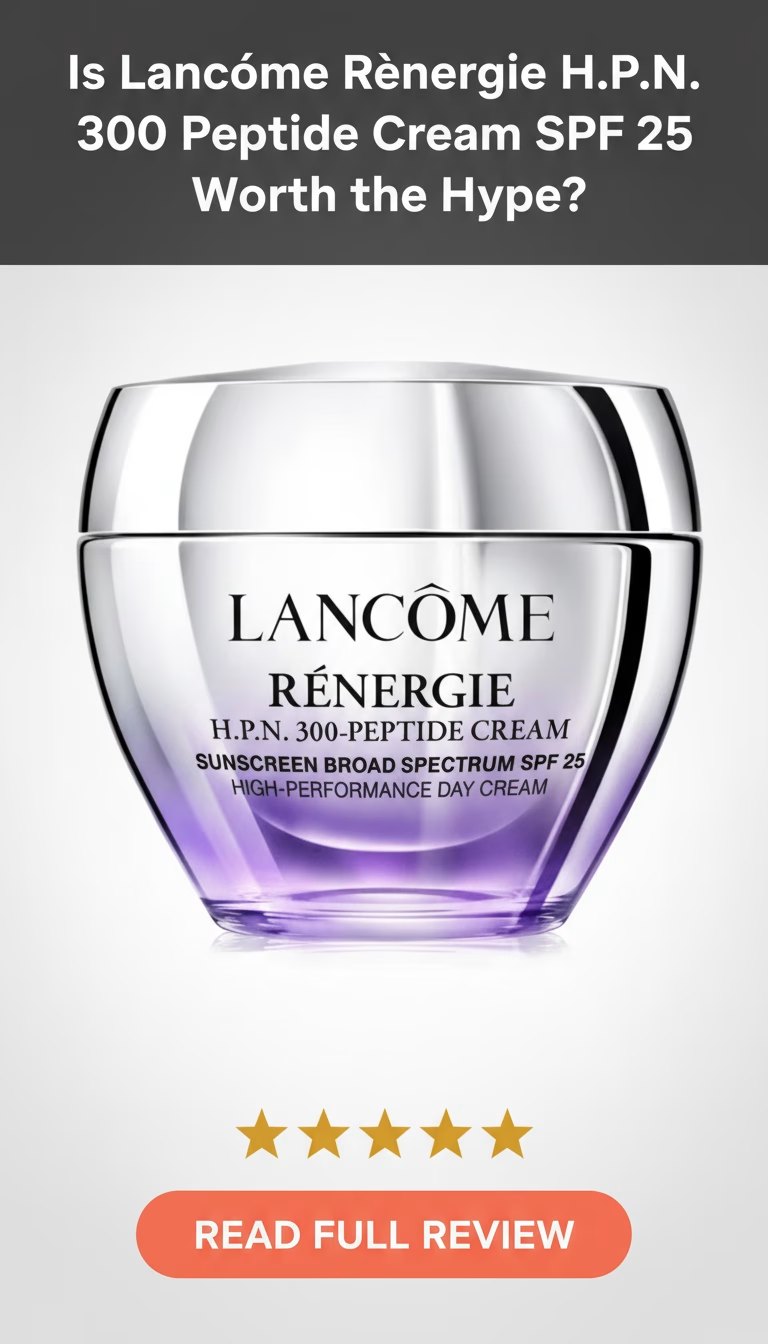
    Lancome’s naming convention doesn’t win clarity awards, but the product itself is straightforward: a peptide-rich anti-aging day cream with SPF 25 built in. At $150 for 1.7 oz (50ml), it’s priced in the same tier as the prestige Renergie night cream but includes the convenience factor of eliminating a separate sunscreen step. The “H.P.N.” stands for Hyaluronic acid, Peptides, and Niacinamide — the three core actives.

    The Three-Pillar Formula

    Hyaluronic acid handles immediate hydration — multi-weight molecules for surface plumping and deeper moisture retention. The 300-peptide blend is Lancome’s headline claim: a proprietary combination of peptide fragments at various chain lengths, designed to signal collagen and elastin production. Niacinamide (vitamin B3) at an undisclosed concentration addresses skin tone, pore appearance, and barrier function.

    The SPF 25 comes from a chemical sunscreen blend — primarily homosalate and octisalate, with ethylhexyl methoxycinnamate (avobenzone stabilizer). This provides UVA/UVB protection adequate for daily incidental exposure (commuting, working near windows) but not sufficient for extended outdoor activity. No white cast on light-to-medium skin tones, which is a common problem with mineral SPF formulas in moisturizers.

    The texture is a medium-weight cream — lighter than the Renergie Night version but richer than a gel-cream. It spreads smoothly and absorbs in about 60-90 seconds. There’s a subtle floral scent, typical of Lancome, that fades within a few minutes. The finish is slightly luminous — not matte, not greasy — which makes it a decent makeup primer.

    8-Week Daily Use

    Applied every morning after cleansing, toner, and a vitamin C serum.

    Week 1-2: The texture under makeup was the first standout quality. Foundation and tinted moisturizer applied smoothly over it, with no pilling, separating, or SPF-related patchiness. Skin felt hydrated through the day without becoming oily in the T-zone by afternoon. The slight luminosity gave bare skin a healthy appearance without needing additional products.

    Week 3-5: Hydration levels stabilized at a higher baseline. Morning tightness after cleansing resolved faster, and mid-day dryness around the cheeks and nose didn’t occur. Skin tone appeared more even, likely from the niacinamide — redness around the nose and on the chin calmed noticeably. Fine lines on the forehead looked slightly softer, primarily from sustained hydration rather than structural change.

    Week 6-8: The peptide effects, if present, were subtle. Skin felt marginally firmer — more resilient to the touch — but the change wasn’t dramatic enough to attribute solely to peptides versus the cumulative effect of consistent hydration and sun protection. The SPF benefit was arguably the most impactful anti-aging component: daily UV protection prevents more aging than any peptide can reverse.

    SPF 25 — Enough or Not?

    For office workers, indoor professionals, or anyone whose sun exposure is mainly incidental (walking to the car, sitting near windows), SPF 25 from a well-formulated product is adequate. The chemistry-based filter absorbs cleanly without the white residue that mineral SPFs leave. However, if you’re spending more than 30 minutes outdoors — lunch walks, outdoor dining, weekend activities — layer a dedicated SPF 30-50 sunscreen over this. SPF 25 in a moisturizer is a baseline, not a replacement for proper sun protection during real exposure.

    Competitor Comparison

    La Roche-Posay Anthelios UV Correct SPF 70 ($33) is a vastly superior sunscreen at a fraction of the price, though it doesn’t include the peptide or anti-aging actives. It Cosmetics CC+ Cream SPF 50 ($47) combines coverage with sun protection if you want a makeup-hybrid approach.

    Estee Lauder Revitalizing Supreme+ SPF 15 ($68) is the direct competitor — cheaper, lower SPF, similar peptide-and-hydration approach. The Lancome has better sun protection and a more refined texture. Olay Regenerist Micro-Sculpting Cream SPF 30 ($29) is the drugstore value option — adequate peptides, better SPF, far lower price, but less elegant texture.

    What Works

    • Combines three evidence-based actives (HA, peptides, niacinamide) with practical sun protection in one step.
    • Zero white cast — the chemical SPF filter blends invisibly on most skin tones.
    • Texture works well under makeup — no pilling, no separation, slight luminosity acts as a primer.
    • Niacinamide benefits show within 3-4 weeks — measurable improvement in tone evenness and reduced redness.
    • Convenient for people who skip sunscreen — building it into the moisturizer step improves compliance.

    What Doesn’t

    • $150 is steep for SPF 25 — higher-protection sunscreens cost a fraction of this price.
    • SPF 25 is insufficient for real sun exposure — you still need a dedicated sunscreen for outdoor time.
    • Peptide effects at 8 weeks were subtle enough to question whether they justify the premium over a simpler SPF moisturizer.
    • The floral fragrance, while mild, eliminates this for fragrance-averse users.
    • Jar packaging (same criticism as the night cream) — airless pump would better preserve peptide stability.

    The Verdict

    The H.P.N. 300 works best as a convenient morning step that consolidates hydration, anti-aging actives, and basic sun protection into one application. The texture is genuinely pleasant, it layers beautifully under makeup, and the niacinamide delivers visible tone improvement within a month. The peptide claims are harder to verify at this timeframe. At $150, you’re paying a significant premium over Olay Regenerist SPF 30 ($29) for better texture and a prestige experience. Whether that gap is worth it depends on how much your morning routine’s sensory quality matters to you. For practical UV protection, a $30 La Roche-Posay sunscreen outperforms this — but few sunscreens feel this good on the skin.

    Pros

    • Visibly firms and lifts skin.
    • Provides excellent daily sun protection.
    • Leaves skin feeling super hydrated.
    • Noticeably reduces fine lines and wrinkles.
    • Absorbs quickly without feeling heavy.

    Cons

    • It's definitely a splurge item.
    • Subtle fragrance might not be for everyone.
    • Takes time to see full results.
  • IT Cosmetics Confidence a Cream Anti-Aging Hydrating Moisturizer

    IT Cosmetics Confidence a Cream Anti-Aging Hydrating Moisturizer

    IT Cosmetics Confidence in a Cream Anti-Aging Hydrating Moisturizer Review 2026: Is It Worth Buying?

    Let’s be real, finding a moisturizer that actually *does* what it says it’s going to do, especiall…

    IT Cosmetics Confidence in a Cream — The $52 Moisturizer That Launched a Cult Following

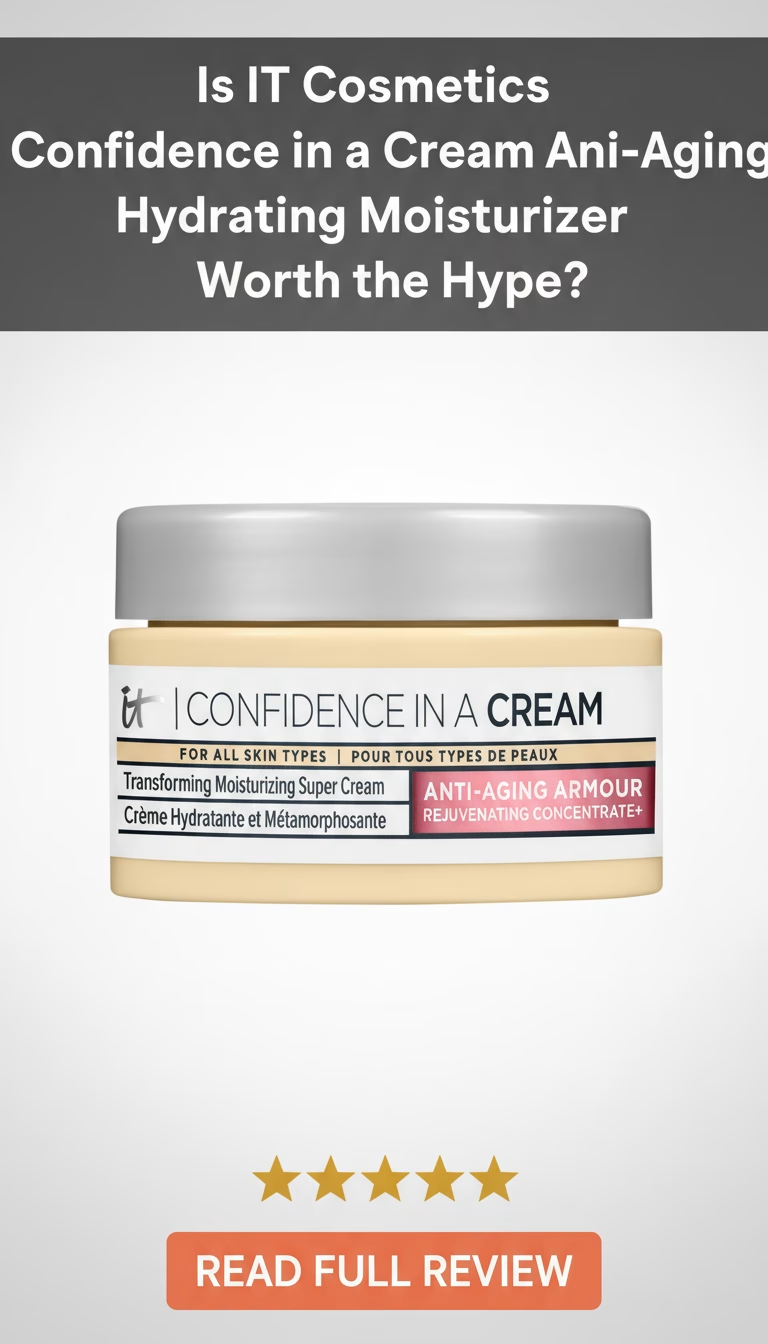
    IT Cosmetics positioned Confidence in a Cream as a dermatologist-developed anti-aging moisturizer that crosses the line between drugstore function and prestige texture. The full-size jar (2 oz / 60ml) runs about $52 at Sephora and Amazon, though the travel size (0.5 oz) at $19 is what most people encounter first. It’s marketed as an all-in-one solution for dryness, fine lines, and dull skin — the kind of product that tries to replace a three-step routine with a single jar.

    Inside the Formula

    The ingredient list reads like a greatest-hits compilation of hydration science. Ceramides (1, 3, and 6-II) form the backbone — these are the lipids that your skin barrier naturally uses to retain moisture, and supplementing them topically is one of the most well-supported approaches in dermatology. Hyaluronic acid (sodium hyaluronate) handles water-binding. Collagen provides a surface-level smoothing film. Peptides (palmitoyl tripeptide-1 and palmitoyl tetrapeptide-7) signal collagen production over time. Niacinamide addresses tone and pore appearance.

    The texture is the product’s signature — thick, whipped, almost mousse-like. Scooping it from the jar, it holds its shape momentarily before melting into a thinner consistency on warm skin. Absorption is surprisingly fast for something this rich — about 60-90 seconds. No sticky residue, no heavy film. The finish is satin: not matte, not dewy, just naturally soft. There’s a very mild, almost clinical scent that dissipates in seconds.

    Daily Use Over 8 Weeks

    Morning and night application, layered over serums (vitamin C morning, retinol alternate nights).

    Week 1: The immediate comfort factor is what hooks people. Tight, dry, post-cleanse skin feels settled within a minute. Morning application creates a smooth base for foundation — makeup glides rather than catching on dry patches. The texture is rich enough to feel substantial but light enough to avoid that “wearing a mask” sensation.

    Week 2-4: Hydration improvement was consistent and noticeable. The mid-afternoon tightness that typically sets in — especially around the cheeks and nose — stopped happening. Dry patches on the outer cheeks and jawline healed without needing a separate treatment. Skin looked healthier: more even-toned, less sallow under fluorescent lights.

    Week 5-8: The anti-aging claims showed modest results. Fine lines on the forehead appeared softer — more from sustained hydration than active wrinkle-filling. Skin felt more resilient overall: less reactive to weather changes, quicker recovery from exfoliation. The texture improvement was most visible as a smoother surface when bare-faced.

    The Jar Problem

    The Tiffany-blue glass jar looks expensive and photographs well. But it’s a jar — open-air format, fingers dipping in daily. IT Cosmetics includes a spatula, which most users forget after week two. For a formula built around peptides and ceramides, airless pump packaging would better preserve ingredient integrity. A pea-sized amount covers the face. The 2 oz jar lasts approximately 8-10 weeks with twice-daily use, which makes the per-application cost reasonable.

    How It Stacks Up

    CeraVe Moisturizing Cream ($19 for 19 oz) is the obvious budget comparison — it also uses ceramides and hyaluronic acid, and it costs a fraction per ounce. The CeraVe texture is heavier, less elegant, and doesn’t feel as nice under makeup, but the core hydration function is similar. If you’re purely hydration-focused and price-conscious, CeraVe wins on value.

    Drunk Elephant Protini Polypeptide Cream ($68) is the step-up option — similar peptide focus, better texture, but higher price. First Aid Beauty Ultra Repair Cream ($38 for 6 oz) is the value champion for barrier repair — simpler formula, less anti-aging, but excellent hydration at a better price per ounce.

    Against Clinique Moisture Surge ($43): Moisture Surge is lighter, more gel-cream, better for oily skin. Confidence in a Cream is richer, better for dry-to-combination skin that needs more emollience.

    What Works

    • The whipped texture is genuinely enjoyable — rich without heaviness, fast absorption, excellent under makeup.
    • Ceramide + hyaluronic acid combination is dermatologically sound for barrier repair and hydration.
    • Compatible with common actives (retinol, vitamin C, niacinamide) without pilling or irritation.
    • Skin feels noticeably softer and more resilient within the first week.
    • The travel size ($19) is a low-risk way to test before committing to the full jar.

    What Doesn’t

    • CeraVe delivers comparable hydration at roughly 1/10th the price per ounce — the texture premium is real but large.
    • Anti-aging effects are modest — fine line softening through hydration rather than active wrinkle correction.
    • Jar packaging isn’t ideal for preserving peptide and ceramide integrity.
    • Too rich for oily skin in humid conditions — will feel heavy by mid-day.
    • The “anti-aging armour complex” branding overpromises relative to what ceramides and peptides deliver in a moisturizer format.

    The Verdict

    Confidence in a Cream is a genuinely good moisturizer with a texture that punches above its price point. The ceramide-peptide-hyaluronic acid formula does what the science supports: hydrate, repair the barrier, and create a smoother surface for makeup. It’s not a replacement for retinoids or targeted anti-aging treatments, but it’s one of the better everyday moisturizers for dry-to-combination skin that wants more than CeraVe without jumping to $100+ luxury creams. The travel size makes it easy to test. If the texture matters to you (and for daily-use products, it should), this is one of the more pleasant formulas in the $30-60 range.

    Pros

    • Super hydrating without feeling greasy.
    • Noticeably smoother and plumper skin.
    • Makeup applies beautifully over it.
    • Gentle enough for sensitive skin.

    Cons

    • It's definitely a bit pricey.
    • Jar packaging can be less hygienic.
    • Subtle scent might not appeal to everyone.
  • Tatcha The Dewy Serum

    Tatcha The Dewy Serum

    Tatcha The Dewy Serum Review 2026: Is It Worth Buying?

    Okay, let’s be real for a second. We’ve all been there, right? Staring into the bathroom mirror, scrutinizing every tiny line that wasn’t th…

    Tatcha The Dewy Serum — $89 for Glow, and Whether the Glow Is Real

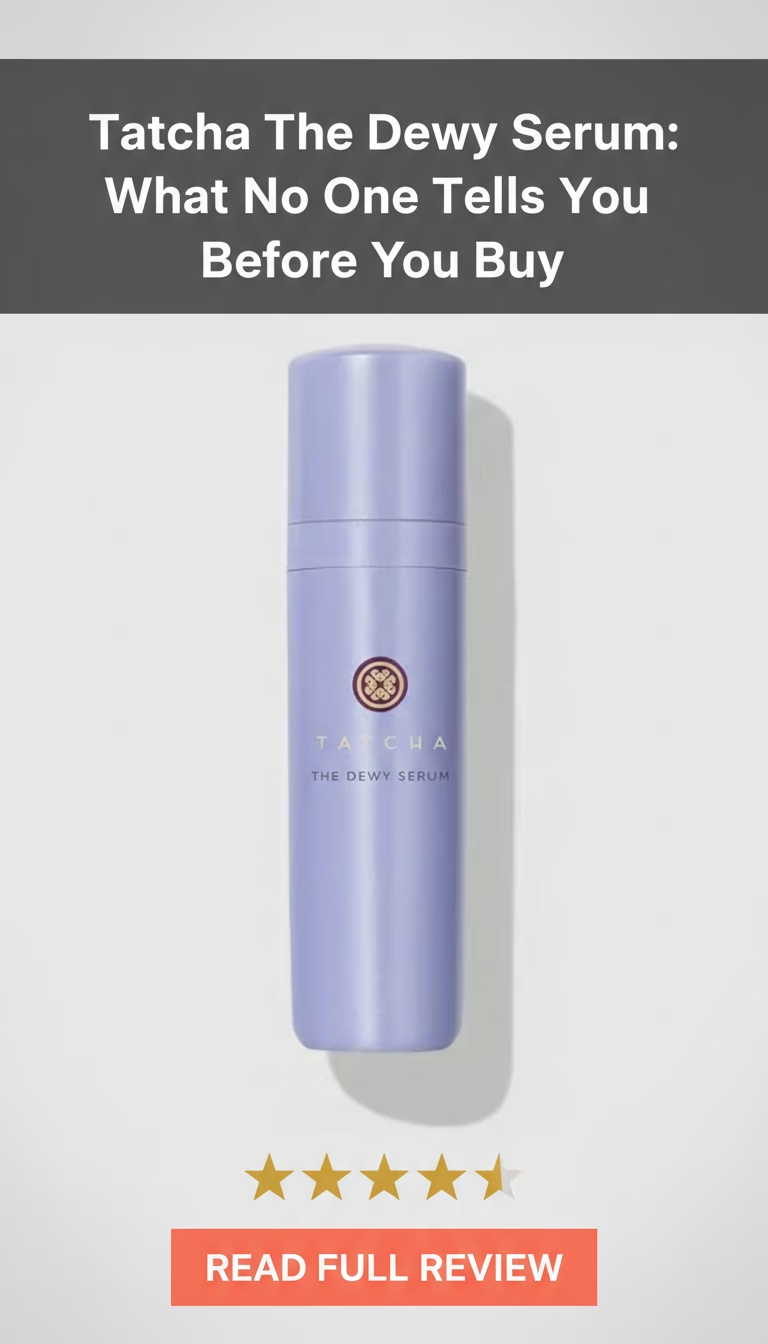
    Tatcha built a brand around Japanese beauty rituals and premium ingredients, and The Dewy Serum is their answer to the “glass skin” trend that refuses to die. At $89 for 30ml (1 oz), it sits in the upper tier of hydrating serums — cheaper than SK-II’s essence but more than double what brands like The Ordinary or CosRx charge for similar hydration-focused products. The core promise: deep hydration, gentle resurfacing, and that elusive lit-from-within look.

    Formula and Ingredients

    The formula is built on three pillars. Tatcha’s proprietary Hadasei-3 complex — a fermented blend of Uji green tea, Akita rice, and Okinawa mozuku algae — provides antioxidant protection and the amino acids that support surface renewal. Lactic acid at a low concentration (Tatcha doesn’t disclose the exact percentage, but the pH and gentleness suggest 3-5%) handles mild chemical exfoliation. Hyaluronic acid and squalane round out the hydration and moisture-locking components.

    The texture is a medium-weight gel-serum — thicker than water but thinner than most serums with squalane. It has a slight silkiness that comes from the squalane rather than silicones. Two to three drops from the dropper cover the full face. Absorption takes about 30 seconds, leaving a soft sheen rather than a sticky film. There’s a very faint, almost imperceptible clean scent that disappears immediately.

    6-Week Test

    Used twice daily, after cleansing and toner, before moisturizer in the morning and before night cream in the evening.

    Day 1-7: Immediate hydration improvement. Skin felt noticeably plumper within the first application — not in a “swollen” way but in a “filled-in” way, like dehydration lines across the cheeks suddenly had less depth. The morning-after effect was consistent: skin looked fresh and reflected light evenly instead of in patches.

    Week 2-3: The lactic acid started showing results. The rough texture on the outer cheeks — the kind that makes foundation sit unevenly — smoothed out. Skin tone looked more consistent, and the overall complexion had a clarity that hadn’t been there before. No irritation, peeling, or sensitivity, even when used alongside retinol on alternate nights.

    Week 4-6: The “dewy” claim landed. Skin had a genuine luminosity — not oily, not shimmery, just healthy-looking. The glow was most visible in natural light, and it held through the day without turning greasy by afternoon. Fine lines around the eyes appeared softer. The area between the brows, where expression lines tend to shadow, looked smoother.

    What it didn’t do: significant impact on deep wrinkles, dramatic brightening of dark spots, or oil control. It’s a hydration-and-glow product, and it stays in that lane.

    The Packaging

    The violet glass bottle with gold accents is objectively beautiful — heavy, well-made, and photogenic on a bathroom shelf. The dropper is precise and consistent. The glass is thick enough to feel premium but also heavy enough to be a travel concern — dropping this on tile would be expensive. At $89/oz, every spilled drop stings. The dropper seal is tight, which helps preserve the actives.

    Competitive Context

    The Ordinary’s Hyaluronic Acid 2% + B5 ($8) handles pure hydration at a fraction of the price, but it doesn’t include the exfoliating or antioxidant components. CosRx Snail 96 Mucin Essence ($22) provides similar plumping and glow at a much lower price point — it’s thicker and less elegant, but effective. SK-II Facial Treatment Essence ($185+) targets similar glow outcomes through fermented Pitera but at 2x the price and with a completely different texture (watery, not serum-like).

    Drunk Elephant’s Protini Polypeptide Cream ($68) provides hydration plus peptides in a cream format rather than a serum, but the glow factor is less pronounced. Tatcha’s own Dewy Skin Cream ($68) is the richer, cream version if you want the glow without the exfoliating lactic acid.

    What Works

    • The glow is real — natural luminosity that’s visible in photos and in person without looking oily.
    • Lactic acid exfoliation is effective but gentle enough for daily use on sensitive skin.
    • Absorption is fast and residue-free — layers perfectly under sunscreen, makeup, or heavier treatments.
    • Dehydration lines (not deep wrinkles) visibly fill in within the first week.
    • No irritation when combined with retinol, vitamin C, or other actives.

    What Doesn’t

    • $89/oz is hard to justify when CosRx and The Ordinary deliver comparable hydration for $8-22.
    • The “anti-aging” claims are modest — fine line softening, yes, but no impact on deep wrinkles or significant sagging.
    • The glass bottle isn’t travel-friendly — heavy and breakable.
    • Oily skin types may find the “dewy” finish pushes toward greasy by mid-afternoon.
    • 30ml won’t last long if you’re generous with application — expect 5-6 weeks with twice-daily use.

    The Verdict

    The Dewy Serum delivers genuine hydration and glow. The combination of fermented actives, gentle lactic acid, and squalane-based moisture creates a result that’s more nuanced than straight hyaluronic acid serums. The question is whether that nuance is worth $89. If budget is a primary concern, CosRx Snail Mucin ($22) gets you 70-80% of the effect. If you value the texture, the packaging experience, and the gentle exfoliation on top of the hydration, Tatcha’s formula is one of the better executions in the prestige serum category. Best suited for normal-to-dry skin that needs radiance and gentle resurfacing without the irritation risk of stronger acids.

    Pros

    • Gives an amazing dewy, hydrated glow
    • Luxurious feel and application
    • Visibly plumps skin, reduces fine lines
    • Gentle, non-irritating formula
    • Improves skin texture over time

    Cons

    • Definitely on the pricey side
    • Slight fragrance might bother some
    • Results can take a few weeks to fully show
  • Shiseido Vital Perfection Uplifting and Firming Advanced Cream

    Shiseido Vital Perfection Uplifting and Firming Advanced Cream

    Shiseido Vital Perfection Uplifting and Firming Advanced Cream Review 2026: Is It Worth Buying?

    You know that moment, right? You’re catching a glimpse of yourself in the mirror, maybe under some hars…

    Shiseido Vital Perfection — A $146 Firming Cream Tested Against Its Own Claims

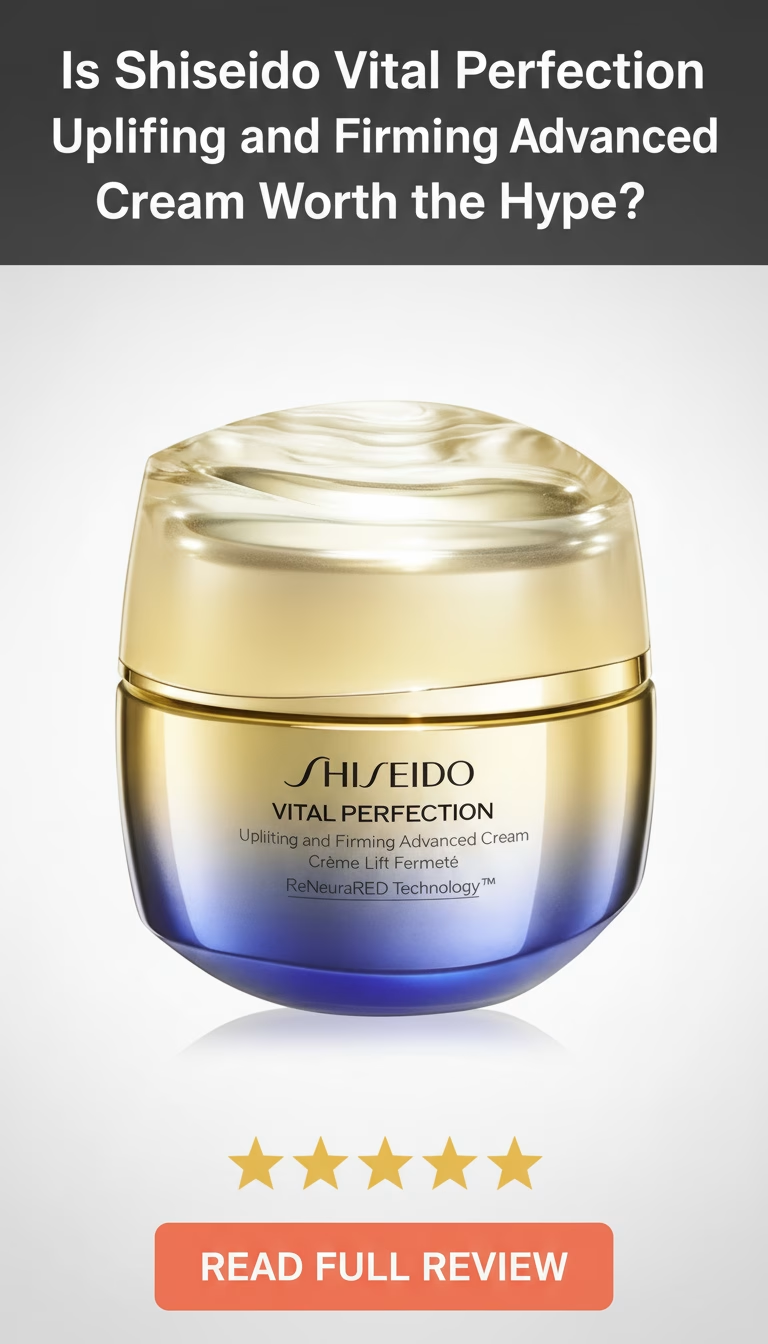
    Shiseido’s Vital Perfection line sits at the intersection of Japanese skincare philosophy and Western anti-aging expectations. The Uplifting and Firming Advanced Cream costs $146 for 50ml (1.7 oz), positioning it in the same tier as La Prairie’s entry-level products and well above most department store moisturizers. It targets sagging, wrinkles, and dullness — the three complaints that converge once skin passes the mid-40s mark.

    What Shiseido Puts In It

    Two proprietary technologies define this formula. ReNeura Technology++ is Shiseido’s approach to improving skin’s responsiveness to topical treatments — essentially, it claims to help skin “receive” active ingredients more efficiently by targeting sensory receptors. The second is the KURENAI-TruLift Complex, built around safflower extract and designed to improve elasticity at a structural level. The formula also includes VP8 — a blend of olive root extract, green tea, angelica, and other botanicals with antioxidant properties.

    The texture is rich but controlled. It’s thicker than a typical moisturizer but melts on contact — more like a balm that liquefies rather than a cream that spreads. A pea-sized amount covers the face; two peas for face and neck. Absorption is faster than expected for something this emollient — about 90 seconds to full absorption. There’s a light, clean scent that’s more green-floral than sweet, and it dissipates within a minute.

    12-Week Test Period

    Used twice daily (morning and night), with retinol on alternate evenings and vitamin C under the cream in the morning.

    Week 1-3: Hydration was the first observable change. Skin that typically felt taut by mid-afternoon maintained its elasticity through the day. The cream created a smooth, slightly satin finish that held makeup well without greasiness. Morning skin looked noticeably less deflated — the puffiness-to-flatness transition that happens by mid-morning was less pronounced.

    Week 4-8: The firming claim became credible. The jawline and cheek area showed improved definition — not a dramatic lift, but the kind of subtle tightening that shows up in side-by-side photos. Nasolabial folds appeared shallower under consistent lighting. The skin texture on the neck improved more noticeably than the face, possibly because neck skin starts from a thinner, more depleted baseline.

    Week 9-12: The radiance component became the standout. Skin tone evening happened gradually but was clearly visible by week 10. Post-inflammatory marks from old breakouts faded faster than usual. The overall complexion had a luminosity that wasn’t shiny or dewy — more like healthy skin that reflects light evenly. Fine lines maintained the softened appearance from the mid-period; deeper wrinkles remained largely unchanged.

    The Jar and Spatula

    The packaging is beautiful — heavy glass with an iridescent purple-gold finish, and it comes with a small metal spatula. The spatula is actually functional, not just decorative — it helps with portion control and hygiene. The jar’s weight makes it impractical for travel (it’s close to 8 oz with the glass), so decanting into a smaller container is the practical approach for trips.

    Against the Competition

    Lancome Renergie Lift Multi-Action Night ($140) is the closest Western competitor. The Lancome is richer, more emollient, and better suited for very dry skin. The Shiseido has a lighter feel despite similar richness, absorbs faster, and provides more noticeable brightening. For firming specifically, they’re comparable — the Lancome uses linseed extract, the Shiseido uses safflower and its proprietary complex.

    La Mer Moisturizing Cream ($200+ for 1 oz) costs significantly more and delivers similar hydration with less targeted firming. For pure firming efficacy, the Shiseido outperforms La Mer at a lower price point. Estee Lauder Revitalizing Supreme+ ($68) is the value alternative — less sophisticated texture and less firming, but adequate for early concerns.

    What Works

    • Firming effect is measurable by week 4-6 — particularly visible along the jawline and on the neck.
    • Skin tone evening is gradual but significant over 8-12 weeks.
    • Texture absorbs faster than competing rich creams — no greasy residue, works under sunscreen and makeup.
    • Compatible with retinoids and vitamin C without pilling or irritation.
    • The spatula and portion control mean the jar lasts approximately 3 months with twice-daily use.

    What Doesn’t

    • $146 for 50ml is expensive — the performance advantage over $70 options isn’t proportional to the price gap.
    • Deep wrinkles and significant sagging won’t respond meaningfully — this is maintenance and mild improvement, not correction.
    • The glass jar is impractical for travel and the air exposure degrades some actives over time.
    • Too rich for oily or acne-prone skin — could contribute to congestion around the chin and nose.
    • The scent, while subtle, is present — completely fragrance-averse users should test first.

    The Verdict

    The Vital Perfection delivers on firmness and radiance within a reasonable timeframe, and its texture is genuinely superior to most competing rich creams. The science behind ReNeura and KURENAI is proprietary enough to be hard to verify independently, but the observable results over 12 weeks were consistent with the claims. It’s best suited for normal-to-dry skin showing visible signs of sagging and dullness. If $146 fits your skincare budget, it’s one of the more effective options in the prestige firming category. If price is a concern, the Lancome Renergie ($140) gets you 85% of the way there, and Estee Lauder’s Revitalizing Supreme+ ($68) handles the basics at half the cost.

    Pros

    • Noticeable lifting and firming effect.
    • Skin feels smoother and more hydrated.
    • Luxurious texture and pleasant scent.
    • Helps reduce visible deep wrinkles.
    • Leaves a healthy, radiant glow.

    Cons

    • Definitely on the pricier side.
    • Scent might be strong for some.
    • Requires consistent use for best results.