Fill the bottle, close the lid, turn it upside down over your gym bag and look at the seam. If you would not trust it there, nothing else about the bottle matters. After the lid, the whisk is the next thing to judge, because that is what decides whether you drink a smooth shake or chew one.
Most shaker bottle shopping is a choice between a few small mechanical details dressed up in colors and capacity numbers. This guide covers the details that change what ends up in your cup or your gym bag, how to check each one, and which ones you can stop worrying about.
What actually matters
1. The lid seal
A shaker is a sealed container that you throw around. The lid design decides whether it stays sealed. The most reliable pattern is a screw-on lid with a separate cap over the drinking opening, so there are two barriers between your shake and your bag instead of one.
The check: before you rely on any bottle, fill it with water, close it fully, and hold it upside down over the sink. Shake it hard for a few seconds. Then lay it on its side on a paper towel for a while. Any weeping at the threads or around the cap will show up. Do this again after a few weeks of washing, because gaskets and threads that seemed fine on day one can loosen up or get dirty.
Also look at how the cap closes. A flip cap that snaps down firmly is easier to trust than one that merely rests in place. If you can close it with one hand and feel a definite stop, it is less likely to pop open in a bag.
2. The agitator
Powder clumps because dry material meets liquid in a lump, and the outside gets wet while the inside stays dry. Shaking alone moves liquid around but does little to break the lump apart. An agitator, which is a loose piece inside the bottle, hits the clumps as you shake.
Two common types exist: a wire whisk ball, and a plastic or metal grid or spring. A wire whisk ball has many thin wires to catch clumps from every side, while a fixed grid or a coil covers less of the space.
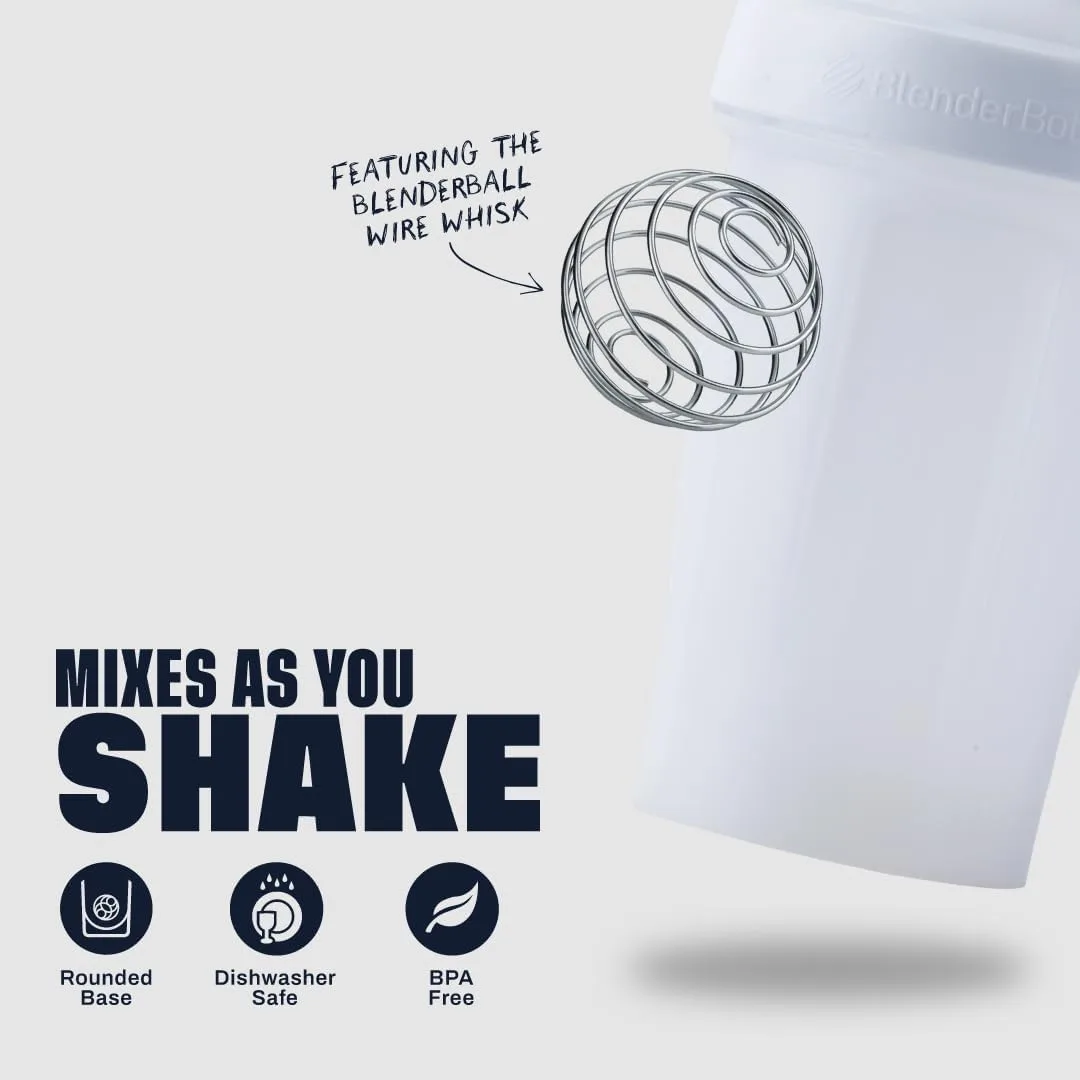
The check: look at what the whisk is made of. If it is stainless, check that it is a named grade rather than a vague "metal" claim. Then drop it in the empty bottle and shake; it should travel the length of the bottle and hit all the walls. A whisk that jams or sits in one spot is not doing the work.
3. Mouth width
A narrow opening means powder on the counter and on your hands. A wide mouth lets a scoop go in without a funnel, lets you add ice or fruit, and makes it far easier to reach inside to clean the corners.
The check: hold your usual scoop over the opening. If the scoop clears the rim with room to spare, the mouth is wide enough. If you have to angle it and tap carefully, it is not. This matters most at 6 a.m. in a locker room, when you do not want to be careful.

4. Real capacity and usable markings
Bottle size is a number on the label, but the markings on the side are what you actually use. Some bottles are bigger than their marked volume, which leaves headspace for shaking. Headspace is good: a shake needs room to move or it will not mix. But the marks should be easy to read, in the units you use.
The check: look at where the printed scale stops compared with the stated capacity. If the scale stops well below the top, you can measure liquid up to the last mark and above that you are guessing. Also see whether the scale shows both ounces and milliliters, if you follow a recipe in one or the other.
The BlenderBottle Classic V2 is a useful example. It holds 28 oz, but the markings only go to 22 oz. That is a limitation if you measure large shakes in the bottle: you measure to a point and eyeball the rest.
5. Material and care
Plastic is light. Stainless steel bottles stay cold or hot and are rigid, but they are heavier. For protein shakes, which are meant to be drunk soon after mixing, insulation matters less than it does for a water bottle you carry all day.
If you buy plastic, look for a clear statement that it is free of BPA and phthalates. If you wash by machine, check that the bottle is stated to be dishwasher safe, because heat warps some plastics.
The check: after the first wash, sniff the bottle, then smell it again after a day with a milk shake sitting in it. A bottle that can be fully taken apart, lid, cap, whisk and body, is easier to keep clean than one with molded parts you cannot reach.
6. The drinking spout and carry loop
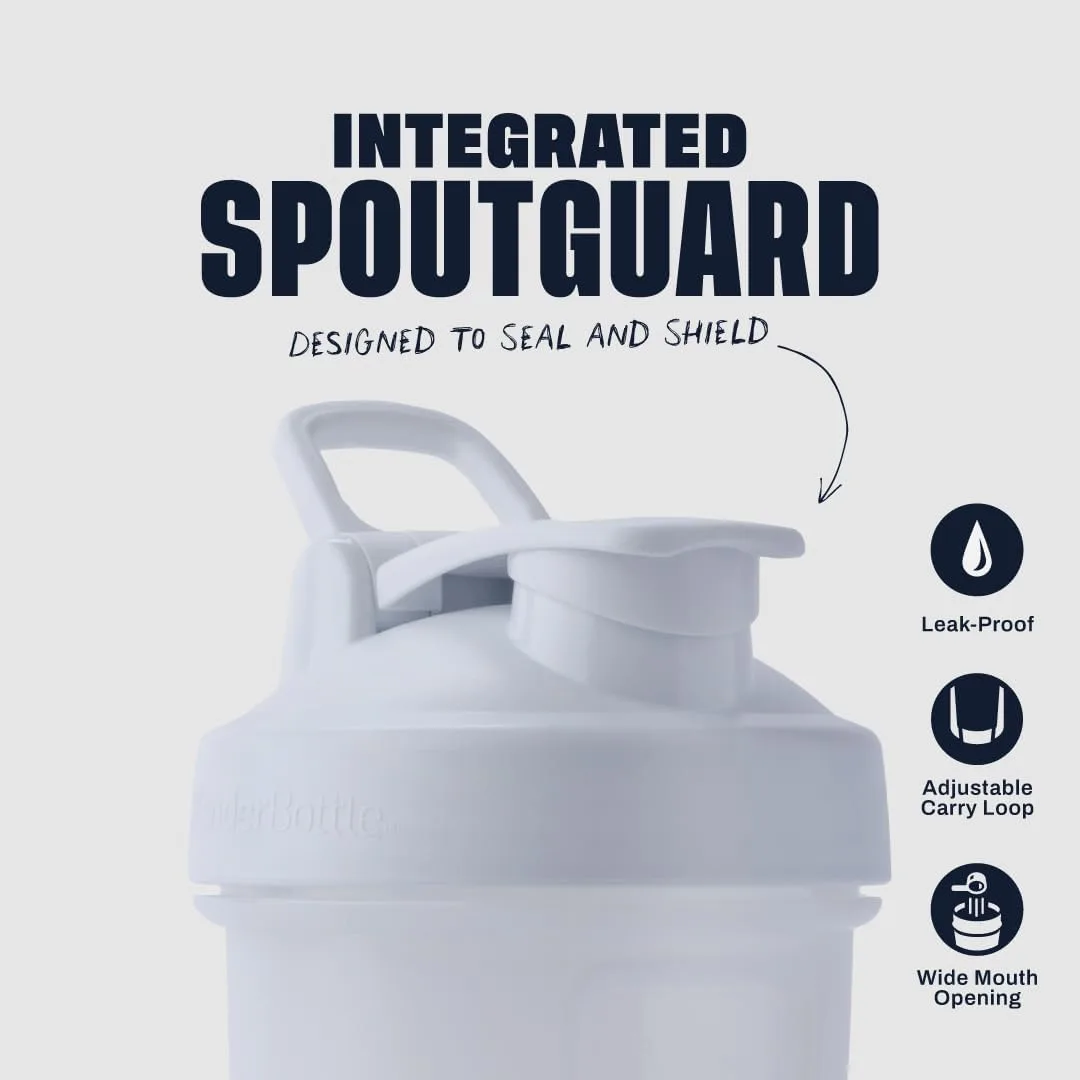
A spout guard keeps the mouthpiece clean. It is a small feature, and it is useful if the bottle goes into a bag next to shoes and a towel.
A carry loop is convenient for hanging the bottle from a finger or clipping it to a bag, but it is not a reason to choose one bottle over another. Check that it is wide enough for your finger and that it does not get in the way when you drink.
What to ignore
- Color and graphics. They do nothing for mixing or sealing. They only help if you share a gym fridge and want to find your bottle.
- Extra compartments. A storage cup for powder or pills attached to the base adds seams, and seams are where leaks and odors start. If you carry powder, a small separate container is simpler.
- Insulation, for protein only. It helps if you also want the bottle for cold water. For a shake that you drink within a short time, it adds weight and bulk.
- Brand claims about "engineered" mixing. Look at the agitator and the lid. Those are the parts that do the work.
- The biggest size by default. A bottle that is too large for your serving leaves the shake spread thin, so the whisk has less to catch. Match the bottle to your usual serving, with some room above it.
Common mistakes
Adding powder first. Powder dumped into an empty bottle can pack into the corners at the base, and liquid has trouble reaching it. Pour in the liquid first, add the powder, and then shake.
Filling to the brim. A full bottle has no room for the whisk to travel. Leave air at the top. That air is what makes the shake move.
Shaking hot liquids in a sealed bottle. Hot liquid in a closed container builds pressure. Mix hot drinks another way, and use the shaker for cold or room temperature liquid.
Leaving it sealed after use. A bottle closed with a milk shake residue inside gets a sour smell quickly. Rinse it soon after you finish, and let the parts dry open.
Not removing the whisk when cleaning. Residue collects around the wires and under the lid gasket. If you only rinse the body, the smell comes from those spots. Take it apart every time.
Trusting a new lid without testing it. The upside down water test takes a minute. It is better to find a leak over your sink than inside a gym bag.
Using a drink tumbler as a shaker. A tumbler built for carrying water is not designed to mix powder. If you use powder only now and then, a plain stirring cup may do; if you use it daily, buy something built for it.
Which buyer should pick what
| If you | Prioritize | Why |
|---|---|---|
| Carry a shaker in a gym bag | Screw-on lid with a secure cap | The lid is the only thing between your shake and your clothes. |
| Mix protein at a desk or at home | A good whisk and a wide mouth | Leaks matter less; clumps and easy cleaning matter more. |
| Use pre-workout or other drink mixes | A wire whisk and a lid you can clean thoroughly | Flavored powders leave residue and smell if the lid cannot come apart. |
| Measure servings precisely | Clear markings in the units you use | Check where the scale stops against the stated capacity. |
| Want drinks to stay cold for hours | Insulation, which means a different bottle | Standard plastic shakers are not insulated. |
Most people fall into the first two rows. They want something that mixes without clumps, closes firmly, and washes without effort. That description fits a plain bottle with a stainless whisk and a good lid.
Where our catalog fits
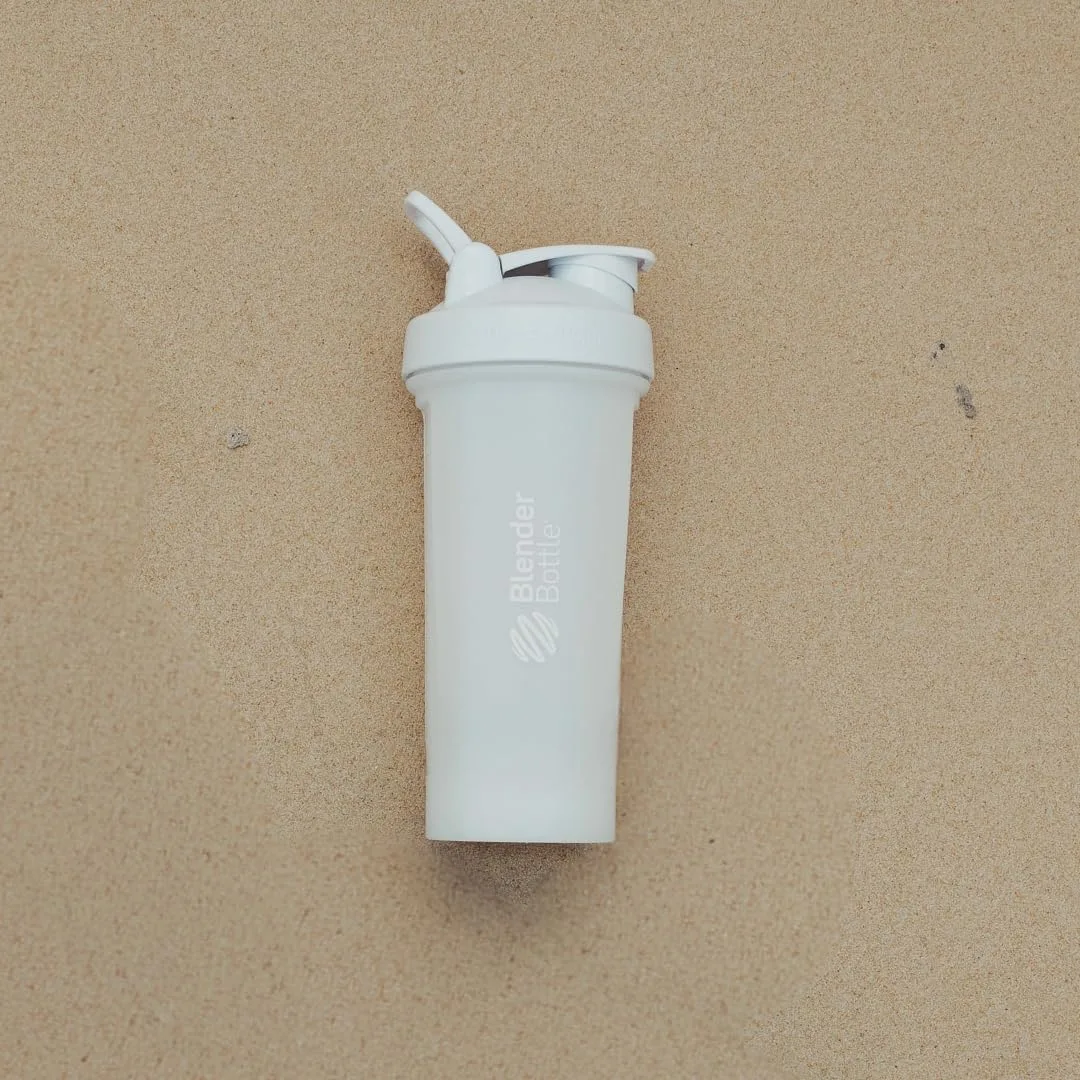
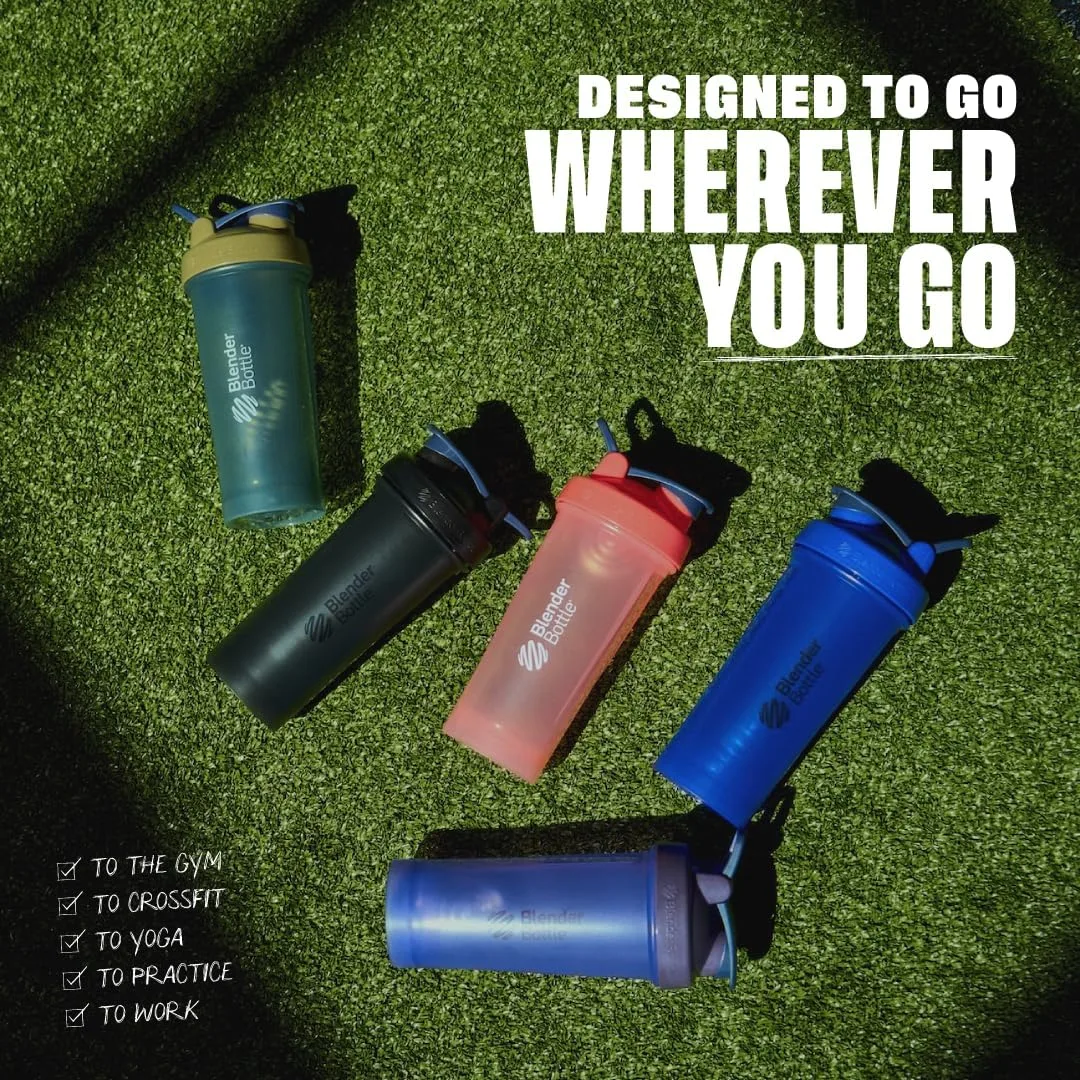
The BlenderBottle Classic V2 Shaker Bottle, 28 oz is the straightforward choice for protein shakes, pre-workout and drink mixes at the gym or at a desk. We have not published a full review yet, so this section covers its listed features, checked against the points above.
The standard shaker bottle: a stainless steel BlenderBall whisk, a screw-on leak-proof lid and a flip cap that keeps the spout clean. Note that the markings stop at 22 ounces even though it holds 28.
As an Amazon Associate we earn from qualifying purchases. Links on this page may be affiliate links; we may earn a commission at no extra cost to you.
Agitator. It uses the BlenderBall, a 316 surgical-grade stainless steel wire whisk ball. That is the wire whisk design described earlier, and the grade is named.
Lid. The screw-on lid has a flip cap with a SpoutGuard. That gives you a sealed thread plus a cap that keeps the mouthpiece clean. Run the upside down water test anyway, as you would with any bottle.
Mouth. It has a wide opening that is easy for scoops and liquids, with ounce and milliliter markings.
Care. The plastic is BPA and phthalate free, and the bottle is dishwasher safe. The wide loop top is for carrying or clipping keys.
The trade-offs. The markings only go to 22 oz even though the bottle holds 28 oz, so the top of a large shake is a guess. It is plastic and not insulated, so it will not keep a drink cold. If either point is a dealbreaker, the table above tells you what to look for instead.
If you are comparing it with other gear in the catalog, note that the Stanley Quencher H2.0 FlowState Tumbler, 40 oz is a different kind of product, a tumbler rather than a shaker. Check the current price on the product page before you decide.
A short checklist before you buy
- Does the lid screw on, with a separate cap over the opening?
- Is the whisk a wire ball in a named grade of steel?
- Does your scoop fit through the mouth without angling?
- Where do the markings stop compared with the stated capacity?
- Does every part come off for washing, and is it dishwasher safe if you use a machine?
- Do you need insulation? If yes, plastic shakers are the wrong category.
Answer those six and the choice is usually clear. The rest is color.

Found this review helpful?
Pin it to one of your boards and come back to it whenever you need a reminder.



No comments yet.
Join the discussion. Comments are moderated before appearing.