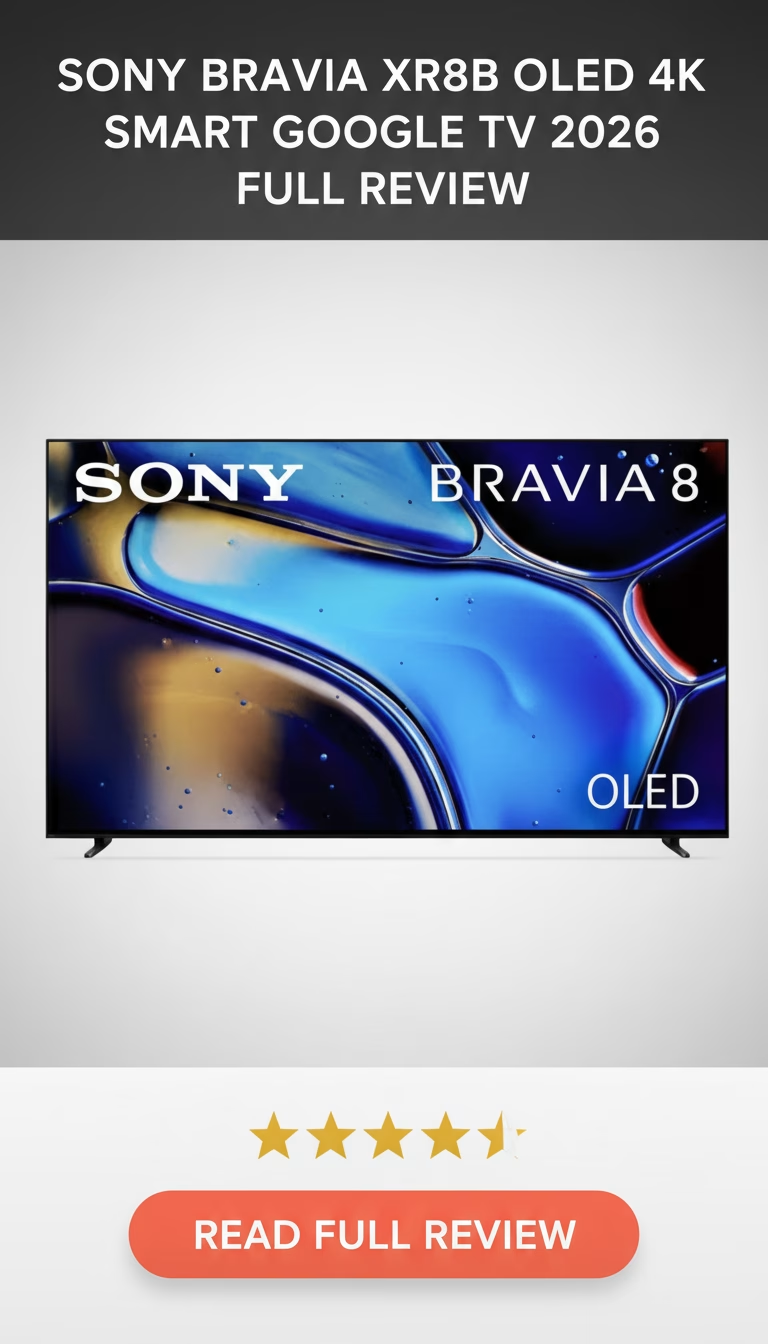
Sony BRAVIA 7 — Mini-LED Done Right, With Sony''s Processing Edge
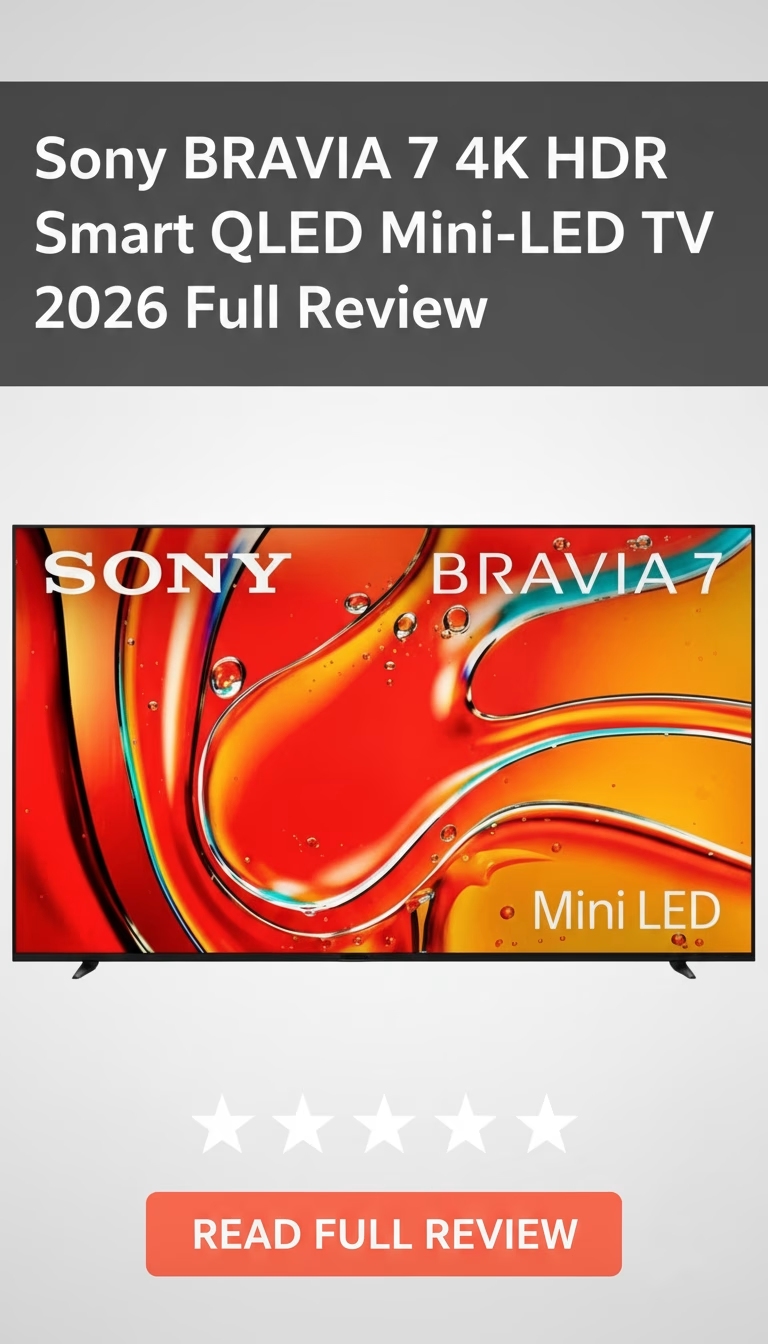
Sony''s BRAVIA 7 slots between the budget BRAVIA 3 and the flagship BRAVIA 9 as their mid-range mini-LED offering. Starting around $1,100 for the 55-inch and $1,500 for the 65-inch, it targets buyers who want better-than-average picture quality without the $2,500+ price of a premium OLED or the BRAVIA 9''s $2,800 entry point. The main selling point isn''t the panel itself — it''s what Sony''s XR processor does with it.
Processing Over Panel Specs
On paper, the BRAVIA 7''s mini-LED backlight uses fewer dimming zones than Samsung''s QN85D or TCL''s QM8 at the same price. Sony doesn''t publish exact zone counts, but in practice, the backlight behavior suggests roughly 300-400 zones on the 65-inch model. That''s fewer than competitors with 500-1,000+ zones.
What matters more: Sony''s XR Processor manages those zones with better precision than most competitors handle twice the count. Blooming — the bright halo around objects on dark backgrounds — is remarkably well-controlled. A white subtitle on a black background produces less visible bloom than TVs with technically superior backlight hardware. This is Sony''s signature advantage: their processing algorithms compensate for hardware limitations in ways that directly improve the viewing experience.
Peak brightness measures around 1,400 nits on 10% HDR windows. Not class-leading, but sufficient for HDR content to look punchy and detailed. Full-screen sustained brightness sits around 800 nits, which handles bright rooms competently.
Color and Motion: Where Sony Earns Its Reputation
Color accuracy in the Filmmaker or Custom preset is excellent — delta E under 2.5 without professional calibration. Skin tones look natural rather than oversaturated. This is where Sony consistently outperforms TCL and Hisense: faces look like faces, not orange-tinted mannequins. The color temperature stays consistent across brightness levels, avoiding the blue shift that cheaper mini-LEDs exhibit in dark scenes.
Motion handling is arguably the best of any mini-LED TV at this price. Sony''s Motionflow XR processes 24fps film content without judder, sports without blur, and gaming without artifacts. The default settings work well enough that most users won''t need to touch the motion settings — a rarity in this category where TCL and Hisense both require manual tuning to avoid the soap opera effect.
Google TV: The Software Experience
Google TV as a platform is content-focused — the home screen surfaces recommendations from across your streaming subscriptions rather than leading with an app grid. It works well once you''ve signed into your services and trained the algorithm with a few preferences. Chromecast is built in. Google Assistant voice search is fast and accurate for finding specific titles across platforms.
App selection covers everything: Netflix, Disney+, Apple TV+, Amazon Prime, Max, Peacock, Paramount+, YouTube. Apps load in 2-3 seconds. The interface occasionally pushes sponsored content tiles on the home screen, which is annoying on a $1,500 TV but can be partially managed in settings.
Gaming: Capable but Not the Priority
Two of the four HDMI ports are HDMI 2.1, supporting 4K 120Hz with VRR and ALLM. Input lag in Game Mode measures around 17ms at 4K/120Hz — acceptable for casual and most competitive gaming but noticeably higher than Samsung or LG OLEDs at 9-10ms. The BRAVIA 7 is a movie-first TV with gaming as a secondary capability, not a gaming-first display.
VRR works with both FreeSync and basic G-Sync compatibility. No Dolby Vision Gaming support — a feature the BRAVIA 9 includes but Sony reserved for the upper tier.
Sound Quality
Sony''s Acoustic Multi-Audio system places tweeters near the screen edges to localize sound to on-screen action. The effect is subtle but real — dialogue appears to come from the actors'' positions rather than from a speaker grille at the bottom. Bass is thin, as expected from any flat-panel TV, but midrange clarity is above average. Adequate for everyday watching without a soundbar, though music and action movies benefit from external audio.
Where It Fits
- Film and TV enthusiasts who prioritize natural color reproduction and accurate motion handling over raw brightness specs.
- Bright living rooms where OLED reflections would be problematic but you still want HDR impact.
- Buyers who want Google TV integration and Chromecast built in without external hardware.
- Competitive gamers should look at LG or Samsung OLEDs for lower input lag and more HDMI 2.1 ports.
- Brightness chasers will find better peak numbers from Samsung''s QN90D or Hisense U8N at similar prices.
- The BRAVIA 9 is the better Sony if budget allows — more dimming zones, brighter highlights, and Dolby Vision Gaming.
The BRAVIA 7 is a processing-first TV. If you value natural-looking images with accurate color and smooth motion over raw spec-sheet numbers, it delivers better results than competitors that win on paper but lose in the living room. Sony''s image processing remains the best in the business at this price point.
Key Features
Pros & Cons
What We Like
- Incredible picture quality and brightness.
- Deep, inky blacks with excellent contrast.
- Motion handling is exceptionally smooth.
- Google TV is fast and user-friendly.
- Great for both movies and gaming.
What Could Be Better
- It's quite a pricey investment.
- Stand design can be a bit bulky.
- Viewing angles could be wider.
Specifications
| Brand | Sony |
|---|---|
| Model | XR-75B7 |
| Dimensions | 57.1 x 32.8 x 2.2 inches (without stand) |
| Weight | 50 lbs (without stand) |
| Material | Premium Metal Bezel, Plastic Back |
| Color Options | Black |
| Warranty | 1 Year Limited |
| Category Specific 1 | QLED Mini-LED |
| Category Specific 2 | 4K UHD (3840 x 2160) |
| Category Specific 3 | Google TV |
Frequently Asked Questions
If you're looking for top-tier picture quality, especially with HDR content, then yes, it's a fantastic investment. You're paying for Sony's excellent processing, vibrant Mini-LED tech, and a premium viewing experience. It's definitely in the high-end bracket, but you get premium performance.
Typically, Sony TVs come with a 1-year limited warranty covering parts and labor. It's always a good idea to register your TV after purchase and check the exact terms from Sony or your retailer for the most up-to-date specifics.
Both are excellent Mini-LED TVs. The Sony BRAVIA 7 often shines with its superior motion processing and more natural, film-like color reproduction, especially for skin tones. While the Samsung QN90C might get a tad brighter in some scenes, many find the Sony's overall picture refinement and accuracy slightly superior.
This TV is perfect for movie buffs and sports enthusiasts who appreciate incredible picture fidelity, deep blacks, and smooth motion. Gamers will also love its advanced features like VRR and ALLM, making it a great all-around choice for a premium home entertainment setup.
Available on Amazon and other major retailers. We recommend checking Amazon for the best current price and fast shipping.
Final Verdict
The Sony BRAVIA 7 is an absolute powerhouse for home theater enthusiasts, delivering stunning visuals with incredible brightness, contrast, and Sony's signature natural color processing. If you're ready to invest in a truly premium viewing experience, this TV is an outstanding choice that won't disappoint. Check Amazon for current pricing and available sizes to bring this cinematic experience home.

Save for later
Found this review helpful?
Pin this article to your Pinterest board and come back to it whenever you need a reminder.
Save to PinterestPrice Tracker
Get Price Drop Alerts
We'll notify you when the price drops below your target.