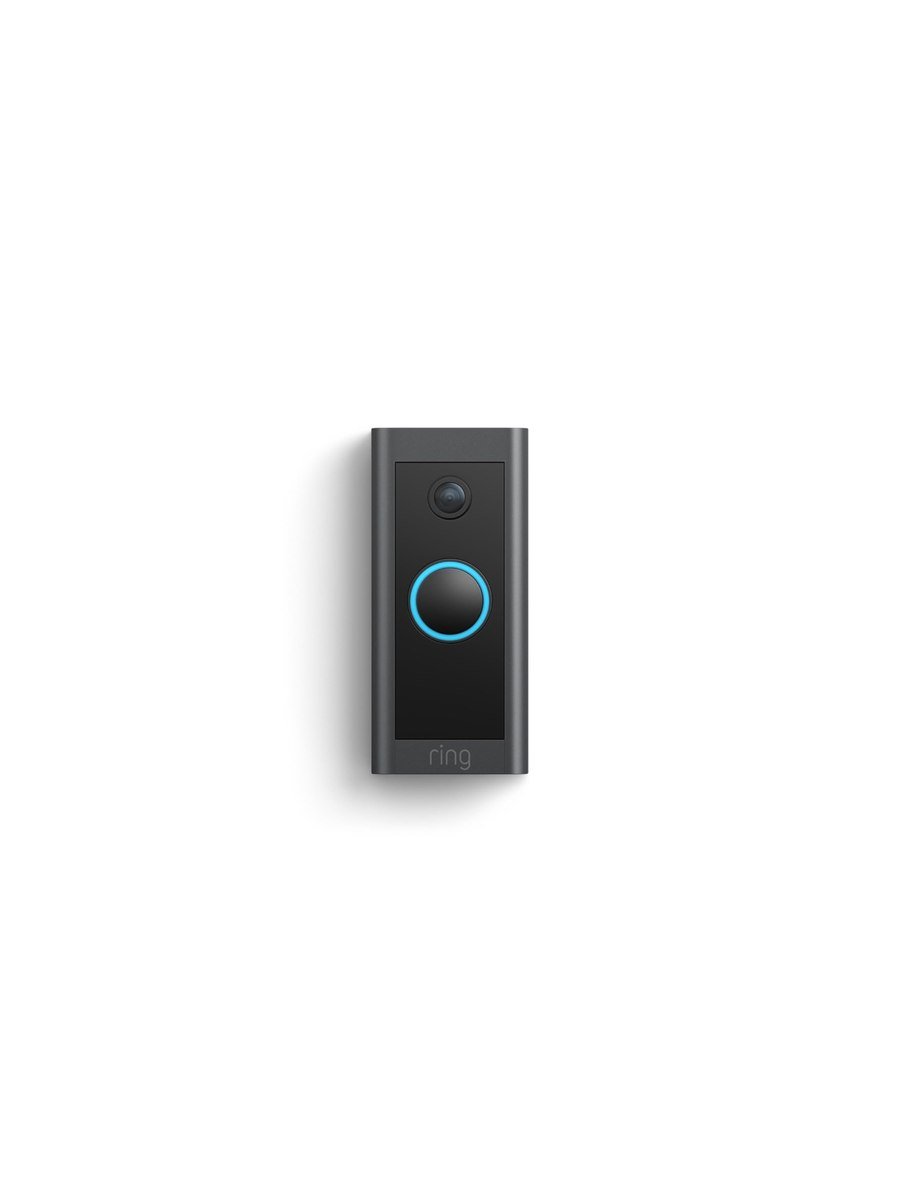
This is the cheapest doorbell Ring makes, and the compromises are all visible up front rather than hidden. It needs wires, it needs a chime elsewhere, and it needs a subscription to be much use. If all three are fine, it is a neat little device.
Installation
The Wired model runs off your existing doorbell transformer, so there is no battery to remove and charge every few months — a real advantage over the battery models. The trade is that you must already have doorbell wiring, or add a plug-in adapter or transformer. It is small, which matters on a narrow door frame where the bigger Ring units look clumsy.
The unit does not ring your existing indoor chime. You need a Ring Chime, an Alexa device, or your phone to hear it. That surprises people, and it is the single most common complaint about this model.
Before you order: three things to check
Each of these decides whether the doorbell works properly or becomes a weekly annoyance, and all three are easier to check than to fix afterwards.
The transformer. A doorbell transformer that was sized for a mechanical bell may not have the headroom for a camera that streams video. The symptom of an undersized one is a doorbell that works until someone presses it, then reboots, or that shows a low-power warning in the app. Ring publishes a required voltage and VA rating for each model; read it off your transformer, usually in the consumer unit, the loft or behind the old chime, before buying rather than after.
The Wi-Fi at the door. Front walls are the thickest in the house and the router is usually at the other end of it. The Ring app reports signal strength for the device; anything weak shows up as slow live view and alerts that arrive after the visitor has left. Test with a phone standing where the doorbell will go. If it is marginal, a plug-in access point in the hall fixes it and a better doorbell will not.
What the camera will actually see. The unit is fixed, so the view is decided by where the old doorbell happened to be. If that puts the lens at chest height on a recessed porch, you get a lot of jacket and no faces. Angled wedge mounts exist for a few pounds and are worth ordering at the same time.
Video and detection
1080p with a decent field of view and infrared night vision that holds contrast well. Motion detection is customisable with zones, so you can exclude the pavement and stop the pocket-buzzing every time a car passes. Real-time alerts arrive quickly on a decent connection. It is 2.4 GHz only, which is the right choice for range through a wall but means it will not benefit from a faster network.
Zones are worth setting properly on day one. Draw them to cover the path and the doorstep and nothing beyond the gate, because a zone that includes the road generates alerts all day and the natural response is to turn notifications off altogether, which defeats the device. If a tree or a flag sits in the frame, either exclude it or expect it in every windy-night recording.
The subscription
Without a plan you get live view and motion alerts. You do not get recordings. That means if something happens while you are not looking at your phone, there is nothing to review afterwards — which is the main reason most people buy a doorbell camera. With a Ring Protect plan, video is retained for up to sixty days and snapshots for seven. Budget for it; the hardware price is not the real price.
| What you want | Plan needed |
|---|---|
| See who is at the door, live | None |
| Get a notification when someone arrives | None |
| Watch what happened while you were out | Paid plan |
| Share a clip with a neighbour or the police | Paid plan |
| Cover several cameras on one bill | The higher tier |
Plan names and prices change, so check them on the day you buy. What does not change is the shape of it: recordings are the paid part.
Where it sits in the range
Compared with the battery models you lose the removable battery and some resolution; you gain constant power and a smaller body. Compared with the Pro models you lose 1536p, better low light and radar-based motion. For a flat door or a rental where you do not want to drill much, the Wired is the sensible pick.
Should you buy it?
Buy it if you have doorbell wiring, already own an Alexa speaker to act as a chime, and accept the subscription. Skip it if you have no wiring, if you want recordings without a monthly fee, or if you need the widest possible view of a large front garden.
Key features
1080p HD video
With two-way talk and real-time notifications to your phone.
Advanced motion detection
Customisable zones so you can exclude the pavement or road.
Infrared night vision
Sharp contrast after dark.
Hardwired power
Runs from an existing doorbell transformer, no battery to charge.
Works with Alexa
Announce and view on compatible Echo devices.
Ring Protect
Video saved up to 60 days and snapshots up to 7 days on a paid plan.
Pros & cons
What we like
- Constant power means no battery swaps
- Small enough for a narrow door frame
- Customisable motion zones cut false alerts
- Night vision holds contrast well
- Two-way talk works reliably
- Cheapest way into the Ring ecosystem
What could be better
- No recordings at all without a subscription
- Does not ring your existing indoor chime
- Requires existing doorbell wiring or an adapter
Specifications
Frequently asked questions
For live view and alerts, no. For any recorded video you can watch later, yes. Most of the value of a doorbell camera is in the recordings.
No. This model does not drive an existing mechanical chime. You need a Ring Chime, a compatible Alexa device, or just your phone.
Only with a Ring plug-in adapter or a suitable transformer. There is no battery in this model.
No, it is 2.4 GHz only. In practice that is usually better for range through a front wall.
With a Ring Protect plan, video is retained for up to 60 days and snapshots for up to 7 days.
Usually an undersized doorbell transformer. One chosen years ago for a mechanical bell may not have the headroom for a camera that streams video. Check the voltage and VA rating printed on the transformer against Ring's stated requirement for the model.
Signal strength at the door, which the Ring app reports. Front walls are thick and the router is usually at the other end of the house. A plug-in access point in the hall fixes it; a different doorbell will not.
Cover the path and the doorstep and stop at the gate. A zone that includes the road generates alerts all day, and the natural response is to switch notifications off, which defeats the point of the camera.
Final verdict
A tidy, permanently powered doorbell camera at the lowest price Ring offers. It needs existing wiring, a separate chime and a plan for recordings.
Reader rating


No comments yet.
Join the discussion. Comments are moderated before appearing.