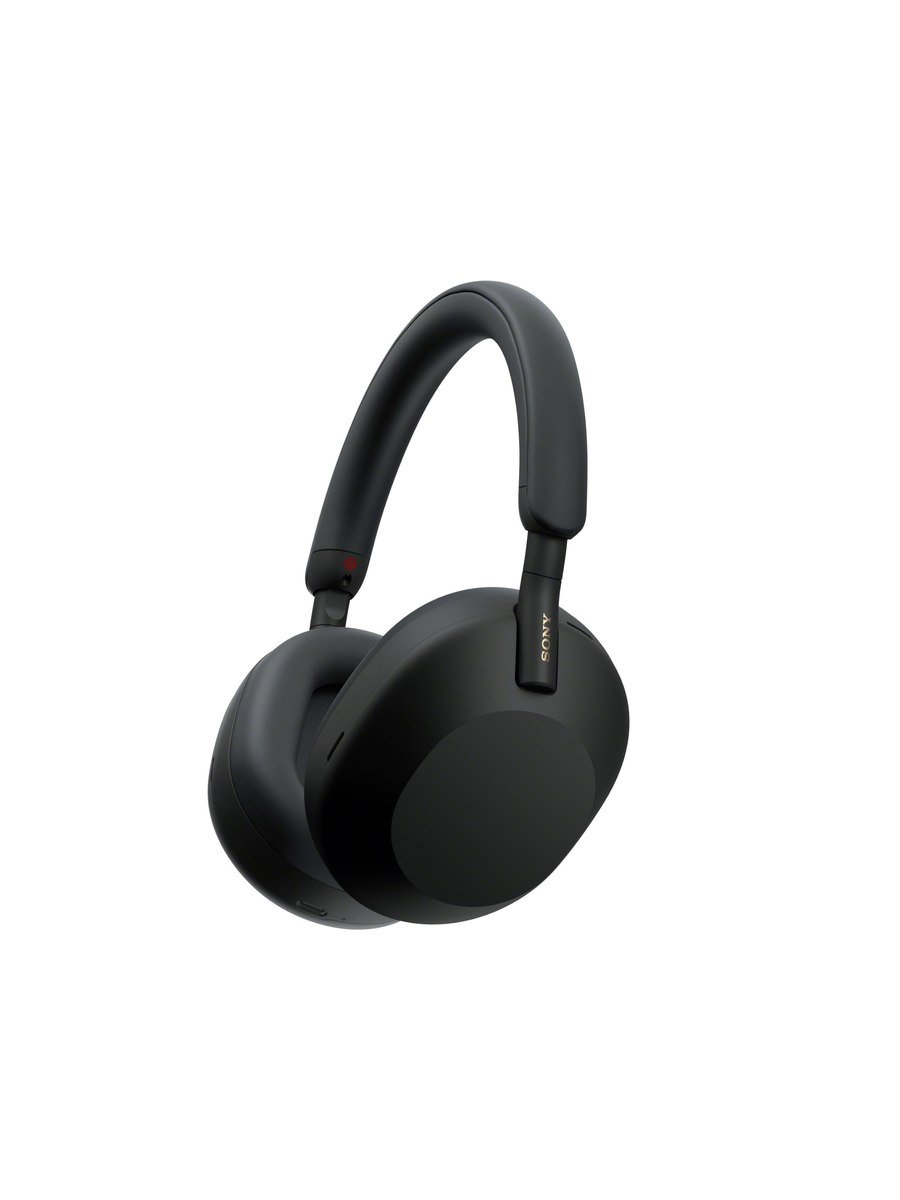
Sony changed almost everything about the XM5 and kept the one thing that matters. The cancelling is still the quietest you can buy in a mainstream pair of over-ears, and everything else — the new shape, the case, the lost folding hinge — is a set of trade-offs you will either forgive or not.
The redesign
The XM4 folded flat and inward into a small case. The XM5 does not fold at all; the cups swivel and that is it, so the case is noticeably larger. If you live out of a backpack, this is a real cost. In exchange you get a slimmer headband with a wider, softer pad, and a build that looks and feels more expensive. At 250 g they are light for the class.
Comfort is the strongest part of the new design. The clamping force is gentle, the pads are deep, and the weight sits on the crown rather than pinching the jaw. Long flights are genuinely comfortable, which was not always true of the older models.
Noise cancelling
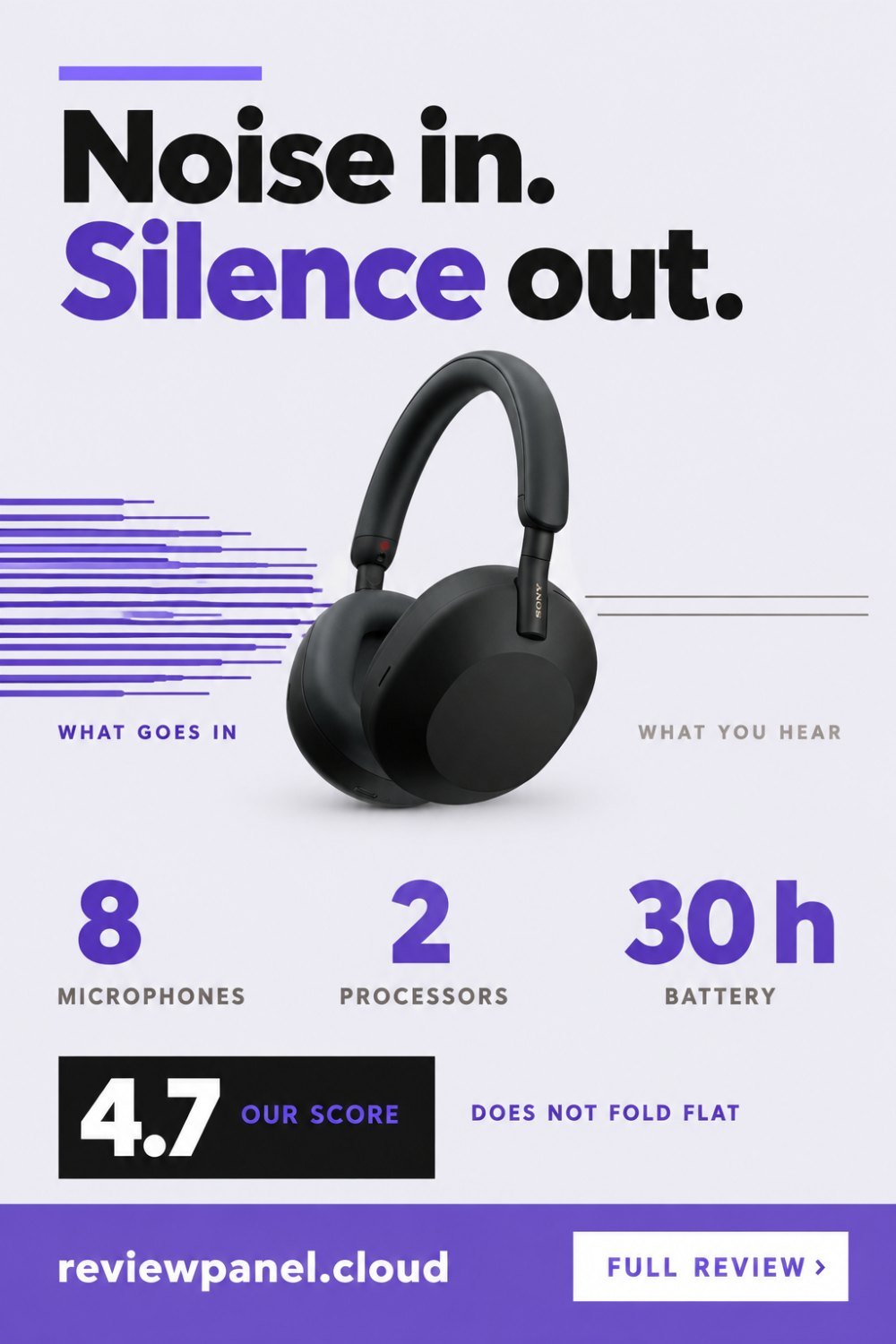
This is where the money goes. Sony runs eight microphones across two processors, the V1 and the QN1, and the difference shows up in the middle frequencies where most headphones give up. Aircraft rumble goes, obviously. What is unusual is how much office chatter and road noise thins out too. Auto NC Optimizer adjusts for air pressure and for how the pads seal against your glasses, and it works quietly in the background.
Speak-to-Chat is the one feature worth a mention. Start talking and the headphones pause the music and pipe in the room. Some people love it; others turn it off within a day because it triggers when you clear your throat. It is a toggle, so try it.
Sound, and the EQ that fixes it
Out of the box the tuning is bass-forward and smooth, aimed squarely at streaming playlists. The Sony Headphones Connect app has a proper equaliser, and pulling three or four decibels out of the low shelf turns them into something much more balanced. LDAC is supported, so Android users with high-resolution files get more detail than AAC allows; iPhone users will not see the benefit.
A starting point rather than a prescription, since the app's five bands are blunt instruments and ears differ.
| Band | Move | Why |
|---|---|---|
| Clear Bass | −2 | Takes the bloom off the very low end |
| 400 Hz | −2 | Where the boxiness sits |
| 1 kHz | 0 | Leave voices alone |
| 2.5 kHz | +1 | Brings detail back after the cuts |
| 16 kHz | +1 | A little air, not sharpness |
The soundstage is closed-in, as it is on every good cancelling headphone. If you want air and separation, a wired open-back pair at half the price will beat these and cancel nothing.
Which of the three cancelling headphones
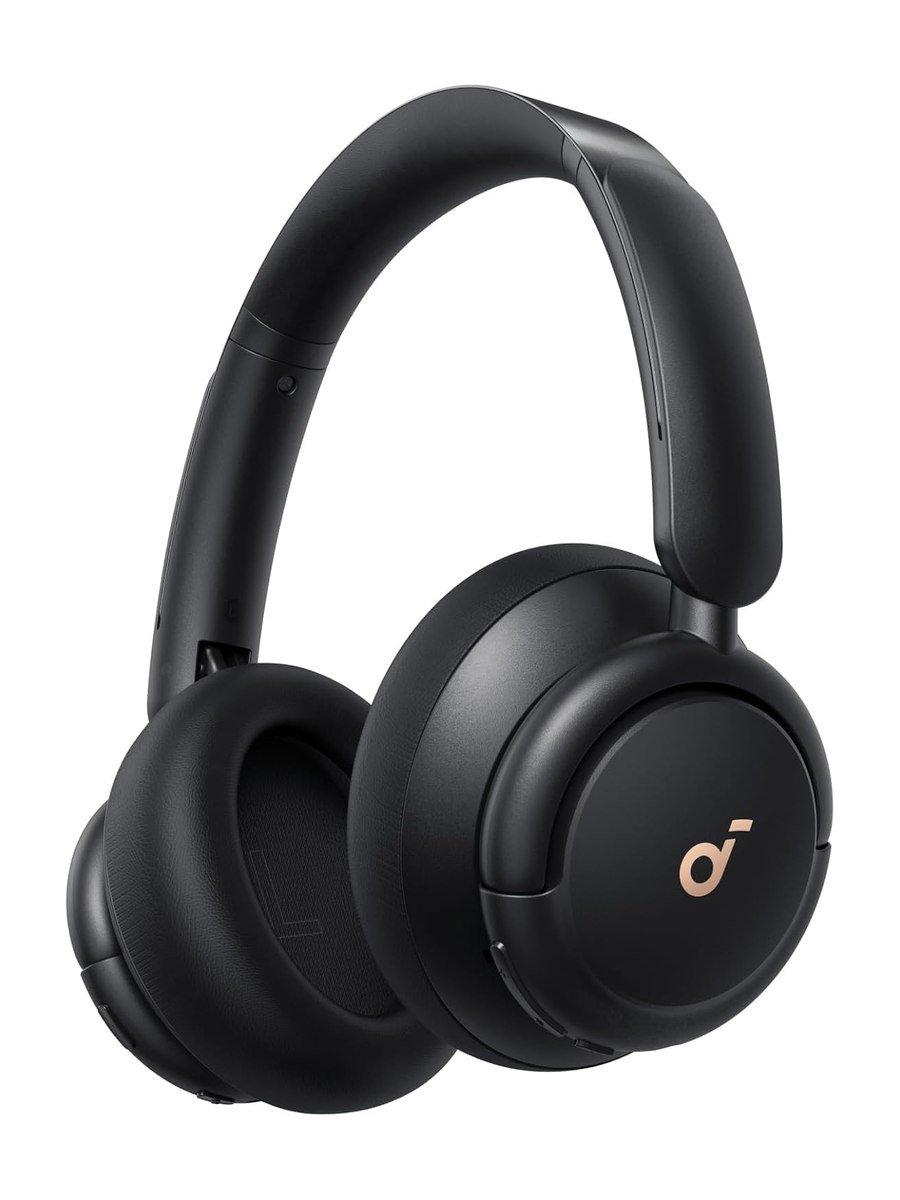
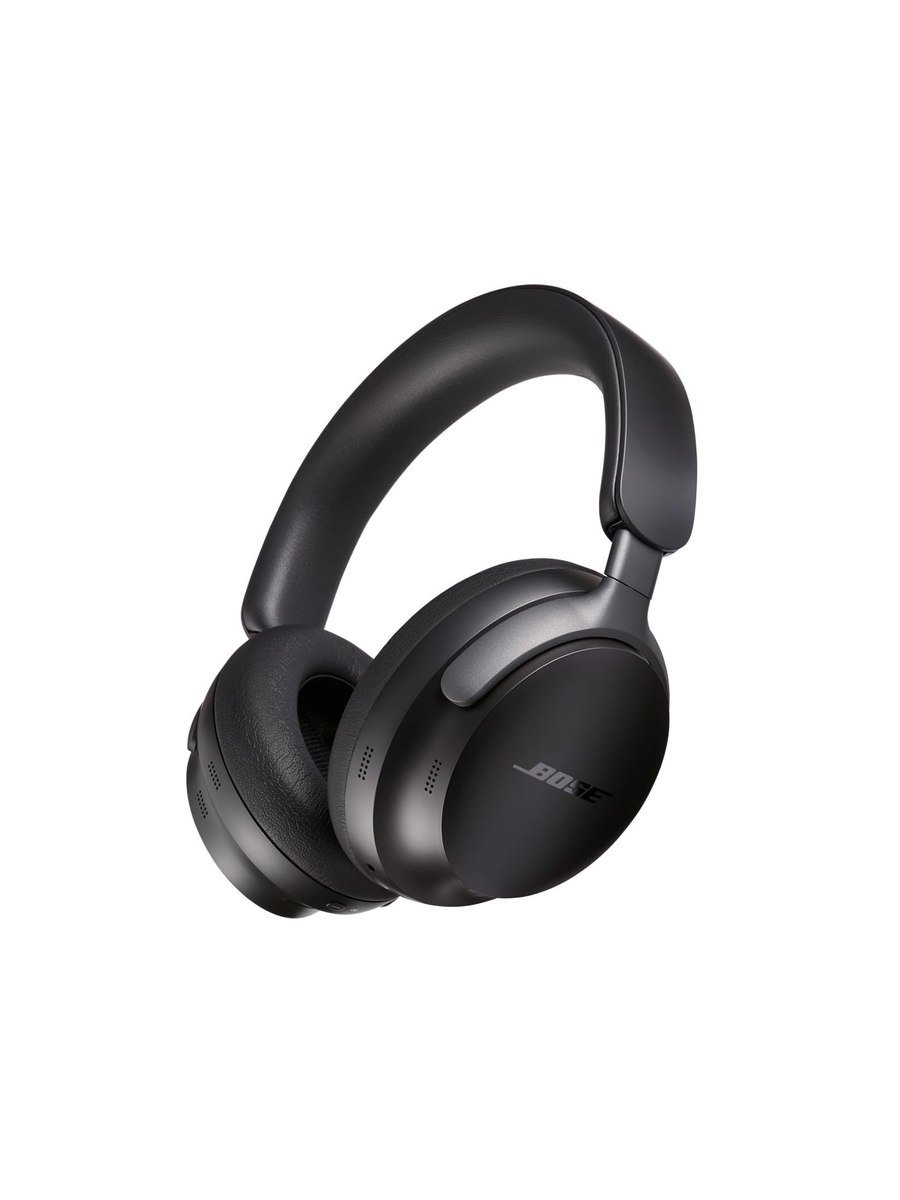
These three cover most of what people actually consider, and they are genuinely different products rather than the same thing at three prices.
| If you want | Buy |
|---|---|
| The quietest cabin on a long flight | Sony WH-1000XM5 |
| The most comfortable pair for eight hours | Bose QuietComfort Ultra |
| Most of the quiet for a third of the price | Soundcore Q30 |
| A pair that folds into a small bag | Not the XM5 |
Living with them on the road
Three things are worth knowing before a flight. Multipoint holds two devices at once, so a laptop and a phone can both be connected and the headphones will switch to whichever plays; it is reliable here, unlike on many rivals, and it is the feature that removes the daily re-pairing dance. The supplied 3.5 mm cable works when the battery is flat and on older in-flight entertainment systems, though cancelling needs charge to run. And the Auto NC Optimizer runs a calibration on take-off pressure changes, which is why cancelling can sound briefly different as a plane climbs; it is working rather than failing.
Battery and calls
Sony rates thirty hours with cancelling on, and a three-minute charge is claimed to give three hours with a USB-PD adapter. In practice the number holds well enough that charging becomes a weekly habit rather than a daily one. Call quality took a real step up in this generation thanks to Precise Voice Pickup and the wind-noise work; the XM5 is one of the few cancelling headphones you can take a work call on outdoors without apologising.
Keeping them for five years
The earpads are the part that fails first on every over-ear headphone. The protein leather flakes after a couple of years of skin contact and heat, which is normal wear and not a manufacturing fault. Sony sells replacement pads, and fitting them takes a few minutes; a fresh set restores both comfort and cancelling, since a hardened pad leaks sound around the seal. Wipe the pads with a slightly damp cloth rather than anything alcohol-based, which accelerates the flaking, and store them in the case rather than on a desk where the pads sit compressed.
Should you buy it?
Buy the XM5 if cancelling is the reason you are shopping and you fly or commute enough to care about the last ten per cent. Skip it if you need a pair that folds small, if you want a neutral tuning out of the box, or if you already own the XM4 — the gap is real but it is not four hundred dollars of real.
Key features
Auto NC Optimizer
Adjusts cancelling for air pressure and how the pads seal against glasses.
Integrated Processor V1 and QN1
Two chips driving eight microphones for wider cancelling.
Speak-to-Chat
Pauses music and opens the mics as soon as you start talking.
LDAC support
High-resolution Bluetooth audio on compatible Android phones.
Quick charge
Three minutes of charging for about three hours of playback with a USB-PD adapter.
Precise Voice Pickup
Beamforming mics plus wind-noise reduction for outdoor calls.
Pros & cons
What we like
- Class-leading noise cancelling, especially mid-range
- Light and genuinely comfortable for hours
- Thirty-hour rating with fast charging
- LDAC for Android listeners
- Much improved call quality outdoors
- Multipoint holds two devices reliably
What could be better
- Cups no longer fold, so the case is bulky
- Bass-heavy out of the box
- Speak-to-Chat triggers on a cough
Specifications
Frequently asked questions
No. The cups swivel flat but the headband does not fold inward, so the carrying case is larger than the one that came with the XM4.
Yes, mostly in the middle frequencies where voices and keyboard noise sit. Low-frequency rumble was already handled well by the older model.
No. iPhones use AAC. LDAC only helps on Android devices that support it.
About three and a half hours over USB-C. A three-minute top-up gives roughly three hours of playback if you use a USB-PD charger.
Yes, with the supplied 3.5 mm cable, and they work passively when the battery is flat.
A useful starting point in the Sony app: Clear Bass down two, 400 Hz down two, 1 kHz flat, 2.5 kHz up one, 16 kHz up one. That removes the bloom and the boxiness without making the treble sharp.
The Auto NC Optimizer recalibrates for cabin pressure. The brief change is the feature working rather than failing.
Yes, and they should be. Protein leather flakes after a couple of years of skin contact and heat; Sony sells replacement pads and fitting them takes minutes. A hardened pad leaks sound, so new pads restore cancelling as well as comfort.
Final verdict
Still the quietest mainstream over-ears you can buy, and now comfortable enough for a long-haul flight. The case no longer folds, which is the price of the redesign.
What owners report
Gathered from what long-term owners consistently say, not from a single test.
The case no longer folding is the change frequent travellers talk about most, and it forces a rethink of how a backpack gets packed. On long flights the headband not creating a pressure point is the difference people coming from the previous model point to. The touch surface can register stray commands in rain or through gloves. Owners several years in mention the headband finish wearing at the contact points.
Reader rating
Found this review helpful?
Pin it to one of your boards and come back to it whenever you need a reminder.

No comments yet.
Join the discussion. Comments are moderated before appearing.