Put the purifier somewhere it has open space on all sides, keep the bedroom door closed, and leave it running on its lowest setting every night. That habit matters more than picking a clever corner, and it only works if the unit is not boxed in by a curtain, a dresser or the side of the bed.
Most placement advice online is either vague ("somewhere central") or oddly precise. Bedrooms are not labs. You have a bed in one spot, a door in another and a nightstand with a limited footprint. The useful question is which factors change how well a small purifier cleans the air you breathe while asleep, and what you can check yourself without any equipment.
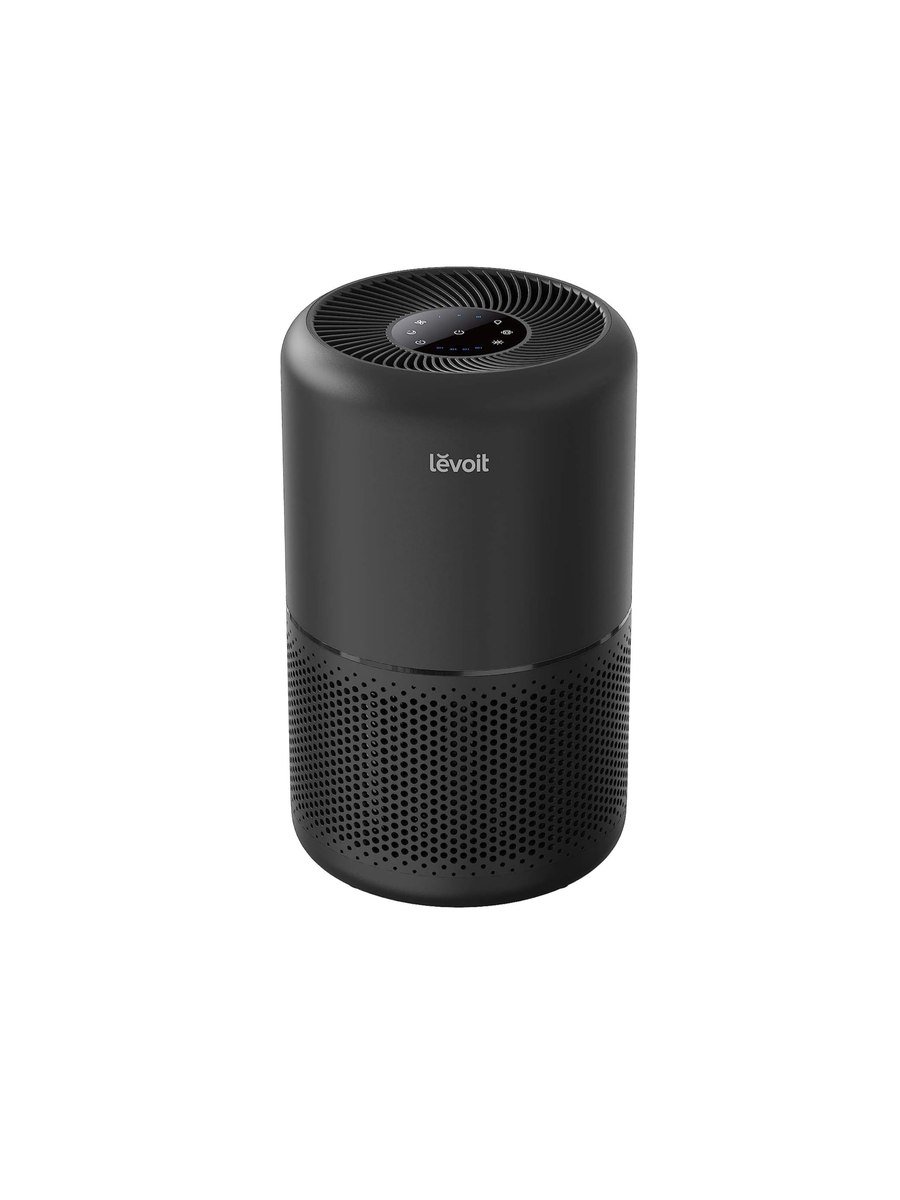
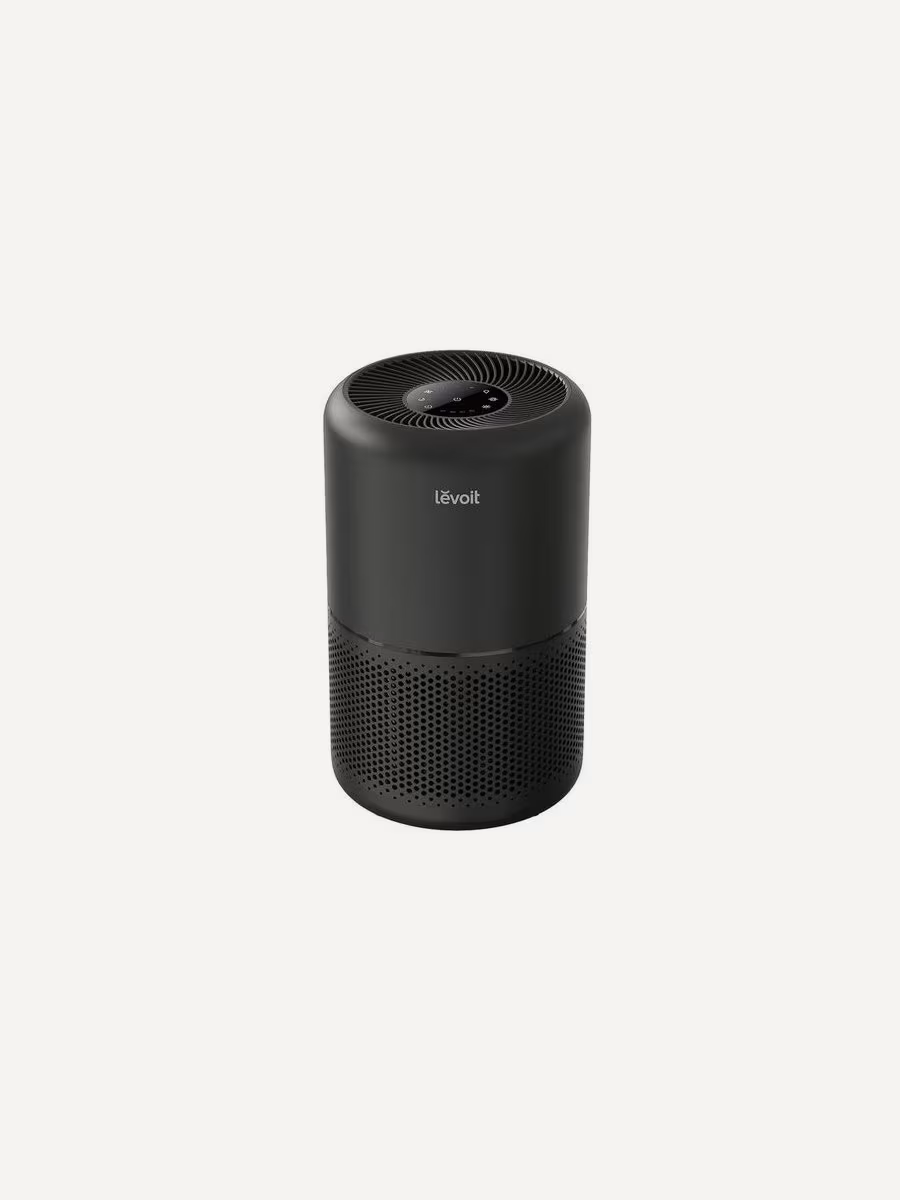
This guide uses a compact HEPA purifier, the Levoit Core 300, as the working example, because its specs make the trade-offs concrete. The advice applies to most small cylindrical units of this kind.
What actually matters
1. Open air around the intake and the outlet
A purifier can only clean air it can pull in and push out. Shove it into a gap between a wardrobe and the wall, or tuck it behind a curtain, and you have built a small dead zone. The room gets less benefit from it.
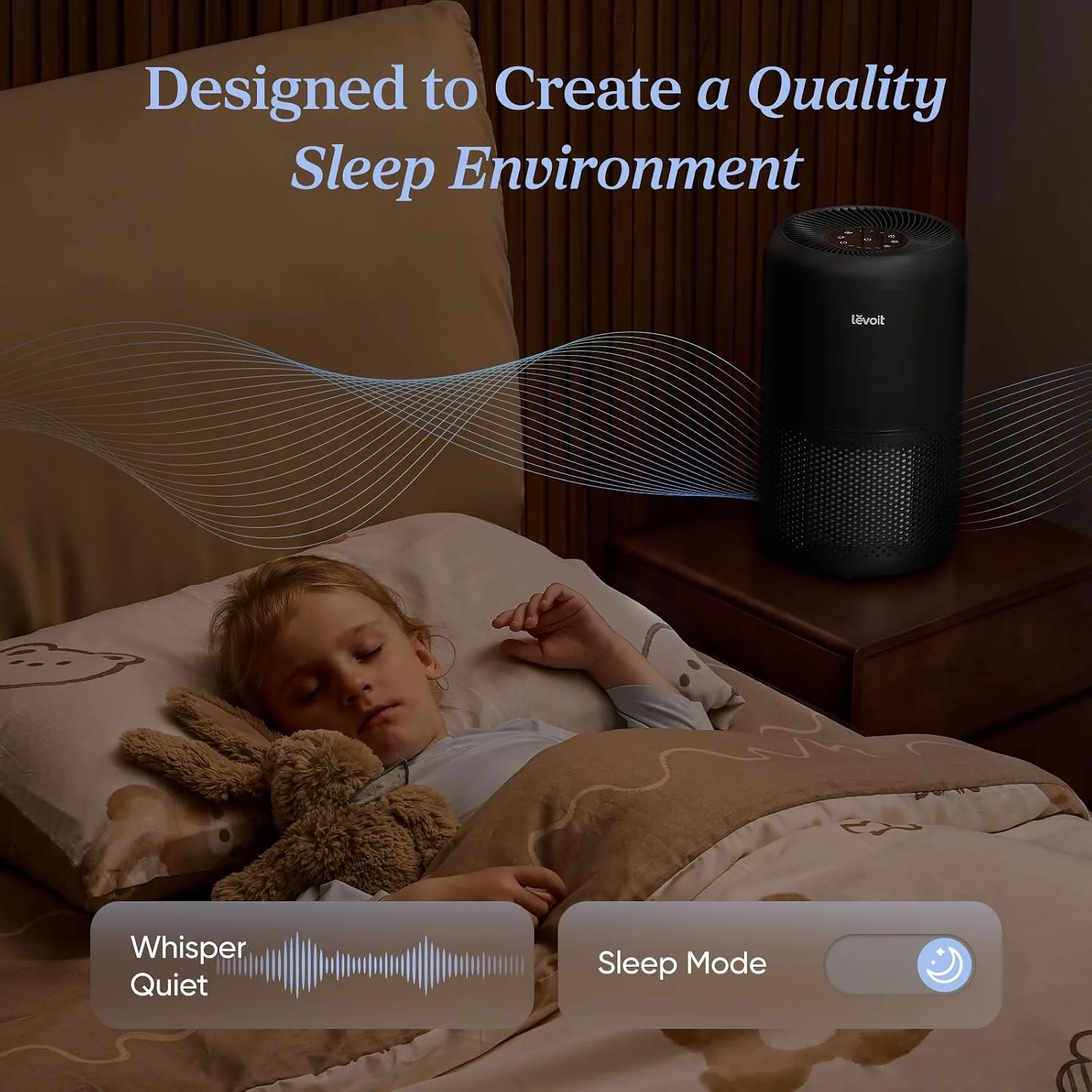
The check: stand in the room and look at the unit. If you cannot see most of its body from at least two directions, move it. Also make sure nothing drapes over the top, since the vent grille sits there on this model.
2. Distance from where you sleep
Closer to the bed is better than the far corner, because the air you breathe for eight hours is the air around your head. A nightstand is the obvious spot. It is at roughly the right height, it has a power outlet nearby, and the unit stays out of the way of your feet in the dark.
Closer is not the same as pointed at your face. Direct airflow on skin and eyes bothers some people, especially in dry winter air. If you wake with a dry throat or itchy eyes, shift the purifier to a dresser or a stand across the room rather than switching it off.
The check: lie in bed on a normal night setting and see whether you feel a steady draft on your face or neck. If you do, move the unit sideways, not away entirely.
3. A closed door
A purifier cleans the room it is in. Leave the door open and it is also working on the hallway and whatever else the air connects to. This surprises people who set it up in a bedroom and then wonder why the air never seems to settle.
The check: think about when you actually run it. If the plan is nights with the door shut, you are fine. If you want it running during the day while the door stays open for pets, accept that it is cleaning a bigger volume than you sized it for.
4. Room size, measured honestly
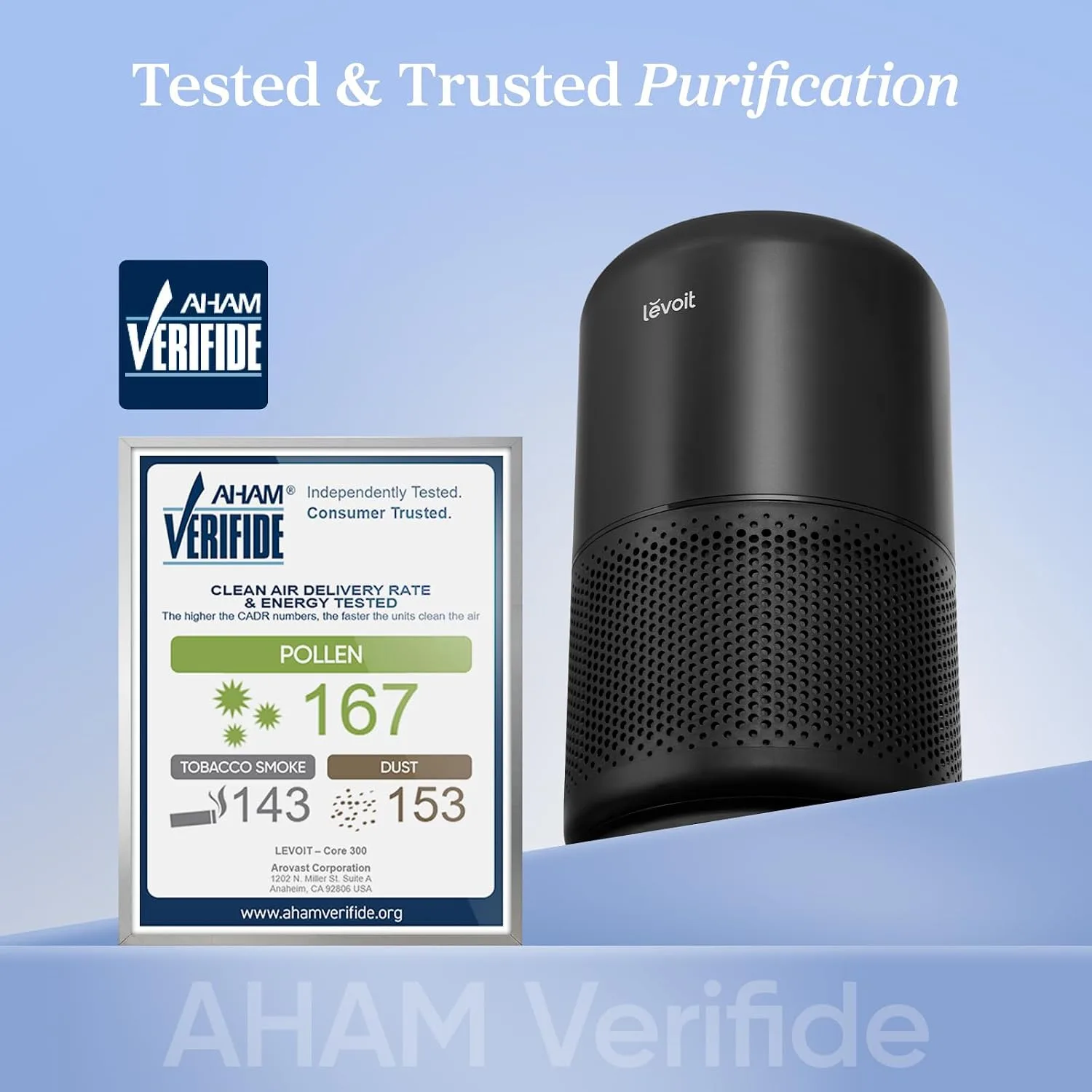
This is where compact purifiers get oversold. The Core 300 is quoted at about 143 CFM CADR, a number that sounds generous. In our review we found the headline coverage figure optimistic, and we recommend sizing it for about 200 square feet. That is a sensible bedroom, not an open-plan floor.
The check: measure the room's length and width and multiply. If the answer is clearly above 200 square feet, or the room opens into another space, a single compact unit will be working beyond its comfort zone. A smaller bedroom, a nursery or a home office is the better match.
5. Noise at the lowest setting
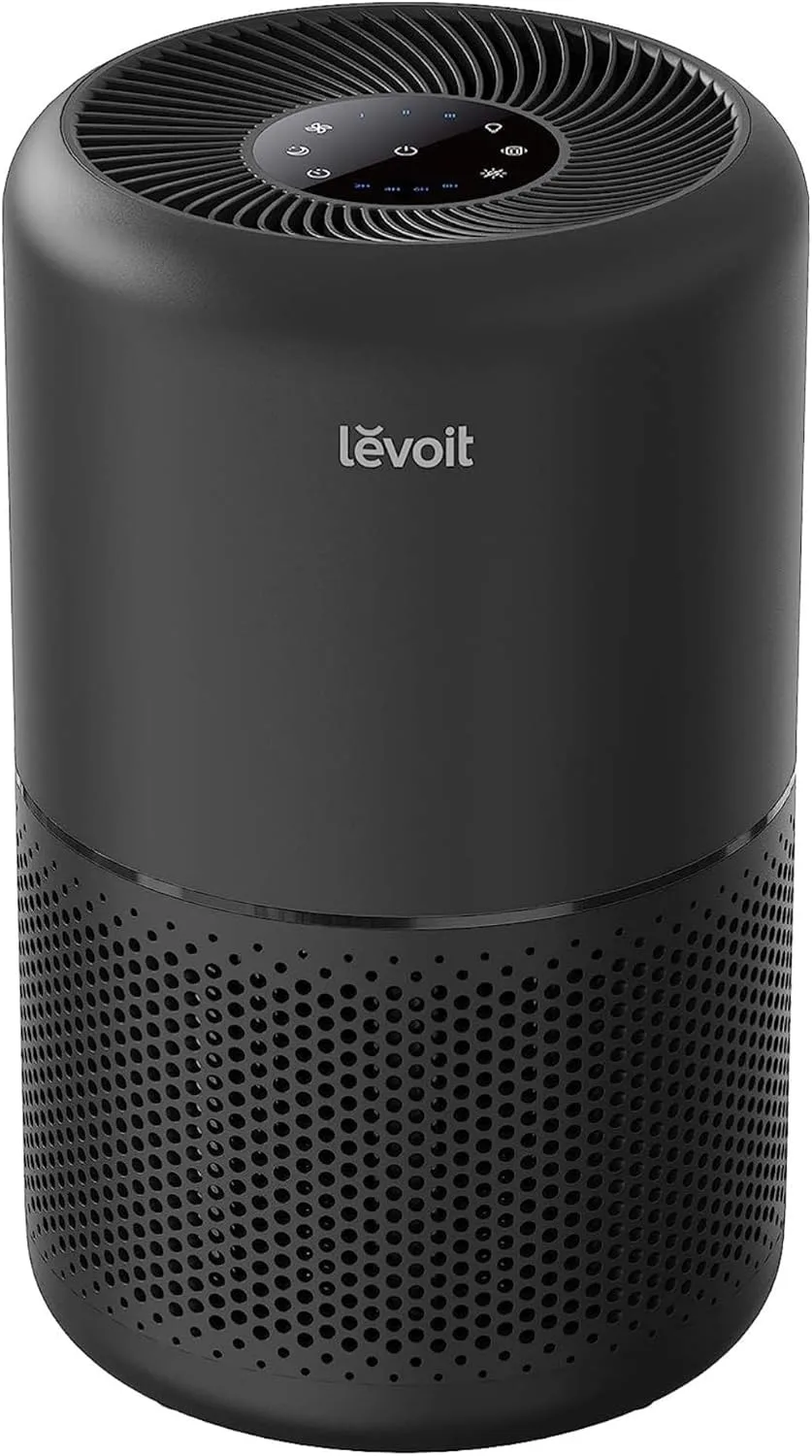
You will only run a purifier all night if it does not wake you. The Core 300 starts at 24 dB on its lowest setting, and owners say overnight use on low is not a problem. No owners describe it as sleep-disturbing.
Light matters as much as sound. A bright display in a dark room is its own irritation. This model has a display-off mode, which is worth using from the first night.
The check: run it on low in the room at the quietest time of the evening, with the display off, and listen from the bed. If you can only hear it when you are trying to, it is quiet enough for a bedroom.
6. Runtime
Air quality in a bedroom is a daily problem, not a weekly one. Dust is disturbed every time you move the bedding. Pollen comes in on hair and clothes. Pet dander is released whenever a pet is on the bed. A purifier that runs only when you remember it, or only after you start sneezing, is always a step behind.
The practical routine is simple: run it overnight on low, with the door closed. If you want a faster clean after vacuuming or changing the sheets, step it up for a while before bed, then drop it back down. This model has a timer, which helps if you prefer a higher setting for the first stretch of the evening.
7. Filter replacement
The Core 300 uses a three-stage filter in one cylinder: a fine pre-filter, an H13 true HEPA layer, and activated carbon. Filter life is 6 to 8 months. That is a range, not a promise. A bedroom with a long-haired dog on the bed will load a filter faster than a quiet room with hard floors, so lean toward the early end if your home is dusty or has pets.
Changing it is not a chore. The whole assembly lifts out in about ten seconds with no tools. The thing owners actually talk about is the ongoing cost of replacements, which adds up against the unit itself. Check the current price of replacement filters before you buy, so it does not come as a surprise.

The check: set a reminder on your phone for the six-month mark when you first set the unit up. At that point, look at the filter. A heavily gray or fuzzy pre-filter, or a noticeable drop in airflow, tells you not to wait for the eighth month.
What to ignore
- The headline coverage number. It is the most flattering figure on the box. Use the 200 square feet guideline instead.
- The perfect-corner debate. Whether it is by the window, by the door or by the wall matters far less than whether it has open space around it and sits near the bed.
- Ionizers, UV stages and anything that makes ozone. You do not need them in a bedroom. The Core 300 has none, and that is the right call for indoor air.
- Carbon as a fix for strong smells. The carbon layer here is thin and does little for strong gases. Treat it as a mild bonus, not a main feature.
Common mistakes
- Leaving the plastic wrap on the filter. This is the most common setup mistake. Nearly everyone who reports a whistling noise and no airflow on day one has done exactly this. Take the filter out, remove all the wrapping, and put it back before you decide anything is wrong.
- Hiding it. Behind the bed, under a desk or behind a chair, it looks tidy and works badly.
- Running it on high all night. The lowest setting is the quiet one. Use it and let it run for hours instead.
- Buying for the wrong room. A compact unit in a large open space will disappoint, and the blame will fall on the product rather than the sizing.
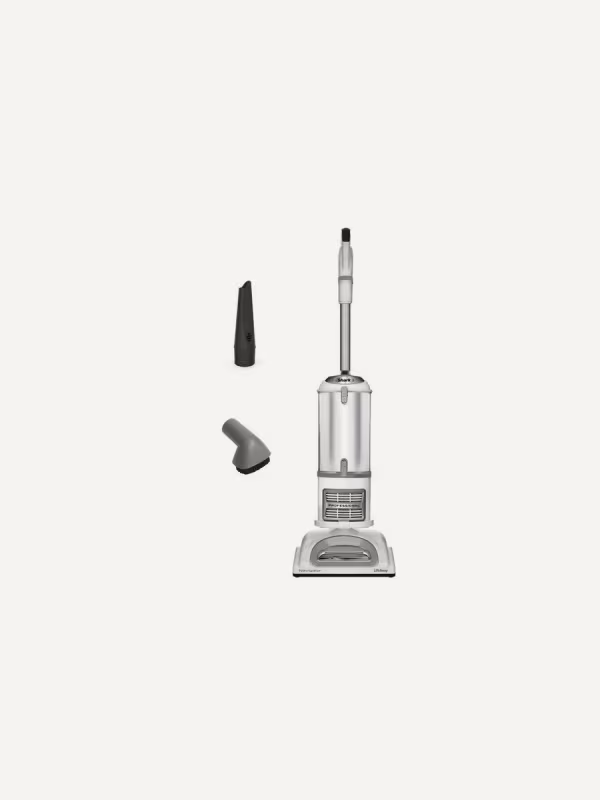
- Treating the purifier as the only fix. It handles what is floating in the air. Settled dust on carpets and floors still needs a regular vacuum, such as the Shark Navigator Lift-Away, otherwise it keeps getting stirred back up.
- Forgetting the filter. A filter past its life is just a fan. The calendar reminder is the whole solution.
Which buyer should pick which kind of product
Most people comparing compact purifiers are choosing between a few types of unit, and the right one depends on the room and how much attention you want to give it.
| Your situation | What to look for |
|---|---|
| Bedroom of about 200 sq ft or smaller | A compact true HEPA unit with a quiet low setting and a display-off mode |
| Nursery | Low noise, no ozone, and simple controls you can use half asleep |
| Dust, pollen or pet dander | Real HEPA grade filtration and a filter you will actually replace on schedule |
| You want automatic adjustment | A model with an air quality sensor and auto mode, which the basic Core 300 lacks |
| Strong smoke or chemical odors | A unit with a deep carbon filter, not a thin layer |
| Large or open-plan space | Something sized for the actual area, or more than one unit |
If you want sensor-driven operation, the Core 300S adds Wi-Fi and auto mode to the same basic design. The plain Core 300 has no sensor, so you choose the setting yourself. For a bedroom where you want one low setting every night, that is not much of a loss.
Where the Levoit Core 300 fits
The Levoit Core 300 is a good match for a bedroom, nursery or home office with dust, pollen or pet dander. It combines H13 true HEPA, rated to capture 99.97% of particles at the hardest size to catch, with a pre-filter and carbon in a single cylinder. It is quiet from 24 dB, uses no ioniser or UV stage, and produces no ozone. Current models have AHAM Verifide testing.
A quiet, properly filtered purifier for a bedroom-sized room. Ignore the headline coverage figure and size it for about 200 square feet.
As an Amazon Associate we earn from qualifying purchases. Links on this page may be affiliate links; we may earn a commission at no extra cost to you.
The trade-offs are plain. The coverage claim is optimistic, so size it for about 200 square feet. There is no air quality sensor or auto mode. The carbon layer is thin, so it will not handle strong gases. And replacement filters are an ongoing cost that owners bring up often once the novelty fades.
In homes with dust or pets, owners say the difference is obvious within the first week. That fits the advice above: put it near the bed, keep it unblocked, close the door, run it low overnight and replace the filter on time.
The short version
- Nightstand or a nearby dresser, with open space around it and nothing over the vent.
- Door closed, low setting, display off, every night.
- Size it for the room, and treat the Core 300 as a 200 square foot unit.
- Remove all plastic from the filter before setup.
- Check the filter between 6 and 8 months, earlier in a dusty or pet-heavy home.
Found this review helpful?
Pin it to one of your boards and come back to it whenever you need a reminder.


No comments yet.
Join the discussion. Comments are moderated before appearing.