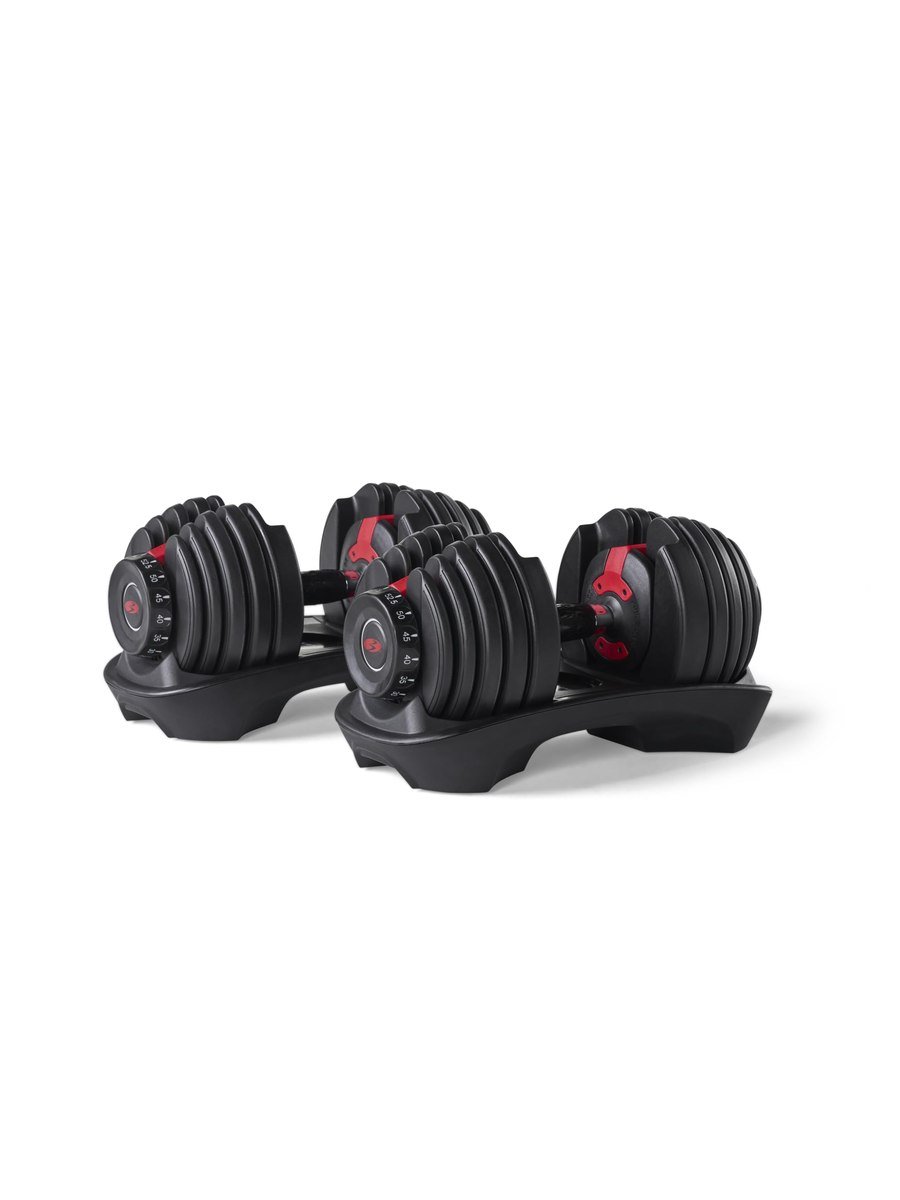
Adjustable dumbbells solve a space problem that anyone who has tried to build a home gym runs into immediately: a full rack of fixed dumbbells needs a wall, and a wall is exactly what a spare bedroom does not have.
The dial
Each dumbbell adjusts from five to 52.5 pounds, in 2.5-pound increments up to 25 pounds and five-pound increments beyond. Two dials, one at each end, and a twist selects how many plates the handle picks up out of the cradle. It takes a couple of seconds, which matters when you are doing drop sets and do not want to lose the set. The plates that are not selected stay in the tray.
The replacement maths is the selling point: the pair covers what would otherwise be fifteen separate sets of dumbbells.
Where the ceiling actually bites
52.5 pounds per hand sounds like a lot until you look at which exercises reach it first, and the order is predictable.
| Exercise | When 52.5 lb runs out |
|---|---|
| Biceps curl, lateral raise, rear delt | Almost never |
| Overhead press | After a few years for most people |
| Bench press | Sooner; this is usually the first to cap |
| Rows | Soon, especially single-arm |
| Goblet squats, lunges, RDLs | Quickly; legs outgrow dumbbells fast |
The honest read: for upper-body isolation and pressing, these last years. For legs, they cap early, and the answer is not heavier dumbbells but higher reps, slower tempo, single-leg work, or a barbell. That is worth knowing before you conclude the dumbbells were the wrong purchase.
Build
The plates are metal with a moulded shell around them, and the locking system holds them without rattle once selected. The handle is knurled and non-slip, and it is a comfortable diameter — thicker than a competition dumbbell but not uncomfortably so. The cradles double as storage, which is the only sensible way to keep them.
What you have to accept
They are long. At the heavy end each dumbbell is noticeably longer than a fixed 50-pound dumbbell, and that changes some movements — close-grip presses and certain curls feel awkward. You cannot drop them. Selectorised dumbbells are not built to be thrown onto the floor at the end of a failed set, and doing so is the fastest way to break the mechanism.
The top weight is 52.5 pounds per hand. For most people that is years of progression. For an experienced lifter doing heavy rows or presses, it is a ceiling you will eventually hit.
Training safely with weights you cannot drop
This is the practical consequence people underestimate. A dumbbell bench press taken to failure normally ends with the weights on the floor, and that option is gone. Three habits cover it. Stop a rep or two short of failure on any press, which costs almost nothing in results and removes the problem entirely. Learn to lower the dumbbells to your chest and sit up with them rather than pressing them away, which is a skill worth practising with a light weight before you need it. And set the cradles where you can reach them from the bench, so the end of a set is a placement rather than a decision.
On a wooden floor, a mat under the cradles is worth the small cost: it protects the boards, keeps the trays from sliding and makes the whole thing quieter for anyone downstairs.
Looking after the mechanism
The failure mode for every selectorised dumbbell is the same: the selection mechanism jams or a plate does not seat. Two rules avoid almost all of it. Always return the dumbbell fully into the cradle before turning the dial, because adjusting it in mid-air is what misaligns plates. And always start and finish a session with the dial at the lowest setting, so the plates sit in the tray in a known position. If a dial feels stiff, do not force it; lift the handle out, drop it back in squarely and try again.
The app
Bowflex includes a period of JRNY access, which does rep counting, form guidance and adaptive weight targets through a phone camera. It is a genuine feature rather than a gimmick, but it is a subscription afterwards, and the dumbbells work perfectly well without it.
Should you buy it?
Buy the 552 if you train at home, need a range of weights, and do not have a wall for a rack. Skip it if you regularly press more than 52.5 pounds per hand, if you need to drop weights at failure, or if you do a lot of movements where dumbbell length matters.
Key features
Dial adjustment
A twist at each end selects the plates the handle picks up.
5 to 52.5 lb per dumbbell
2.5 lb increments to 25 lb, then 5 lb steps.
Replaces 15 sets
One pair covers the range of a small dumbbell rack.
Metal plates with moulded shell
Locking system holds the plates without rattle.
Storage cradles
Included trays hold the unselected plates and the dumbbells.
JRNY app
Rep counting, form guidance and adaptive weight targets, included for two months.
Pros & cons
What we like
- Replaces fifteen pairs of fixed dumbbells
- Dial adjustment takes a couple of seconds
- 2.5 lb increments up to 25 lb for small jumps
- Knurled non-slip handle at a comfortable diameter
- Storage cradles included
- JRNY app access included for a period
What could be better
- Long at the heavy end, which changes some movements
- Must not be dropped
- 52.5 lb ceiling per hand for strong lifters
Specifications
Frequently asked questions
52.5 pounds per dumbbell. For most people that is years of progression, but a strong lifter doing heavy rows will hit the ceiling.
No. Selectorised dumbbells are not built for it, and dropping them is the most common cause of failure. Lower them to the cradle.
A couple of seconds per dumbbell, which is quick enough for drop sets if the cradles are next to you.
Yes, particularly at the heavy end. Close-grip presses and some curl variations feel different as a result.
No. The dumbbells work fully without it. JRNY adds guided workouts and camera-based rep counting.
Stop a rep or two short on presses, which costs almost nothing in results. Learn to lower the dumbbells to your chest and sit up with them, and keep the cradles within reach of the bench so ending a set is a placement rather than a decision.
Legs, then rows, then bench press. Curls and raises rarely get near it. When legs outgrow the dumbbells, the answer is higher reps, slower tempo or single-leg work rather than heavier dumbbells.
Only turn the dial with the dumbbell fully seated in its cradle, never in mid-air, and leave both dials at the lowest setting at the end of a session. If a dial feels stiff, lift the handle out and re-seat it squarely rather than forcing it.
Final verdict
One pair replaces fifteen sets of dumbbells and adjusts in seconds. They are long at the heavy end and you absolutely cannot drop them.
What owners report
Gathered from what long-term owners consistently say, not from a single test.
Lifting before the dial has fully seated produces a plate rattle; the complaint disappears once the habit forms. At the heaviest setting the handle is long enough to catch the floor or the leg on chest presses and lateral raises, which matters in a tight room. People who learn the hard way that these cannot be dropped end up with cracked cradles, so a controlled set-down is the one thing to unlearn. Even so, the space saved outweighs those limits for nearly everyone.
Reader rating
Found this review helpful?
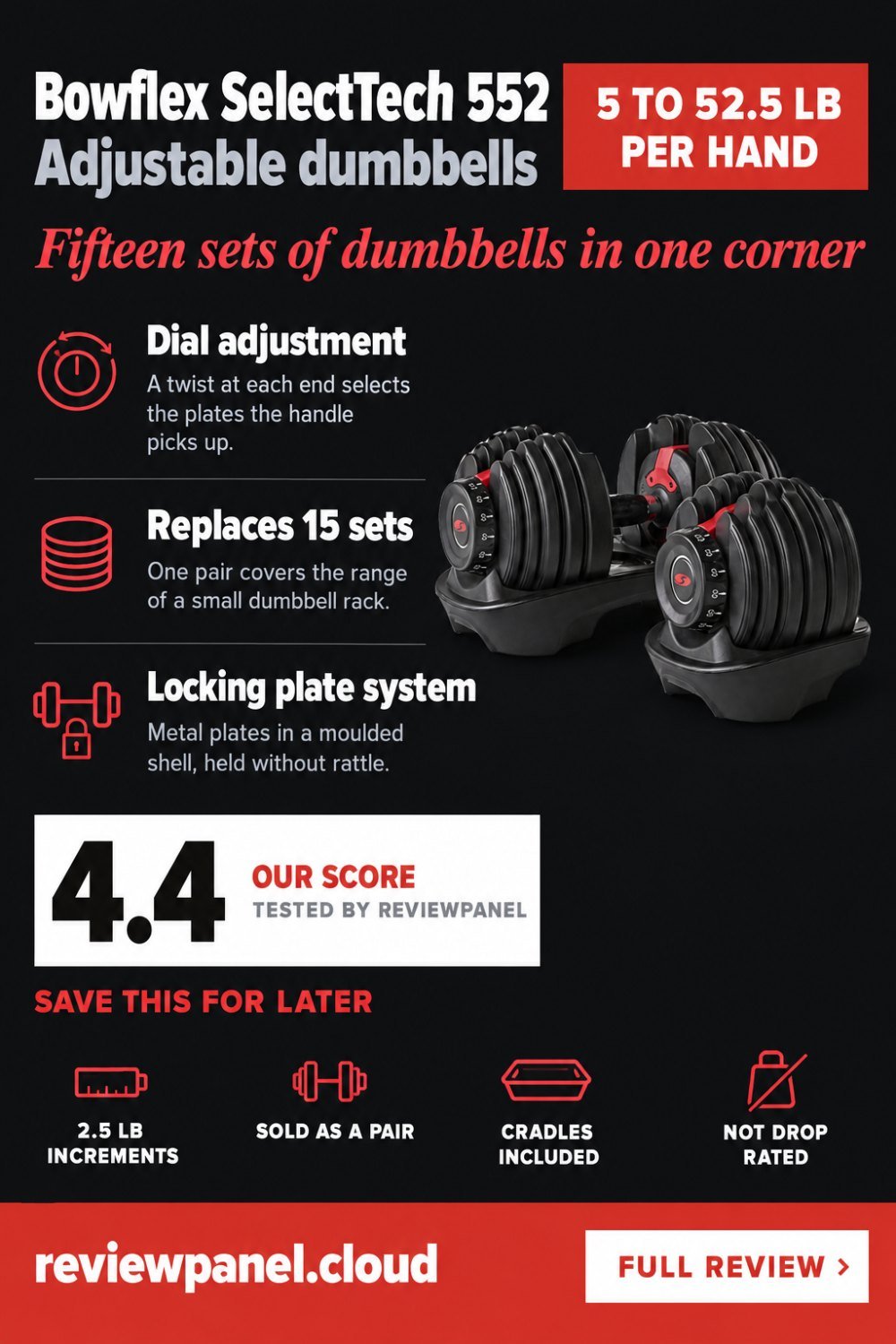
Pin it to one of your boards and come back to it whenever you need a reminder.

No comments yet.
Join the discussion. Comments are moderated before appearing.