Buy the compact gun if you will carry it, and a full-size one only if you can name the large muscle that needs more depth. The wrong size for where you actually use it is an easy mistake to make.
The mini versus full-size question sounds like a power question. It is mostly a habits question. A gun that lives in a drawer because it is heavy, loud or a hassle to set up does nothing for your legs. A smaller one that goes in your gym bag gets used.
There is one honest trade-off, and it is worth stating up front. Compact guns give up some depth on large muscles. How much that matters depends on which muscles you work on and how deep you need to go. The rest of this guide helps you find out.
What actually matters
Each factor below comes with a check you can do before spending anything.
Depth on large muscles
This is the main reason to go full-size. Thighs, glutes and the big muscles of the back are thick, and larger guns pull ahead on deep work there.
The check: think about your last three bouts of soreness. If they were calves, forearms, neck, shoulders or the general stiffness that comes from sitting, depth is unlikely to be your problem. If they were deep quad or glute soreness after heavy leg sessions, and light pressure never seems to reach it, you are in full-size territory.
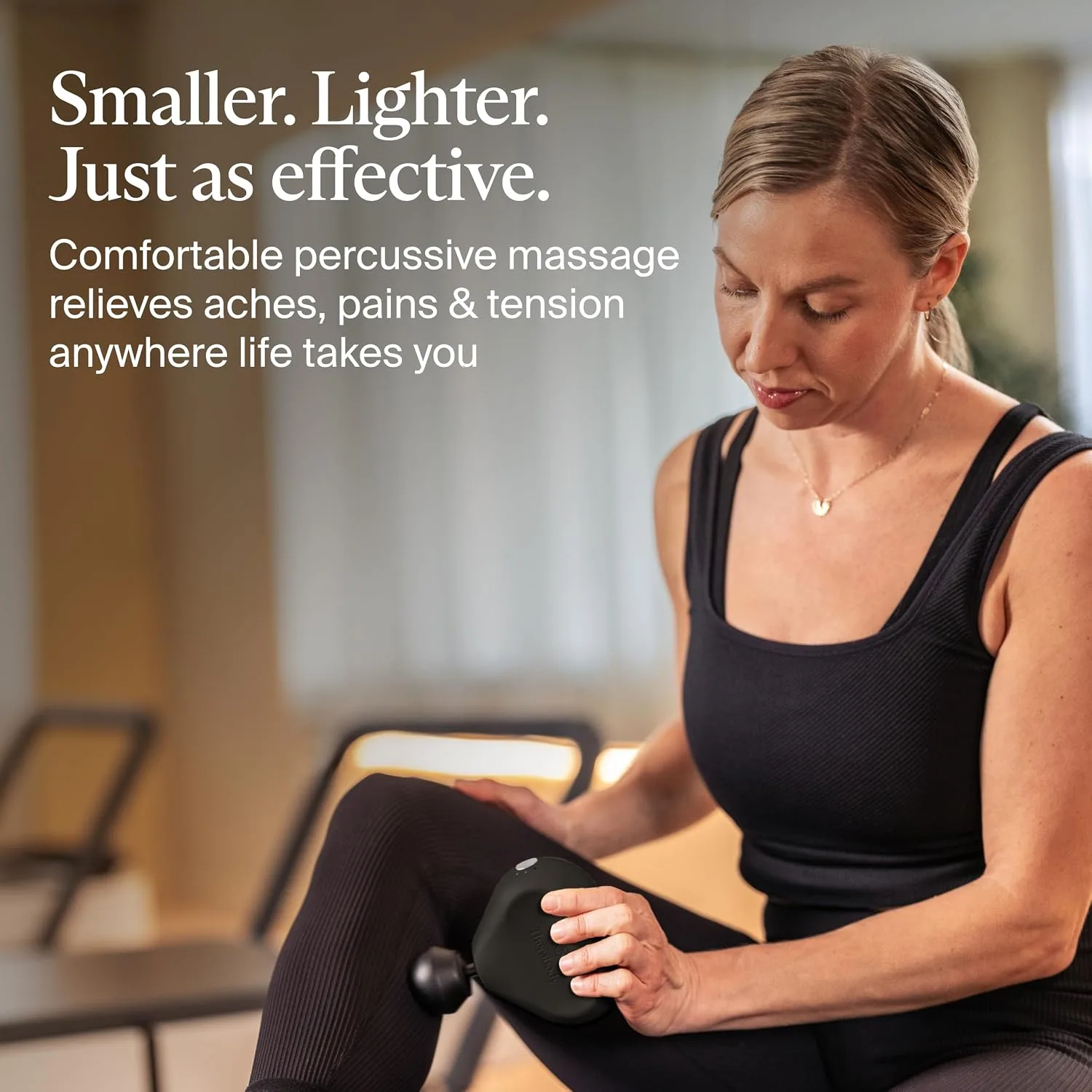
Owner feedback on the compact option is encouraging here. Many say the Theragun Mini does most of what bigger massage guns do, including on large muscle groups. Our review still lands where the category does: deep work on big muscles is where larger models pull ahead.
Portability
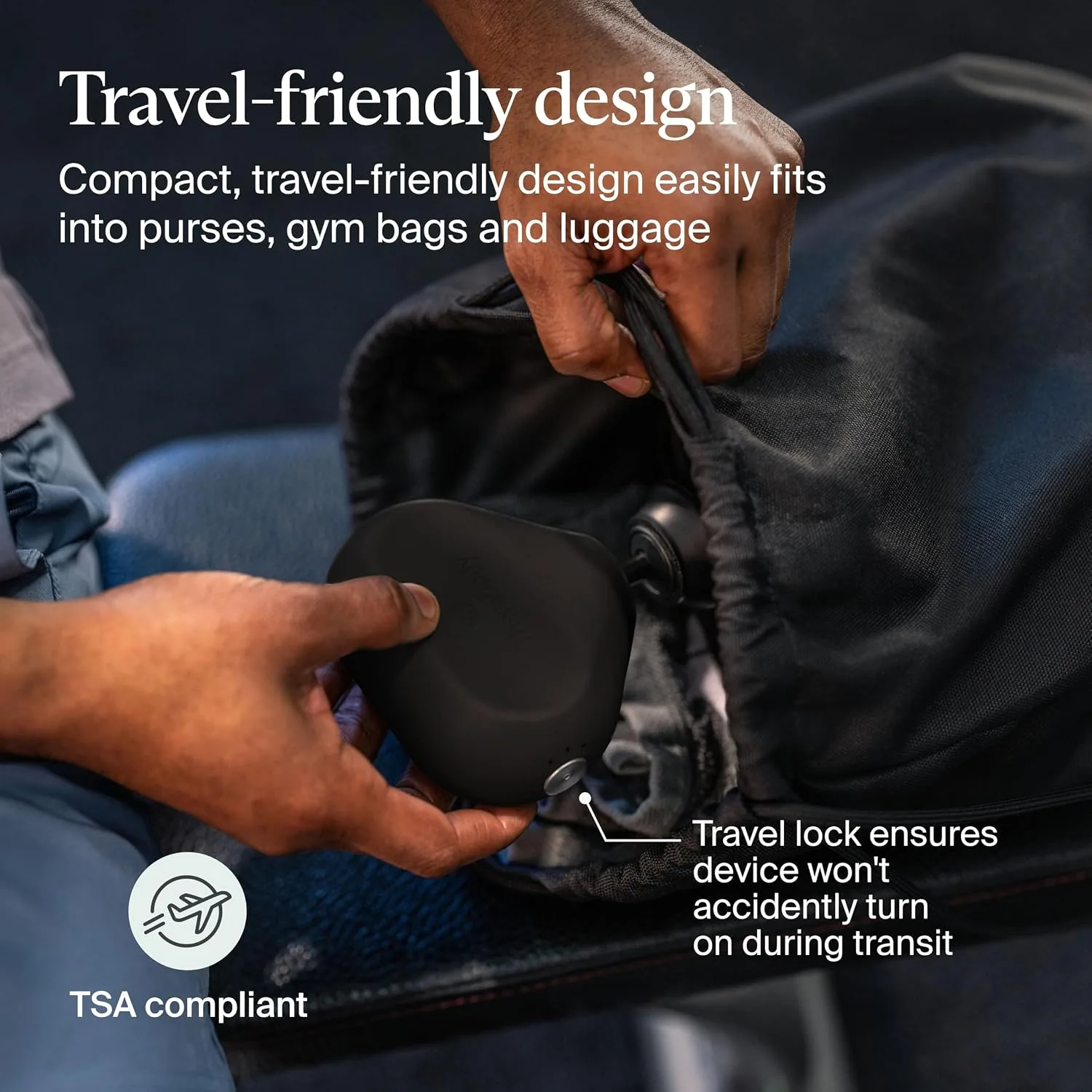
Size and weight decide whether the gun leaves the house. This is the strongest argument for a compact model, and for desk workers, travelers and runners it often outweighs everything else.
The check: look at the bag you carry most days. Does a full-size gun fit alongside your normal gear without pushing something out? Then hold something similar in weight for the length of a typical session, one-handed. If your arm tires before your muscle is done, you will cut sessions short.
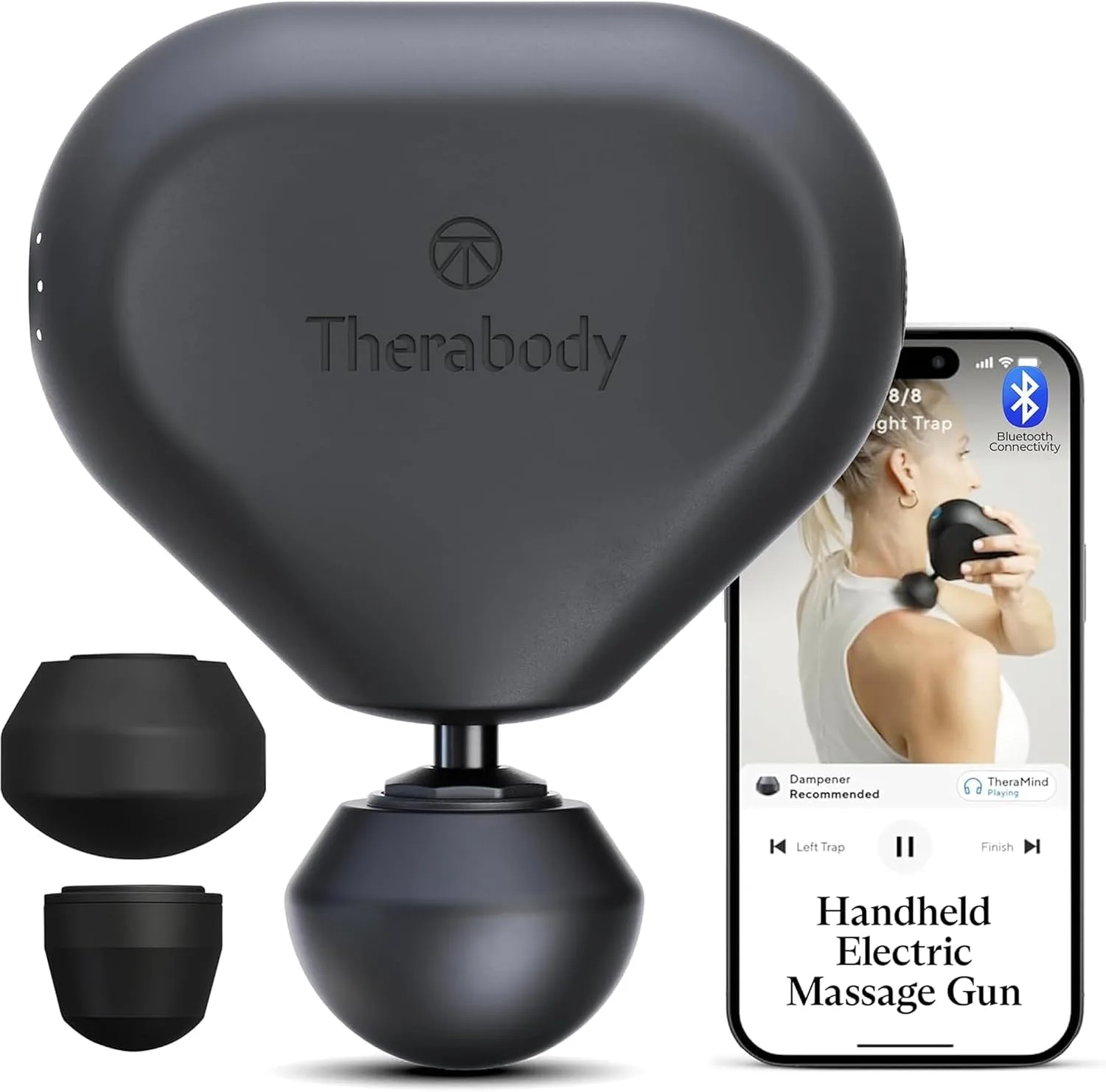
The Theragun Mini (3rd Generation) is built around this point. It is 30% smaller, lighter and quieter than the original Mini, and it is small enough for a pocket or carry-on. It also has a travel lock that stops it switching on inside a bag.
Noise
Loud guns get used less, especially in the evening or in shared spaces. If you want to treat your legs while watching TV or while someone else is sleeping, noise is a real feature.
The check: decide where and when you will use it. If the answer includes a living room, a hotel room or an office, put noise near the top of your list. The Mini is quiet enough to use while watching TV.
Attachments
Heads change how a gun feels on the body more than most people expect. A round head spreads pressure, a smaller one concentrates it, and a softer one is gentler on bony or sensitive areas.
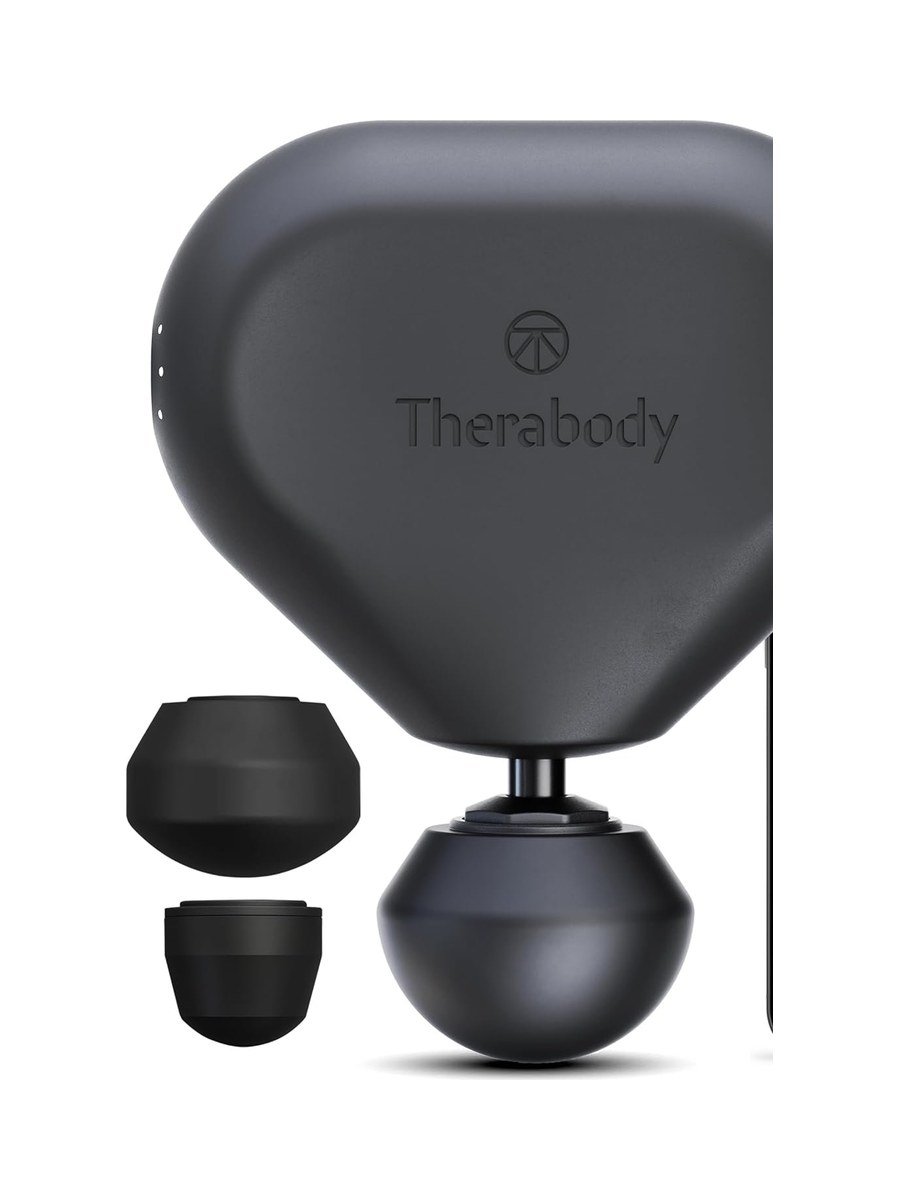
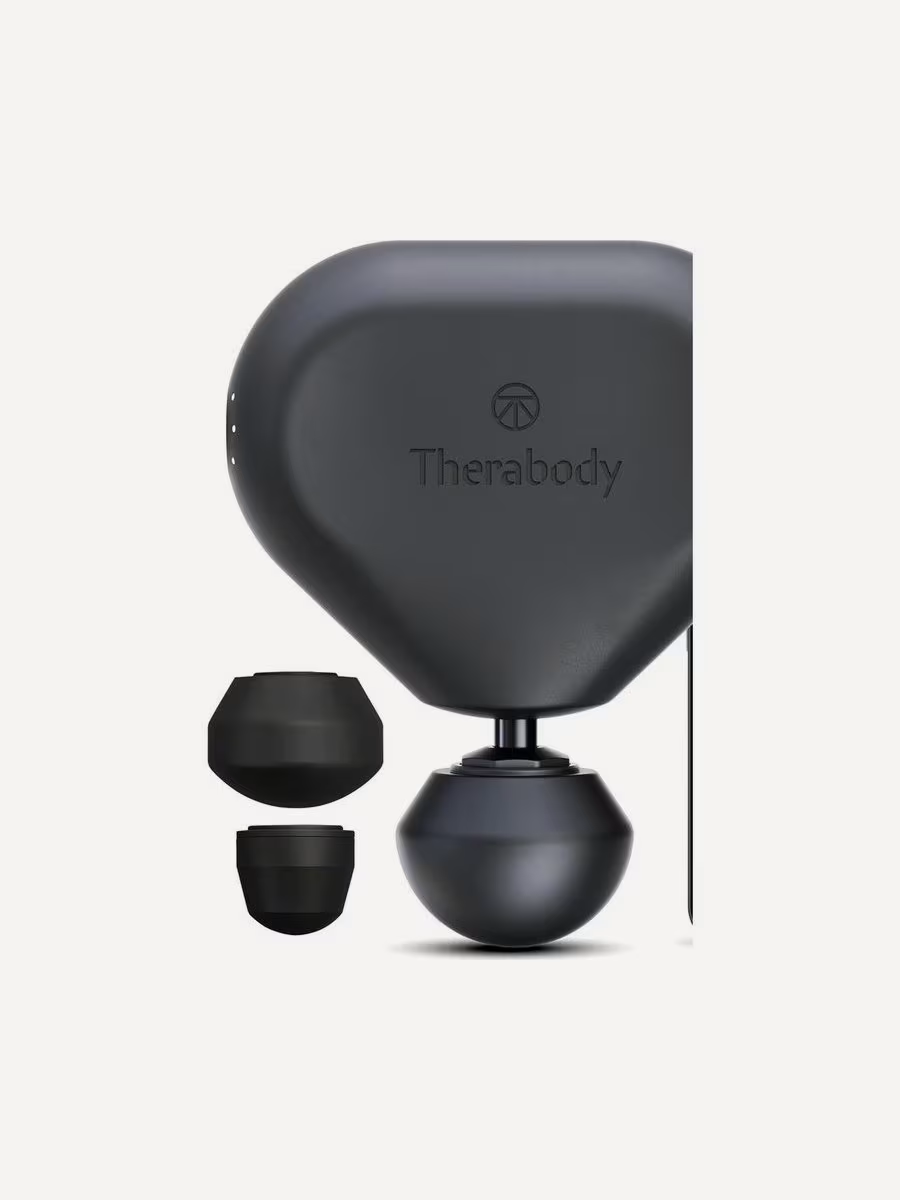
The check: list the spots you would treat. If they include both broad muscle and one or two stubborn knots, you want at least a general head and a pointed one. If you are sensitive around the neck or shins, a cushioned option is useful. The Mini includes three: a Dampener for sensitive areas, a Standard Ball for full-body use and a Thumb for knots.
Controls and speeds
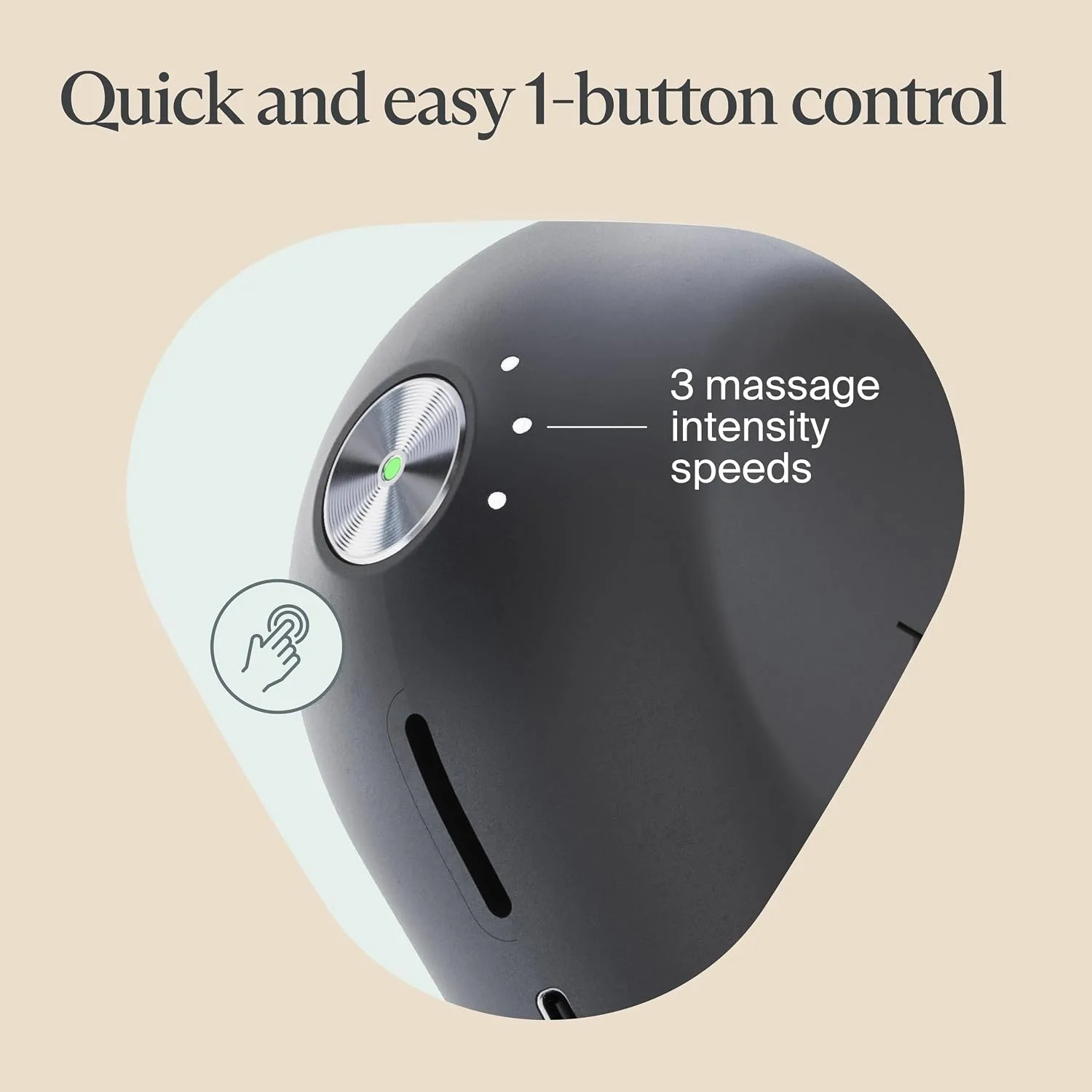
More speeds sound better. In practice, many people settle on one or two and stay there. Complicated controls get in the way when you are holding the gun at an awkward angle.
The check: be honest about whether you would use a long list of settings. If you would rather press one button and go, a simple layout is a plus. The Mini has a single button with three speeds shown by LED indicators. The flip side is that three speeds is a limit, and it is one of the listed drawbacks.
Battery and charging
Battery life matters less than convenience. A gun that charges from a cable you already carry is easier to live with than one needing its own charger.
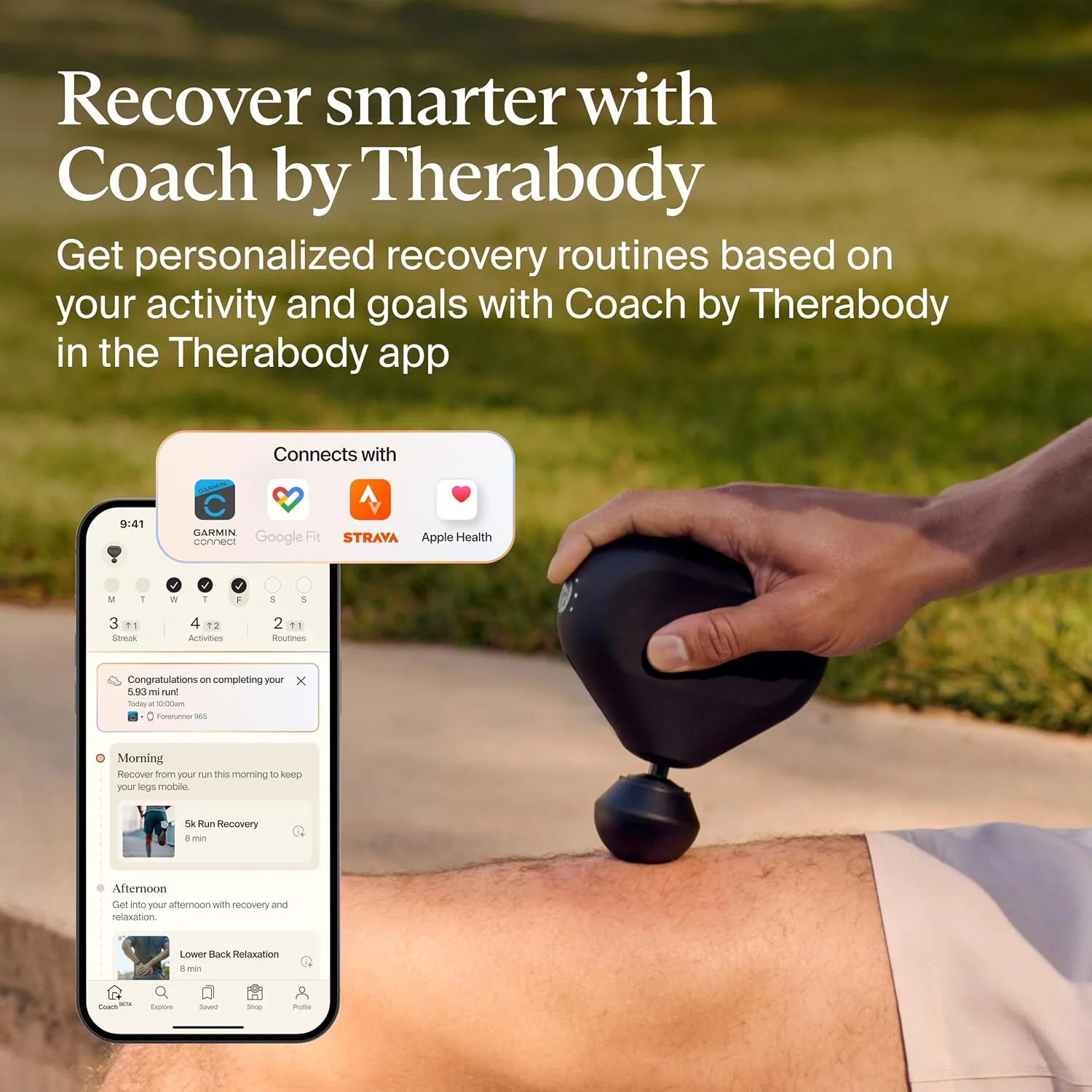
The check: think about how often you will use it between charges and whether you travel. The Mini is rated for up to 180 minutes and charges over USB-C, the same cable many phones use. Owners are split on battery life. Some find a charge lasts a long time, while a few report batteries fading.
Hand fit
Massage guns are held awkwardly, often with a twisted wrist, to reach your own back or calf. A smaller body suits a smaller hand, and owners mention that the Mini fits a smaller hand well.
The check: if you can, hold a few in a shop and mimic reaching your upper back. If the grip feels bulky now, it will feel worse after ten minutes.
What to ignore
- Big headline power claims. A bigger number does not tell you how the gun feels on your body, how loud it is, or whether you will keep using it. Judge on the factors above.
- A long list of included heads. Two or three that you use beat six that stay in the box.
- App features as a deciding factor. Guided routines and recovery suggestions can be handy if you like being told what to do. The Mini has Bluetooth and the Therabody app for this, but you can decide on the physical factors first.
Common mistakes
- Buying for the hardest day, not the usual one. People imagine their worst post-leg-day soreness and buy for that. Most days are ordinary tightness, and ordinary tightness does not call for maximum depth.
- Ignoring weight until it arrives. A heavy gun feels fine in a product photo. It feels different when you are reaching behind your shoulder.
- Assuming bigger is gentler. A strong gun on a sensitive area can be unpleasant. Having a soft attachment and a lower speed matters as much as top-end strength.
- Pressing hard instead of letting the gun work. Heavy pressure tires your arm. Light, steady passes are a sensible starting point. If light pressure feels like nothing, that is useful information about whether you need more power.
- Skipping the noise question. A loud gun is one you avoid using at night, which is often when you most want it.
- Treating it as a medical device. A massage gun is for everyday tightness. If you have a persistent or sharp pain, that is a question for a clinician, not an attachment.
Which buyer should pick which
| If this sounds like you | Lean toward |
|---|---|
| You travel often and want something for a carry-on | Compact |
| You sit at a desk and mostly have neck, shoulder and forearm tightness | Compact |
| You run and want quick relief after a session | Compact |
| You want to use it in the evening without disturbing anyone | Compact |
| You lift heavy and chase deep soreness in thighs or glutes | Full-size |
| The gun stays at home and weight does not bother you | Full-size is reasonable |
| You have smaller hands or struggle to hold heavy tools at an angle | Compact |
If you land in the middle, ask which mistake costs you more. A compact gun that occasionally feels light is easy to live with. A full-size gun that stays at home does nothing for you.
Where our catalog fits
We currently review one massage gun, and it is the compact option. If your answers above pointed to portability, quiet use and everyday tightness, it is the one to look at.
Theragun Mini (3rd Generation)
Our verdict calls it the massage gun you will actually carry: pocket-sized, quiet and strong enough for everyday tightness. It suits travelers, desk workers and runners who want quick relief anywhere.
The massage gun you will actually carry: pocket-sized, quiet and strong enough for everyday tightness. Deep work on big muscles is where larger models pull ahead.
As an Amazon Associate we earn from qualifying purchases. Links on this page may be affiliate links; we may earn a commission at no extra cost to you.
In practice, it makes sense for three kinds of buyer. If you spend most of the day at a desk, the three attachments and quiet running mean you can ease a stiff neck without making a scene. If you travel, the travel lock and USB-C charging remove two small annoyances. If you run, the small size means it is easy to bring along for after a session.
The drawbacks are clear and worth taking seriously. It has less depth than full-size guns on large muscles, only three speeds, and some owners feel it is expensive for its size. Check the current price and decide whether the portability is worth it to you. Battery comments from owners are mixed, so if you plan heavy daily use, factor that in.
If you are shopping for the wider recovery routine, two other reviews may help with the tracking side: the Garmin Forerunner 55 GPS Running Watch for runners, and the Google Fitbit Charge 6 Fitness Tracker for general fitness tracking. Neither replaces a massage gun, and they answer a different question.
The short version
Pick compact if you will carry it, want quiet, and your trouble spots are everyday ones. Pick full-size if you can name a large muscle where you routinely need more depth and you are happy to leave the gun at home. If you are unsure, start with the compact one. It is the easier mistake to live with.
Found this review helpful?
Pin it to one of your boards and come back to it whenever you need a reminder.




No comments yet.
Join the discussion. Comments are moderated before appearing.