Portable speakers come in two useful sizes: one that fits a pocket and one that fits a bag. Pick the wrong one and either the sound falls short of the occasion or the speaker stays at home, which is the more common failure.
Why size is the specification that matters
Bass needs air to move, and moving air needs a driver with room behind it. That is why a pocket speaker with impressive marketing still sounds thin outdoors: there is no physical way around the volume of the cabinet. Everything else about a small speaker can be excellent and this limit still applies.
Indoors it matters less, because walls reflect sound back and a small speaker sounds fuller than it is. Outdoors there is nothing to reflect from, which is exactly where people are disappointed, and why the same speaker can seem good in a kitchen and feeble on a beach.
Pocket size
Around 300 to 600 grams, roughly the size of a drinks can or a paperback. Right for cycling, a hotel room, a bathroom, a desk, a picnic for two. Enough for one or two people sitting close to it, with bass that is present rather than felt. Water resistance is non-negotiable at this size, because a speaker this portable ends up somewhere wet.
Mid size
Roughly 500 grams to a kilogram, the size that goes in a backpack but not a coat. This is the first size where bass is something you feel rather than infer, and where a speaker can cover a garden, a balcony or a small gathering without being pushed to distortion. Past a kilogram, "portable" is a word on the box rather than a description of your day.
| Where you will use it | Size |
|---|---|
| Shower, kitchen, desk | |
| Bike, hike, hotel room | |
| Picnic for two | Pocket, close by |
| Garden, balcony, barbecue | Mid |
| Beach with a group | Mid, and expect to turn it up |
| A party in a room | Neither; you want mains power |
Three numbers to check, and one to ignore
- Battery, at the volume you will use. Published figures are measured at moderate volume, often half. Outdoors at three quarters, expect roughly half the printed number.
- The protection rating. IP67 means dust-tight and survives immersion; IPX4 survives splashes and nothing more. The first digit is dust, the second is water, and an X means untested rather than immune.
- The charging port. USB-C or it becomes the speaker you cannot charge on the day you forgot its special cable.
The number to ignore is the wattage. There is no shared method behind the figure, and a well-designed thirty-watt speaker routinely outperforms a badly designed sixty-watt one. Size, driver arrangement and whether there is a separate tweeter tell you far more.
Stereo pairing, and its limits
Most speakers now pair with a second identical unit for stereo, which is a genuine improvement outdoors: two small speakers a couple of metres apart sound wider and louder than one. The catches are worth knowing. Pairing usually works only with the same model or the same manufacturer's current system, and older speakers from the same brand are frequently incompatible with the new scheme. Battery life also drops, because both units are working. Buying two small speakers to avoid buying one larger one works if you will actually carry both.
Looking after it
Rinse it after salt water or a chlorinated pool, because both are harder on seals than rain, and dry the charging port before plugging anything in; a wet port is the most common way a waterproof speaker dies. If it will sit unused for months, leave it at about half charge rather than empty, which is how lithium cells survive storage. And keep it out of a hot car, which does more damage to the battery than any amount of use.
The short version
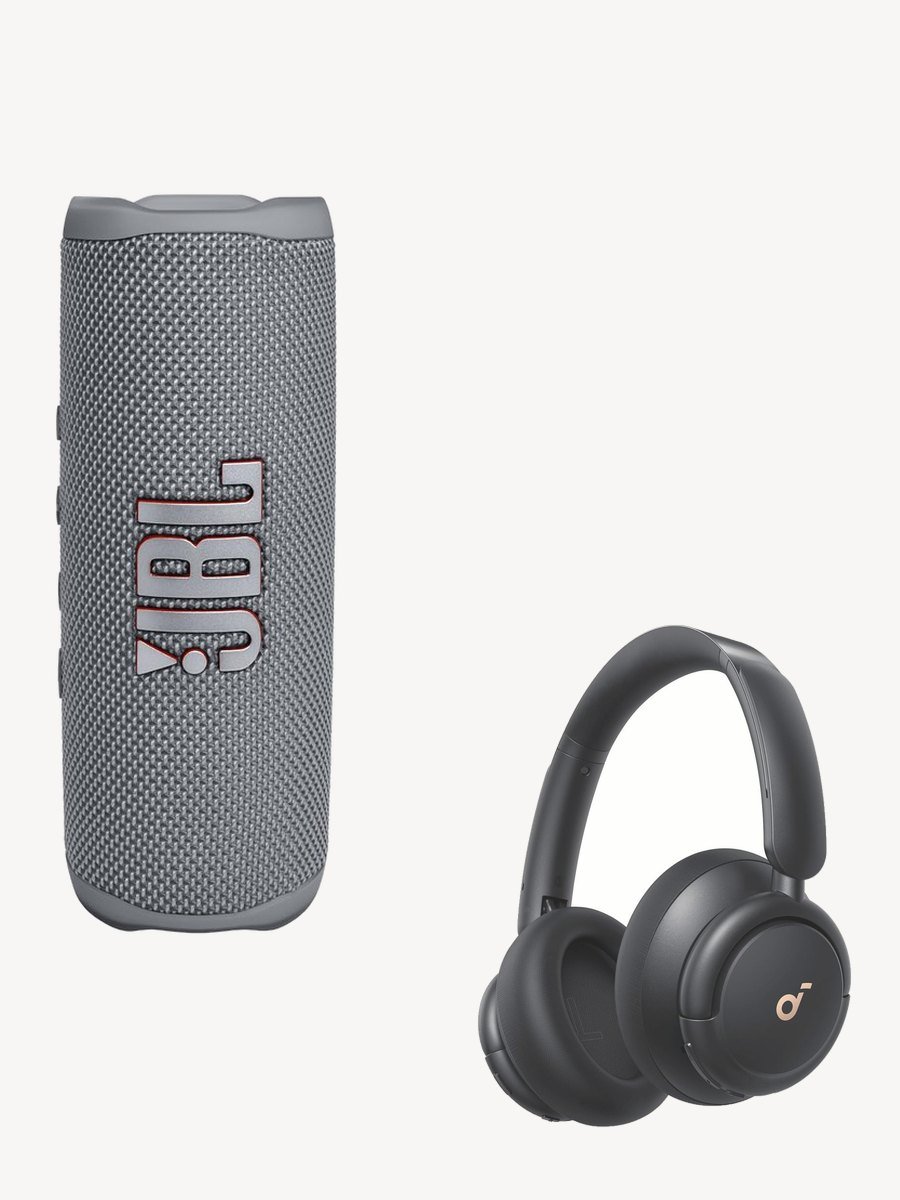
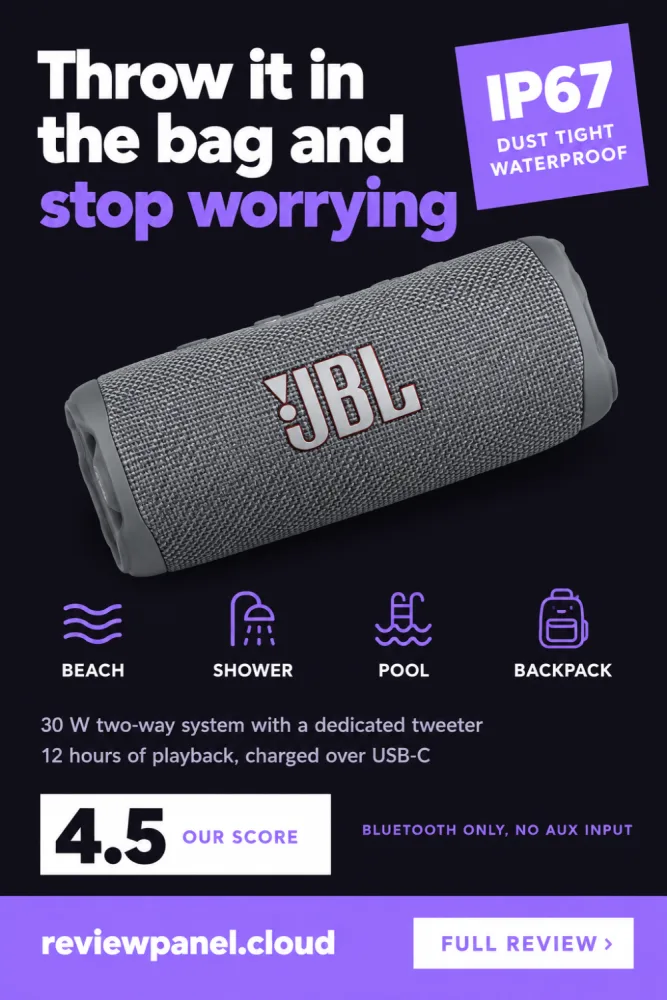
Buy pocket size if it needs to be with you all the time and you listen alone or with one other person. Buy mid size if it will sit somewhere, outdoors, with people around it. Check the IP rating, insist on USB-C and ignore the watts. Our review of the JBL Flip 6 covers the middle of that range, including why a separate tweeter changed the category and where to put the speaker so the bass survives.
Found this review helpful?
Pin it to one of your boards and come back to it whenever you need a reminder.

No comments yet.
Join the discussion. Comments are moderated before appearing.