Air purifier boxes talk about filter layers, ionisers and smart sensors. One number decides whether a machine actually cleans your room, and it is usually printed smaller than all of them: the clean air delivery rate.
What CADR is, and why coverage figures mislead
CADR is the volume of thoroughly filtered air a machine produces per minute, measured in cubic feet per minute in the United States and cubic metres per hour elsewhere. It combines airflow and filter efficiency into one figure, which is why it is the only number that lets you compare two machines honestly.
The "covers up to 1,000 square feet" line on the front of the box is a different thing. That headline is usually calculated at a single air change per hour, which means the air in the room passes through the filter once every sixty minutes. For dust that is marginal; for pollen or smoke it is close to useless. Independent standards quote the same machine at a much smaller room precisely because they assume four or five air changes.
The arithmetic, once
You need three numbers and a calculator, and the whole thing takes a minute.
- Floor area of the room in square feet, multiplied by the ceiling height in feet. That is the room's volume.
- Multiply by the air changes you want: two or three for general dust, four or five if anyone in the room has allergies or asthma.
- Divide by sixty. That is the CADR, in CFM, you should be shopping for.
A worked example. A 12 by 14 foot bedroom with an 8 foot ceiling is 1,344 cubic feet. For allergies at five air changes that is 6,720 cubic feet an hour, which divided by sixty is 112 CFM. So a machine rated around 140 CFM has headroom, and one rated 60 CFM does not, whatever the box says about square feet.
Metric works the same way: room volume in cubic metres, times air changes, gives the m³/h figure to look for.
Three CADR numbers, not one
Certified machines publish three: smoke, dust and pollen. They differ because particle size differs, and the smoke figure is the hardest test, since smoke particles are the smallest. If a listing quotes only one number without saying which, assume it is the flattering one. If you are buying because of wildfire smoke or cooking smoke, read the smoke figure specifically.
What you pay after the purchase
A purifier is a subscription with a machine attached. Filters typically last six to twelve months, and over three years they usually cost more than the unit did. Before buying, look up the replacement filter price and multiply by the number of years you expect to own it, then add that to the sticker price and compare again. A cheap machine with expensive proprietary filters is not cheap.
Two habits stretch filter life without compromising it: vacuum the pre-filter layer monthly, and run the machine continuously on a low setting rather than in bursts on high, which is both quieter and easier on the filter than the stop-start alternative.
Noise, at the setting you will actually use
Every purifier is quiet on its lowest setting and loud on its highest, and the headline decibel figure is always the lowest one. The question that matters is how loud it is at the speed required to hit your air changes. A machine that needs its top speed to clean your room is a machine you will turn down at night and stop benefiting from. Buying slightly more capacity than the arithmetic demands is really buying the ability to run it at a quiet speed.
What to ignore
- Ionisers and "plasma" stages. They add complexity and some produce ozone, which is a lung irritant. A filter you sleep next to should not be making anything.
- UV lamps. The contact time as air rushes past a small lamp is too short to do the work claimed for it.
- Smart sensors, mostly. Useful for a machine you want to leave on auto, irrelevant to how well it filters, and often the difference between two model numbers that are otherwise identical.
- Filter layer counts. "Five-stage filtration" usually means a pre-filter, a HEPA layer, a thin carbon sheet and marketing.
The short version
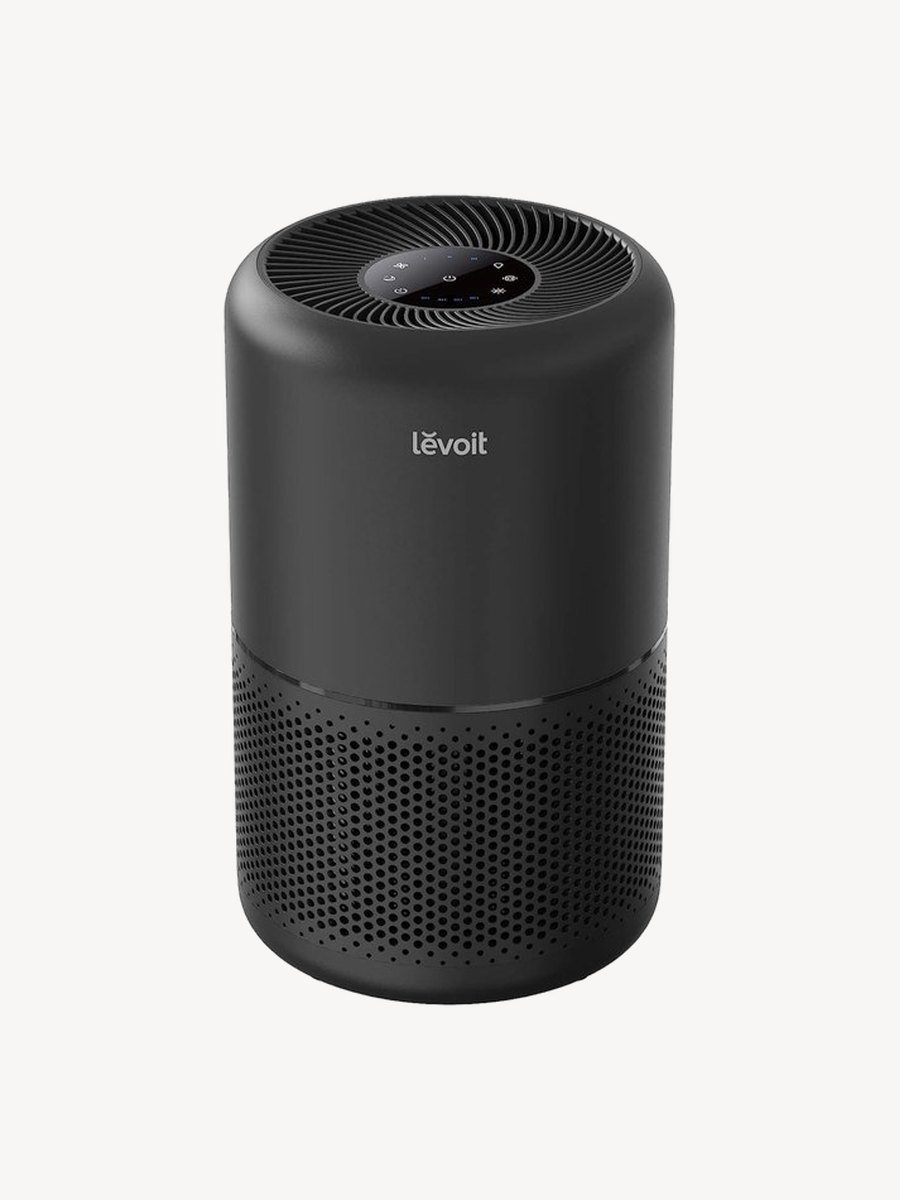
Work out the CADR your room needs, buy a machine with headroom above it so you can run it quietly, check the replacement filter price before you check the unit price, and ignore anything that generates rather than filters. If you want to see how those rules apply to a real machine, our review of the Levoit Core 300 works through the sizing and the running costs for a bedroom-sized room.
Found this review helpful?
Pin it to one of your boards and come back to it whenever you need a reminder.



No comments yet.
Join the discussion. Comments are moderated before appearing.