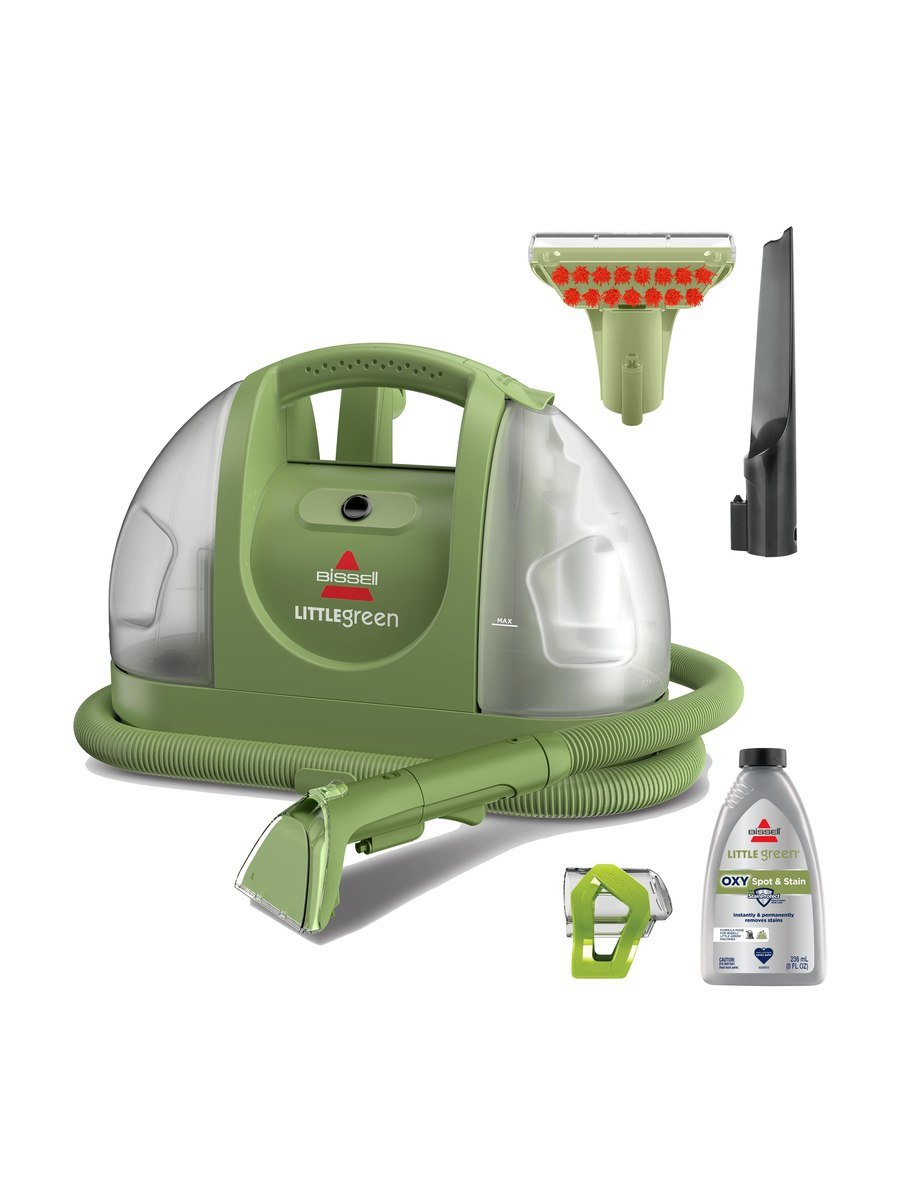
Most cleaning products loosen a stain and leave you to blot it. The Little Green does something different: it sprays cleaning solution into the fabric, you scrub, and then it sucks the dirty water back out. That last step is the whole point, and it is why a fifteen-year-old design is still on the best-seller lists.
What it actually does
Two tanks: clean solution goes in one, dirty water comes back into the other. The hose ends in a tool with a trigger and a clear head so you can see what is coming out of the fabric, which is either satisfying or horrifying depending on how long you have owned the sofa. Suction is strong enough to leave the fabric damp rather than wet, so it dries in a few hours rather than a day.
The 1400B has a 48 oz clean water tank, which is enough for a large sofa cushion or a car's front seats before refilling.
The method that gets stains out
The machine rewards a technique, and doing it in the wrong order is why some stains come back. Blot first with a dry cloth and lift anything solid, because spraying onto a wet stain just spreads it. Spray the solution and leave it for a minute rather than scrubbing immediately, since the cleaner needs contact time to lift the stain from the fibre. Scrub with the brush head in one direction rather than circles, which keeps the pile lying the same way. Then pull with the trigger released — suction only, no more liquid — in slow overlapping passes until the window on the tool runs clear. Finally, do one pass with plain water in the tank and extract again: leftover detergent in the fabric is sticky and attracts dirt, which is why a cleaned patch sometimes becomes the dirtiest one a month later.
Patience beats pressure. Two gentle cycles remove more than one aggressive one, and they are far kinder to the fabric.
What it is good at
Pet accidents, spilt drinks, muddy paw prints on stair carpet, car seats and floor mats, high chairs, the pale armchair that seemed a good idea. It excels at anything where the mess is in the fabric rather than on it. Bissell says the brand has been tested against a hundred-plus common stains, and the ones we have thrown at it — coffee, red wine, dog — have come out with patience and two passes.
Pet accidents need one extra step
Urine is a different problem from a coffee spill, because the smell comes from salts and bacteria left behind after the liquid is gone, and it often reaches the foam under the fabric where suction cannot follow. Extract as normal first, then treat with an enzyme cleaner and let it sit for the time on the bottle before extracting again. Enzymes break down the compounds rather than masking them, which is what stops a dog returning to the same spot. Steam and very hot water are the two things to avoid on urine: heat sets the proteins and the smell becomes permanent.
What it is not
It is not a carpet cleaner for a whole room. It is a spot machine with a short hose and a small tank; doing a full lounge carpet with it would take an afternoon and a dozen refills. For that you want a full-size upright cleaner. It is also loud, and the motor is the cheap-sounding part of the product.
It is also not a wet vacuum for floods. Sucking up a burst-pipe puddle will fill the dirty tank in seconds and, once full, water goes where it should not. That job belongs to a wet and dry shop vacuum.
Maintenance
The single most important habit: rinse the hose and tool after every use by running clean water through them. Dirty solution left to dry in the hose is what kills these machines, and it is the most common complaint you will read. Two minutes of rinsing buys years.
Empty and rinse both tanks as well, and leave them off the body to dry rather than sealed, because a damp closed tank grows the smell that people later blame on the machine. Every few months, check the small filter screen where the dirty water enters; hair and fibre collect there and suction fades gradually enough that nobody notices the cause.
Should you buy it?
Buy it if you have pets, children, pale upholstery or a car you care about. Skip it if you actually need to clean whole carpets, or if you will not commit to rinsing it after use.
Key features
Spray and extract
Sprays solution, you scrub, then it vacuums the dirty water back out.
Two-tank system
Clean solution and recovered dirty water kept separate.
48 oz clean water tank
Enough for a large sofa cushion or a car's front seats.
Specialty tools
Included tools for upholstery and tight areas.
Clear tool head
Shows the dirt coming out so you know when to stop.
Compact body
Carries by a handle and stores in a cupboard.
Pros & cons
What we like
- Pulls dirt and liquid back out of the fabric
- 48 oz clean water tank covers a large cushion
- Works on upholstery, stairs, car seats and mats
- Clear tool head shows what is coming out
- Leaves fabric damp rather than soaked
- Small enough to store in a cupboard
What could be better
- Not practical for a whole carpet
- Loud motor
- Dies early if you do not rinse the hose after use
Specifications
Frequently asked questions
Not realistically. The hose is short and the tank is small; a full room would take an afternoon and many refills. It is designed for spots and upholstery.
A few hours in a ventilated room. The suction leaves fabric damp rather than wet, which is the main advantage over spray cleaners.
The machine is designed around it and the warranty assumes it. Plain water works for a rinse pass, but strong household detergents can foam badly and damage the motor.
Almost always because dirty solution was left to dry in the hose. Run clean water through the hose and tool after every use.
Yes, that is one of its best uses. Bring the car to the machine with an extension lead rather than the other way round.
Blot first, spray and wait a minute, scrub in one direction, then extract with the trigger released in slow overlapping passes until the tool window runs clear. Finish with a plain water pass, because leftover detergent stays sticky and attracts dirt.
Extract first, then use an enzyme cleaner and let it sit before extracting again. Enzymes break the compounds down instead of masking them. Avoid steam and very hot water, which set the proteins and make the smell permanent.
No. The dirty tank fills in seconds and then water goes where it should not. A burst pipe or a flooded floor is a job for a wet and dry shop vacuum.
Final verdict
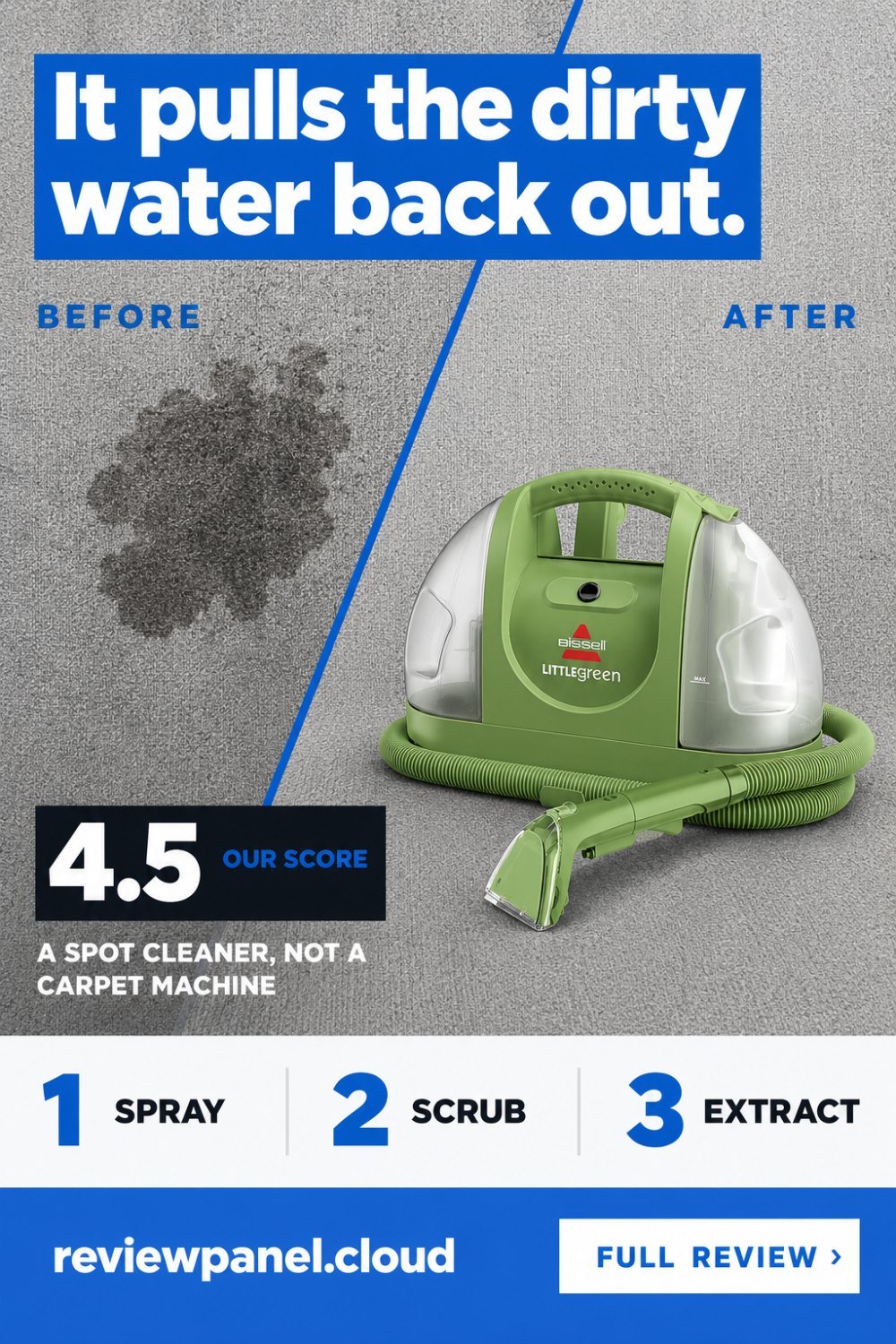
Sprays, scrubs and then pulls the dirty water back out, which is what separates it from every spray-and-blot product. A spot machine, not a carpet cleaner.
What owners report
Gathered from what long-term owners consistently say, not from a single test.
The small tank means refilling several times for a large stain, which does not become a complaint for anyone who expected it. The dirty water tank smells if it is not rinsed after every use, and owners remind each other of this constantly. On pet accidents the result is at the level people describe as not having expected it; upholstery and car interiors are where it gets used most. Storing the hose is the part of the design that draws the most criticism.
Reader rating
Found this review helpful?
Pin it to one of your boards and come back to it whenever you need a reminder.


No comments yet.
Join the discussion. Comments are moderated before appearing.