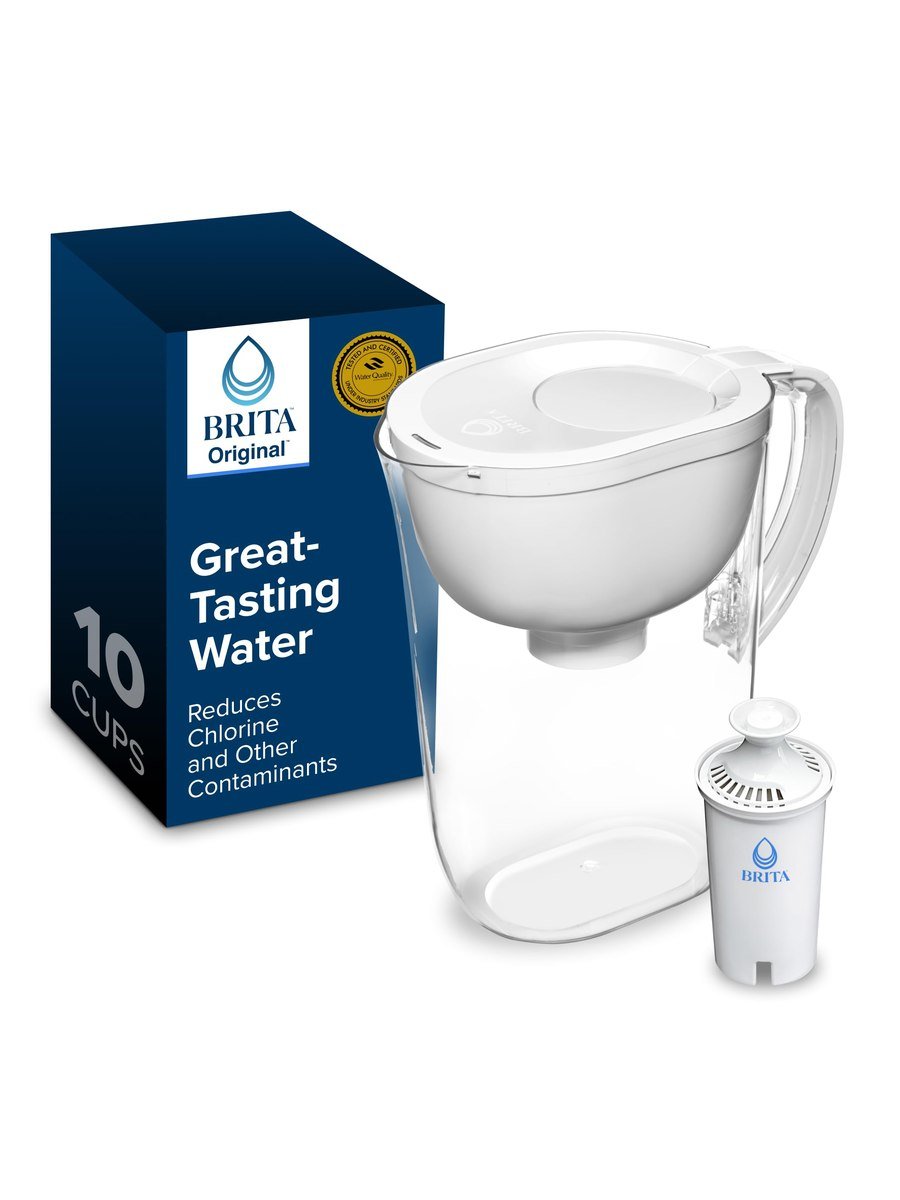
A water filter pitcher is one of those purchases where the marketing and the reality drift apart. The Brita Everyday does a specific, well-defined job. If that job is the one you need doing, it is excellent value. If you were hoping for something else, read the filter certification before you order.
What the standard filter removes
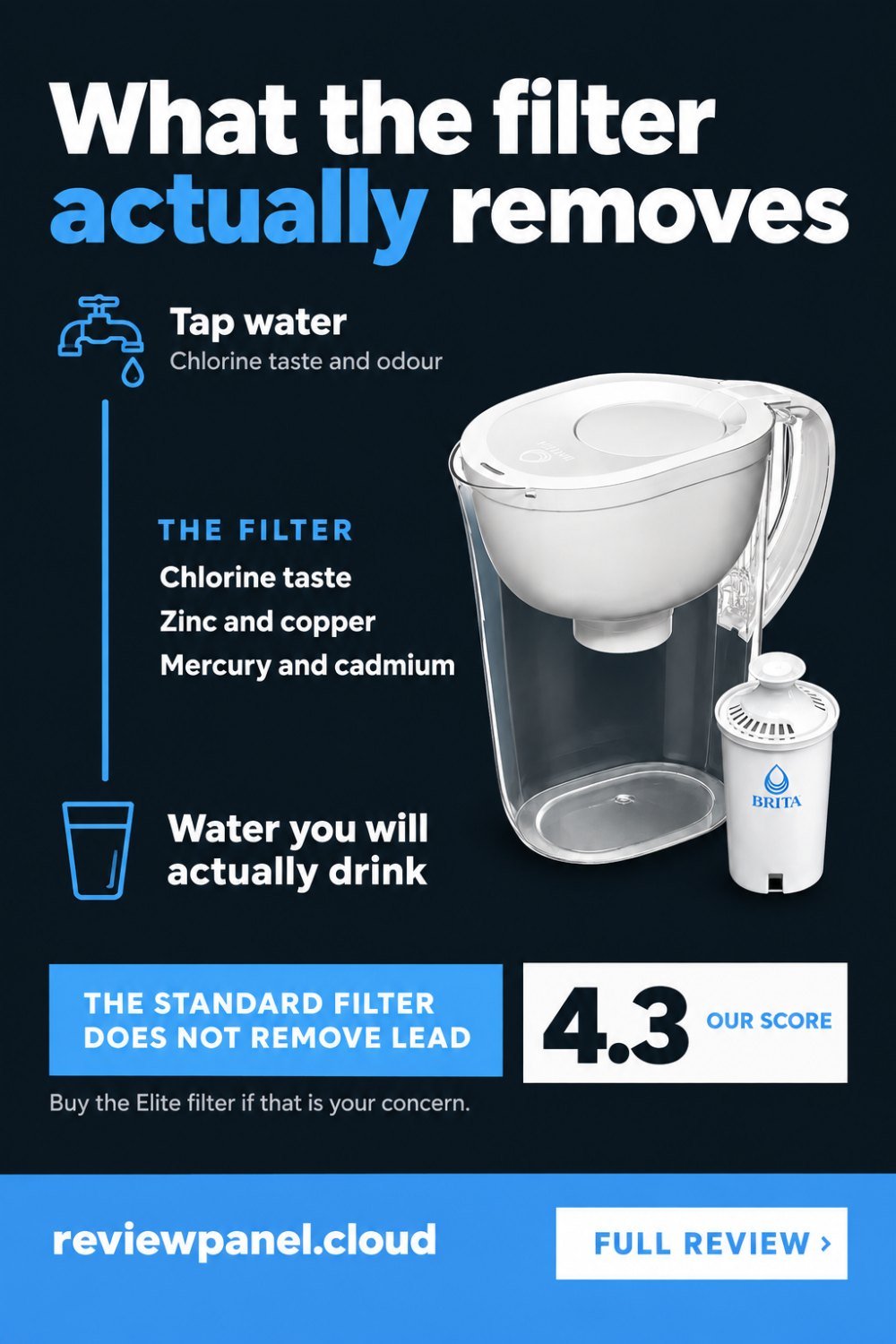
Chlorine taste and odour, which is the main reason most people buy one, plus zinc, copper, mercury and cadmium. That is the standard filter, certified to WQA and NSF/ANSI standards. It is the difference between tap water you tolerate and tap water you actually drink, and in a chlorinated supply the change is immediate and obvious.
What the standard filter does not do is remove lead. If lead is your concern — older plumbing, a specific test result — you need the Elite filter, which is rated to remove 99 per cent of lead and lasts six months instead of two. The pitcher is the same; the filter is the product.
Which filter for which problem
This is the only decision that matters here, and it is easy to get wrong because both filters fit the same jug.
| Your problem | Filter | Realistic outcome |
|---|---|---|
| Water tastes or smells of chlorine | Standard | Fixed, immediately |
| Old plumbing, worried about lead | Elite | Rated for 99% lead removal |
| Limescale in the kettle | Neither | Pitchers do not soften water |
| Water from a private well | Neither | Test the supply, then treat it properly |
| Worried about bacteria | Neither | Not a purifier; it does not disinfect |
| Fluoride | Neither | Needs reverse osmosis |
A filter jug improves water that is already safe to drink. It is not a treatment system, and any product that claims otherwise at this price should be read carefully.
Living with it
Ten cups is enough to fill three large reusable bottles, which suits a couple or a small family. The classic oval shape fits most fridge doors, which sounds trivial until you buy a rectangular jug and discover it does not. The flip-top lid means you refill under the tap one-handed without removing the lid, and there is a sticker indicator on the lid to remind you when the filter is due.
Keeping it clean, which people skip
The jug itself needs washing, not just refilling. A filter removes chlorine, and chlorine is what was keeping the water in the jug from growing anything; filtered water sitting warm on a counter for a week is a better home for bacteria than tap water is. Three habits cover it. Wash the jug and lid with warm soapy water every couple of weeks, and keep it in the fridge rather than on the worktop. Do not top up over old water day after day; empty it and refill. And if the jug will stand unused for a week, take the filter out, and either refrigerate it in a sealed bag or start a new one, because a wet filter left at room temperature is exactly the environment to avoid.
Slime on the underside of the lid or a musty smell means the jug, not the filter, needs attention.
The annoyances
Filtering is slow — you fill the reservoir and wait a couple of minutes, which is fine unless someone has just emptied the jug and put it back. New filters need a fifteen-second rinse and often shed a little carbon dust on the first pour. And the lid is the part that breaks; treat it gently.
The cost case
Brita quotes one filter as replacing about three hundred standard sixteen-ounce bottles, with a change every forty gallons or roughly two months. Even allowing for optimism in that number, the economics against bottled water are not close, and neither is the plastic waste.
Against the tap, the arithmetic is different and worth stating plainly: tap water costs almost nothing, so a filter jug is a purchase about taste, not savings, unless it replaces bottles you were actually buying. Six standard filters a year is the running cost to weigh, and the Elite lasts three times as long for a higher price per filter, which usually works out similar over a year while needing four fewer changes to remember.
Should you buy it?
Buy it if your tap water tastes of chlorine and you want that fixed cheaply. Skip it if you need lead removal — buy the Elite filter version instead — or if you want filtered water instantly rather than after a wait.
Key features
Standard filter
Certified to WQA and NSF/ANSI standards for chlorine taste and odour.
10-cup capacity
Enough to fill three large reusable bottles.
Fridge-door shape
Classic oval body designed to fit most door shelves.
Flip-top lid
Refill under the tap without removing the lid.
Filter indicator
A sticker on the lid shows when a change is due.
Elite filter option
Removes 99% of lead and lasts six months instead of two.
Pros & cons
What we like
- Removes chlorine taste and odour immediately
- Reduces zinc, copper, mercury and cadmium
- Oval body fits most fridge doors
- Flip-top lid refills one-handed
- Filter indicator sticker on the lid
- Very cheap compared with bottled water
What could be better
- Standard filter does not remove lead
- Filtering takes a couple of minutes
- The lid is the part that breaks
Specifications
Frequently asked questions
No. The standard filter handles chlorine taste, zinc, copper, mercury and cadmium. For lead you need the Brita Elite filter, which removes 99% of it.
About every 40 gallons, or roughly two months of normal household use. The Elite filter lasts six months.
New filters shed a little carbon dust. Rinse the filter for fifteen seconds before the first use and discard the first jug.
The oval shape is designed for door shelves and fits most. Measure the shelf depth if your fridge is narrow.
By a wide margin. Brita quotes one filter as replacing about 300 sixteen-ounce bottles.
No. Pitcher filters do not soften water, so scale keeps forming. That needs a softener or regular descaling, not a jug.
Every couple of weeks, with warm soapy water, lid included. Filtering removes the chlorine that was keeping the water from growing anything, so a jug left on a warm counter for a week is worth more attention than the filter is.
Take the filter out and either refrigerate it sealed or start a fresh one when you return. A wet filter left at room temperature is the one thing to avoid.
Final verdict
Fixes chlorine taste cheaply and fits a fridge door. The standard filter does not remove lead; buy the Elite filter if that is your concern.
What owners report
Gathered from what long-term owners consistently say, not from a single test.
The lid shifting while pouring is the design complaint that comes up most, and holding it with a finger becomes habit. The filter indicator counts time rather than use, so it warns early for heavy users and late for light ones. Filtering slowing down as the cartridge ages tells you it is time far better than the indicator does. The change in chlorine taste is obvious from the first glass.
Reader rating
Found this review helpful?
Pin it to one of your boards and come back to it whenever you need a reminder.

No comments yet.
Join the discussion. Comments are moderated before appearing.