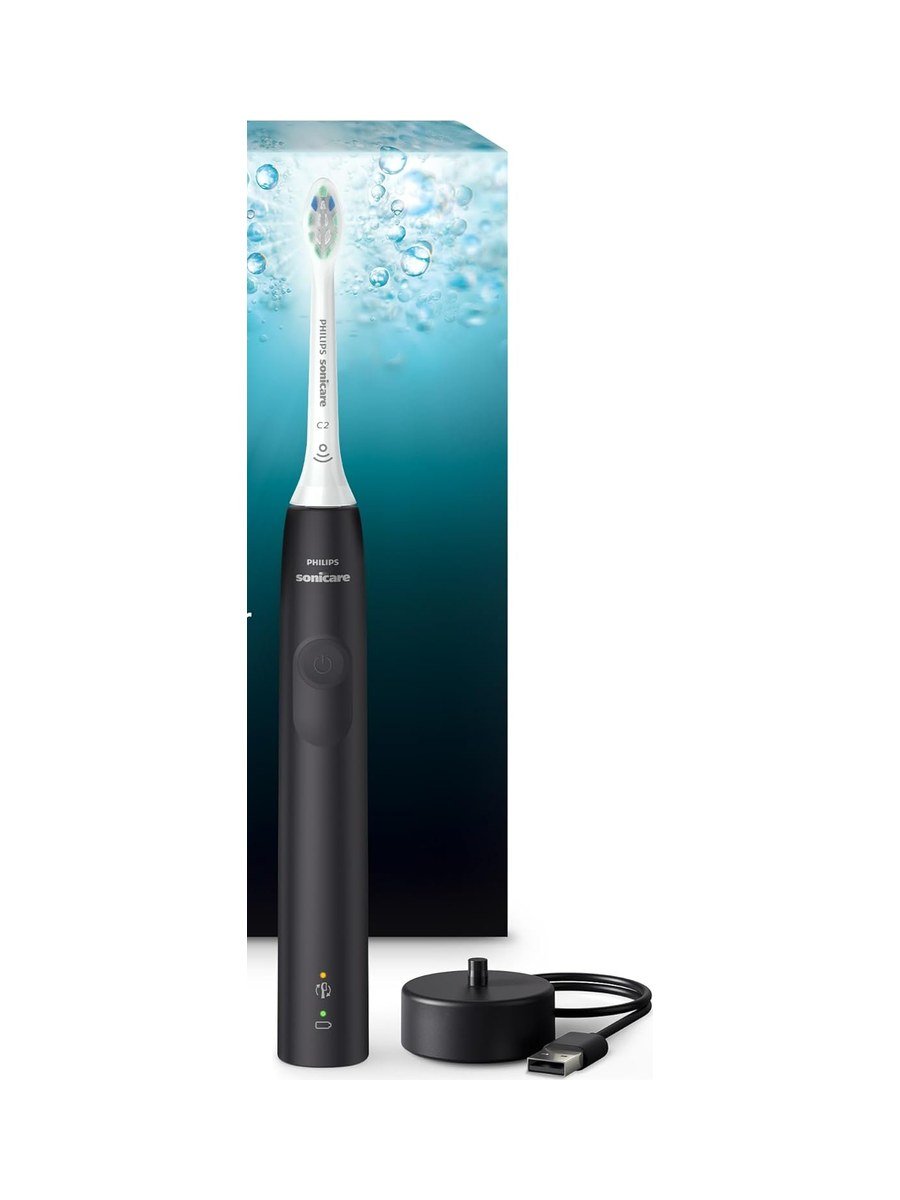
Expensive electric toothbrushes sell apps, modes and travel cases. The Sonicare 4100 sells the three things that actually change how clean your teeth get: a sonic clean, a timer and a pressure warning.
The clean
Philips' Advanced Sonic Technology vibrates the bristles quickly enough to push fluid between teeth and along the gumline, reaching places a manual brush skims over. The included C2 Optimal Plaque Control head has soft, flexible bristles. Most people moving from a manual brush notice the smooth feeling within days.
Brushing properly
The SmarTimer runs for the recommended two minutes and the QuadPacer pauses briefly every 30 seconds so you move to the next part of your mouth. If you press too hard, the handle pulses to tell you to ease off, which protects gums and enamel. EasyStart ramps the power up gradually over the first 14 uses.
Two settings and a reminder
There are two intensity levels, useful if your gums are sensitive. The handle also tracks how often and how hard you brush and tells you when the head needs replacing, usually about every three months.
Battery and charging
A full charge lasts up to 14 days of twice-daily brushing. The catch: it ships with a USB charger and no wall plug. Most homes have a spare USB adapter; if yours does not, add one to the order.
Which Sonicare to buy
| If you want | Buy |
|---|---|
| The core features at the lowest price | Sonicare 4100 |
| More modes, an app and a travel case | A higher Sonicare series |
Brushing technique with a sonic brush
An electric brush does the scrubbing for you, so the technique is different from a manual one. Hold the bristles at a slight angle to the gumline, press lightly and glide slowly from tooth to tooth rather than scrubbing back and forth. Let the QuadPacer move you around the mouth: upper outside, upper inside, lower outside, lower inside.
The first week can feel tickly; EasyStart ramps the power up over the first 14 brushes so you get used to it. If your gums are sensitive, start on the lower intensity and stay there as long as you like.
Running costs
The handle is the one-off cost; brush heads are the ongoing one. Replace the head roughly every three months or when the reminder lights. Multi-packs of genuine Sonicare heads cost less per head than singles. Keep the handle dry between uses and charge it when the battery indicator tells you, rather than leaving it on the charger permanently.
Should you buy it?
Buy the Sonicare 4100 if you are moving from a manual brush or replacing an old electric one and want the features that matter without paying for extras. Skip it only if you travel constantly and want a charging case in the box.
Key features
Advanced Sonic Technology
Pulses fluid between teeth and along the gumline.
Pressure sensor
The handle pulses to tell you to ease off.
SmarTimer and QuadPacer
Two minutes in total, with a cue every 30 seconds.
EasyStart
Gradually increases power over the first 14 uses.
Brush head reminder
Tracks use and tells you when to replace the head.
Two intensity settings
Choose gentler power for sensitive teeth.
Pros & cons
What we like
- Sonic cleaning that reaches between teeth
- Pressure sensor pulses when you press too hard
- Two-minute timer with 30-second quadrant pacing
- Two intensity settings for sensitive gums
- Up to 14 days per charge
- Reminds you when to replace the brush head
What could be better
- USB charger only, no wall plug in the box
- No travel case
- Only one cleaning mode
Specifications
Frequently asked questions
No. It comes with a USB charger, so you need a USB wall plug or a USB port to charge it.
Philips Sonicare click-on brush heads, including the C2 Optimal Plaque Control head it ships with.
About every three months, or when the reminder light tells you.
Yes. Use the lower intensity setting and let the pressure sensor stop you from pressing too hard.
Up to 14 days of brushing twice a day for two minutes on the standard setting.
The pricier models add modes, apps and travel cases. The core cleaning, timer and pressure warning are already here.
Final verdict
Everything that makes an electric toothbrush worth having, without the app and the gimmicks. Budget for a USB wall plug if you do not have one.
What owners report
Gathered from what long-term owners consistently say, not from a single test.
Many owners call it the best toothbrush they have used, describing teeth that feel smooth afterwards. Battery life is mostly praised, though some report weaker power over time. The most repeated complaint is that it ships with only a USB cord and no wall plug. A minority report the handle failing inside a year, which the Philips warranty covers.
Reader rating
Found this review helpful?
Pin it to one of your boards and come back to it whenever you need a reminder.

No comments yet.
Join the discussion. Comments are moderated before appearing.